While many of you are hammer and tongs at the game of deploying hotspots, the real opportunity is beginning to shift from *building* the network to *using* the network.
One of the best ways to learn something is to do it. Let me show you how, for about $40, you can add your first sensor to the network and visualize the data.

Before we get there, let's think about why this is important, and how knowing how to do this will give you a competitive edge. This'll go into strategy and theory plus my own predictions, so if you just want to skip theory and get started, jump here.
Strategy and Theory - A New Network
Helium is participating in a movement that is the single largest jump in human evolution for the past 10,000 years or so. If you would wind back in time 10,000 years to the pre-agricultural era and talk to a hunter-gatherer, the information they knew about the world would melt (or at least temporarily re-form) your brain.
From odd aspects of sensing the world, like ocean navigators dipping their scrotum into the sea to feel very slight water temperature differences that indicated what current or part of the world they were in, to Native Americans who knew where the animal they were going to hunt and kill that day was well before they left camp, humans had a highly developed internal view of the world. This was based on paying attention to senses so finely tuned as to be unbelievable today.
That view is almost entirely lost, and any individual human will probably never experience it again. We will experience something even richer.
With the help of edge computing, a wide deployment of sensors and sensor types, and the burgeoning ability to both visualize and use data, we humans are beginning to re-understand our world. Helium is a part of this.
When you deploy a Helium hotspot, you're probably aiming to maximize your HNT earnings. That's cool, so am I, and on top of that I'd love to help you with it. Still, the thing you may not be thinking about is what's beyond the HNT earnings. What are the opportunities that are popping into existence just by you and a few thousand others building our own network that moves data from invisible to visible?
The simplest explanation is that by increasing the "data density" of a business, then by showing them how to use that extra data, you give them a valuable competitive edge. In some cases that edge will save them money. In some cases it will make them money.
This data density is the "new and improved" version of how we humans sense the world. As a quick (and non-monetary) example, imagine the hunter-gatherer from 10,000 years ago. She knew where to go that day to find the best food because of her individual sensory connection to the weather and season, but she couldn't really share that knowledge with you, other than to tell you where to go.
If you deploy a weather station network of 20 units over, say a few thousand acres, you will have created a far denser sensor network than any standard weather station deployment, and ANYONE IN THE WORLD can have instant access to that data. If you decide to help people visualize that data, now you have added tremendous value that is available to anyone who wants it. Maybe you charge for that data. Maybe you don't. Maybe you share it in a way that other experts can help you refine your understanding further. Whatever you do with a sensor network like that, you are contributing to elevating our human understanding of the world, and that's pretty damn cool.
Now, you can apply this data density idea any where you can imagine, so start imagining.
Is it useful for the local trucking company (or an Amazon DSP) to know where their vehicles are at 12 second intervals? Is it useful for your local restaurant to know the inventory levels in an off-site kitchen, and for every other company who shares that off-site location to also know their inventory levels based on weight-plate sensors?
Will FedEx see a use for tracking individual packages, or pallets, or trucks, or airplanes? Would a supplement company benefit from tracking the provenance of it's supplies, so you know the high-end collagen you bought actually came from animals humanely treated, and if you wanted to you could track from cow to coffee? You ARE putting collagen in your coffee, right? Wait, that's another article.
How about your local government? San Diego sure could benefit from knowing when wildfires were starting way before they get reported by human senses. Deploying a network of air quality sensors might save BILLIONS of dollars if we can stop a wildfire when it's only covering ½ an acre.
When it comes to deploying sensors, the only limit to creating and using data density is your imagination
So, how do you go about adding to this data density?
Let's get started!
Here's a broad overview of how the whole thing works:
- Buy a sensor
- Sign up for a Helium Console account
- Provision your sensor (this just means you claim ownership of it digitally, so that you're the one controlling the data flow)
- Connect that sensor to some kind of data visualization platform
- Deploy the sensor
Step 1: Buying a Sensor
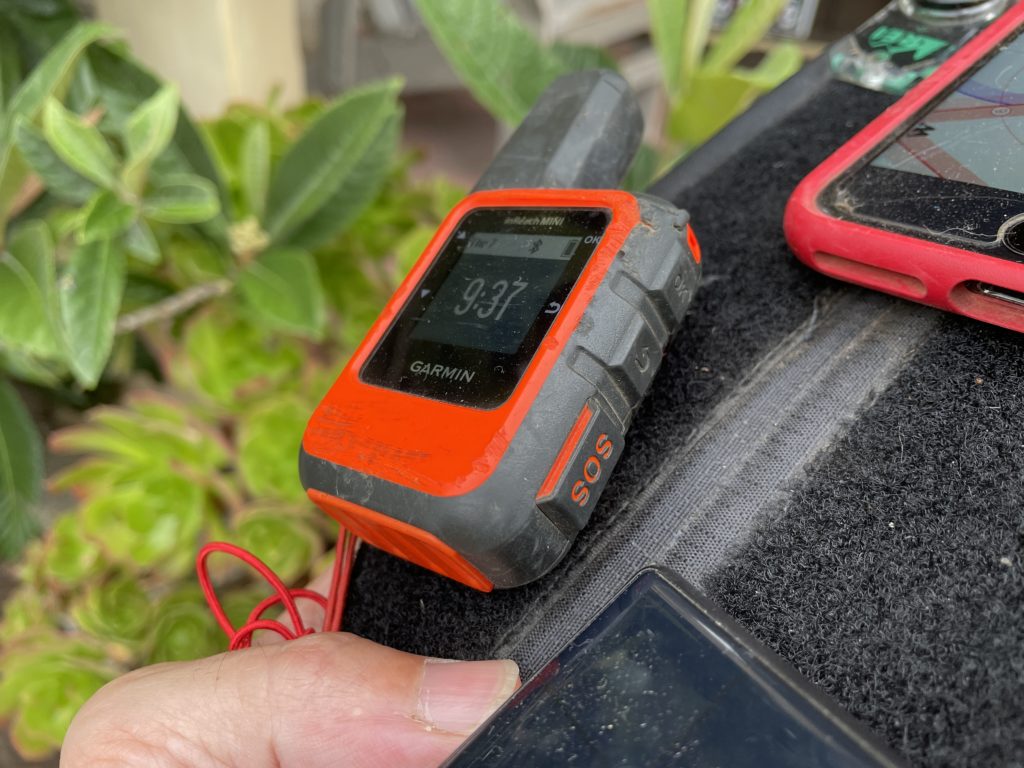
I suggest starting with something simple and cheap. I've deployed a bunch of the Dragino LHT-65 temperature and humidity monitors. I use them to act as a double-check on monitoring whether or not a hotspot is up. They're usually under $50 with shipping and don't use much data. Do NOT throw away the box with the DEV EUI sticker on it. You'll want that info. We'll see a quick tip to see a long list of sensors in the next step, Provisioning.
Step 2: Provisioning the Sensor
You'll need to set up a Helium Console account. Helium has an excellent set of instructions on their site for how to do that, head over there and follow the steps to get yours going. Helium has also done a great job of walking you through adding a specific device.
Since you already bought the LHT-65, we might as well follow the steps for that one, here. Yes, typing in the DEV EUI, APP EUI, and APP KEY is a PITA. The only shortcut is using the QR code on the device to give you the DEV EUI, which you can then copy/paste.
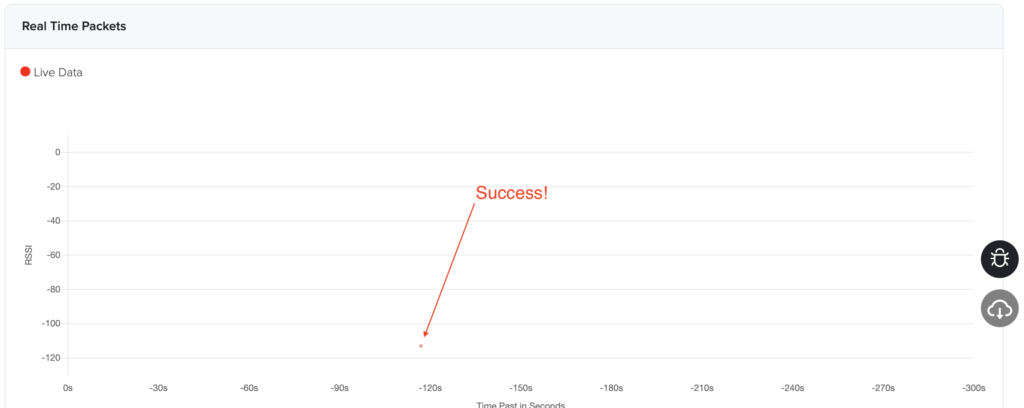
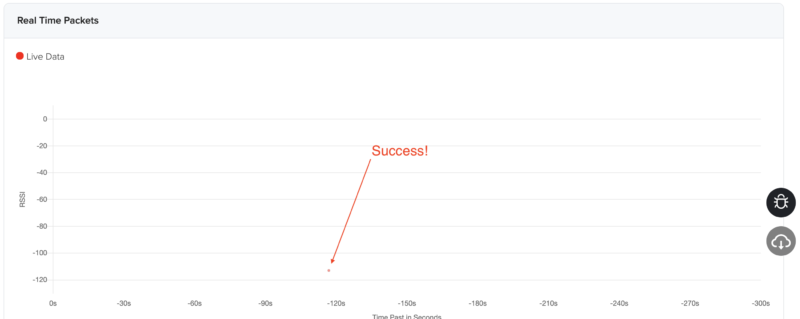
Ok, now that you've got a sensor, a Console account, and you've provisioned the sensor, you'll need to activate the sensor. In this case, that means you push the only button on the device for at least 3 seconds. Yeah, it's that easy. Here's the manual if you want to dive in deeper. It may take a few minutes for it to show up in Console. I recommend getting the LHT-65 outside and within direct Line of Sight to your nearest hotspot just to ensure this first process goes smoothly.
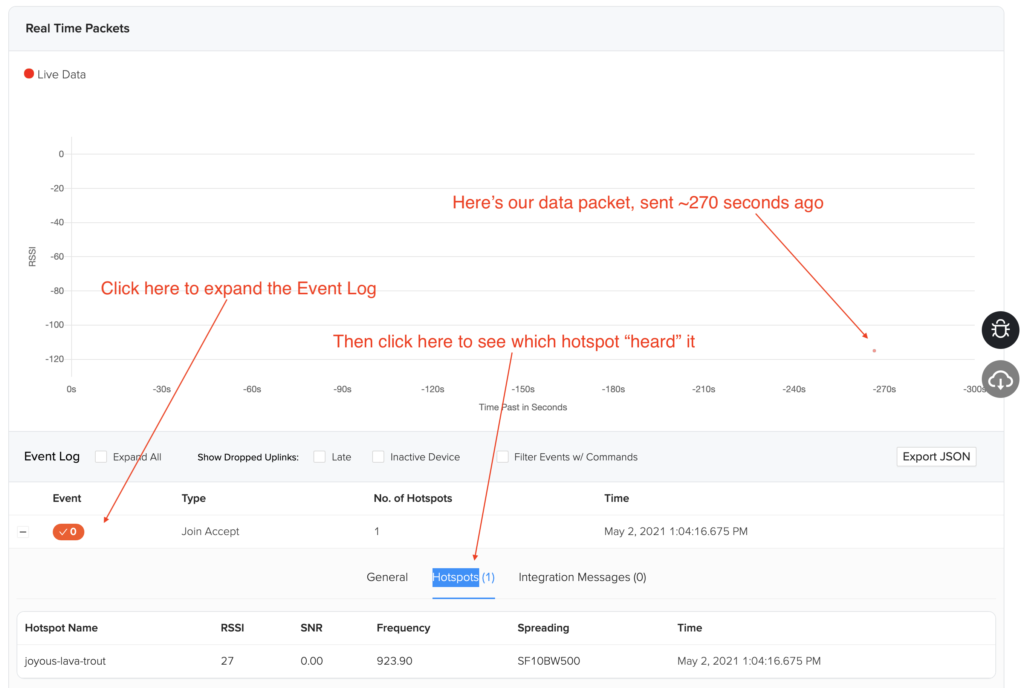
You can watch as nearby hotspots pick it up. Scroll down to the Event Log, open up an Event, then click on Hotspots. That's the hotspot that's "hearing" your device.
Now let's talk about integration with data visualization platforms.
Step 3: Connect & Visualize
As you've probably seen after following those steps, Helium Console is not built for the average person to just look at and visualize data.
For that, you'll need to connect your Console account to another platform. If you want the easiest version, just follow along with Helium's LHT65 instructions and use myDevices Cayenne. It's free and easy.
You can use other tools to visualize the data as well. From your Helium Console window, click on the Integrations menu on the left side and then look for all the pre-built integrations. Let's try Datacake.
Head over to the Datacake website and set up an account. Once you've got that, go back to Helium Console and look for Integrations on the left menu. Click on that, then choose Datacake. There's a full set of instructions on how to do this, so at the risk of sending you to the Helium site, you should go check those out.
Ok, the next step is confusing. With the LHT65 provisioned in console, you have to tell Datacake AND Console what you've done. In Datacake, look for the blue Add Device button, then choose LoRaWAN --> New Product from template-->then search for LHT and click on the Dragino LHT65 radio button. Like this:
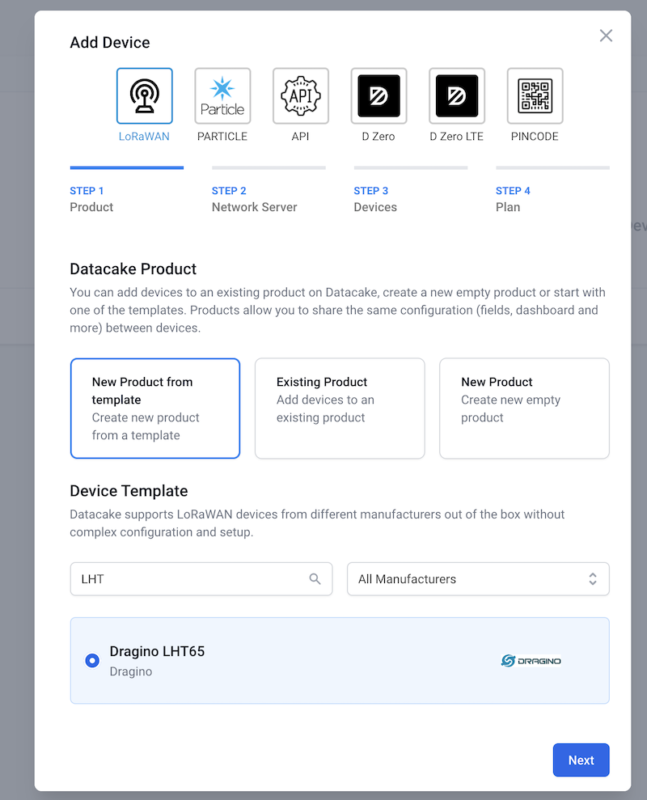
Next they'll ask you to choose the Network Server you want to connect. Look for Helium, then click next.
Now you'll need to put the DEV EUI in. Hot tip: Use copy/paste to pull it over from your Console account. It will look different than the DEV EUI you've typed in, don't worry. Just copy/paste. Trust me on this one.
For this first device, choose the Free plan and then connect away. That's it.
I've found that it usually takes a while to start actually SEEING the data. Be patient. It'll come.
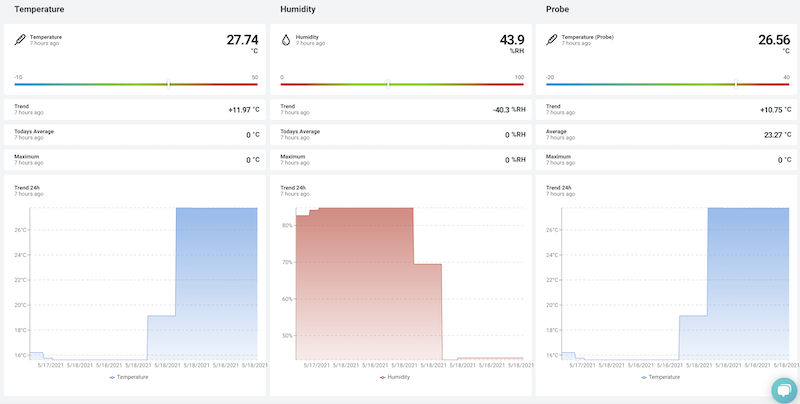
Now the fun part starts: Deploy the sensor! A sensor is just one more tool in your toolbox as you help build this new world of IoT interconnectivity.
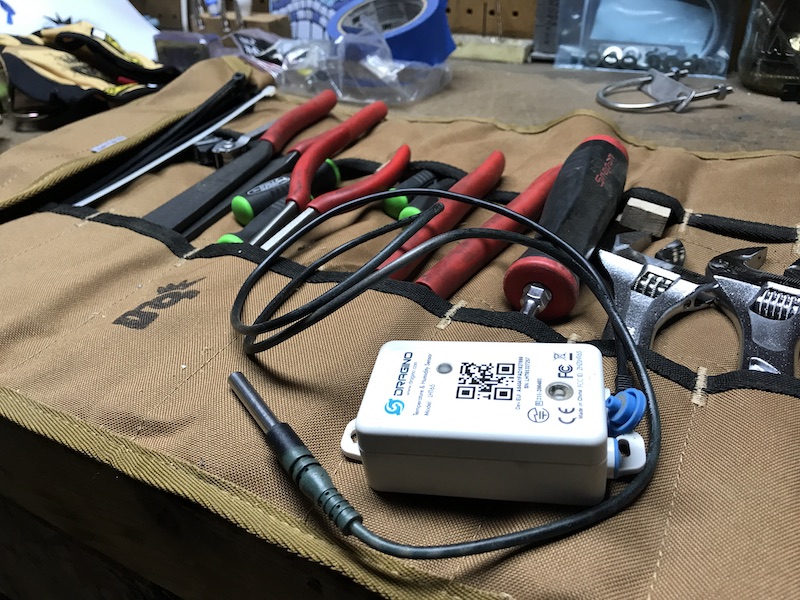
How will you use data to change your world?
Get 'em!
Cristian H - 5/20/2021
Hi Nik, thanks for always sharing great content with the Helium community, I really enjoyed this post. In theory any LoraWan sensor is compatible with Helium, as far as I understand. But, is there anything in particular that I should look for other than the 915 (US) frequency band? Thanks!
Nik - 5/20/2021
I don't think so. Still the Wild West a bit, but 915 is my north star for now. :)
Gary Boudrie - 5/24/2021
Hello Nick, I am just getting started and waiting on my FreedomFi hotspot for delivery. My question, related to to question above, do the current models being or getting ready to be shipped come in at 915 default, or is this something you need to state and pay extra for in said configuration and components? One more quick question, I have a second hotspot on order also from Helium and FreedomFi, should I cancel the second hotspot and just put my money to better use in the system on other components? Thank you, Gary
Nik - 5/24/2021
Hi Gary, not sure about the FreedomFi, none of those have shipped yet and don't look like they will for a while. Should be pretty straightforward re. 915. As far as a 2nd FreedomFi hotspot, I've seen those slots on the waiting list are selling for a boatload on eBay. Tough call.
Ian c - 6/2/2021
Hi Nick, I have enjoyed your projects with the helium network. I live in the north bay area, and I have access to a mountain top. I would like to pick your brain on your mountain project deployment with the helium network, I'm currently following your setup as far as I can tell from your videos.
Hi Nik; thank you for the great content. Im awating 2 of the bobcat miners that i have ordered and I have been thinking about how it is not enough for me to just put up the miners, but that the real longevity and acceptance will be centered on Using the network/finding ways to show potential users how they can use it as well! the temp/humidity sensor is something that I will buy as a use case scenario in order to show people the potential. I live in a small town, and most of my "neighbors" would be better served if I could show them a way to use it. We have a lot of people who are constantly "losing" their pets. I have been thinking that if i could find a device that they could attach to their pets collars, that would help them find their kitties and doggies, then I would be better able to promote the network as well as find volunteers to host my miners. Do you know of an application that is on the market that would meet this requirement? thanks for your help and for sharing your knowledge!!! chris.
Nik - 6/9/2021
Hi Chris, There's nothing super small and simple *yet*, but it's coming. Def. keep an eye out for new sensors. I'll write more about the ones I'm working on bringing online once I've got 'em up and running. You're def on the right track though, keep learning & exploring!
Greg - 7/12/2021
Another brilliant article. Definetely going to purchase a couple of the LHT65 units. Do you have any experience with the LSN50v2-S31 — LoRaWAN Temperature & Humidity Sensor? While larger, its only £15 more expensive but seems like it could alert you if your hotspot was in danger as it claims to have instant mode. Thanks again for directing me here!
Nik - 7/12/2021
I haven't seen those, but test 'em out and let me know what you learn. Neat!
Mo - 8/2/2021
Nik, Thanks for the great content. Is there any returns/rewards/economics for deploying sensors within the helium network yet?
Nik - 8/3/2021
Well, there's a cost in data credits to deploy sensors, but you can charge for access to that data, or to make sense of that data.
Marco Martins - 9/5/2021
Don’t you have to pay for the “traffic”?
Nik - 9/5/2021
Yes, you have to pay for the data on any sensors you "provision". If your hotspot is processing that data, it's basically a net zero cost. If someone else's is, you'll pay. If you turn around and charge a margin to the customers you're providing a service for, that's how you'll turn a profit.
Marco Martins - 9/5/2021
Does that mean that if I have hotspots running I can use my earned HNTs to pay that traffic directly from my earnings or I do still have to buy credits? How much does a device like this reporting every 10 minutes would “cost”? Thank you
Nik - 9/5/2021
Sure. You'd have to sign up for a Helium Console account and buy DC with HNT. I've had one running May 2nd to Sept 5th which has used 8,532 DC.
Marco Martins - 9/12/2021
That’s basically free ?
Nik - 9/12/2021
depends on what you call "free." :) It's definitely cheap, and especially if you're earning HNT off a hotspot, easily affordable to run lots of data.
Ben Swim - 11/25/2021
Anyone know what network PurpleAir uses? There’s a lot of those here in Ca. I’d be willing to put out the $ for it if I knew it would use my hotspot. Do you know of any other sensors that are already in high deployment that use our hotspots?
keith - 12/4/2021
is there a way i can see what sensors are in my area? is that on the console or another app? i. still waiting for my bobcat, but would like to see what sensors are in the area or what data would be flowing into my hotspot….. thanks Nik
Nik - 12/4/2021
Not sensors as far as I know, but you can see data flow in an area here.
Road - 12/5/2021
Ben, I have a couple of PA sensors, some for work, and they work pretty good compared to professional dust monitors. They are using local wifi of the customer. They're not cheap either, almost $300 a piece. When I use them remotely, I have to use a battery/inverter, and then use my cell as a hotspot. It would be cool if they made something that utilized the Helium Network.
James - 12/7/2021
Under integration and status in Helium console while running the temp sensor should it say no-status? I did set it up and added to data cake and it is being found by a hotspot
Nik - 12/7/2021
Hi James, I'd check over in #sensor-dev in the Helium Discord, although if you're getting data you're probably fine.
kyle p - 12/9/2021
hi nik Is there anyway to get your dc to the helium app?
GEORGIOS STYLIANOU - 1/11/2022
hi there, i have already installed LHT-65 and placed on the exact same outdoor box that is used for my bobcat. after 30 transmitted packets my miners has not heared any of them being 2 cm away from the sensor while at the same time 9 of them are heared by a hotspot many km away. is there any distance restriction ?
Nik - 1/11/2022
Hi Georgios, you may have the sensor in a "dead spot" not covered by your Hotspot's antenna. Try moving it away from the Bobcat box a bit (and shielding it from other directions.)
Bruno - 2/2/2022
Hey Nic, Do you know if there is a lag in the sensor data propagating through the network? I’m looking into using Dragino door Lora sensors for a home security setup, and transmission time would be important for that. Thanks Bruno
Andy - 4/29/2022
So, from what I've been reading, you wont earn enough HNT to even offset the cost of these sensors. Basically, the only reason to add sensors is to help the Helium network grow?
Nik - 4/29/2022
That's not how it works. Sensors will cost you money (in data credits) to use the Network. The reason to add sensors is because you have something that is profitable to measure.
Mr. Smith - 5/7/2022
Just thought you'd like to know that there are already some dead links on this (so, how do you use the helium network) page already: "Dragino LHT-65 temperature and humidity monitors" isn't truly dead, but it produces: Search results for 'LHT65' Your search returns no results. "follow the steps for that one, here" is dead and "Helium’s LHT65 instructions" is also dead.
Nik - 5/8/2022
Thanks Mr. Smith, will get those updated!
Erin - 5/9/2022
Nik, could you go into a little bit more detail. On how it sensor would earn income if I deployed just one or two in my own yard or do I need to spread them out and multiples across my city. To earn a second passive income. Suggestions of sensor's like proximity sensors for vehicles needing reporting back to homebase. Or just temperature moisture dust. Also It sounds like using the network is going to cost a variable amount depending upon the data being collected from the sensor and cost to sent it. Also now I need to market the information to earn something by selling the data to someone. This all-seams extremely vague on how to do that now. Do you have any insight to those questions.
Nik - 5/9/2022
Hi Erin, It all is super vague for now; this is the next step of Helium and no one has it dialed yet.
Paul - 5/25/2022
I'm interested in connecting some items like a Sonde receiver or an AIS receiver. Currently have a LORA 433MHz receiver , using "custom" firmware, collecting data on Sondes to at least 120Km away. The antenna was tuned on a VNA , it is about 2"/5cm stubby antenna. However my interest is installing another receiver 150Km away to detect Sondes coming from another launch station. They have a low data rate and are only transmit for 2 hours twice a day. Any ideas on a practical LORA interface to Helium. I haven't set up a Helium hotspot of my own ,yet.
Nik - 5/25/2022
Check out the work Starwatcher aka Matthew Patrick over at NovaLabs (formerly Helium Inc.) More on him here.
Marlan - 8/3/2022
Hello Nik (and his followers as well), Have you ever heard of a situation where no matter what you do you can't get a sensor to provision on the network until you power-cycle (not a SW reboot) your basestation? I'm a lone wolf out in the country with a Bobcat 300. The sensor is LDS02 Dragino door sensor.
Nik - 8/3/2022
Hi Marlan, I haven't seen that, but you might check in on the Helium Discord #sensor-dev channel, as they may have some better answers for you.
Lior Kvatinsky - 12/9/2022
Hey Nick! Great work in Europe. Me and my business partner followed you for awhile and learned a lot from your content. We heard your advice for finding ways to use the Helium network. We are building a company which provides IOT sensors to small businesses (currently restaurants are our main target). Our first client asked for 10 sensors and is very happy with our service. Unfortunately, both of us doesn't have a lot of technical knowledge, and everything took awhile to figure out.. But now we face a new challenge: Helium Console let us operate only 10 devices and one organization ? We try to go over our options for increasing the limit but it's very technical and complicated (running our own server). Do you have any idea what should our best course of action should be?
Nik - 12/10/2022
Hi Lior, Three options: 1) Short term you can reach out to Helium Foundation and ask for access to a Console with more devices. 2) Reach out to Paul over at disk91.com and ask about pricing for running this for you; that's his expertise. 3) Dive into Chirpstack and be ready when Helium makes the switch. That'll be a longer term play. Best bet if you're not technical is probably Paul. Good luck with it, and if there's anything I can do to help, please let me know!
Lior Kvatinsky - 12/12/2022
Thank you my friend I appreciate your response! - I'm trying for weeks to reach the Helium Foundation and no response/: is there a specific person from the Foundation you know I can contact? - I assume that there's some I'm not aware of: What is the switch you mentioned? Does the console gonna merge or discontinue?
[…] network has evolved considerably with specialized units like the Helium Mobile Hotspot, which bridges traditional cellular connectivity with blockchain rewards. Technical […]