3 posts tagged with "Helium In The Wild"

View All Tags

After Action Report - Helium In The Wild

· 12 min read
Nik
Site Owner

From Nov 4th through 17th of 2022, Gristle King Inc conducted the Helium In The Wild tour on behalf of the Helium Foundation.  This idea was conceived, developed, and supported by Nik Hawks, Joey Hiller and Scott Sigel to help get boots on the ground off US soil and demonstrate the Helium Foundation’s commitment to building the IoT network.  

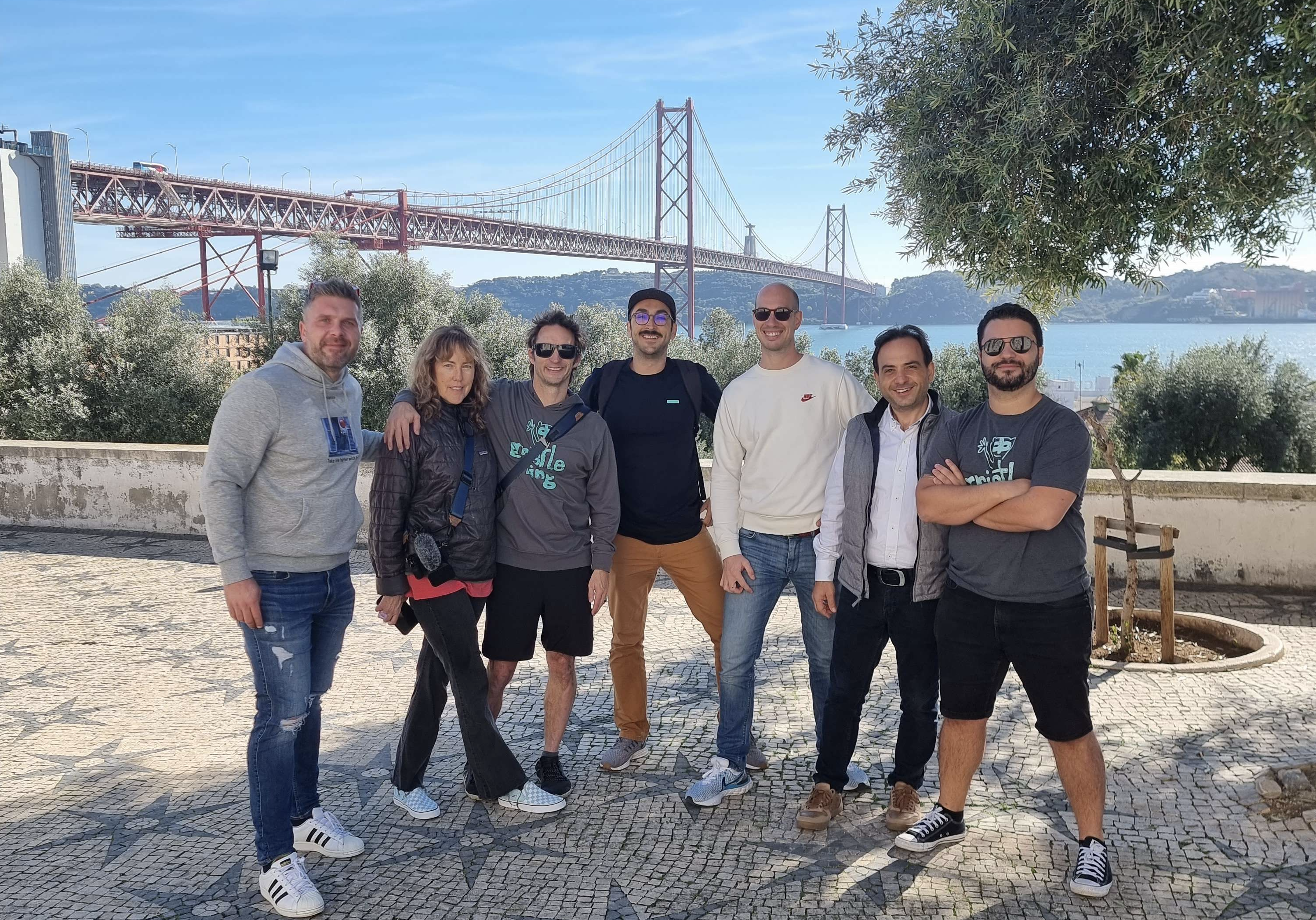
The tour started in Lisbon with Solana Breakpoint, included coverage of the Hackathon Train event, moved to London where we held a larger event, then on to Paris where we held a small meetup.  We finished in Barcelona where we attended the Smart Cities Expo and organized another meetup.

During that time we met Helium enthusiasts, took the pulse of the community, shared as much content as we could through formal presentations and informal conversations, and gathered video to be developed into a 5 part series of short videos to be released on the GK YouTube documenting the tour.

SEGMENTS (5)

Lisbon - Solana Breakpoint

In Solana we attempted to meet devs building on the Helium Network but, frankly, failed.  I’m not saying they weren’t there, but in moving through the crowds and talking to many folks at the booths, I met very few people who had done anything more than “heard of” Helium. There were major presentations by Amir Haleem (CEO of NOVA), Abhay Kumar (CEO of Helium Foundation), Joey Hiller (Technical Director at Helium) as well as others, and all were reasonably well attended. Still, the general public I met just walking through the crowds wasn't, in general, familiar with Helium.

https://youtu.be/JG3KZm6IlhY

Lisbon - Hackathon train

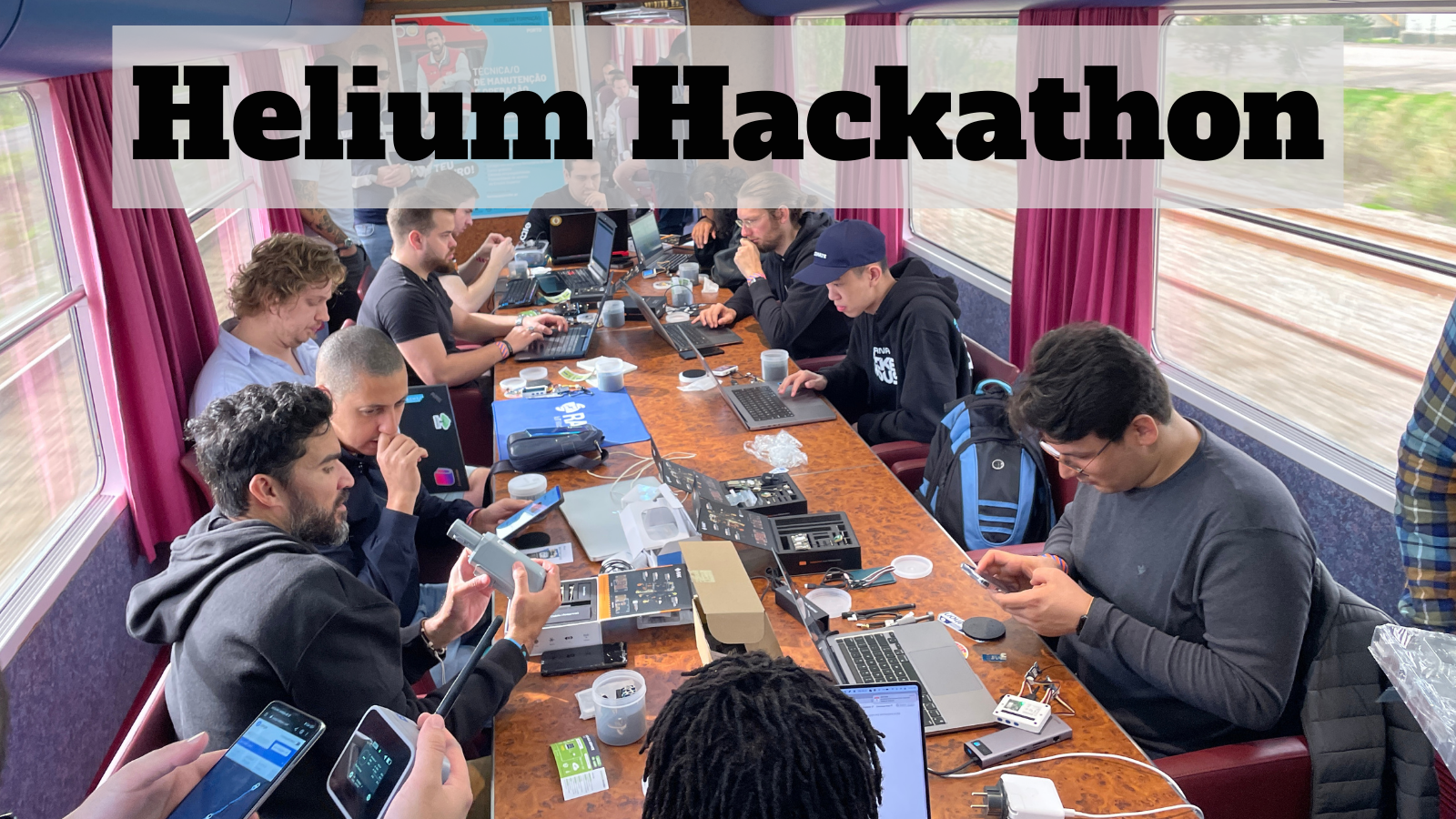
On the Hackathon train we obviously had a different crowd.  Two things stood out:  First, just getting Helium to work is still a struggle, even for geeks.  While everyone seemed to eventually sort out getting their sensor onto the network and passing data, the event highlighted that Helium as a useable network is still in its infancy.

Second, some people have been in the LoRaWAN field for a long time.  The expertise to build on this network is there, though concentrated in just a few experts.  These people should be cultivated and supported as public educational resources.  More on that later.

https://youtu.be/DaeRL\_SKTJg

London - Here Be Dragons & Building an IoT Business

In London we had our largest gathering. 35-ish people showed up at a great venue and participated in two separate events.  

First, a mapping game in the morning called Here Be Dragons.  Participants were given mappers provided by RAK Wireless or Trackpac and then instructed to map locations throughout London selected by Dave Akers (Helium Analytics).  Each location was assigned points, and the team who collected the most points won two Hotspots provided by Linxdot.

Second, a series of presentations and panels on building a IoT business.  These ranged from Neil talking about Trackpac, Rob talking about the challenges of building a backend, Dave Akers walking through using Analytics to guide business decisions, a panel of Adrian (Waveform for Helium Foundation), Adrian (Linxdot), and Skye (RAK) discussing the next 6 months to a year of development in their respective systems, and finishing up with a presentation from a locally successful IoT business owner (Bill Clee at Novacene) talking about how to save the world and build a business with LoRaWAN.

This meetup was generally well received, and feedback included thanks for making industry connects for participants as well as excitement for people who had their first exposure to Helium here.

https://youtu.be/afky2LVl6nY

Paris - Meetup

We ran a small meetup with university students on a financial track who were interested in DeFi/CeFi and the intersection with Helium as well as YouTuber SMOKLM.  The students knew very little about Helium, but were curious about it and very interested to learn how it worked and how including a blockchain aspect into the project made it more useful. I had planned a trip down to visit with Paul (disk91), but the logistics turned out to be too much to be worth the effort. It basically added 2 days of traveling for about 4 useable hours with Paul.

https://youtu.be/\_leABVyAN8k

Barcelona - Meetup

Marc Pous from Balena has a local IoT meetup group who came out.  Heavy on telecom engineers, we also had folks from Ibiza very interested in building a Helium based business.

Barcelona - Smart Cities Expo

We attended the Smart Cities Expo and talked with many businesses about Helium.  Sophi Kravitz and Alex Coffman from Helium Foundation were also there.  Almost all businesses I talked to were familiar with LoRaWAN.  Very few had heard of Helium.  

A good example of this was business owner Ed Robinson at ParkHelp, a San Francisco based parking management company.  They’re using LoRa for their sensors but are convinced that LoRaWAN isn’t a good solution because good coverage for parking lot sensors (with a car or truck over them) doesn’t exist.

https://youtu.be/ggQJWe5zcdM

COMMUNITY QUESTIONS (2)

These were questions I heard over and over, and are worth exploring as they give insight into current opinion, understanding, and perspective.

Is Helium dead?  

This appears to be at the intersection of 5 beliefs.  I strongly caution against arguing whether or not these are actually true; these are just perceptions from the general public:

  1. The public perception that Helium/Nova is abandoning IoT in favor of 5G.

  2. The Solana/FTX meltdown and connection with MultiCoin and Helium investors

  3. The network isn't yet reliable.  Blockchain halts, data credit issues.

  4. PoC & data credits "temporarily" not earning enough.  While those of us who understand it know that PoC & DC will never again pay our mortgage (or anything close), there's still a hope that one day we'll rewind the earning clock to, say, January of 2021.  If Hotspots don't earn money, most people don't see how the network can survive.  They don't care about building an IoT business; they just want free money.  A common question they ask is, “If PoC and Data Credits don’t make money, why will people leave their miners plugged in?”

  5. HF/N isn’t doing enough to fix gaming, and most HNT on the network is going to gamers.

How do I make money on Helium?

Answering this got the most positive response, though for many it’s not what they want to do.  Fairly obviously, a large percentage of the Helium Network was built by people who wanted to plug, play, and earn.  They don’t want to build a business.

Nurturing those who do want to build a business and/or support the community is critical to long term success.

ACTION ITEMS (3)

Manage Information Flow

HF and Nova are not yet doing a good enough job of keeping the community informed on what is happening in the space.  This needs to be a concerted, long term effort that will frankly seem to smart engineers like “dumbed down repetitive overkill”.  It’s not.  Not everyone is searching hard for all the information available.  Most people look at what shows up in their feeds and don’t go beyond that.  Providing both a consistent data flow as well as a coherent and easily followable story line is important for the long term health of the community.

This should come from insiders and outside influencers on all channels; Discord, Twitter, YouTube, email, Facebook, etc.

Message to Specific Audiences

People fairly neatly matched up into four groups.  Addressing each group specifically will help either minimize damage control or maximize opportunities.

Businesses - Support & Promote 

Run by tech-savvy people who see the opportunity in a global permissionless LoRaWAN network, these were 1-10 person operations deploying anywhere from 100 to 1,200 sensors.  They include Heliotics based out of Slovakia, CM7 Group based out of Lebanon, Trackpac, based out of the UK, and a WISP with coverage throughout Ibiza.

Early Adopters - Invite to help

People who bought miners early on and roughly understand that profitability of PoC/DC will never be what it was.  They are curious about IoT business and love meeting up. Generally not motivated to start their own business in Helium, but open to learning about other projects that will deliver "passive income". For this, I'd recommend using the HF/NOVA marketing channels to make sure anyone who has a Hotspot knows about DIMO, Hivemapper, React Network, and possibly GEODNET. All of those are TIPIN/blockchain + meatspace/PoPW projects that are or will probably use the Helium LoRaWAN.

Recent Adopters - Manage information flow.

People who bought miners recently.  They are generally operating on the belief that PoC/DC will pay off their miners within a few months to a year and are disheartened to hear that they’ve missed the “passive income” opportunity.

Skeptics - Provide clear onboard path and “Helium 101” resources.

These are people who are curious but skeptical about Helium and haven’t yet bought a miner. This is a large and untapped market, and a "Helium 101" effort could help bring in many more Hotspot owners and sensor users into the Helium ecosystem.

Build Local - The problem

Supporting local points of contact to build their community isn’t being done well enough yet.  The early Discord channels for cities was a good start, but eventually was outgrown.  

Building a strategy to target local/regional audiences and help them connect at physical events is important.  Email lists are probably the easiest way to do this.  

I asked Bobcat, Nebra, Linxdot, Hotspotty, Parley Labs, and the Helium Foundation to send to their email lists regarding the London event and we still only had 35-ish people show up.  I don’t think anyone yet has figured out how to identify/activate/manage a strong local community, though there is definite hunger for it.

In London we had organizational help from the Trackpac team (Neil, Rob, and George) Dave Akers, Adrian (Waveform), Liam (Fish), and AP, as well as support from Hotspotty for the Here Be Dragons mapping event.  This was a good start, but definitely still short of the mark. There are 6,000 asserted Hotspots in London, of which 2,700 have been active lately (data from Dave at Helium Analytics). Those 2700 Hotspots belong to 2183 wallets. 35 showing up out of 2,100 wallets means there's room for improvement. Lots of room.

In Paris we had another YouTube, SMOKLM, help identify a place to meet, but due to date restrictions and a lack of market penetration/language ksills on my side, only had 4 people show up.  

In Lisbon we managed to rally a few more people, including 2 of the most successful businesses building on Helium, but again, coordination, lack of resources, and lack of a local organizer made the meetup small.

In Barcelona we were helped by Marc Pous from Balena.  He’s been running local IoT meetups there for 10 years but said that lately interest has been way down.  We had perhaps 10 people attend that.

Build Local - Proposed Solution

A repeatable package for locally based Helium Ambassadors to organize and support ongoing network health should be built and implemented.  

An example of this package could include:

-Identify potential local Helium ambassadors, ideally through inbound requests.

-Develop a structure for how to build and activate a local network (enthusiasts, schools, businesses)

-Demonstrate and guide ambassadors on how to structure a monthly meetup (updates, biz opps, Mapping or other games, networking)

-Teach ambassadors as part of the onboarding process how and when to reach out to HF for assistance.

-Instruct ambassadors on how to find and activate local experts who understand LoRaWAN AND can teach others how to use it.

By putting all this together and funding a robust Helium Ambassador program, the Helium Foundation can help decentralize efforts to teach the world about Helium and support those who are willing to learn, use, and build with it.

What's Next?

The Helium In The Wild tour was a success in terms of goals set and achieved. Much remains to be done. Explaining Helium to a larger audience, reassuring the current community regarding the longevity and stability of the ecosystem, and constantly amplifying the efforts of those who are building on the network are all long term works, not one time trips.

Finally, an enormous thanks to my wife & business partner, Lee Selman, who ran cameras, recorders, microphones, took care of hotels, tickets, trains, and baggage, and managed to shoot some of the best footage on the trip. Without her, none of this would have been possible.
Reports from the Field - Helium In The Wild, Hackathon Train

· 5 min read
Nik
Site Owner

"The job right now isn't to make IoT easy. It's to make it work".

As I look across the Helium ecosystem in early December of 2022, I'm starting to see the emergence of working businesses built on Helium. Baxus may be the most recent example; a company tracking all the conditions of items as they move around, though mostly focused on their storage conditions. They're starting with whiskey casks and wine barrels and what they're demonstrating is what we saw on the Hackathon train: Helium still requires technical expertise, but it works.

Whether you're figuring out how to use a people counter, a temperature and humidity sensor, or have an idea that the world hasn't yet explored, the time to build is now.

In contrast, if you're looking for an easy "Apple/Mac" experience, Helium isn't yet the place for you across the board. That's not to say it doesn't exist, and the leading example is Trackpac, built by longtime Helium community member Neil Skoglund.

After spending 18 days traveling around Europe and talking to people across the Helium space, one of the key takeaways is that this is what I think of as "the blind period" in the growth of an industry. "Blind" because it's hard to know what's going on. We just came through a massive burst bubble of unhealthy growth. HNT went from less than $2 up to $55, then back down to $2. The fallout from that is felt across the Helium community as those who rushed into this for "on the couch profit" get shaken out, sometimes very vocally.

Many people I met had the question: Is Helium dead? I can see why they'd ask that; especially if they came into Helium, like many, from the access point of mining crypto.

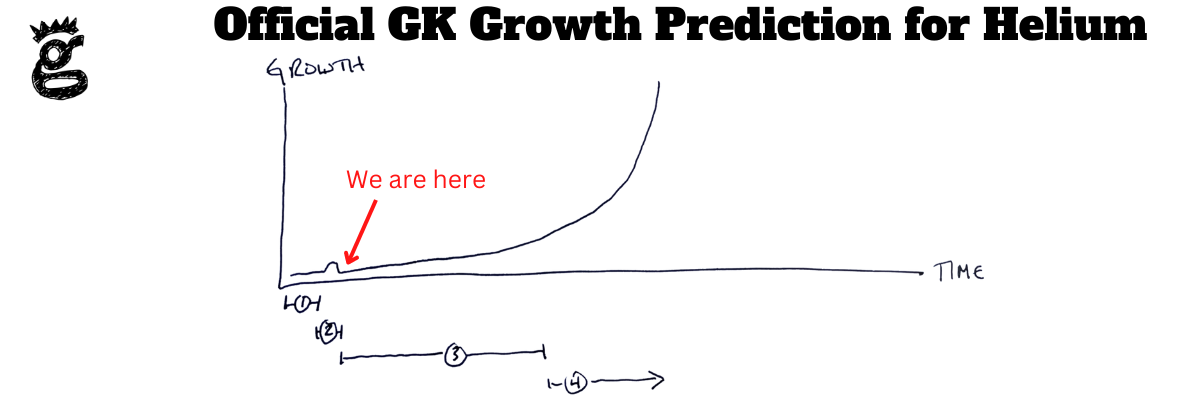
In the graph above (not to scale), at stage 1 we had Helium Inc casting about in the wilderness for years, trying to figure out what it would do. Helium was always about IoT, so that was their North Star. During that time (2013-2019) nobody really knew about them. They they stumbled on the idea of hooking IoT to a blockchain, birthing an industry with exquisite (and probably completely accidental timing. It still took a year to fire; it wasn't until sometime around late 2020 that things started to go parabolic.

That brings us to stage 2, which transformed the company and the community from a few engineers with a geeky idea to several hundred thousand mostly cryptocurrency enthusiasts who were speculating during the great boom of '20-'21. For a while, you couldn't lose. Like all booms, that went up, a few lucky ones (no one I know, and as far as I can tell, no one at Helium Inc) got off at the top, and the rest of us rode the wrong side of the parabolic curve back down to where we are now.

That brings us to the beginning of stage 3. The beginning is the blind period. In the curve above, it's probably the period between the beginning of the stage up until where you see the number 3. Now keep in mind, this curve is just a prediction. And the time scale is funky. Seriously funky. I could be completely wrong about it.

However, what I saw on the Hackathon train, and in Lisbon before that, and London, Paris, and Barcelona after is a period of growth ahead that goes steadily upward, though not at any kind of "change your life" rate for a while. The whole time we're stage 3, the only noticeable improvement will be measured in months at a minimum. Hours, days, or even weeks aren't particularly useful.

Of course, stage 4 is when everyone will want to pile in again. I don't have any predictions worth sharing about when that will be.

In the meantime, the important takeaway from the Hackathon train experience in particular is that NOW is the time to be head down and building.

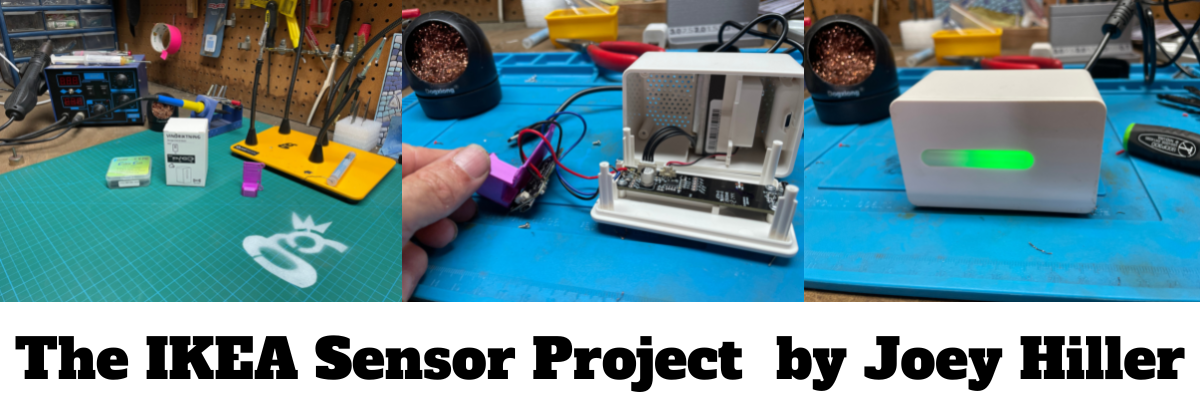
Find a place you can learn, whether that's a friend, a group of friends, or Helium's #sensor-dev channel on Discord. If you want a first project, start with Joey's IKEA sensor project. There's plenty of info online about it and the community in general is well versed in it.

Just by getting one sensor on board, from soup to nuts, my feeling is that you'll be vaulting yourself well past the "blind spot" on the graph above and be well on your way to capitalize on the growth when it comes.

Here's to your ongoing success in this incredible project, LFG!

Reports From The Field: Helium In The Wild - Lisbon

· 12 min read
Nik
Site Owner

On Nov 2nd, my bride Lee & I set off to 4 cities in Europe to conduct a Helium Foundation project called "Helium In The Wild" with three goals.

First, to see how Helium was being used in the wild. Obviously sensor usage isn't huge yet, and lots of b.s. has been thrown around the interwebz about what is and isn't happening with it. My gut is that we're totally and fine and about where I'd expect us to be for a very new and ambitious project, but...

I wanted to meet real people on the ground who are building with Helium and see for myself just how far along it actually is, who's using it, and how.

Second, to rally local communities together so they could learn, network and grow the Helium ecosystem locally. One of the amazing strengths of all these decentralized projects is that they're decentralized. Duh. It's also a weakness, as it can be hard to find focus points where you actually meet other people in real life who are interested in the same things you are.

Third, to show with "boots on the ground" that the Helium Foundation is strongly supporting IoT projects outside of the US. I know, I know, there's been a ton of news about 5G lately. For those of you A) outside the USA and B) into IoT, it has felt at times as if the Helium project has abandoned IoT. It hasn't, and part of this project was to demonstrate that.

Our first stop was Lisbon, where Solana Breakpoint was kicking off. We did the flight in two steps; San Diego to London, and London to Lisbon. On the London to Lisbon flight, I'll estimate about 60% of the passengers were there for Solana. That seemed exciting, as the reason I was starting in Lisbon was to see how much of the Solana ecosystem was building on, in, and around Helium.

As I asked around the airport gate waiting to board the flight to Lisbon (no, I don't have a problem meeting strangers), what I found was that, while most people had *heard* of Helium, very few knew what it was, what it did, or had any idea of the size of it.

That trend continued throughout my Solana Breakpoint experience. It reinforces (to me) that we're still super early in this whole thing, and while the move to Solana is a huge deal in the Helium community, it hasn't really spread as "hot news" throughout the Solana developer community yet.

Now, it's not the like the very first thing I did was go straight to Solana Breakpoint. I wanted to meet some Helium homies first, and Lisbon is the home base for Hotspotty OGs Daniel and Max. Daniel was the one who walked me through (on YouTube) building my very first Helium Hotspot, back when the DIY program was open. For the record, the DIY program is not open now, but it's on the roadmap for the future. I'd expect mid to late 2023 at a guess. Ok, back to Lisbon!

Lee & I cruised over to the coffee shop that Daniel used to co-own (before he switched full time to Hotspotty) to meet up with a few other Helium peeps.

Max was at the shop as well, and while we were there, the mappers that RAK Wireless donated as part of support for the tour showed up. Daniel immediately started working to get them set up.

As Daniel started to tear into the mappers, I got to visit with Miroslav Marko, owner of Heliotics, and Charbel Matta, owner of CM7. Both of them are working on building businesses on Helium, and both were in Lisbon to check out Solana Breakpoint and catch up with the Helium community. Meeting these two was a great indication of the current state of building out the IoT side of Helium.

Both are deeply technical, already have a related business, and see the value in a global, permissionless, decentralized network. It was heartening to talk with both of 'em, and along with Max (Hotspotty) and Joey Hiller (Helium Foundation), we spent most of the rest of the day together walking around, sharing a meal, and talking about Helium.

This first day was super encouraging; we were meeting people who were building on and excited about Helium! We spent the next four days checking out Solana Breakpoint, where we definitely didn't meet as many people who were so deeply involved in Helium. Still, we watched closely as both Nova and the Helium Foundation demonstrated a clear commitment to continue to grow Helium.

https://www.youtube.com/watch?v=xxfxJn\_uTF0

Amir spent about half the time talking about IoT, and the other half talking about the 5G plans as well as how the network is readying itself to take on more protocols. I've seen a fair amount of "Nova is abandoning IoT" FUD, but pretty clearly that's not the case.

There were other excellent presentations there that I'll go deeper into. Let's start with Abhay Kumar's. Abhay is the new CEO at the Helium Foundation , and he talked extensively about the move over to Solana.

https://www.youtube.com/watch?v=Auk06eIRanI

Abhay spent time explaining what Helium is, which is something we (the community) need to remember is an unfinished task. I'll skip forward quite a bit here to the lessons learned at the last stop on the tour, Barcelona, where I found that most people in the Smart Cities space have never heard of Helium.

Look, in growing the Helium IoT network to over 970k Hotspots in over 75,000 cities in the last three years, the Helium community has made a pretty good start towards achieving the long term goal, which is to "provide ubiquitous affordable connectivity to the Internet for all things and people." We (community members, including myself) tend to think of Helium as a pretty big deal, and something "everyone" knows about. They don't. Not even close. We have a ton of work to do when it comes to just letting people know we exist, let alone what Helium can do! Ok, back to Abhay's talk.

Abhay talked about the IoT side and also introduced the MOBILE network. He didn't go deep into either one. His talk wasn't about explaining Helium in depth, it was about making sure the Solana community understood, at a high level, what Helium is bringing as far as an opportunity for Solana developers and the ecosystem.

He introduced the idea of HIP 51, the Helium DAO. Now, for those of us in the world of Helium, HIP 51 is old news, but for the crowd, a lot of this was new.

Abhay also talked about HIP 70, which is the one that proposed a new architecture for core parts of the blockchain. Dig more into HIP 70 here, but the short version relevant here is that it allows Helium to move to a new L1, taking the burden of building a blockchain off the Helium community. It means we, whether "we" means Nova, or the Helium Foundation, or you, can do the thing we're the best at, which is deploy coverage and build businesses related to that coverage.

One of the first exciting things that happens with the move to Solana is the minting of almost a million NFTs, one for each Hotspot. The implications of this aren't yet understood, but what I think we'll see is an explosion in flexibility on ownership splits, enabling better incentives for healthier network growth, and some very interesting smart contract applications.

Until I re-watched Abhay's talk, I missed one of the key parts; Helium Foundation has acquired the Strata Protocol. Strata is a protocol to launch tokens on Solana, so this makes sense. This makes it reasonably likely for the Foundation to hit its goal of getting Helium on Solana mainnet by Q1 2023.

Noah Prince from Strata joined Abhay on stage to go through a demo of Hotspots earning MOBILE tokens and interacting with HNT. He touched on security aspects, including circuit breakers. As an example, if more than, say 20% of the MOBILE tokens leave the treasury in some configurable window, say 24 hours, there's an automatic shut down.

Noah also demo'd the Backpack wallet to show how you'd claim rewards. With about a million hotspots, if all rewards were released all the time, it would spam the chain with transactions. The way they've set it up is that a Hotspot NFT will be like a piñata; it'll hold all your rewards until you hit it, at which point it'll release 'em to you. Simple. He also showed how you can redeem MOBILE for HNT, which is a one-way operation; you can't buy MOBILE, you can only earn it or redeem it for HNT. With that HNT you can buy Data Credits and then use the Network.

What's left is the integration with Helium's cloud. That is a system of Oracles counting all the packets that are used by all the Hotspots and provide Proof of Coverage rewards and figure out the lifetime rewards for all entities. Challenges include taking all the current Hotspots and rewards and bringing them into the Solana system. Minting a million Hotspot NFTs at $.40/mint is an enormous cost which they may try and solve with NFT compression. With many technical problems still to be solved, the core functionality of how the DAOs and subDAOs work appears to be sorted out.

Next, Joey Hiller, Jose Marcelino, and Carrie Kellar presented on how some of the use cases that start to occur with Helium on Solana.

https://youtu.be/ckcPH7CBreI

Joey's demonstration referenced his IKEA air quality sensor build, internet connected chicken coops and supply chain tracking for small coffee shops; it's always fun to listen to his talks. Jose Marcelino from RAK Wireless joined Joey to go through a demo with Trackpac, which is BFGNeil's company that uses Browan Tabs and other trackers to provide a super easy experience with using Helium.

Now, one of the things we hear all the time from the FUDpatrol is how no one is using Helium, which is (fairly obviously to those of us using it) bullshit. Still, it was nice to see Jose put numbers to just one customer's use; 1,200,000 check ins from Trackpac trackers since early 2022, all on the Helium network.

Getting a Trackpac tracker to work is simple; download an app, scan a QR code, and you're tracking whatever it is you want. RAK Wireless & Trackpac worked together to track buses and shuttles for Solana participants to move between the 3 main venues during Solana Breakpoint. Proving that the Helium IoT network is super cheap to use, tracking 26 vehicles across the city for 3 days cost 46.8 cents in total. (26 trackers x 1.8 cents per tracker for the 3 days).

Carrie Kellar, the CTO and co-founder of Baxus, shared the stage and talked about how Baxus is creating infrastructure for tangible assets, starting with whiskey and wine. Baxus has created a pipeline for collectors to authenticate, store, and insure their wine and whiskey. They allow you to mint an NFT that acts as proof of ownership and authentication which users can trade or use as collateral for loans.

Baxus is using Helium to provide proof of presence as well as temperature and other sensor data to show the environment of a specific cask or barrel throughout its lifetime. This gives a collector the ability to audit, in real time, the location, state, and history of a specific unit. Casks are outfitted with temperature and humidity sensors, and will soon have trackers attached. Now, I'm not a wine or whiskey collector, but I do like nice things and, like many of us, I've got a Gollum-like obsession with seeing the state of something I own whenever I want to. Watching Carrie talk, I could see the power in layering the ability to get all this data cheaply on top of an NFT.

The upshot of the Baxus presentation is that we've got yet another industry being born on the back of Helium and unlocking the potential present in a different L1. Before Helium, there wasn't the cheap and ubiquitous coverage across rural areas and down in wine cellars that you need in order to track barrels of wine and casks of whiskey. Now there is. Yes, the world is changing, and if you're reading this, you're witnessing history. You can expect to see something like this happening for every type of ingredient and collectible thing that exists.

This was all super exciting to see. From the broad perspectives of Amir and Abhay down to the use cases that Jose, Joey, and Carrie demo'd, this was evidence of Nova and Helium Foundation's efforts at growing the Helium ecosystem and ensuring the transition to a new blockchain unlocks a ton of new value (not just a faster chain that works better.)

What's next in the Helium In The Wild series? Why, the Helium Train Hackathon, of course. My post on that will come out in the next few days. In the meantime, rest assured that the Helium ecosystem is alive and kicking, and though it may still be a baby, it has all the hallmarks of growing up to be a giant. Rock on!