4 posts tagged with "helium off grid"

View All Tags

Helium In The Wild - Start Your Engines!

· 8 min read
Nik
Site Owner

Ready to push hard into IoT outside of the US? Meet Helium In the Wild!

Starting in November with Solana Breakpoint in Lisbon, Portugal, I'll be heading out to see how Helium is being used in the wild. I'll be looking for and sharing lessons, inspirations, and interviews with real people who are getting up to their elbows in this network.

https://youtu.be/hKbBtm6sqDg

The Helium Foundation is sponsoring this series to showcase how people are using Helium around the world. Yeah yeah yeah, I know, I'll still do stuff covering the use of IoT in the US, but there's a whole world out there and I want to help YOU see it!

Driving demand is critical to the long term success of Helium, and I'm psyched to help you figure out how to do it yourself by showing you how it's already being done.

At each place I visit, we'll do something different to help you learn about Helium and connect with your local community. It may be learning how to use a sensor, an aspect of running a LoRaWAN business, or any other thing useful to you as a user, service provider, DIYer, or just an interested bystander. We'll also be running a mapping contest called Here Be Dragons at a few locations, more on that below.

The current schedule looks like this. For details on each location, head down to the individual sections.

Wherever possible I would LOVE to meet you at any one of these. If you'll be in any of those areas on or around those dates, please sign up so I can keep you abreast of when the community workshop and meet up will be. Everyone who signs up AND shows up to their location gets a Helium in The Wild t-shirt (while supplies last).

If you know anyone I should meet or should invite to present at any of these, connect us up, yo.

Stoked!

[formidable id="35"]

In the interest of making all this really easy for you to keep track of, here are a few more things to think about.

At each location we'll be running something a little different. Some will have the Here Be Dragons mapping contest, some will have presentations from experts, some will have a panel discussion so you can learn from a variety of people. All events will allow you to connect with locals who are into the same things you're into as well as allowing you to build and strengthen local network connections.

Here Be Dragons mapping contest is an event with RAK 10701 LoRaWAN mapping units. RAK is one of the sponsors of the Helium In The Wild tour, and we're psyched to see them supporting the community! During the contest you'll be competing to see who can map a variety of things, from most hotspots connected to specific hotspots to most miles traveled. Tiny prizes will be given to top performers, and at the end of the Helium In The Wild tour I'll mail all the mappers off to the various winners. The Hotspotty team along with Dave Akers at Helium Analytics has generously agreed to help support the back end of this so we can know who did what with a mapper. :)

LOCATIONS & EVENTS

LISBON Activities

On November 4th, at 11 AM, I'd love to meet you for coffee at Selva.

Pending hardware arrival (it got stuck in transit), on the 7th, in conjunction with Daniel & Max at Hotspotty and sponsored by RAK Wireless, we'll be running the first ever Here Be Dragons event. You can buy an NFT for the event (NOT required, just a fun way to support, all proceeds will go to supporting a future Helium x Solana Hackathon).

If you're coming, please register using the form above and show up. RAK Wireless has sponsored this event with 10 of their 10701 WisBlock Field Testers which Daniel has set up to integrate with Hotspotty for scoring.

After running Here Be Dragons I'll be exploring Solana Breakpoint and reporting back on how moving over to Solana will benefit Helium users in specific ways. If you're in Lisbon and have anything to do with IoT, Helium, and Solana, please reach out so we can connect!

I'll attend the Proof of Physical Work event and let you know more about the Hivemapper/Helium collab.

LONDON Activities

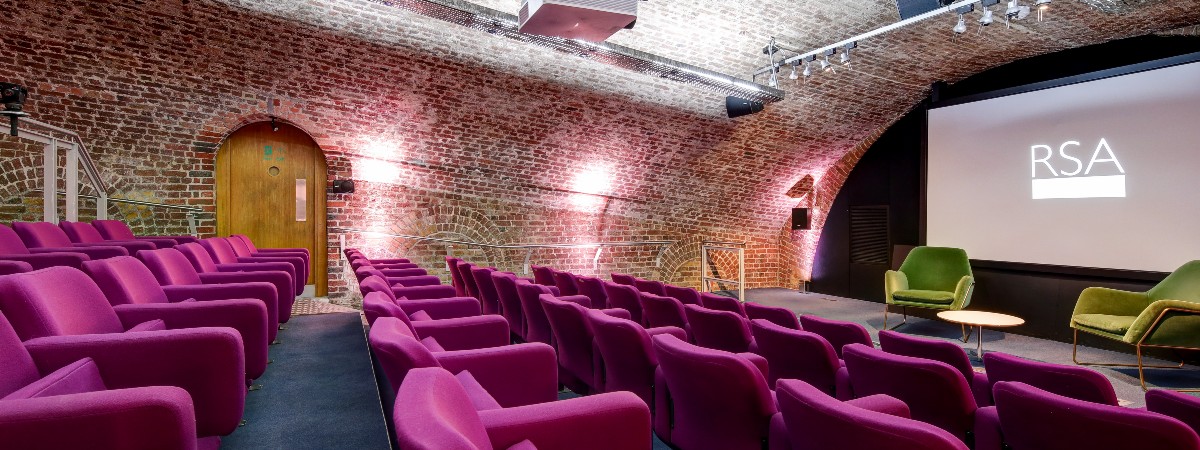
The London event is turning into the headline event of the tour. I've booked a pretty special place for us to meet, the Durham Street Auditorium at the RSA House in Central London.

We've also got an adjacent meeting space, the "Long Gallery" so you'll have a place to mingle and connect with others. We'll have food there as well, so while I'll ask ya not to come off a 1 week fast and clean out the refreshments, there'll be something to nibble on.

The event kicks off at 9:30 AM the morning of the 11th, meeting in the Long Gallery to start the the London Here Be Dragons mapping contest using units supplied by RAK. You can buy an NFT for the event (NOT required, just a fun way to support, all proceeds will go to supporting a future Helium x Solana Hackathon).

After that, starting at 1 pm local time we'll be holding an series of talks focusing on running an IoT business with Helium. We'll have reps from the community, Helium Foundation, manufacturers, and even from outside the Helium eco-system! The event runs 1-5 pm in central London.

Event timeline:

0930 - 1000 Here Be Dragons Registration (optional NFT for this is here)
1000 - 1300 Here Be Dragons mapping contest
1300 - 1315 What Hath Helium Done? - Nik Hawks/Gristle King
1315 - 1345 Building a Business With Helium, Neil Skoggers/Trackpac,
1345 - 1400 Using Analytics to Drive IoT Business Decisions, Dave Akers/HeliumAnalytics
1405 - 1435 Future of IoT Panel (Adrian Clint/Helium Foundation, Skye Blackledge/RAK Wireless, Adrian Li Mow Ching/Linxdot)
1440 - 1500 Building End to End Solutions, Rob Putt/Trackpac
1500 - 1600 How To Save The World With LoRaWAN, Bill Clee/Novacene
1600 - 1700 Mingle as needed. Wallflowers to depart. Extroverts shall sustain.

If you're coming to either (or both events), please register using the form above. RAK Wireless has sponsored this event with 10 of their 10701 WisBlock Field Testers which Daniel at Hotspotty has set up to integrate with Hotspotty for scoring.

PARIS Activities

Morning meetup at La Felicita, 10 AM, to connect with the local Helium crew (including local YouTuber SMOKLM).

We'll spend the rest of that day and the next connecting with locals in Paris (and frankly, recovering from a blaster of a trip up 'til this point) and prepare for the final stage, Barcelona! We did have a trip down to Paul (aka Disk91 planned), but it ate up too much time; we'd be on the train for 8+ hours plus a 2 hour flight, all in the course of 24 hours. Far better to spend that time boots-on-the-ground in Paris!

BARCELONA Activities

The theme in Barcelona revolves around exploring how governments, specifically cities, may use LoRaWAN and Helium. I'll be attending an expo called Smart Cities Barcelona to dive into how many municipalities are using the growing flood of data to build and manage better, smarter cities.

On the evening of November 16th we'll be meeting with the IoT Barcelona Meetup group at 6 pm. That group is run by Marc Pous, a Balena wizard and our local connect. We'll be at Itnig, which is a local statup hub; come join us if you're around!

Helium Deployed: The Network In Action

· 12 min read
Nik
Site Owner

Our pilot project is complete, and boy have we learned a ton from this one! While many are still focusing on earning HNT for Helium Hotspot deployments, the obvious move for those of us interested in longevity is actually USING the Network.

Over the course of a week, supported by Tommy and Ryan at Lonestar Tracking, Matthew at Digital Matter, Travis at Helium, and Jeremy C (@jerm on Discord), I deployed 2 off-grid Helium Hotspots high in the mountains of Utah (one at over 8,000' and one above 11,000') to track 30+ paragliders as they flew during the annual Red Rocks Fly In as well as raced during the inaugural X Red Rocks Hike & Fly race.

I've written about the prep for that here, as well as how paragliding got me into Helium. For now, let's follow along with what it looks like when you actually deploy Helium Hotspots for real world usage.

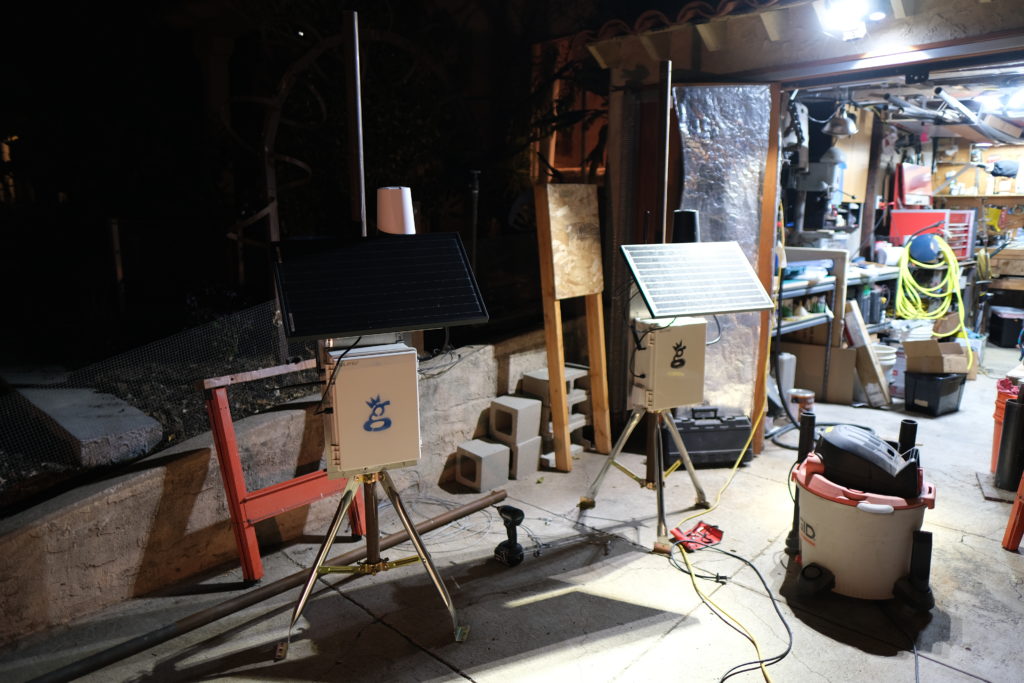
It started with the usual last minute scramble to get everything ready for a big project. The night before I was out in the shop cutting masts and prepping enclosures to make sure I had everything ready for a big week! During the past year, I've learned a bunch about getting these things out in the wild. The latest improvement I learned from a client (thanks Dave H!) was using these little tripods for a "plant it anywhere" setup that's easy to carry.

When you get where you're going, just fasten the tripods into the ground with long lag bolts and you're set!

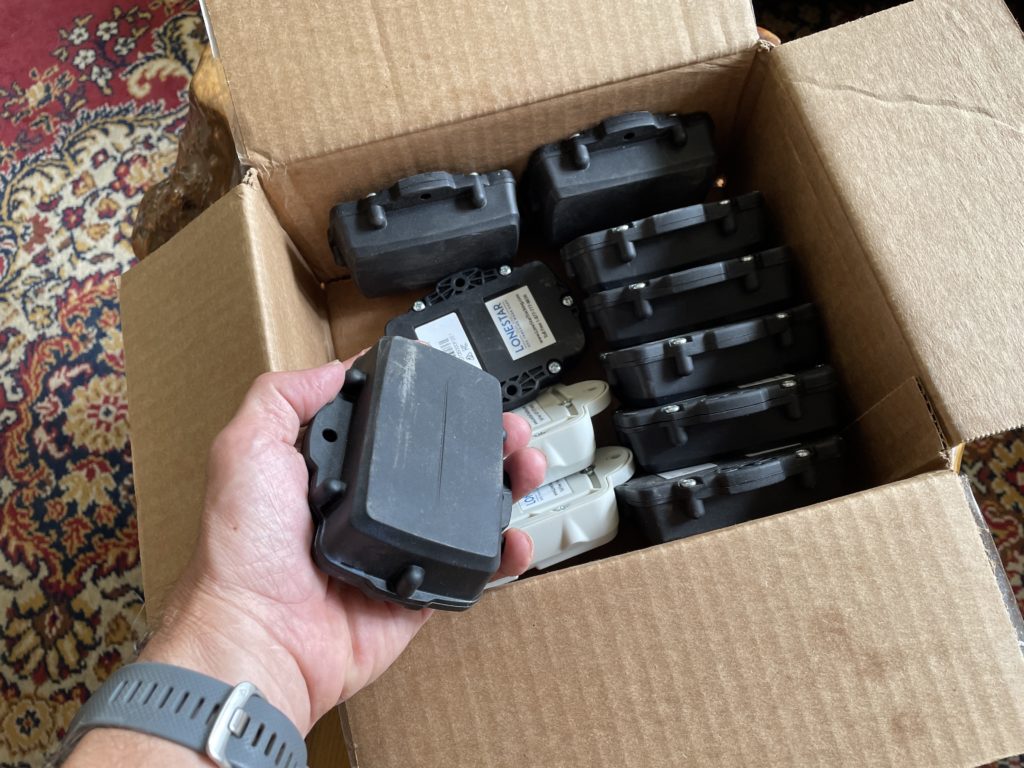
The trackers I used were Digital Matter Oyster trackers, about 160 grams and the size of a few phones stacked on top of each other. The advantages these trackers have is that there aren't any buttons to turn off or on, the battery life is measured from weeks to years, and they're pretty rugged. Originally designed to track vehicles, they were an excellent step in the direction of tracking far less predictable things. A paraglider has the entire sky within which to move.

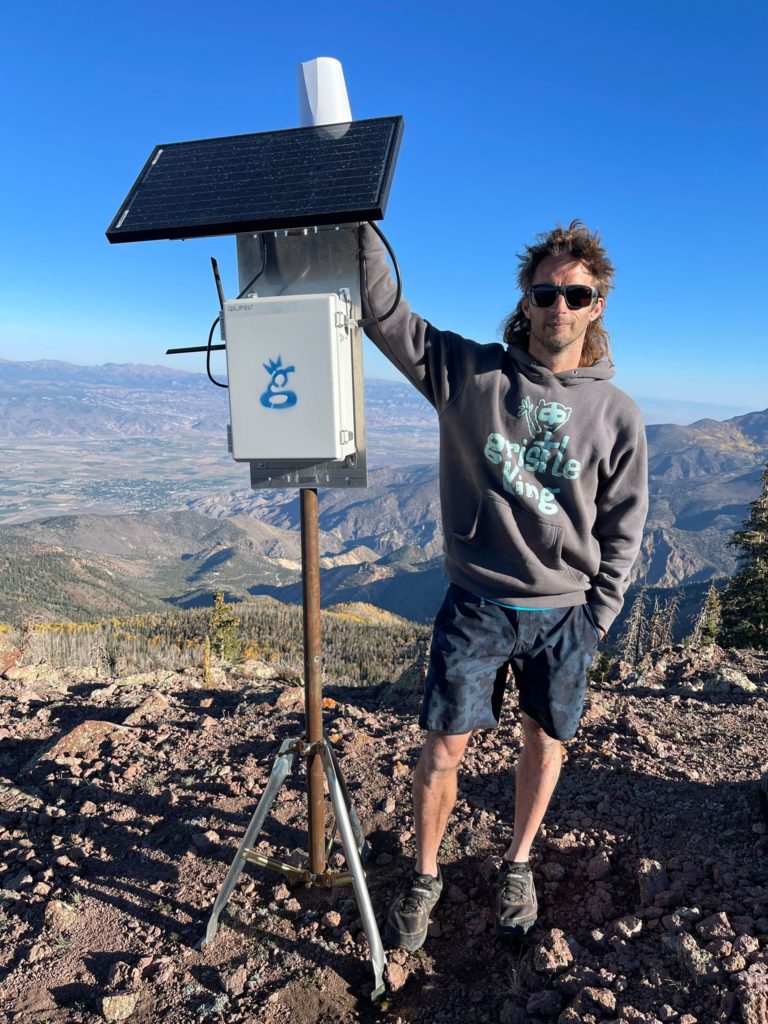
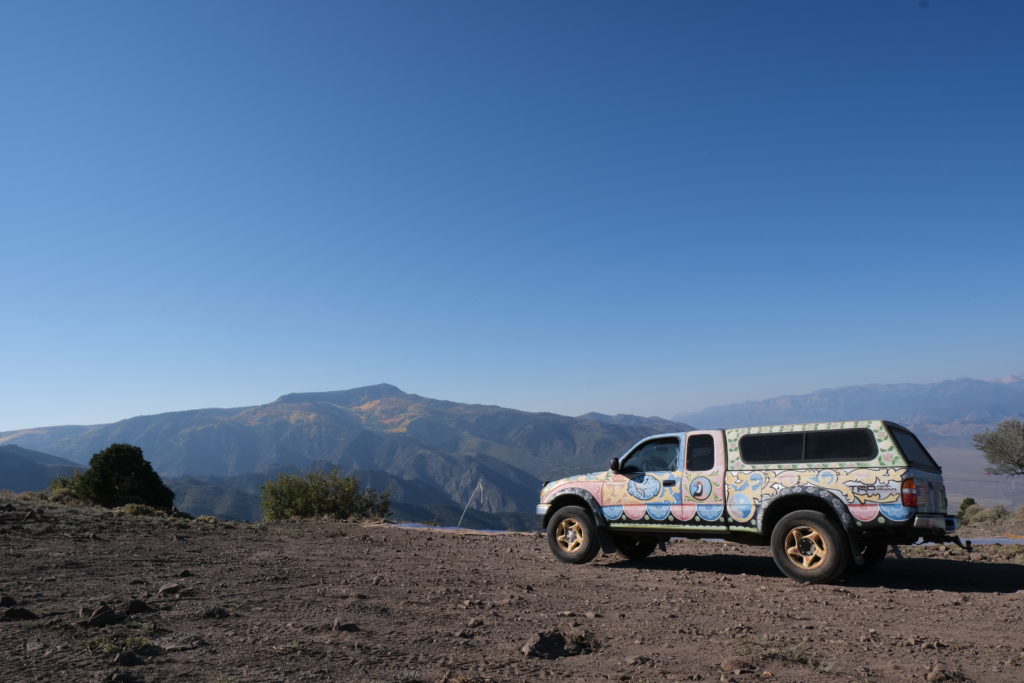
I arrived late Friday night into Monroe, Utah, then met up the next morning with Stacy Whitmore, president of the local flying club, CUASA. We jumped in my truck (which is pretty easy to pick out in a crowd) and headed up to place the two Helium Hotspots, one at Cove Launch, and one on top of Monroe Peak.

Cove was first up, and after a 40 minute drive up a rough road, we arrived at a truly glorious place to put a hotspot. With a view of the Sevier Valley to the north and south, it was an excellent first step.

https://youtu.be/qsoJ-\_zuxrU

As you can see in the video above, these 2 hotspots weren't the only ones providing coverage. Since pilots can get up to 18,000' (the legal limit) the trackers have a clear line of sight..everywhere. We were seeing 80+ mile sensor communication to the gateways, which is impressive!

With the gateways set up, it was time to start flying!

https://youtu.be/ijnTEm6Mrf8

As I handed out trackers to paragliders and watched their progress through the sky, a few things became clear.

First, the Network works. While the tech can be complicated and the whole thing is not yet push-a-button easy, it does work. That's rad.

Second, the deployment pattern of Hotspots becomes far more important when you start to optimize for Network coverage and not just earnings. I jumped at the first two locations because both were high and had great views. It worked, but there were plenty of coverage holes that I could've filled in with a different pattern. When I cover this event next year, I'll use 2 or 3 more hotspots and place them in a ring around the valley rather than on just one side. I'll also use Kudzu to estimate coverage, which was something I'd wanted to do but ran out of time.

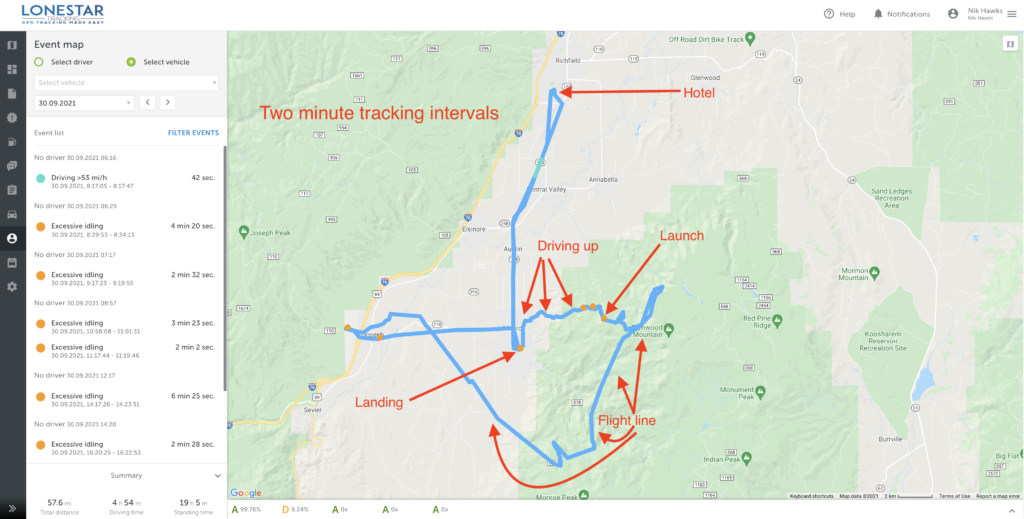
Third, using vehicle trackers to track paragliders is an excellent start, but free flight pilots in general (paraglider and hang gliders) need a few options that we hadn't configured in the trackers. Here's an example of the day in the life of a tracker, from the time I handed it out in the LZ (landing zone, which is where pilots in Monroe usually meet to start the day) all the way to the end of the day when the pilot went back to their hotel.

Before going further, I want to make it clear that this was a pilot program. This is NOT what the end product of a free flight tracker will look like. The goal of this project was to see what was possible and where we needed to improve.

Most of the improvements can come from better Hotspot placement and configuration settings within the tracker. Some improvements specific to free flight will come from hardware modifications. We started off with 2 minute intervals and eventually got 'em down to 30 second intervals by the end of the week. While that pushes out more *potential* data points, if you don't have coverage from a Hotspot it doesn't matter how much data your sensor is pushing out; it won't get seen.

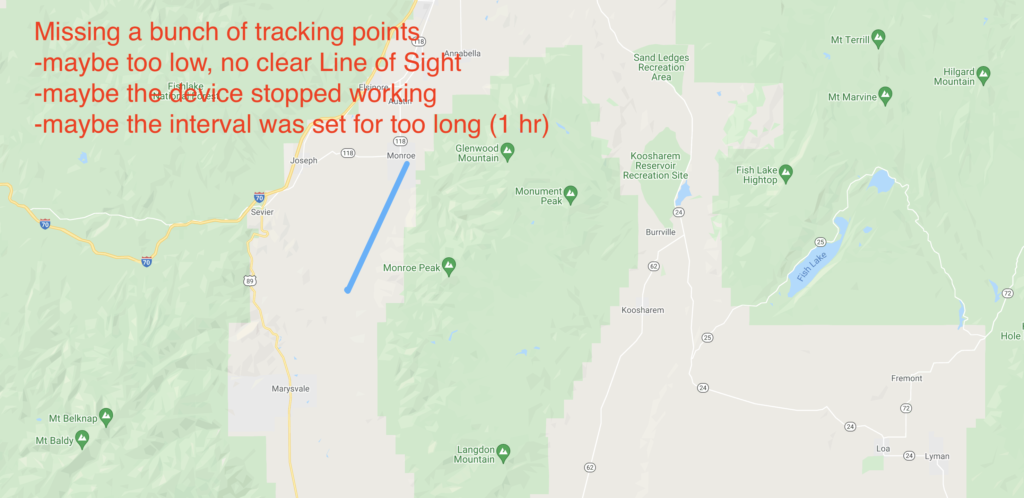
A bunch of things can go wrong. The interval is important; if you set it for an hour you'll have a battery life measured in years, but for a 2 hour flight you'll only get 2 data points, like this:

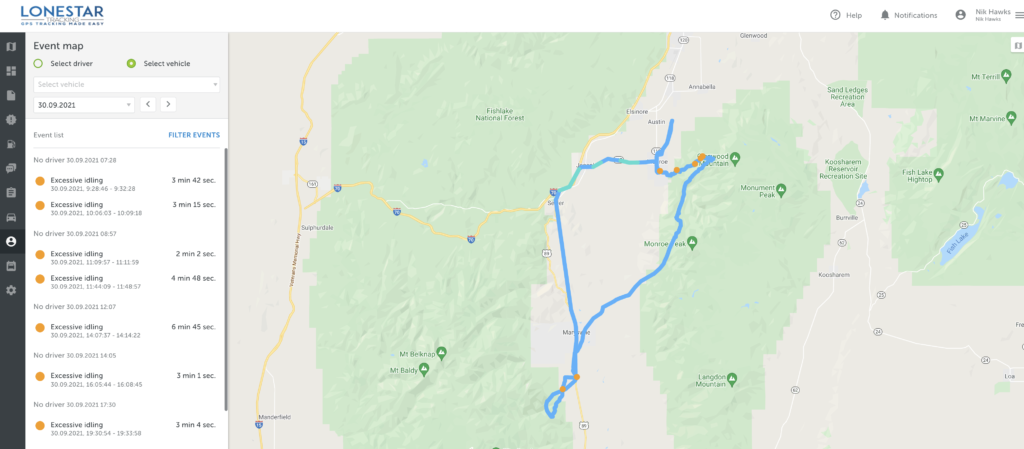
Here's another pilot who did that same flight but had a tracker with much shorter intervals. You can see the difference it makes!

The configuration settings presented an additional set of challenges. For paragliding, I wanted a tracker that could be found if the pilot either had an emergency and landed conscious (and able to push a button), or landed and was unconscious. These trackers were set up for long battery life, so once they stopped moving for a period of time they went to sleep. That's very useful for tracking vehicles on land, but not very useful for paragliders flying in adventure country.

Keep in mind that these trackers only report their positions if they can communicate with a Hotspot. No Hotspot, no comms.

Going to sleep once movement has stopped presents the issue of not being able to be found if a pilot crashes and is unconscious or just not able to move. The solutions for solving that could be creating an on/off button for the tracker so that you can conserve battery at home, when you don't need to be tracked, but push out signals every 2 minutes when you go flying.

The rad aspect of creating off grid Helium Hotspots is that you could put a Hotspot in a helicopter and fly a search pattern with a very wide "bubble" of coverage. As long as trackers are on and pinging, you're very likely to find them. This creates another potential solution for "crash detection" in trackers where they'd continue to ping at 1 or 2 minute intervals if they detected a sudden stopping of movement.

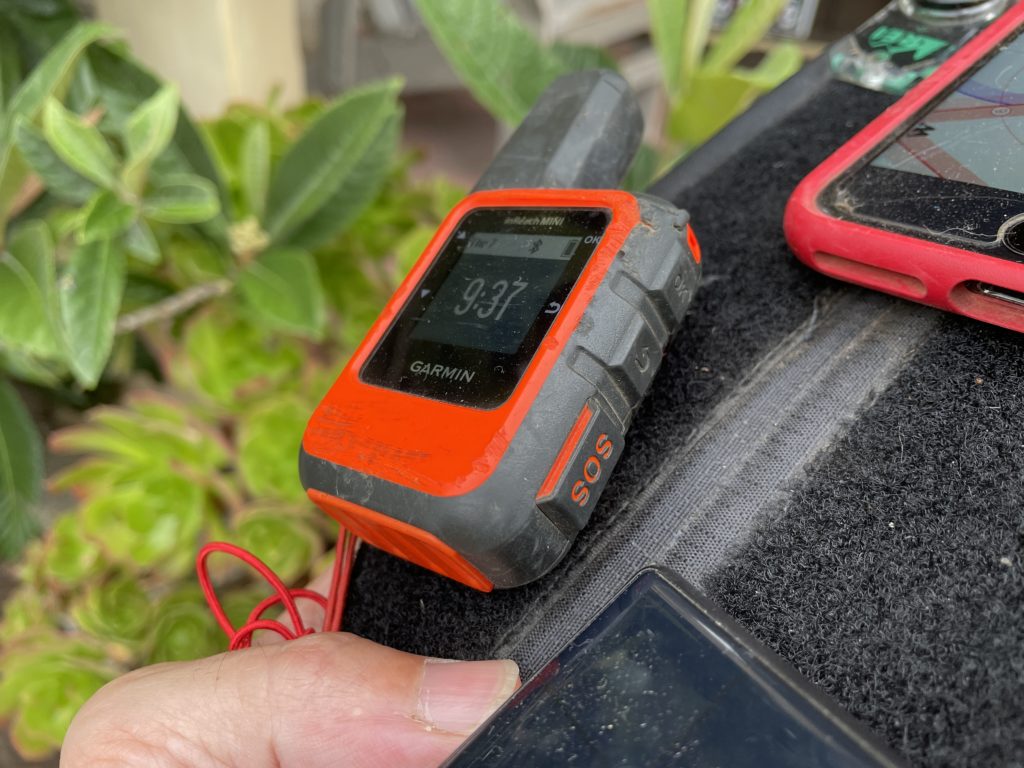
Finally, this project brought to light the usefulness of an "emergency" button, just like you have on an inReach mini.

You might ask, "What's the point of having another device that does the same thing?" Well, there are three good reasons. First, when working in high consequence environments, a basic rule of safety is "Two is one and one is none." Having a backup can be the difference between being found within hours of a crash and not being found for days.

Second, because these two devices work using different technologies, they offer a wider spectrum of "findability." While an inReach can be found by communicating with satellites, if it's deep in a canyon and doesn't have a clear "view" of a satellite, it becomes less useful. A LoRa tracker, on the other hand, puts out an omnidirectional beacon at a minimum range of 60 meters in dense brush and a max range of 80+ miles with clear line of sight. A helo carrying a mobile Helium-compatible Hotspot can fly around and provide a bubble of fairly focused coverage, greatly speeding up the tracking possibilities.

Third, as gruesome as it sounds, if you auger in and hit hard, the impact is likely to break not only your bones but also the electronic tracking devices you're carrying. If those electronic devices are on opposite sides of your body, it is more likely that at least one of them will not bear the full force of the impact and will remain trackable. I know, ugly and terrible, but also practical.

Practicality is the watchword here. The long term health of the Network is based upon the usability of it. Projects like these, where we put sensors and gateways (Hotspots) out into the wild and see how they do, go a long way towards all of us leaning how to use this fantastically cool technology to improve our lives.

If you'd like to see the presentation I gave at the 2021 Red Rocks Fly In about Helium for paragliders, here it is:

https://www.youtube.com/watch?v=MsNQa0fL0WI

My entire involvement with Helium started with a lost paraglider, but finding lost paragliders is just a beginning. I am super pumped to be on this journey and to share as much as I can with you, so that together we can build a superbly useful tool for whatever problem you want to solve. Here's to safe flying, to useful Networks, and to advancing our knowledge and understanding that this giant new realm of IoT opportunity available to us all.

To life!

Resources

Feel free to reach out to any of these companies for help with your projects, and of course, tell 'em the Gristle King sent ya! :)

Lonestar Tracking - Based out of Texas, Lonestar makes it super easy to buy devices and start tracking whatever you'd like.

Digital Matter devices

Helium Network

CUASA - Central Utah Air Sports Association - If you have hotspots you want to place off grid, this crew is way open to having you put them up on high sites around the Sevier Valley. Reach out to Stacy or Jeff to see if you can work with them.

If you're looking for work in the Helium ecosystem, please check out this rad project I'm a part of called Helium Jobs. You can post and find jobs there, help support the ecosystem by making it easier to connect professionally, and let the world know that YOU exist and want to help contribute within the Network. Rock on!

Archived Comments

Mario - 10/10/2021

Inspiring. Dreaming of the day when I finish setting up my helium miners (for good) and start to think off, how can I, using Helium network, make other people's life easier/better. :)


Joseph Campos - 10/12/2021

Great job Nik! Your passion shows and it is awesome that it is aligned with helping keep people safe. Good job in the presentation video, you do a good job of explaining what can be a complicated subject sticking to the "why" the group would care.


Nik - 10/12/2021

Thanks Joseph, much appreciated!


Reports From The Field: Tracking With Helium - Gristle King - A Guide to Helium - 11/2/2021

[…] up was to pro­vide cus­tom track­ing for race par­tic­i­pants. Hav­ing recent­ly done the very first paraglid­ing track­ing event up in Utah, for the X Red Rocks race, I man­aged to avoid a few mis­takes, repeat a few more, and learn a […]


Precios Louzado - 11/8/2021

great job. Is it possible to integrate 3rd party appliances on helium devices as a hub for transacting on the blockchain.


Nik - 11/8/2021

You should be able to use just about any sensor. Helium maintains a list of "Helium ready" ones here.


Cody - 5/5/2022

You are doing incredible work Nik. Appreciate you sharing.


Nik - 5/6/2022

Thanks Cody!


Is Helium A Better "Last Chance"?

· 12 min read
Nik
Site Owner

I got into Helium accidentally. I was looking for a way to find and communicate with other paragliders out back of beyond. I had participated in a Search and Rescue for a well known paraglider out in remote Nevada at the end of summer 2020.

The missing paraglider pilot (James Johnston, aka Kiwi) had GPS and a cell phone, and it still took hundreds of people, including hunters, hikers, bike riders, ATV mounted search parties, planes, helicopters, drones, and satellite imagery 30 days to find him. Here's a 20 minute presentation on just the crowd-source satellite imagery side.

https://www.youtube.com/watch?v=2UgtrcyWreE

I flew up with my friend David Hunt in his small plane to help with the aerial search. We left early in the morning on the third day after Kiwi was reported missing and it became clear that the more people searching, the better.

We got bumped around in turbulent Nevada desert air for a few days before flying back to San Diego without having found the missing pilot. For almost the entire journey, David and I talked about better options for being found. Should we have a backup GPS, or was there another device or technology that could be useful? We found Recco Reflectors, which are useful if a local SAR crew has a helicopter with the technology, but...not many crews in the US have that.

Then another paraglider pilot and buddy of mine, Zach Armstrong, stumbled across this thing called LoRa. LoRa stands for LOng RAnge, and is the radio protocol used by Helium. As we searched around the internet for more on LoRa, we found two cool options. One was Meshtastic, a system designed by a paraglider that used LoRa to form mesh groups of communications nets. You and your buddies can all talk to each other across long distances using devices you build.

We built a couple devices and tested 'em out, thinking of them as a good option, but to be honest, pretty fiddly.

I found a way to 3D print cases locally, made a couple more devices and handed out my extras to local pilots to test while we flew in the mountains. They weren't easy to use unless you really like to tinker. Not everyone does.

Then I stumbled on Helium. It came up when you looked for "LoRa" back in August 2020 on the Googs. I'd been involved with crypto before, so I wasn't afraid of it and didn't think it was a scam. I saw a Helium "Hotspot" down the street from my house earning a tremendous amount of HNT, or Helium Network Tokens. That caught my attention. I got onto the Helium Discord back when you could read through every thread from the start in about a week and a half, and did just that.

Serendipitously, Helium opened up a DIY program at about the same time, where you could buy the parts to make your own Helium Hotspot and onboard it onto the Network. Along with my buddy TJ Ferrara, we applied for and received "alpha codes", then dug into how to actually use the things.

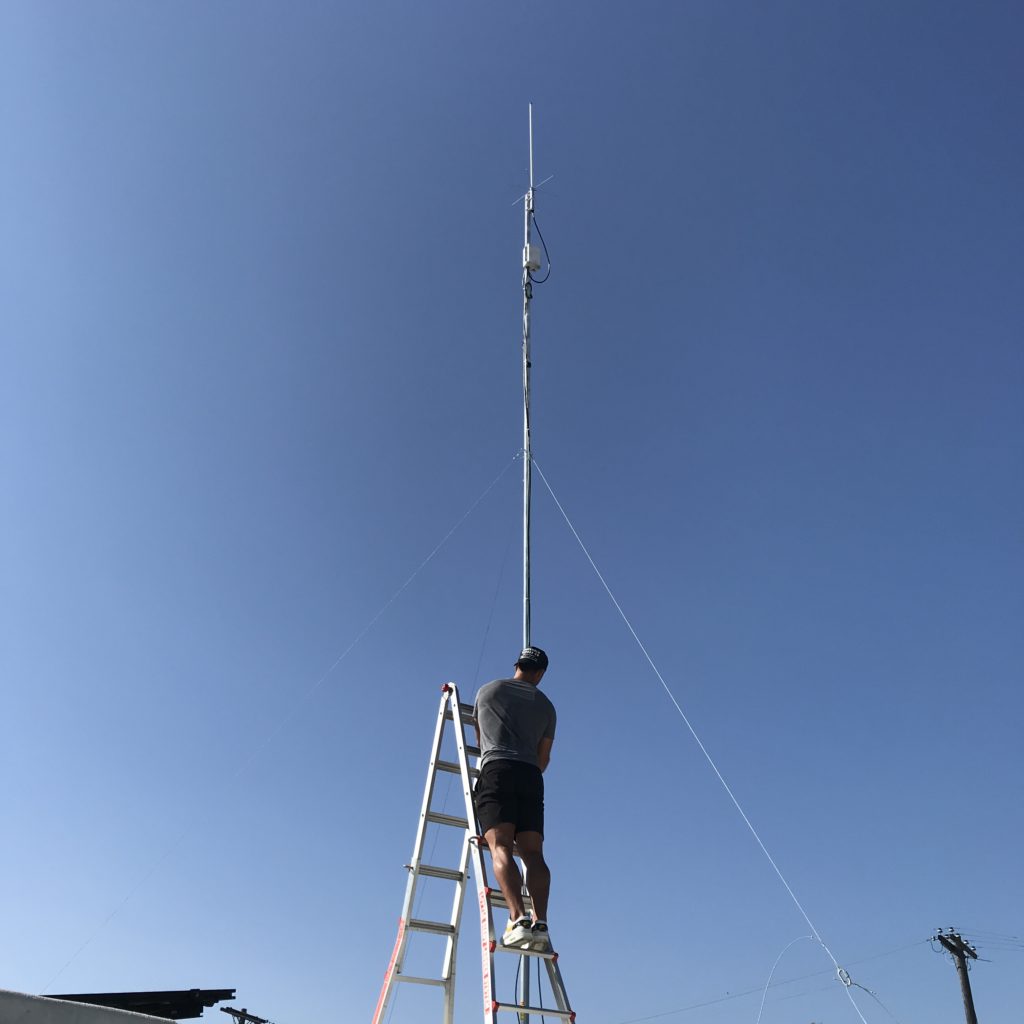
Here's TJ getting our first one online.

Here's TJ up on my roof, putting the finishing cable management touches on that first miner. We were so pumped to have one up and running!

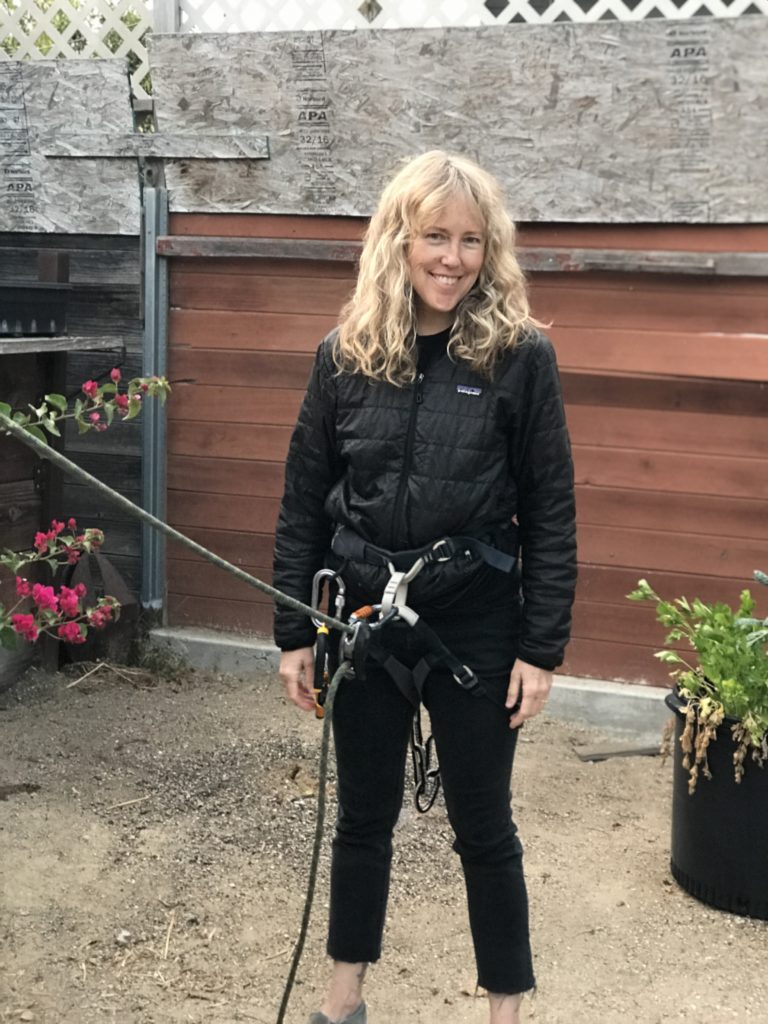
Of course, I had to constantly tinker with it (it was all new and exciting), and the pole was too much for me to manage safely by myself, so I hooked my wife Lee up to the pole with a climbing harness and rope, and she patiently belayed the pole as I tilted it up and down to dial in the hotspot and antenna at the top. She's seen my many phases of crazy, and she gamely went along with this one.

Ok, so that got us into Helium, but how does that relate to paragliding?

Well, with our first hotspot done, I set my sights on getting an antenna way out in the mountains near my favorite paragliding spot. It'd provide us a way to test Helium Network coverage and see if we could use trackers to, well, track paragliders.

We started with Helium Tabs, but those left something to be desired. Form factor = cool, Performance = Not so much. I put one on my new bike and it managed to stop tracking within about a day.

I started ordering parts to build a giant off grid setup. I was so excited about the whole thing I'd send blow-by-blow videos to my Dad.

https://youtu.be/whRloJZ\_9RE

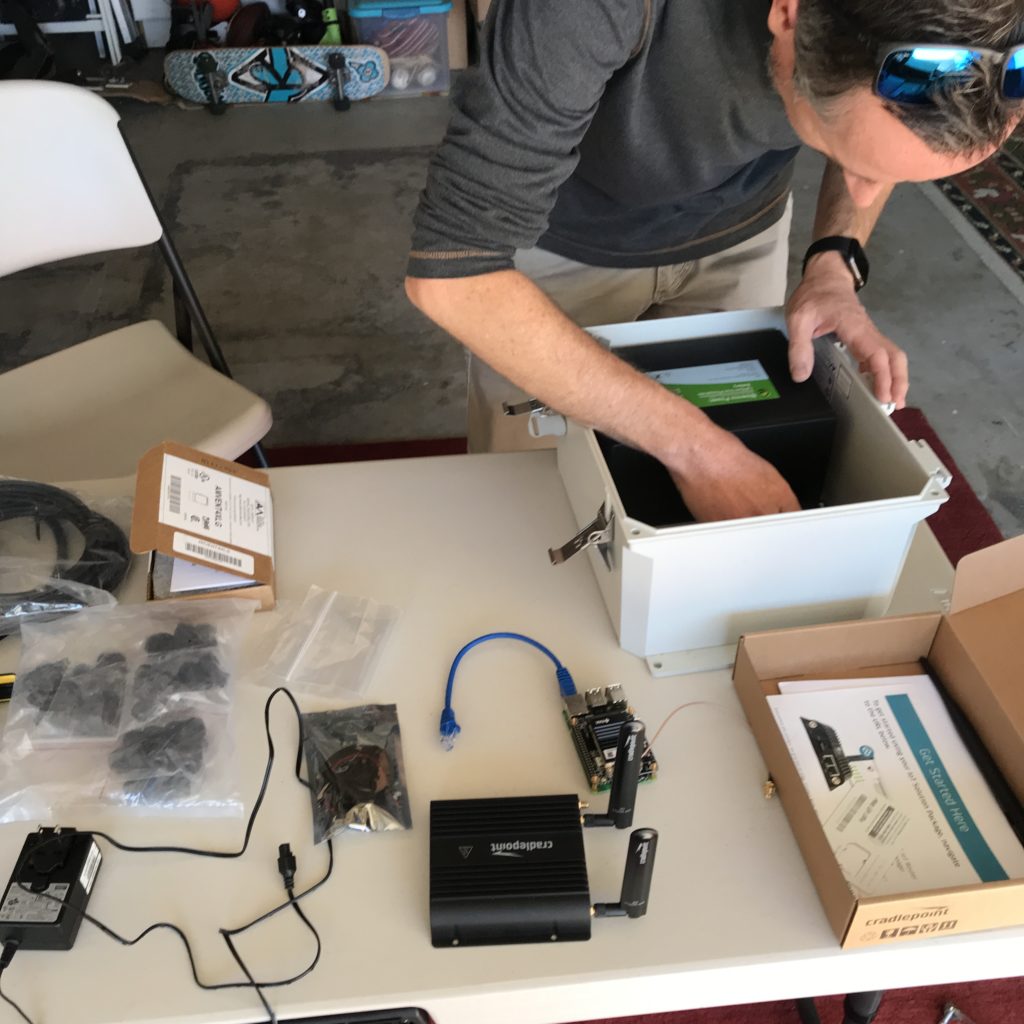
Guided by Paul over at Tourmaline Wireless, who drilled the holes and walked me through the layout, I got the first hotspot put together and ready to hike in. Here's Paul sussing out the best interior setup in his shop.

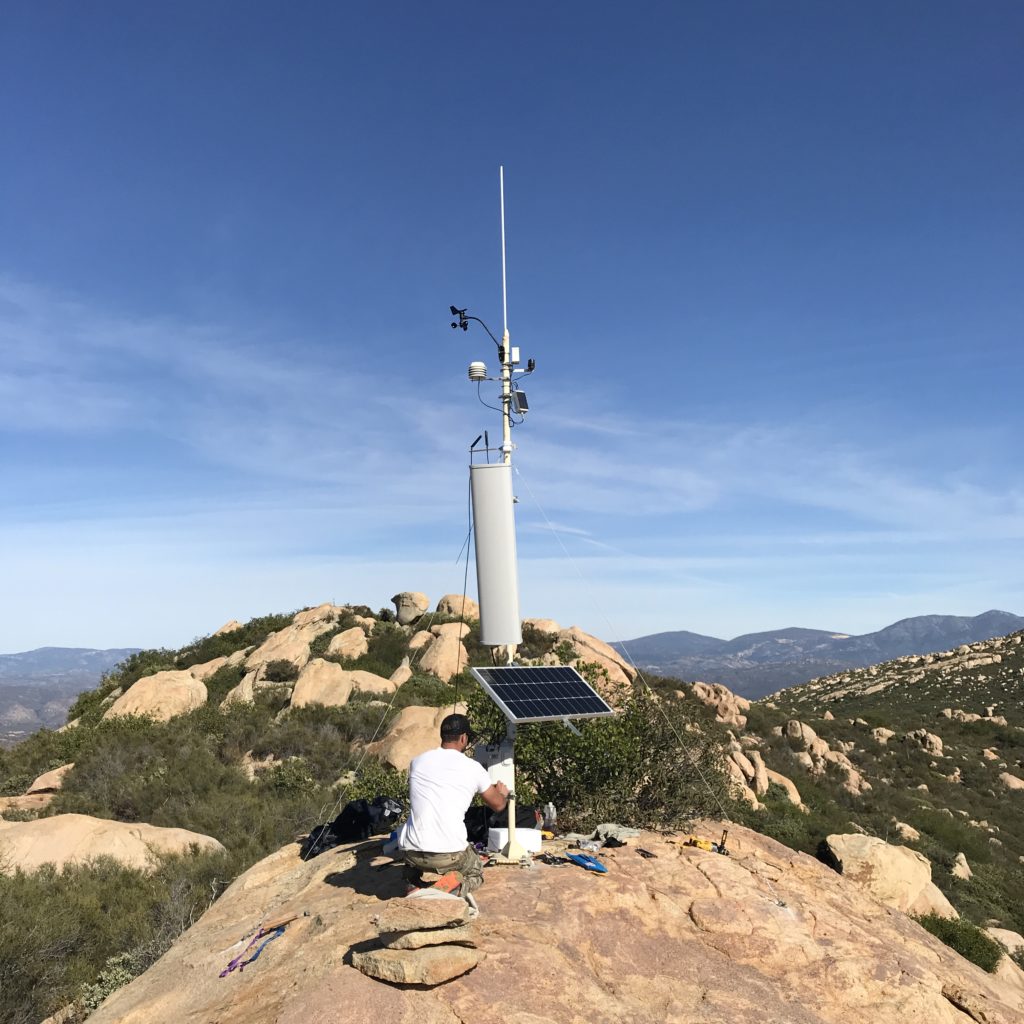
I got permission to place the thing on a mountain the backcountry of San Diego, then TJ & I hiked in 60+ lb backpacks filled with gear and set the thing up. Fun, and unfun. It was a giant antenna that I didn't need, plus more solar panel and battery than was necessary, but it was my first one. I ended up having to dial the antenna gain down with software, a project that introduced to some really cool and competent people (looking at you, @jerm on Discord), and it taught me a lot about what you actually want in an antenna vs what looks cool.

With the off grid hotspot in place and providing coverage from the Mexican border up to north of Los Angeles, I figured we could start testing tracking, but I needed more rugged tracking devices. I turned to Lonestar Tracking and bought a few Digital Matter Oysters from them along with a tracking subscription plan.

I handed out the devices to local paragliders, and we tested them. They worked (I've written about these tests over here.)

So that brings us now, October 2021, a year after the Kiwi SAR, to the Red Rocks Fly In and the XRed Rocks. The Fly In is an annual gathering of paragliding and hang gliding pilots, over 300 of us! It happens up in Monroe, Utah, and is a week of sharing the skies with other free flight enthusiasts. This year, there's something new: The X Red Rocks.

X Red Rocks (XRR) is a paragliding "hike and fly" race organized by one of my free flight heroes, Gavin McClurg. Gavin has participated in the super gnarly hike and fly race called the The Red Bull X Alps, held in (you guessed it) the Alps. He wanted to share that joy (and the joy of type 2 and 3 fun) with the rest of us back here in the US, so he put together the XRR.

In fact, it was Gavin's movie, The Rocky Mountains Traverse, that got me into paragliding back in 2016.

Unlike the month long journey that Gavin went on, the XRR is a 3 day event where, each day you hike up into the mountains to a launch with your paraglider, unpack, unfold, and launch off the mountain, fly as far as you can and land, then pack up, hike up, unpack, unfold, and launch again until you've finished whatever the day's task is.

Of course, I registered for it. :)

I wanted to participate, but I also wanted to combine business and pleasure, and to give back to both my free flight (paraglider and hang glider) community as well as showcase what Helium could do.

The way this event is set up is basically the reason I got into Helium; flying in remote to semi-remote areas without perfect cell coverage.

I wanted a way for my paragliding community to have a third option, maybe a last chance, after GPS & cell phones, to be tracked in case we got lost. I know that LoRa isn't a magic pill, and that it won't replace a Garmin inReach Mini with a global constellation of satellites, or telcos with their giant cell tower sites everywhere.

Still, it's a way for regular people, just like you and me, to deploy a wireless network that provides actual use. That is (pardon my language) fucking radical. I love radical things.

So, with this in mind, I rallied the troops. I called Tommy at Lonestar, Matthew at Digital Matter, talked with the Helium crew about what I wanted to do and why, and all of them very generously volunteered to donate time, materials, and expertise to the project.

I'll be bringing up 2 of my off grid hotspots, Helium is sending me a few of the off grid setups that Paul built for them as well as a bunch of trackers, Lonestar is covering tracking, and Digital Matter is providing enough trackers to cover all the rest of the pilots. If YOU want to be involved in some way, reach out!

I'll be driving up Friday the 24th of September and will spend the weekend setting up Helium Hotspots in the mountains around Monroe. On Tuesday the 28th I'll be giving a presentation on Helium to my paragliding community up in Richfield, UT (8 pm, swing on by!) and on Thursday the XRR kicks off. Ryan from Lonestar and Travis from Helium are coming up to help everything run smoothly and to answer questions, and hopefully to help convince free flight clubs that wherever we have a launch, we should probably add a Helium compatible hotspot to it.

I would love for you to follow along on the journey as we hike, fly, race, and use the Helium Network to demonstrate what a small, committed group of people can actually do. If you're in Utah and want to come help out with setup, troubleshooting, lending us a Helium Hotspot, or just participating in a joyous effort, please reach out or just post to comments.

Come along for the ride!

Archived Comments

Richard Ogden - 9/24/2021

Life is for living ! Well done fella.


Derek Clair - 9/24/2021

I am in Riverton (Salt Lake), and would actually be very interested in hearing/talking all the Helium things; willing to make the drive too if you’ll have me. What is the venue? Or an address, I’m there!


Nik - 9/24/2021

Hi Derek, 8:00 PM. Tuesday, Monroe City Park (Across from Bullies) Main St. Monroe.


FRED GARNER - 9/25/2021

Hi Guys I am in I have been trying to do just what you are going with Helium I am an aircraft and anything that flies on the airstreams I have track aircraft use ADS-b Sillite Radar in and out of airports and I and also a stock that misses with Crypto and that is how I got into Helium hots I am interested in helping people that are doing what they love and I want to help them stay safe would love to help that is all I do is track planes and would to help there is more to this whole thing. use my email I would love to talk. You every here of Mike Patty, Steve Fosit he died doing what he loved and they never found Him. I will do what I can do I have 3 gigs of bandwidth Please get back to me. FRED GARNER


Darin Johnson - 9/27/2021

I'm kinda like you. I found Helium by accident. I was watching videos on mining cryptocurrency, and one came up along the lines of "plug this box in and make money." Another one said before you get into mining something, do your research. What's the usage, is it covered by something already established, etc? So I watch more videos, and while some are talking about "optimum antenna placement" and the like, NONE are talking about what Helium can DO!!! So I keep looking around and when I finally found it, IT BLEW MY (language) FUCKING MIND!!!!!!!!!!!!!!!!!!!!!!!!!! Apple's AirTag just came out a few months ago and it's claim to fame is that other user's phones can help you locate your lost things. Imagine if Google, or Tile, or another company came out with a platform agnostic tracker that uses the Helium Network. All Helium needs is a little push, the right company making something that shows off the power of the network and it will absolutely EXPLODE!!!! I want to be there, I want to be part of this!!!!!!!


G - 10/6/2021

Hi Nik, Can you please give a reasonable explanation to the best of your knowledge how is this possible. And if so can your expertise replicate it? Thanks! G https://explorer.helium.com/hotspots/11ZMRjPTazmb9Gf2s4qpZCW5yEd9Bb1gbSUhGGiobxjDAfxTjve


Nik - 10/6/2021

Probably cheating. I can't/won't replicate cheating. :)


How to take your Helium Hotspot Off Grid

· 26 min read
Nik
Site Owner

It seems pretty straightforward; generate power and a connection to the internet, and you've got an off grid Helium Hotspot setup. Still, you'll have a few minor details to sort out, like what type of enclosure, how to mount it, how to make sure it stays weatherproof if you use an external antenna, and how to vent it.

Actually, those aren't minor, and they're typically not cheap.

For an off-grid install plan on spending US$1-2k and you'll be pleasantly surprised. If you want to experience the anguish of cheapness (as I have), try and spend less than $1k. That may cost you $4k as you realize you skimped so you'll have to double-buy, and you end up with extra almost-good-enough-for-a-serious-remote-install gear laying around the shop. Your choice. ;)

If you want to just buy an off grid setup from someone, I'd start with IoT Off Grid. If you want to see how I built my own, well, keep reading.

Let's start with a drawing to give the big picture.
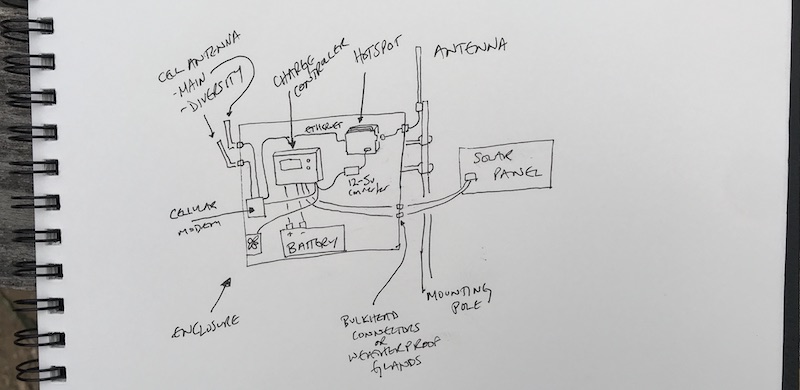
You may see that and say, "Nik, why don't you just use an outdoor hotspot, like the Nebra?" Well, the outdoor Nebra is perfect for a PoE connection when you've got access to power & hardline internet, but:

If you're going to go off grid you'll need to protect your battery, charge controller, and cell modem. You're going to have to buy an enclosure for all that. Might as well put everything in one box (enclosure) and save a little on the hotspot.

There is an updated version of my thinking on off-grid miners, that blog post is here. Much of the below information is outdated, but I'm leaving it up as a record. Enjoy!

Ok, let's lay out some numbers:

Ok, so that adds up to 5 watts but when it comes to solar, you should always plan for more. 7.5 watts continuous is pretty safe. Let's use 8 watts just to give ourselves even more cushion. As it turns out, that's what my remote setup (a DIY, from way back when that program was open. It's NOT anymore) is using, as measured via BarkinSpider's SolarShed directions but using Influx instead of Grafana:
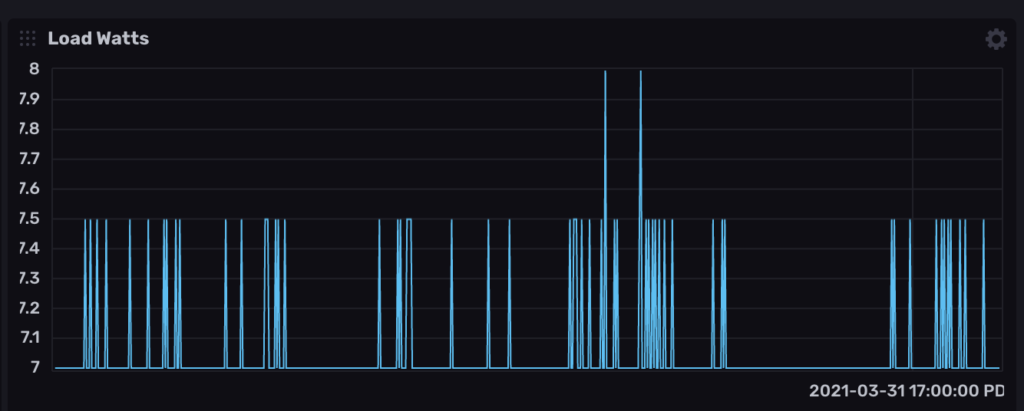
I know that's a cute picture and pictures can be persuasive, so: --> Before you just take my word for it <--

MAKE SURE YOU MEASURE ALL YOUR POWER DRAWS!

Calculate your panel & battery sizes off of YOUR situation, not mine.

Now you'll have to figure out 2 things. First, how big a battery will you need? Second, how much solar wattage will you need?

In Southern California I can use a 100 watt panel and a 50 Ah battery. That's for a remote install that is 6 miles down a rugged trail winding up (and down, and up, and down, and finally up) a mountain. While I don't mind working hard in pursuit of a worthy goal, I don't really love *extra* work. Oversizing the panel & battery makes it less likely I'll need to do extra work.

How do you figure out your battery size?

  • Step 1: Add up all your power draws for a 24 hour cycle
  • Step 2: Figure out how many cloudy/overcast days a year you'll have.
  • Step 3: Multiple the result from Step 1 x Step 2 x at least 1.5. The larger you make that last number the more expensive you battery will be, but the longer it will last. Do NOT skimp on this.
  • Step 4: Shop for batteries. This is my go-to source for batteries. I like nice things, and they make 'em.

What about solar panels? In conjunction with calculating battery requirements, you'll need to figure out how much solar wattage you'll need to keep your batteries charged. Use the worst case scenarios: The longest cloudy weather stretch your region encounters in the bitter depths of winter. You'll thank me when it comes, even though you may not be psyched with the up front cost.

Now that you've got all your kit, what will you put it in, and how will you connect it?

Start by measuring the dimensions of everything, then order an enclosure. I get mine from Allied Moulded. They make professional quality outdoor enclosures. They ain't cheap, but they're the ones that Helium Inc used when running their first off-grid test, way back in April of 2020. You can DEFINITELY find cheaper versions. My general approach is "buy the best stuff you can afford, then you won't have to worry about it." When I've gone against that, it usually costs me even more as I have to replace cheap shit.

Measure twice, then measure again, then double check by placing everything in the enclosure before you drill any holes. Then take a day off to think about it. Make a list of the hole sizes you'll need, plus the cable glands, exhaust vents, fan mount holes, etc.
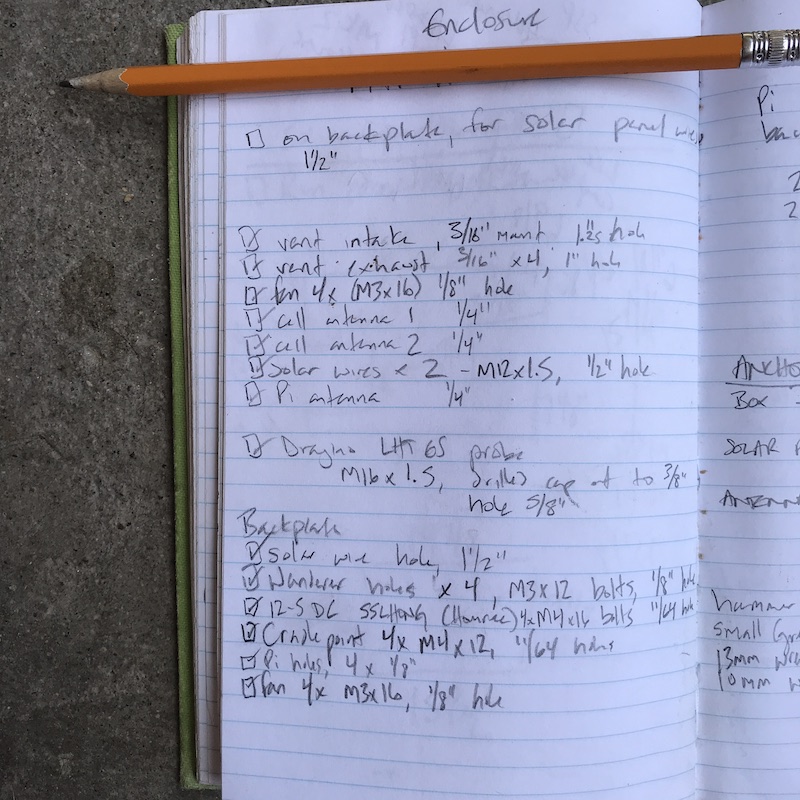
You'll notice in that list and on my shared sheet a call out for a Dragino LHT65. By the way, that sheet is outdated, so use it to give you a *sense* of what you need, but don't just go buying everything on the list.

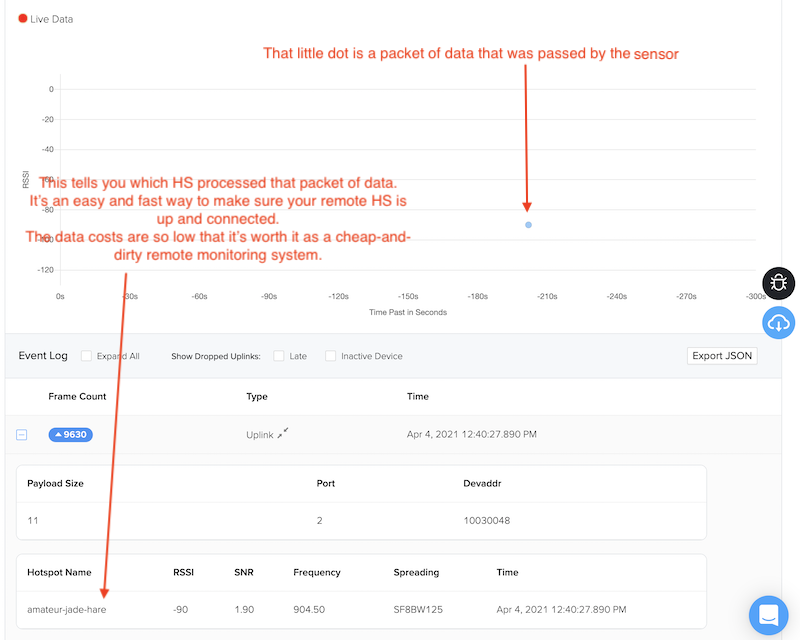
Back to the Dragino! That's a sensor that gives you temp and humidity, but more importantly it's a way to check if your remote hotspot is actually working. On Helium Console, you can see what hotspot is processing the packets from that sensor. It's faster and more accurate than checking Explorer, at least in my experience.
Back to setup. Once you've measured and listed all your parts and holes, lay it all out.

DO NOT BE CONFUSED BY THE PICTURES BELOW, this is for a DIY setup, which is why you're seeing a Pi and not a hotspot at the top right. The DIY program is closed due to security concerns from fucking gamers who ruined it for everyone. Ok, moving on.
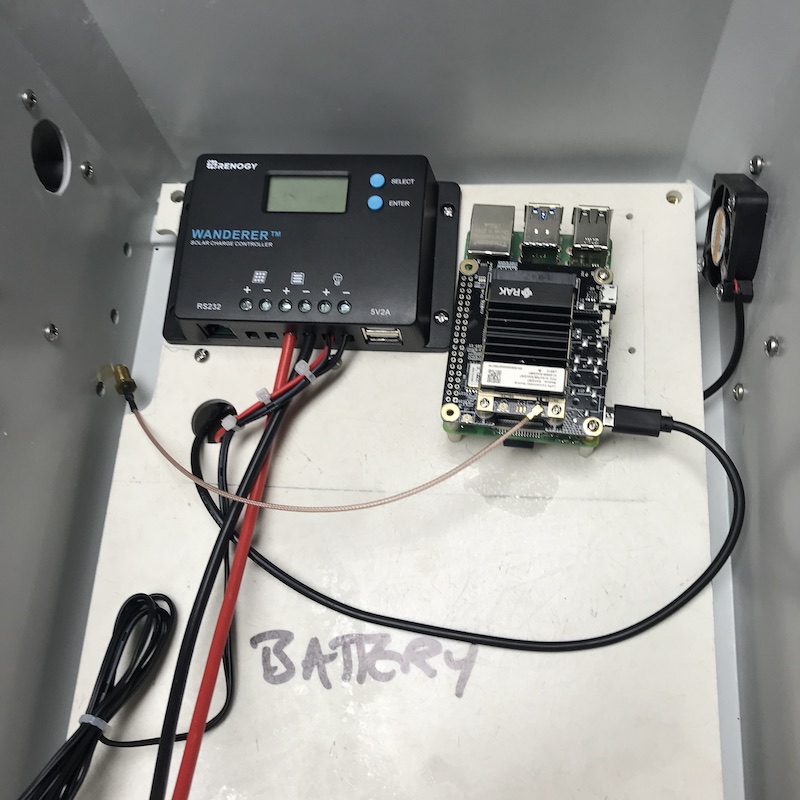
I found it super useful to just write on the backplate where I would put everything. I still made a few mistakes, and the final fit was much tighter than I'd like, but it works. This is the guts of Amateur Jade Hare.
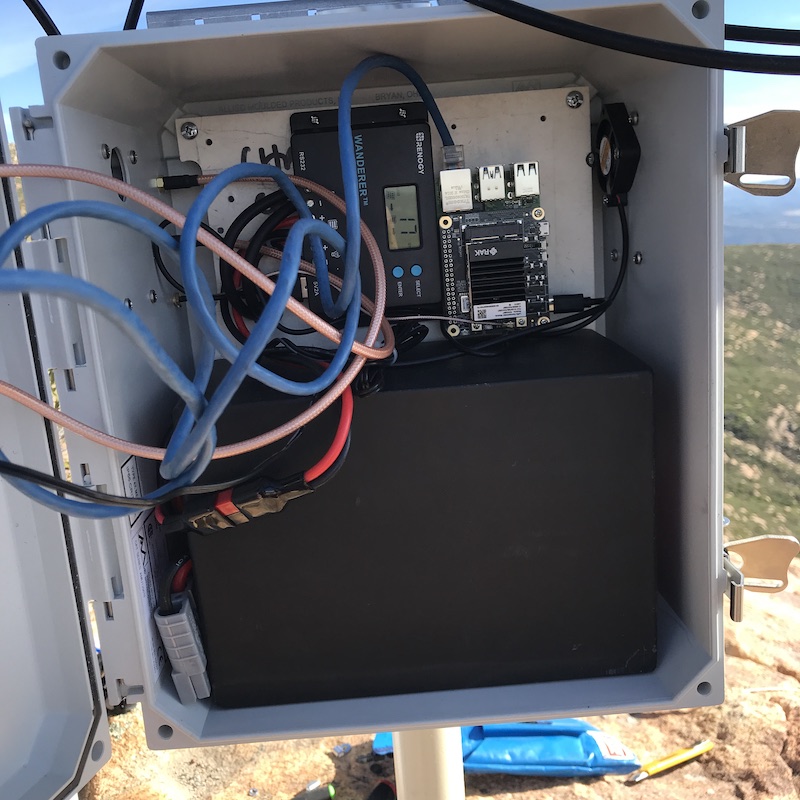
Here's what it looks like from the back; you can get an idea of the fittings & connections to the pole.
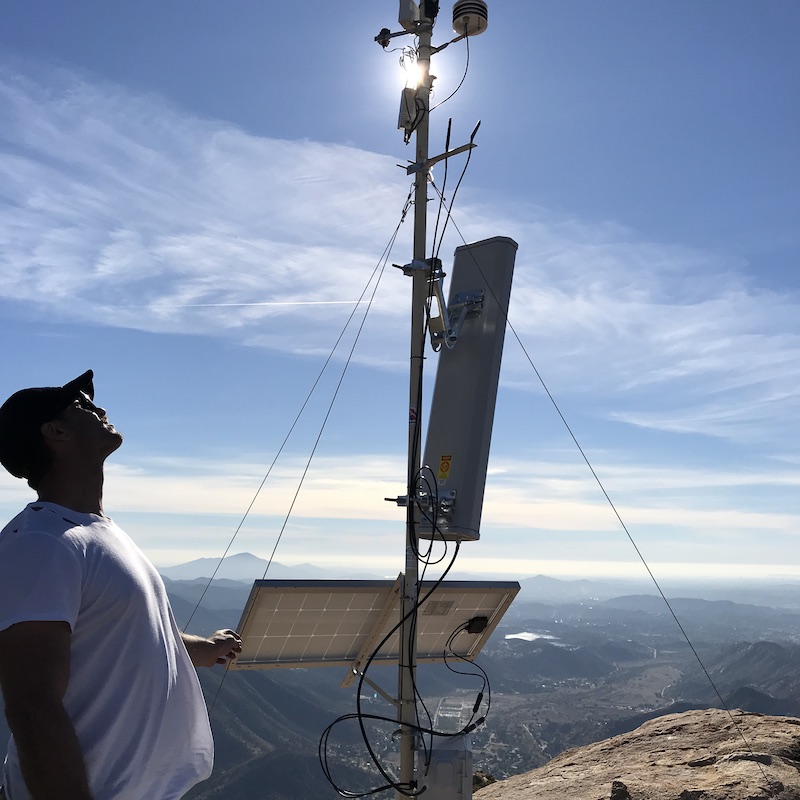
From experience, most people want to use that same antenna. Trust me, you don't. First, they're a PITA to hump in.

https://youtube.com/shorts/3CWjXhy4OTc

Second, they're a PITA to mount. Third, they're so powerful you have to ask your geeky tech friends for help to dial back the transmission power. Finally, they're huge wind catchers, so you need to mount guy wires to keep 'em steady. Fun to set up once, but not so amazing that I can recommend 'em.

Learn from my experience and stick with a more appropriate antenna. You'll probably never thank me because you won't know the ass-pain you're missing, but trust me, that's a hook-up piece of advice.

Ok, that should wrap up both the big picture and a few details on installing a remote Helium hotspot. If you want help putting one up and this post isn't enough, you can hire me for consulting, more on that here.

If you'd like to see the results of someone who's done a consult with me, check out this blog post of an off grid commercial roof install.

Post questions in the comments if you have 'em.

RESOURCES

  • Solar calcs sheet This is for a DIY hotspot running a Raspberry Pi4 & 2287, not a full fat miner. This just gives you an idea. DO YOUR OWN CALCS! YPDMV
  • Olivia Wireless - Only appropriate for DIY miners or Light Hotspots, as they data plan size is tiny.
  • A Rough Guide to Helium Hotspot Placement - Before you get all hot and bothered about going remote, see if this'll help you find an easier, better location.
  • Gear List - This'll give you an idea of what you'll need to get. It's definitely NOT the only way to do it.

Archived Comments

Derek Coleman - 4/6/2021

Amazing article. Thanks for all the valuable information! This is something that I plan on doing with at least 1 hotspot this year and I'd like to know a bit more about your services - we can discuss via email. One initial question I have is about the land that you placed the hotspot on. From the photo it looks like public land? Do you also provide consulting on how to find remote locations and how to legally go about placing a hotspot there?


Nik - 4/6/2021

Hi Derek, that placement required coordinating with multiple agencies and entities; it was not a simple or easy process. :) I can definitely help identify optimal remote locations and help with guiding you through how to legally place a hotspot. Glad the article was useful!


Sacha - 4/7/2021

Hi Nik, Indeed interesting article. Sure going to build one of these. (with some modifications). Thanks for that... Question: such a pool on the top of a mountain... How are your thoughts about lighning. How do you handle that?


Nik - 4/22/2021

Hi Sacha, Add in a lightning arrestor and a ground wire to any deployment and you'll be as safe as you can. I mean, it's a pole up high on a mountain, so it's more likely to get hit than if you're down in the valley, but that's the risks you take, right? :)


Mathias - 5/1/2021

Hey Nik, amazing setup. I only wonder: does the antenna have a lightning arrester? If not, why don't you think it's necessary? Isn't there a good chance of the hospot getting "roasted" during a thunderstorm? Regards from Berlin!


Nik - 5/1/2021

Hi Mathias, Wie gehts! Good catch, I didn't have one on in this photo, whoops! You should always add a lightning arrestor to your antennas, although it doesn't actually stop lightning, it just diverts the charge around the electronics and to the ground. I've added in the one I've used in my installs to the gear list.


Trip - 5/2/2021

Thank you. This is a great resource. I am in Southern California and am seriously considering using your "Off Grid Helium Hotspot Parts List" to build my own remote hotspot. I should be receiving several Rak Miners in June and would like to have one remote rig ready to go. Is the gear list posted still the best equipment you recommend? The remote location I choose is on the side of a mountain, so I will go with the 900 MHz 9 dBi Heavy Duty Flat Panel Antenna you have listed.


Nik - 5/2/2021

Hi Trip, Right on, it's a fun project! That gear list is an excellent start. I recommend going through it and making sure you understand what each thing is for and how connects with the others. You'll need to figure out how you're going to mount it. For example, the gear list assumes a pole mount but doesn't include a mast or pole. I usually draw out what I'm going to do. Doesn't have to be a work of art, it just helps you understand how it'll all go together. Also, you'll have different power and data requirements than this one, as that gear list is for a DIY miner, a program that has long since closed. Make sure you factor those in to your calculations.


Trip - 5/2/2021

Ah ok. Appreciate you’re quick response :-) I am still learning what everything is for. I assumed the gear list sheet was for the Jade Hare location, using a Rak miner. Did you place a more powerful solar unit/battery for that? Also the two antennas for the cell modem, in the picture you drew you have those attached to the enclosure box. Did you use some kind of enclosure antenna attachment to protect those? I figure the rig I need will be very similar, with the exception of a directional antenna and I will likely attach the components to some rocks rather than a pole.


Nik - 5/2/2021

Well, it was built from the initial Jade Hare gear list, but AJH is a DIY. It gets complicated, but with a DIY you can basically use much less power & data by offloading most of the work to a cloud miner, which I did. You can't do that with the RAK, so you'll probably need a larger battery. I've attached the cell antennas directly to the box for some installs and for others ran them up a pole just to give them more elevation. You'll need to use a gland to weatherproof the seal from inside to outside the enclosure. If you'd like a step-by-step walkthrough I'm available for hire, choose the Strategy & Placement option. :)


Trip - 5/2/2021

Thanks, I may hire you for that! I would rather get things right the first time than have to rebuy stuff because it's wrong. I'm still in the early stages.


Herbert - 5/18/2021

Hi Nik, great article and thank you for all that you do. I had a quick question about the battery an the charge controller - did you plug the charge cable from the battery into anywhere or does the charge controller allow charging and discharge through the discharge port of the battery? Thank you!


Nik - 5/18/2021

That battery has two cables. One is a giant grey one that I don't use, the other is a smaller black/red Anderson powerpole that you use to connect to the solar charge controller.


Ryan - 5/20/2021

Hey Nik - This is really awesome! Thank you for being such a great resource to the community. Quick question on the cellular side - What kind of monthly data costs do you incur using the Cradlepoint and Olivia Wireless?


Nik - 5/20/2021

Thanks Ryan! My costs won't be your costs; I'm just running a packet forwarder as part of the DIY, so my data requirements are under 200MB/miner. Cradlepoint has some 3 year plan that's included with the $500 purchase, so that's basically a $0 cost. Olivia for mine is under $10/month for 2 active miners. Look at the UltraMobile plans for a full fat miner, they have unlimited for around $50 and they're always running "sales". ;)


Ryan - 5/20/2021

Thanks, Nik! I’m still learning about all of this. I have some miners on order and I’m reading and researching as much as I can. I figured since the miner is going to use 20-30gb of data a month I should consider that as part of my plans if deployment makes sense in an off-grid situation.


Bill - 5/27/2021

Nik, I'm in Orange County so my non-sun days would be similar to yours. So would a 200 wt. - 12 v solar panel be sufficient? I've got access to three commercial buildings but I think the owner would be more convinced if I didn't have to penetrate the roof.


Nik - 5/27/2021

Bill, that's double what I've got, that should be plenty. :)


Bill King - 5/27/2021

Hmmm. I guess I misread your Excel Spreadsheet. I want to take your advice and not go bare minimum, but I also don't want to overspend for obvious reasons. Anyway, thanks for the reply. I believe I will have the ability to put one on a cell tower next to the building (tower came with the building). So I'm pretty sure I'll be engaging your paid services to consult. Hopefully by the end of July or early August.


Bill - 6/2/2021

So my building owner said I can use the outlet on the roof. But the cable is in the underground parking closet so that's a lot of cable to reach the miner. I was thinking of using a Cradlepoint in an off-grid format but using the outlet instead of solar. This would seem to be better than tapping into the building wi-fi which I suspect may kick me off a lot and which occasionally needs a reboot on the weekend with me having no access to the modem. Thoughts?


Nik - 6/2/2021

Interesting. May be time to use the RUT240 there, especially if it's easy to check up on. Last I saw the Cradlepoint was out of stock :)


Kelly - 6/3/2021

You mentioned a ground wire in an earlier comment. Would you (did you) add a ground rod as well? I couldn't tell from that previous answer answer whether you just risked it or took those extra steps.


Nik - 6/3/2021

Technically, you should always ground everything and use a ground rod. :)


AMS - 6/7/2021

Even though you don't recommend it, I still would like to know which antenna is that in the picture, the one that looks like a big rectangular panel. Great Job! Thank you.


greg - 7/3/2021

Getting close to putting up my enclosure and about to order a few LHT65 for each deployment. I see you were mainly using it to assess connectivity but how do we get temp and humidity info about it? Is there any resource you could point to that talks more about using these sensors? Do we pay for data transfer from the sensor or did the manufacturer? It all just seems like pages of code. thank you so much for everything you do!


Nik - 7/3/2021

Hi Greg, check out this post on using the LHT65. :)


Marcus Makabenta - 7/15/2021

Hey Nik I am confused and need help about how to setup the 4g modem from cradle point. Basically I already bought all the list except for the internet portion. I hope you get back to me. Thank you


Nik - 7/15/2021

Sure, what are you confused about?


gekko - 7/26/2021

I don't like solar powered systems because they suck. Not just they cost you tons of money (way more than you would spend over the years for grid electricity), but you need to oversize them waaaaaaaaaaay more than the actual usage is. You can run an RPI4 from 2x12Ah batterys in parallel for about 6 hours on idle at new age. You may say does the PI drain 4A constantly? Nope battery manufacturers always lie about the site of these crappy lead acid batteries and this is at new age of the battery. Give it a year or more and it's about 4 hours. So in his case he used 50Ah batt which is going to provide enough for approx 8 hours of darkness, now that is nice except... if your circuit draining them down to 100% where the batt voltage is approx 13.60V (considered depleted) these batteries need about 48 hours to fully charge so you may never want to go down that much. Then you have to also calculate that on the winters there can be as less as 1-2 hours of sunlight or cloudy all day long. I don't know whats the date of this article but I doubt his running it since 1 year. I simply think that this system is way under designed, I would recommend at least 100Ah in batteries unless that location is some real sunny all day long and even then batteries will always degrade. You will eventually have to replace them after 4-5 years.


Nik - 7/26/2021

Hi Gekko, that unit has been running since, oh, November of 2020. It's made it through the winter months and a cloudy streak. I don't think you're getting your math right on the "approx enough for 8 hours of darkness", I've designed the system to last for over 3 days without significant energy input (cloudy winter days.)


Michael - 8/11/2021

I'm not sure this is the right place to ask but... when you install a hotspot off-grid, do you need to pay for that land? If so, how does someone go about doing that?


Nik - 8/11/2021

Depends on the landowner. I've seen 90/10 splits, I've seen ones where the land owner doesn't care, and ones where they want $500/month or a 50/50 split. Totally dependent on what they want.


Michael - 8/11/2021

Ahh, okay. Makes sense. Thanks for clarifying, Nik!


Paul Novak - 8/16/2021

Hello Nik, A couple months ago I set up my hotspot on the flat roof of an apartment building. The internet is through AT&T prepaid using an LTE modem. However, port 44158 is closed and I am “relayed” since day one, because AT&T (as a cgnat) does not provide a public IP address. I checked Verizon and T-Mobile and they also use cgnat… Can you please tell me what carrier you are using and how you managed to get a public IP address? Thank you!!!


Nik - 8/16/2021

Hi Paul, I'm using Olivia Wireless, which is fine for packet forwarders (future Light Hotspots) but not set up for "full fat" miners. T-Mobile was offering a plan of 100GB for $55/month, but they've since closed that down. Have you checked in on the Discord #off-grid-and-enclosures thread?


Adrian - 8/16/2021

Hello Paul, If you are in the Southern California area I may be able to help you figure out the connectivity issue.


Nik - 8/16/2021

Hey Adrian, if you've got a good solution please let me know, would love to share that info with the Helium community!


Cherrieh Pittman - 8/16/2021

A company from Portugal is starting to manufacture these: https://store.bevotech.com/product/stand-alone-hotspot-outdoor/ A bit pricy, especially when you throw in their 4G modem.


Nik - 8/16/2021

Rad, off grids are the most fun ones!


Pom - 8/23/2021

Any suggestions how to make sure it works during cold and snowy winter? It gets to - 25 - 30 sometimes in my region...


Nik - 8/23/2021

To mitigate snow you've got some options; larger batteries, larger panels, or snow removal. It's not all complicated (like automated snow removal) but it will probably get expensive. I've heard of folks insulating their enclosures for winter, but I haven't done that myself.


Alex - 9/15/2021

Hi Nik! If you're using a outdoor helium miner, ex. Kerlink outdoor miner, how you will go for the power supply? Thanks


Nik - 9/15/2021

You’ll need power, usually from a solar panel with a battery and charge controller.


Packable Off Grid Helium Miners - Gristle King - A Guide to Helium - 9/19/2021

[…] you will even­tu­al­ly get over the idea of car­ry­ing in heavy equip­ment. I did that on my first off-grid, car­ry­ing in awk­ward­ly loaded 60+ lb rucks over 6 miles of rugged ter­rain with 3k’ […]


Bryce - 10/23/2021

Hi Nik and community - Has anyone found an LTE modem/carrier option for full fat miners that allows port forwarding? I'm also concerned about most unlimited plans that throttle speeds down to 128kbps after 40-60GB of data as my miners are already using close to 150GB of data per month which will just continue to go up as the network grows and usage increases. And I don't know how mining performance will behave at the throttled speeds as I see my miners using up to 600kbps or more multiple times a day. Please share any ideas or suggestions, thanks!


Nik - 10/23/2021

Hi Bryce, try this post for the port forwarding setup. As far as data, there are no good options as far as I know right now for full fat miners.


Brock Gonsoulin - 12/11/2021

So are you able to open port 44158 on the mifi unit your using for internet on this setup or is it relayed?


Nik - 12/11/2021

Hi Brock, Just for clarity, a "MiFi" and a cell router like the 240 are different things. On a router like the 240, you can generally open the port, although that can depend on your carrier. On a typical MiFi device, you probably can't.


Ramiro Doporto - 12/30/2021

Your the man, I just drew this schematic in my head and it looked very much like yours except my box was hidden in a fake bird house lol.


Kashif - 3/4/2022

Hi Nik, My miner is using around 5-6 GB data per day, any thought how can I reduce it because I have metered connection (100GB per month). Please guide me if any solution you know. Thanks in advance :)


Nik - 3/4/2022

Not really. Wait for Light Hotspots. That seems like a lot; how long has it been on, and what type of miner is it?


Mike - 4/6/2022

The real question I have is, how do I get rights to setup my antenna in the hills? Is there some special use permit or license I need to use?


Nik - 4/6/2022

Hi Mike, find the landowner and ask 'em permission. Procedures vary across public/private lands, but that's the basic two-step.


Kanoa Cook - 4/16/2022

I noticed that 10ft 12AWG charge controller adapter you linked says its good up till 30A of current, but the Renogy solar panel can provide 31-41Ah. I was just curious if this may have been a mistake or if this exact gauge worked for you? I'm definitely not trying to over-engineer anything haha


Kanoa Cook - 4/16/2022

Disregard my last question, I actually saw some grounding wire tables that showed 10AWG is plenty, so I think 12AWG must've been for redundancy. Appreciate the guide!


Rob Wood - 8/22/2022

I need help with data plan and SIM card for a MNTD miner that is off grid. I had an AT&T plan but that SIM card is not working any longer and need to find replacement. MNTD is using 30 gigs a month of data. Any suggedtions? I contacted Olivia and look forward to talking to them.