103 posts tagged with "Helium"

View All Tags

What Should You Look For In A Helium Antenna?

· 27 min read
Nik
Site Owner

"Will this antenna work?" I get that question a lot, usually about some antenna that was discovered after hours of searching and sifting through Google results. Antennas are one of the most confusing parts of Helium, mostly because RF is fairly complicated and the average hotspot owner has as much experience with antenna design and theory as a warthog does with wearing Kiton tuxedos.

Hot tip up front: Antennas have very little to do with your earnings. Most of your earnings come from your placement, most of the rest comes from how high you can get in that placement, and the final little sliver comes from antenna choice. If you want to go deep into the best antenna for your Helium hotspot, read up on it here.

My recommendations for most instances is two-fold: If you have extra cash, try the HNTenna, either indoor or outdoor, for whatever setup you've got.
If you are deploying a fleet and have to watch costs, use any of the McGill antennas, the 6 dBi is a solid middle-ground applicable to almost all installs.

For those of you who don't want to spend that much, here's what to look for in a Helium hotspot antenna:

  • Overall, you want an antenna with a fairly narrow range. What is a narrow range? Ideally, less than 30MHz of band (15 on either side of center). In the US, 915 is our center, and 902-928 is what usually I look for.
  • In that same vein, Wide Band and Ultra Wide Band should be avoided. While they sound like they might be great because they "cover a wide band", that's like saying a Ford Falcon should fly because it has "Falcon" in the name.
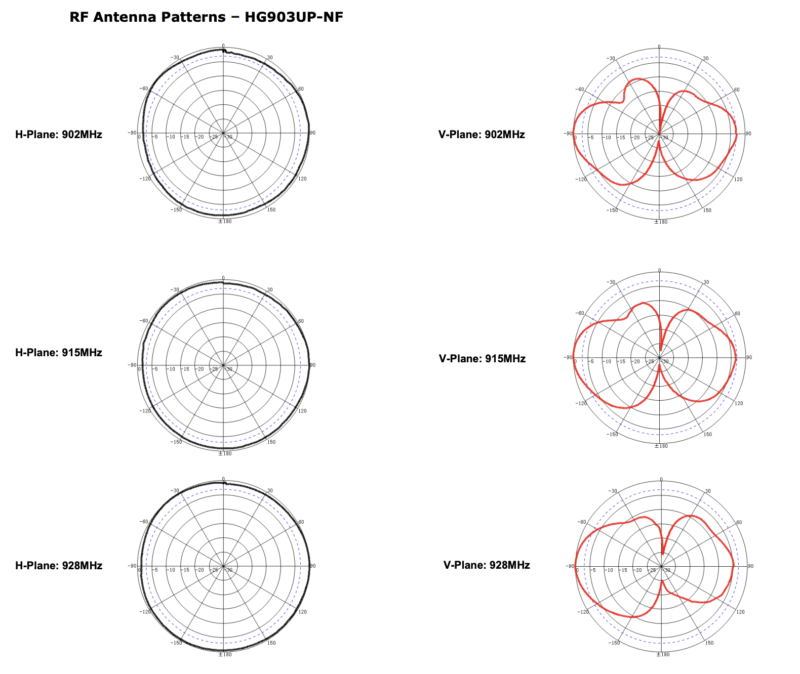
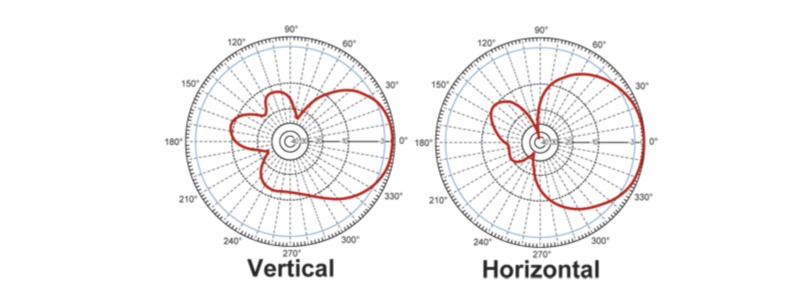
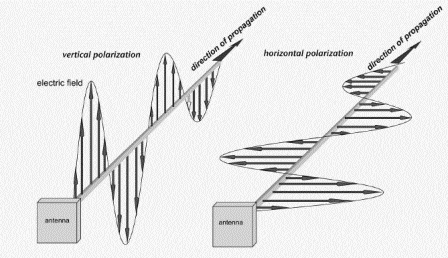
  • An antenna for Helium should be either vertically polarized or multi-polarized. I've written about antenna polarization in this post on antenna radiation patterns.
  • Any antenna you buy should have a datasheet. That's the thing that shows you its pattern from the top and sides. If it doesn't, consider it experimental and usually a waste of money.
  • If the antenna is high gain (say above 6 dBi), you want electrical downtilt of 1-3 degrees. This helps you to not overshoot nearby hotspots.

Ok, so that's how to assess what you should buy. The next step is actually testing the thing. We're going to go a little into geek land here, be ready. I'll step up the cost slowly, from zero to, oh, more than you want to spend.

We've got 3 general things to check:

  • Is it actually working in "the real world"?
  • Does the antenna perform the way it's supposed to?
  • Is our hotspot actually putting out any RF energy?

Is It Working In The Real World? - Discovery Mode

  • Equipment Needed: Hotspot and the Helium phone app
  • Cost: 0. Well, it will eventually cost a few data credits, but if that's a burden then you've got bigger problems than your antenna working.
  • Usefulness: Reasonably useful. There's no reason you shouldn't do this.

The cheapest way to see if your antenna is working is to jump into Discovery Mode on the Helium app. You need to have a hotspot connected to a wallet you control for this step.

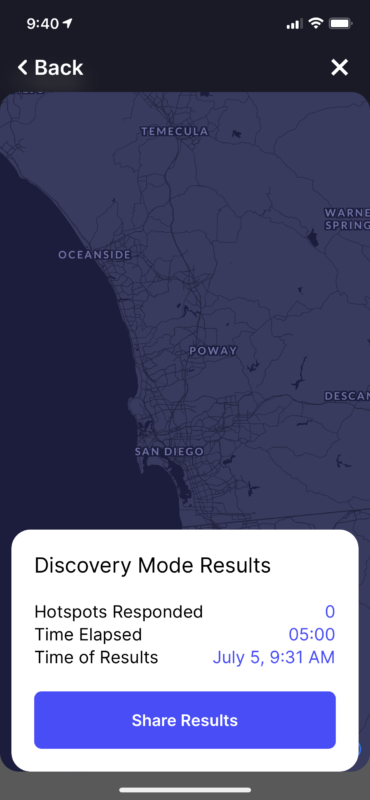
Here are good examples of what you might want to see. Keep in mind that the visuals may change over time, so you're seeing some variation here. Yes, I'm choosing hotspots that have an unusual number of witnesses. :)

Here's what you don't want to see:

Obviously, if you see something like this, that's an indication that something might be wrong with

  • Your antenna
  • The Helium app
  • The chain itself.

You shouldn't immediately freak out if you see that, but you should dive a little deeper.

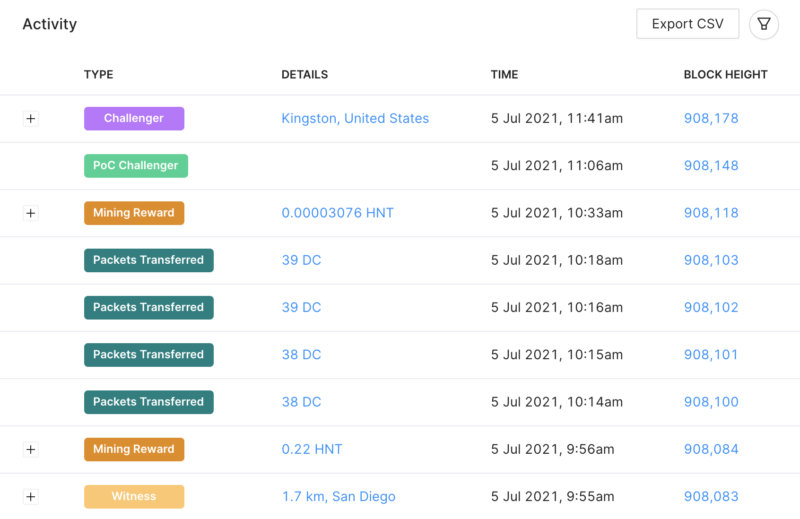
What do I mean by that? I'd check activity and rewards on either the app or Explorer. If those are recent (within the past 24 hours), you're probably fine as far as your hotspot and antenna working. Here's a screenshot from Explorer for the above Discovery (failed) attempt. This hotspot is doing fine, there was just something wonky with either Discovery or the chain.

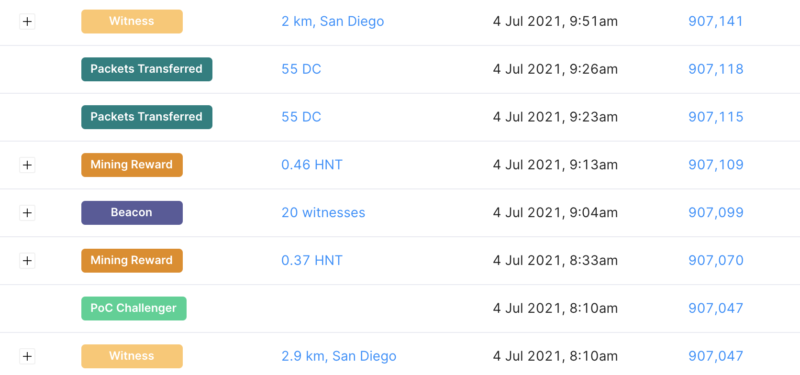
Of course, you might want to scroll back to your most recent beacon and make sure you're being witnessed, although with all the beacons being witnessed in the above case, you're probably fine. Antennas transmit & receive at the same "level". I had to scroll back a day or so to see the most recent beacon, but there it was, complete with witnesses.

Let's say your Explorer page doesn't look like that, and you have zero witnesses on your beacon. There is the possibility that your hotspot is working fine BUT one of the witnesses was on a relay, so despite the beacon actually going out, it is reported as (basically) incorrect/not working as intended. Still, let's not get too far into the weeds on that. Let's stick with antennas for now. How do you test your antenna?

Is The Antenna Performing The Way It's Supposed To?

  • Equipment Needed: Vector Impedance Analyzer or NanoVNA
  • Cost: $70-150
  • Usefulness: Very useful for making sure your antenna is good. This is more important if you're buying an antenna from less reputable sources. Mostly this is useful for mid-level geeks who just want to know what's going on.

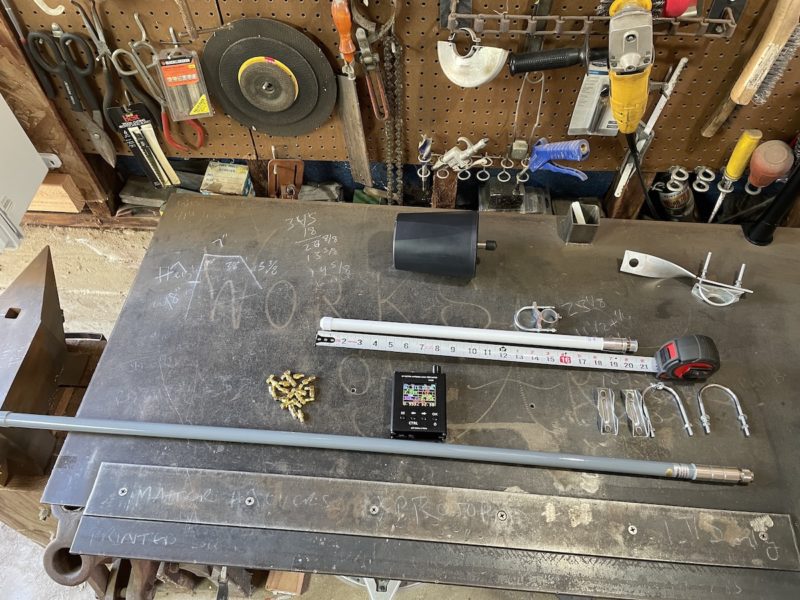
In the image below, the VIA is the little black box between the long grey antenna (a Nebra) and the short white one (an eBay special.) The black antenna on the top is the HNTenna, my go-to for most deployments. A VIA is used to test the efficiency of an antenna. If you're seeing a low VSWR at your frequency, you've probably got a great antenna. More on that in the Spiess video below.

I bought my VIA from Banggood, you can get 'em on Amazon. Those links aren't exactly what I bought, there seem to be 4 or 5 variations of this thing that are all similar enough to work for you. You'll need to get a pack of adaptors as well, pick those up on A-zon.

Pro-tip: Make a "connector saver" cable that attaches to the connector of the VNA. That way, when you're attaching your antennas you don't risk damaging the connector directly on the VIA.

So far most of the antennas do just fine, although I have seen a few duds.

Andreas Spiess has a great video on how to use this VIA, check it out starting at 7:30.

I use one to test any antenna that comes through the shop. You may find some RF snobs that turn their nose up at it. Yes, it's not the highest end device, but I don't see a reason for everyone with a Helium hotspot to buy (and learn how to use) far fancier equipment. This is a great quick and easy check.

Is The Hotspot Putting Out The Correct Amount Of Energy?

  • Equipment Needed: Bird Model 43 RF Wattmeter
  • Cost: $300-500
  • Usefulness: Almost totally useless for the average Helium Hotspot owner, but a very cool piece of kit, and it reassures you that your hotspot IS actually beaconing.

When I went out to visit the HNTenna folks a few weeks back, Adam pulled out a device so well designed that it hasn't been changed since the 1950s! It's a Bird Model 43P Wattmeter, and it tells you how much energy is being pushed out from a device (your hotspot) and into an antenna. I'm kind of a sucker for old school badass things, so I immediately bought one on eBay. I'll tell you right now: You don't need to. They are SUPER cool, but so far into geek-land that for 99% of Helium peeps it's just not the right fit. Still, I bring it up in case you want to see what's one layer deeper when it comes to RF investigations.

Here's what it looks like in use. You plug the hotspot into the left side, the antenna into the right, then fire up Discovery mode so the hotspot beacons. When it does, you can measure the energy of that beacon. For US hotspots, it should hit 1 watt. Using the bottom scale and dividing by 10 gives you the 1 watt. Yes, I know, different scales, dividing by ten...that's just standard RF geekery. This thing is doing what it's supposed to do.

https://www.youtube.com/watch?v=jy4K3VmEkc8

But, But, But...What Else Can I Test?

I'll leave you with what you should do if all that HNT is just burning a hole in your pocket and you're desperate to know even more about the RF waves all around you. Here's the HNtenna crew walking me through testing the Helium Tab using a device called a Handheld Microwave Analyzer.

https://www.youtube.com/watch?v=PBhCTkc1M68

See that little spike every time we press the button on the Tab? Yep, it's working. No, you don't want to know how much that HMA costs. Or maybe you do.

In any event, we can see the Tab working it's tiny little electronic but off to push out signals. Magic!

So now you know way more about how to choose and test an antenna for Helium.

If you'd like further help with Helium, whether it's understanding the network or optimizing your placement, consider hiring me or taking the Helium Basic Course, which you can find here.

Rock on!

Archived Comments

scott dieken - 7/5/2021

Hey Nik I went to buy that outdoor antenna for $150 but here is the message I got. Your cart has been updated and the items you added can’t be shipped to your address. Remove the items to complete your order. We don’t offer shipping to Arizona. HUH? anywhere else I can get that antenna. I like that the antenna is thick and not tall and since I have had such good results with the stock rak antenna I am not trying to go real high on the DB raiting.


Nik - 7/5/2021

Hi Scott, hmm, I haven't seen that before. I'll ask the HNTenna crew.


Nik - 7/5/2021

You may have chosen the EU version; they don't ship that to Arizona. :)


John - 7/10/2021

Do you have a few hotspot names I can look at that using HNTenna in urban settings? Just curious as I have seen decent discussion on discord but no actual data. Thanks!


Nik - 7/10/2021

Hi John, sure. Thankful Caramel Quail and Chilly Blood Mongoose both currently have an HNTenna on 'em which has been on for a while. Neither of those are optimally positioned, so I'd be careful drawing inferences from them, but...they've got that antenna. :)


scott dieken - 7/10/2021

those two with hntenna look like they are providing great coverage, but that brings up the question do why some hotspots with great coverage do so poorly in rewards. look at cool wool giraffe. That's a stock rack antenna using lmr-400 10ft to get it about 6 feet above the roof. were those hotspots with hntenna were using a 3dbi multi polar antenna? The one that goes for $150


Nik - 7/10/2021

Well, the more witnesses you have does not equate to earning more HNT. I'm not sure why TCQ doesn't do better. CBM is flat out over crowded. Most of both of their witnesses are low scale value.


Bruce - 7/10/2021

Hi Nik, Does a higher dbi antenna allow you to witness hotspots farther away? Or does it just mean your beacons will reach hotspots farther away? Thanks


Nik - 7/10/2021

They're generally symmetrical, although the issue isn't witnessing/beaconing to *more*, it's that the signal values can put you outside of the valid ranges. Take a look at this article.


Sami - 7/14/2021

Dear Nik, do you think a 8dbi Lora antenna with the following would be feasible for a rooftop in a big city in Europe? IH-G08-F8688-V1 Antenne Frequencies 860 MHz bis 880 Mhz Gain 8 dBi VSWR 2:1 Polarisation Vertikal Angle (-3dB) - horizontal 360° Angle (-3dB) - vertikal 15° XPD (Cross Polarization Discrimination) >20dB max input power 50 W DC Ground yes Impedance 50 Ohm Thanks in advance


Nik - 7/14/2021

That’s a pretty poor VSWR, typically you want that below 1.5.


scott dieken - 7/17/2021

Can you tell me how is the best way to make sure your antenna is perfectly straight up and down without any lean. when you are broadcasting signals for miles even a 1 degree lean i think would make a difference. its tough to eyeball. scott dieken


Nik - 7/17/2021

Scott, with a lower gain omni it doesn't seem to make much of a difference. You can use a level on the pole the antenna is attached to.


Lilly - 7/18/2021

Hi Nik, I am going to put the antenna for my Bobcat miner outside on the roof of my one story house, attaching it to maybe a 6 ft mast on the eave( would you suggest maybe up to a 10 ft mast?)and dropping the coax straight down into the room where my router is as I am planning on keeping the miner connected with ethernet cable. Before I came upon this article, I was going to purchase a Rak 5.8 dBi antenna since that seems to be popular with all the Youtubers and others. I would like to ask you if that is even an antenna I want to use. I know the HNTenna that you are recommending is in a whole different class but since I am not moving the miner outside, I am going to use a LMR400 cable about 30 ft. so with the dBi loss of the cable length and the HNTenna is at a 3dBi, would that work well for me as I am located in the city of Torrance CA. I don't have a lot of very tall buildings around, maybe 3 or 4 stories but I do have a 3 story apartment building located 1 house away from me. Thanks in advance for any input and suggestions.


Nik - 7/18/2021

Hi Lilly, with the cable run you’re planning on, use the 5.8 first. Torrance (or anywhere in LA) is overcrowded, that may be a tough spot. Go as high as you can reasonably go with the antenna.


Lilly - 7/18/2021

Thanks Nik! I will try doing that first. This one hotspot Faint Pecan Trout is 1.1K from me and is one of my witnesses, it is pulling in 450-500+ HNT per month which is what I want to grow up to be like LOL. I checked around his/her area and don't see any very tall mounted antenna in the area at all. They have their gain listed as 1.2 dBi and 0 meters elevation... with 87 or so witnesses, I am wondering what they could have set up, any idea? I truly appreciate you sharing your knowledge with all of us, and taking your time in answering everyone's questions. I am learning a lot just from all the Q and A's.


Nik - 7/18/2021

Hmm, hard to say. Usually, high earners are ones that are providing WUPU (Wide, Unique, Proveable, and Useful) coverage better than anyone else. It helps a bunch if their hotspot can "see" other hotspots that can't then "see" each other. Glad to hear you're learning and doing, that's always a rad way to interact with the world. Rock on!


scott - 7/18/2021

Hi So i have a lot of miners arriving shortly that I need to deploy. while I strongly feel the best way to set up a hotspot is with a very short very high quality cable going out side getting the antenna up high with 360 clear view, some people will not want to or not be able to drill holes in their wall or mount an antenna outside for whatever reason. I have been sticking with the lower dbi antennas with my outdoor setups. I am looking forward to deploying that 150 buck antenna from hntenna shortly, and I will get back to you with results. So my question is for those people keeping the hotspot and antenna indoors, what would the recommended dbi and antenna type be? Would it be a higher dbi? This is assuming they live in a city with many other hotspots around them, and the city is flat without any hills. also I've heard that windows might not be the best place to put the antenna depending on type of window, is that true? lastly I've heard that quarter wavelength antennas send the signal up more then a full wavelength antenna, is this true. thank you very much.


Nik - 7/19/2021

Hi Scott, I'd put the indoor version of the HNTenna as high as you can get it inside the house.


Tom - 7/26/2021

Hey Nick, on this post (https://gristleking.com/a-rough-guide-to-helium-hotspot-placement/) you recommend to buy a 5.8 dBi RAK antenna from Parley Labs. However, on this other post (https://gristleking.com/antennas-for-helium/) you mention to buy the 902-928MHz Outdoor Helium Antenna USA/CAN (915) from HNtenna. My hotspot is called Tart Lemon Sawfish, in Phoenixville PA, and I am on a steep location with a good looking for the township to one side but a bad look to the opposite side (blocked by a small hill). After reading your blogs and others, I know I need to install a 20 or 30" pole attached to my chimney to improve my range to the opposite side (and to a few hidden hotposts to the good side, which are very low on the terrain). But I'm not sure which atenna do buy. Appreciate your expert comments, thanks!!


Nik - 7/26/2021

Right on Tom. Either antenna would be fine. As I've learned more about antennas I've gravitated to the higher end of things (the HNTenna). With that said, you probably won't see a significant difference in performance between those two antennas.


Ibrahim - 7/26/2021

please check those two hotspots the (hidden) one is better than (shiny) in dbi and antenna height also in witnesses but still Shiny earn more HNT around 400HNT/month https://explorer.helium.com/hotspots/112bfUFPhUbLASS8mh4WPpnCBm89ZCRJHCrmraCj7ftz5KzSi2cd https://explorer.helium.com/hotspots/11eEguhpRmrNv4BcgeJ2QrK3hrH77CUwCYGuhhky7gQiWuuvLRt


Tom - 7/26/2021

Thanks! My next question is: if I am to place a 3dbi antenna outside on top of a pole (on top of a chimney), I will use a 50 or 60" cable, but even the LMR400 cable has a certain dbi loss at that lenght (I guess). So my question is - isn't the loss going to offset the gains of the outside antenna? (FYI my RAK miner will sit on the basement, so yeah - the cable distance will be at least 50")


Nik - 7/26/2021

Hi Ibrahim, right now (July 2021) there's no way to confirm that the antenna gain & elevation reported is actually true, so I'd take those with a grain of salt. With many grains of salt, actually. :)


Nik - 7/26/2021

Whew, in that case go with the 5.8. I'd also figure out a way to run ethernet from the basement up to the attic, then have a shorter antenna cable run to the outside.


Tom - 7/26/2021

Run ethernet from basement to attic and connect where, if the hotspot will be on basement? Also where to connect the short antenna cable to? Sorry I did not understand that, please clarify. Thanks!


Nik - 7/26/2021

Ah, I should have been more clear. I'd move the hotspot to the attic, and run an ethernet cable from the router to the hotspot, then a shorter antenna cable from the hotspot to the antenna.


Viktor Papp - 7/27/2021

Hi Nik, I hope you can advise a hungarian fan of yours :) We have close to 0 possibilities to get a proper antenna here in Hungary, the closest order option is from Germany. I found 2 possible candidates, but not completely sure if they would be fine. Please nod if I should go ahead with one or both of them :) Thank you in advance! 1.MikroTik LoRa Omni Antenna Kit 6.5 dBi 824-960 MHz with SMA Female Con, TOF-0809-7V-S1 2.Paradar 868MHz LoraWAN Antenna with N Socket for LoRa, HNT, Amateur Radio, Aviation, FLARM, OGN and Software Defined Radio (SDR) - 8.5dBi I have several miners and locations ready- 6.5 dbi would be used in top of building (130 feet above ground) in urban areas and 8.5 dbi in rural flat areas approx. 30 feet above ground. Regards, Viktor


Nik - 7/27/2021

Hi Viktor, either of those looks like they'll be fine. Keep me posted on your deployments please!


KJ - 7/27/2021

Hi Nik, Thanks for sharing. I've been trying to figure out why I'm not getting any witnesses. I understand there a lot of variables but a new hotspot just came online just north of me and within a day it had witnesses (very similar tree coverage to where I'm at). I got a Rockland 8dbi antenna placed outside 12ft up and nothing. Just went back to the stock bobcat 4dbi outside the window and still nothing.


Nik - 7/27/2021

Hi KJ, sounds like you should witness. I'd just give it time. How many hotspots within 1.5 km? 5 km? 10 km?


KJ - 7/27/2021

Hi Nik, None within 1.5k, 3 @ 5k, and more than 5 @ 10k It’s been 12days and nothing. KJ


Nik - 7/27/2021

Got it, that'll be tough with that few close by. 12 days is worrying. I'd check the bluetooth diagnostics, then probably power cycle it and check all connections. Can you beacon successfully?


KJ - 7/27/2021

Diagnostics are fine. Ports are communicating fine. API call responds well. Just not witnesses on my beacons. Power cycled several times. The thing I haven’t cycled is the router.


Nik - 7/27/2021

Beaconing OK? If not, it might be worth getting something to test your cable & antenna. Full video on this over here. If you can hook the cable & antenna up to the little VNA/VIA and keep VSWR under 2, you're probably fine for both.


KJ - 7/27/2021

Looking into borrowing or buy a via based on your article.


Nik - 7/27/2021

Cool. You may also find one in the local Helium community (check in Discord) or just ham radio peeps.


Jasper - 8/1/2021

Hey Nik, Really appreciate your contributions to the network. I been running my first hotspot for 5 days now (hot bubblegum seahorse) and keep getting Witness Beacon (Invalid) with my setup? It says the reason is: witness_rssi_below_lower_bound? Do you have any insight of why this is? Look forward to your feedback kind sir. Best, Jasper.


Nik - 8/1/2021

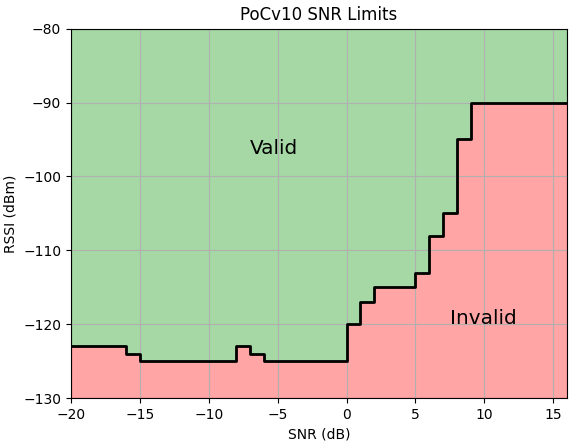
That can be confusing, as it comes from the RSSI/SNR chart Helium is currently using. PoC V10 RSSI/SNR This was originally implemented to combat gaming, and will be changed with PoC v11. For now, you might try changing the antenna. What kind of hotspot is it? Bobcat, Rak V2, etc.


Jasper van der Zwaan - 8/2/2021

Thanks Nik! It’s a sensecap miner


Nik - 8/2/2021

Hmm, I haven't seen much about their antennas yet so can't be as helpful as I'd like.


Tom - 8/5/2021

Yo Nik, thanks for your valuable comments! I have yet another question, but this one might be too much into it: - which 5dBi antenna is better? The RAK one (https://store.rakwireless.com/products/fiber-glass-antenna-kit-for-helium-hotspot?variant=39705923846342) or the Parkey Labs one (https://shop.parleylabs.com/products/5dbi-fiberglass-antenna-for-hnt-hotspots-lorawan-us915) ? Thanks! :-)


Nik - 8/5/2021

If they're not the same thing, they're close enough that it doesn't make a difference. :)


Tom - 8/5/2021

Thank you! I was actually wondering about the "Polarization: Vertical" from the RAK antenna description, and the "omnidirectional monopole" on the Parkey Labs one description. I mean - is there any technical difference in the sense the RAK one does not do omindirectional, or anything else like this? I'm too uknowledgeable to understand that :-(


Nik - 8/5/2021

They're both vertically polarized; almost all antennas on the market for this are. Multi-polarized is pretty rare. Omni-directional is something different.


Tom - 8/5/2021

Is that mult-polarized antenna from HNtenna better than these vertically polarized antennas from RAK and Parkey Labs? Or there is not going to be a visible, significant change on the "performance" of the miner?


Nik - 8/5/2021

More of a difference in urban environments, but it won't be a "change your life" difference. I put 'em on all mine; just one less decision to make.


Paul - 8/7/2021

Nik, Thanks for all the awesome info! What are your thoughts on declaring changes to your antenna and elevation in the helium app if you have an established hotspot already. Is it worth it to loose all your witnesses and have to rebuild them? Planning on going from a 2m indoor elevation to a 7m outdoor location, possibly going from a stock bobcat 4dbi to the HNtenna 3dbi. Is this info just used for the gaming check? Is it likely to get flagged if I don't update it?


Nik - 8/7/2021

Hi Paul, it doesn't make a difference right now. You're not really "losing witnesses", as those are just a record of the hotspots that have witnessed yours; it's not like you're less likely to witness them again. Sounds like you're making the right move going from indoor to outdoor and getting it up high. Keep us posted on how it goes please!


Antti - 8/8/2021

Hi. Thanks for great information. I`m not looking to add any extra dbi or change my stock antenna. I just would like to have my antenna on the roof. Do you know if Bobcat stock antenna can handle outdoors? Hard to get a clear answer on this one.


Nik - 8/8/2021

Hi Antti, good question. The specs are here, and it's got a wind rating. I'd use it just to test indoor vs outdoor, but in the long run I'd go with an outdoor specific antenna.


chop - 8/10/2021

Thanks so much for sharing your expertise here. I learned so much just from this one post! I got my hotspot from Emrit a few days ago, and I figure it's good enough until I can finally get my own units a couple months from now. I'm hoping to experiment a bit with antennas and placement in the meantime to maximize my coverage. I live in a suburban area of mostly ranch and 1.5 story houses. Nothing really tall around here. Is the most important factor for an antenna a clear view? My plan is to move my antenna outside, replace the stock (1.2 dbi?) unit with a 5 or 6 dbi one, and mount it on my chimney so it will "see" over the majority of the buildings in the area. Is there any benefit to going any higher than that? How high is too high in a suburban area with a modest number of hotspots? My ID is Hot Eggplant Marmot.


Nik - 8/11/2021

Yep. Once you're settled on a location, the next most important thing is elevation. You can check to see whether or not going higher will make a difference by using a Line of Sight tool; I use Helium.Vision, but other tools work as well.


Ndu - 9/13/2021

Hi Nik, Do you know if this VNA would work: https://www.amazon.com/?Upgraded?AURSINC-Analyzer-Measuring-Parameters-Standing/dp/B07Z5VY7B6/ or should I buy a VIA instead? I guess I am confused about VNA and VNA, and I am trying to go the cheaper route. Thanks!


Nik - 9/13/2021

Hi Ndu, that link didn't come through, no big deal. People call 'em VNA but they're labeled Vector Impedance Analyzer. I think I bought mine on Banggood but I saw one like it on Amazon, here. The NanoVNA is also popular.


How To Map The Helium Network for Coverage and Profit - Gristle King - A Guide to Helium - 12/2/2021

[…] cov­ered a few ways to test var­i­ous com­po­nents, but this time we’ll dig in to where the rub­ber meets […]


Aaron Olson - 12/25/2021

Thanks Nik. I am very confused because when I put my hotspot in my attic with the stock antenna, I get 12 witnesses, but I didn't witness many beacons. When I put an antenna outside the house with a 10 dbi antenna and 33 ft cheap cable I witness lots of beacons but only 5 witnesses. Any advice?


Thomas - 5/10/2022

Hi, is there another easy way to check if you antenna is working without purchasing hardware? I just installed a new antenna, but I haven't received any rewards (no activity in general) for the past 8 hours. Normally I would get something every 2-3 hours. Discovery mode is not working.


HIP 17 - Why Are You Getting Scaled?

· 24 min read
Nik
Site Owner

It's one of the most confusing aspects of Helium; you put up your hotspot in an "empty" res 8 hex, but you still get your transmit rewards scaled. Why is that, and what can you do about it?

First, let's talk about "transmit reward scaling". What is it? Let's take it straight from the Github proposal:

[...]for each transmit, the transmitting hotspot’s reward will be based on the number of witnesses and then scaled by its own transmit reward scale.

For witnesses, they will receive a portion of reward based on the number of witnesses scaled by the transmitter’s reward scale. 

Translation -->

When you beacon, any reward "assigned" to you for that beacon will be multiplied by your transmit reward scale. If you have a transmit reward scale of .5, all the rewards you get for beaconing will be cut in half. (Your Reward) x (0.5) = 50% of your rewards.

When you witness, any reward assigned to your hotspot is scaled by the transmitter's reward scale. That means if you witness a hotspot's beacon, but that hotspot has a transmit reward scale of .5, your witness reward will be cut in half. (Your Reward) x (0.5) = 50% of your rewards.

But how the heck is the rewards scale calculated? Which resolution should you look at? Here's the vid:

https://youtu.be/826pM9h3ZsU

What's the short version for readers?

  • Your reward scale is a function of hotspot density assessed at different scales (resolutions).
  • Helium assesses your rewards scale at EVERY resolution.
  • The transmit reward scale calculation is a "waterfall", affecting every resolution from 4-10.
  • You can be in your own res 8, or res 7 but still be in an overcrowded res 4 and get scaled. See the video for an example.
  • Sometimes the rewards don't make sense. This can usually be explained by blockchain lag, OR it's likely that Helium is doing some behind-the-scenes math to combat gaming.

Groundwork for Understanding HIP17 - Hexes & Siblings

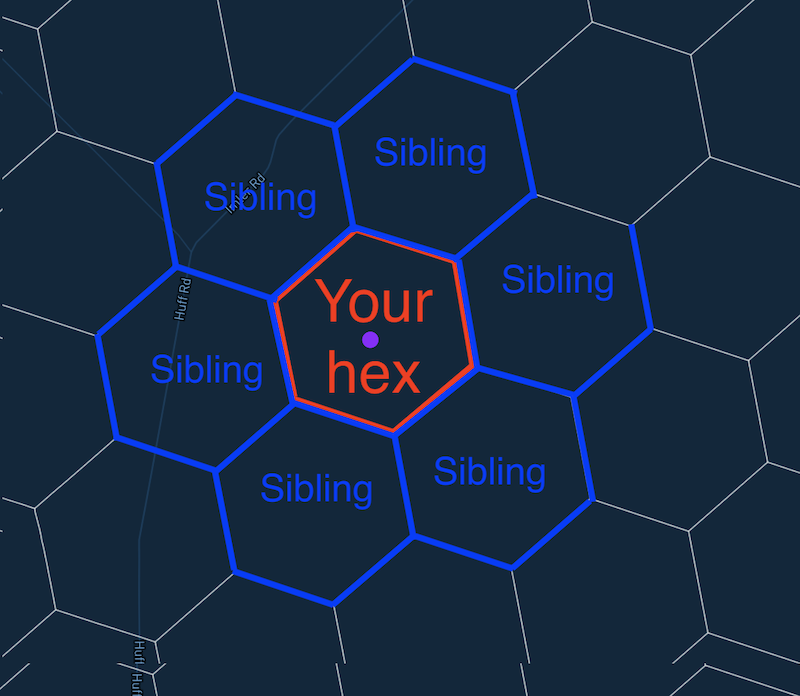
Let's start with the idea of siblings. At any resolution size, a sibling is any hex sharing a side with your hex. Every hexagon has 6 sides and therefore 6 sibling hexes.

A sibling is just one of 3 chain variables, or "chain vars" that the Helium blockchain uses to determine transmit reward scaling at any resolution size.

The chain variables are:

  • Density Target - How many hotspots can be in a hex WITHOUT any other hotspots around
  • Density Max - The most number of hotspots you can have in your hex, even if the Sibling/Density Target variables are met
  • Siblings - The number of siblings that need to meet the Density Target before you can move to Density Max

For example, at resolution 8 (res 8), the chain vars are 2, 1, 4. Yes, it's confusing. No, I didn't write it. Yes, I can explain it. I'll go in order of the chain vars.

  • 2 refers to the number of siblings that will need to have the Density Target in them in order for your hex to have up to the Density Max before being scaled.
  • 1 is the Density Target, or the number of hotspots per hex Helium allows IF the hotspot had no other hotspots nearby.
  • 4 is the Density Max, which is the maximum number of hotspots you can have in a hex once conditions are met (Number of Siblings each having the Density Target.)

That means if you're in a res 8 hex in the middle of the desert with no one around you, you can only have 1 hotspot per hex before you get TRS'd (Transmit Reward Scale). If you had 2 hotspots in your hex, your TRS would be 0.5, or 50%.

If you're in a res 8 in the city where it's a little more crowded, and you have at least 2 siblings that ALSO have 1 hotspot in them, then you begin to be able to add more hotspots, up to 4 hotspots in your hex before getting TRS'd.

The same thing applies at every resolution. Once you get it, it'll make a lot more sense.

The last thing to remind you of is that you'll frequently see wonky numbers that won't make sense. Sometimes those are outdated numbers that just take a few days to drop off. Sometimes that's a result of the "children" hexes affecting the area covered (more on that in the HeliumVision Master Class, which you should totally sign up for.)

At the end of the day, even an 8 year old child could look at New York City and know it's overcrowded, or Basalt, Colorado and know it's underpopulated. While this is a little bit of rocket science (the guy who wrote it now works on rockets), the intent is one of common sense: There is no benefit to the network for overcrowded areas.

That's really all you have to remember. Best of luck with your deployments, and if you need help going deeper or optimizing your Helium hotspot, consider hiring me.

Rock on!

Archived Comments

Gils - 6/21/2021

best explanation of HIP 17 ever !!!


Nik - 6/21/2021

Awesome, thanks Gils!


David Fant - 6/30/2021

Hi Nik, thanks for the write up. It gives me a better understanding of how to look at the different hex resolutions. I am still learning so bear with me... I am looking at a hex that has 11 beacons of which six are off-line, and the Helium Explorer shows it scaled at 0.63. Not sure why the six are off-line, but I believe that non are optimized (external antennas) installations. If we install an antenna that is significantly higher than the rest, (22 story roof with unobstructed views) will we end up being scaled along with the rest? Thanks in advance!


Nik - 6/30/2021

Hi David, yep, you'll get scaled with the rest. As of June 2021, no consideration is given to the elevation of an individual hotspot placement. If you're seeing 11 hotspots in a res 8 hex, I'd look for another hex. :)


David - 7/8/2021

Hi Nik, thanks for your recommendation. I may have missed it in the material, but, will I also be scaled if I place a hotspot in a hexagon with another hotspot that is offline? Thanks again.


Nik - 7/8/2021

Good question, I'm not sure of the answer. I know that offline hotspots fall off the map within a few days, so as long as they don't come back online, you're safe in the long run.


Natko Jankovi? - 7/9/2021

Hi Nik, great to have you, I appreciate your efforts and expertise! So sometimes scaling is not as it should be, depending of Helium interest for the Network spread...There is not much we can hold on to!? Allso in the answer you wrote, there are a few in my area of interest offline for more than 4months and still red approx 174148 blocks behind ( pls.see 881e130d43fffff)... Can you get from Helium staff more clear instructions about positioning and scaling, and what make hotspot losing scaling from 1 to 0,67 if it is alone in res 7 hexagon like there are 2 (see hex 881e130d65fffff) vs. this hex 881e130dc9fffff?! Thak you in advance for explaining us this corelations and unlogical?!


Devon - 7/9/2021

Hi again Natko to touch base on your question, offline miners could be a multitude of things. Also reward scaling changes can take some time to load (ex: if you turn a miner off it will take up to two days for it to not show on the explorer map). If they have been offline for more than 3+ months chances are they will not come back online (at least in your area) usually this is because of EMRIT always having to re-assert hotspots to new areas/customers. It sounds like you are ready for a Standard Helium Strategy & Placement Optimization, this is where we would go over every aspect of the Helium Network that you are inquiring upon. Please fill out this form if you are interested in a session. https://gristleking.com/placement-assessment/


Nik - 7/9/2021

Hi Natko, interesting re. the offline ones. I always look for placement locations that are unequivocally awesome, but it's reasonable to want to put a miner in a place where the offline ones aren't providing coverage. I don't think Helium will give much more clarity on positioning and scaling, as those are the most easily "gamed" aspects right now. I'd aim (overall) for placements that offer clear benefit to the network. "If there's any doubt, there is no doubt." (One of my favorite movie lines.)


John Frederick - 7/29/2021

Hello Nik. Great video. But something that wasn't mentioned was elevation. Unless I missed it. Let's say I have an antenna at the top of a 20 story building and someone else has a hotspot transmitting from the 5th floor of the same building. There's this next to a window. I'm obviously the one on top of the roof with a greater potential of reaching other hotspots. Now let's assume that these same two hotspots are the only two in the hexagon. Are you saying I will share half of everything I get with the guy on the fifth floor?


Nik - 7/29/2021

Yep, any hotspot in the same res 8 hex as you will cut your earnings unless the sibling requirements are filled. What will *probably* happen is that if your HS is providing far better coverage, the split will reward you more favorably over time. That's just my guess (and how I'd tweak the network if I was king).


pcste - 8/13/2021

thanks for this article, ive finally started to understand how this is working..imo this explanation should be the official placement instructions as there is so much false info on discord about placement.


Nik - 8/13/2021

Right on, glad it helped. :)


Sebastian - 8/17/2021

I have an issue. I got scaled down from 1 to .83. I really need help, please.. I have just 2 hotspots in hex8 with at least 2 siblings so the max would be 4 it doesn't make sense. Please can someone have a look? I'm willing to pay


Nik - 8/17/2021

Sebastian, check your other resolutions; I bet you're overcrowded in one of 'em.


pcste - 8/18/2021

Well i thought I understood it but i got scaled when 2 more HS's moved into my res 8 , 1 of them in my res10 and 9. (my res 8 has 2 siblings) so my HS and the 1 in the same res 10 both became 0.5 but the 3rd 1 in the same res 8 but different res 9 was 1.0..... i moved my placement out of the res 10 and out of the same res 9 as the other 0.5 HS and now all 3 of us in the res 8 are 0.67 and not 1.0 heres a link to the discord post i made which includes an image of the HS's https://discord.com/channels/404106811252408320/803306566916767816/877549612033007626 Im wondering if i need to place my HS in the res 8 above me but that would 'place' my HS 180m away from its true location, can i place it that far away? Any help would be gratefully received.


Nik - 8/18/2021

Hi Pcste, if you have one sharing your res10 you'll get scaled no matter what. If you'd like to dig in to optimal deployments including placements I offer consulting services, here.


pcste - 8/18/2021

Im not in res 10, I moved my placement out of the res 10 (as mentioned), and my scale went up from 0.5 to 0.67. As far as i can tell, from reading your instructions and hip 17 I have fullfilled the criteria so cant understand why still scaled ? Im obviously getting something wrong but just cant see it. Thanks for the offer of consulting services, and if i was starting from scratch and wanted help with more than just this issue i may have been interested, however that package is more than i am needing atm. i can only move my HS maybe 1 or 2 res 10 hexes, as such, it will cost me $20 to try 2 new locations around my true location. Thank you again for this article and advice.


Nik - 8/18/2021

Hi Pcste, there's a nuance to HIP17 I didn't understand until recently that explains this. Basically, you don't jump immediately from density target (in the case of res 8 it's 1) to density max. It scales up according to *how many* siblings are filled. If you have 2 siblings meeting the density target, you can have 2 in your hex. If you have 3 siblings meeting the density target, you can 3. 4 siblings = up to 4 in yours, and then 4 is the max. So if you had 5 siblings meeting the density target at res 8, you could still only have 4 in yours. That pattern holds at every other res level up to res 4, where there's a slight (and more or less inconsequential) change. As far as how far away can you "mis-assert", the official line is that your location gets locked to the middle of the res 12 you assert it in. In practice, gamers have gotten away with far more, but that's...gaming.


Dick Headstrong - 8/19/2021

Hey, Thanks for everything. This is an unrelated question that I wasn't sure where to ask it. I've got one hotspot up and running in an enclosure with ethernet and POE. I have a second miner (SenseCap M1) I also want to move outside but would be using WIFI (because my friend at this location doesn't have wired internet). Do indoor units use the LoRan antenna to access the wifi connection as well or is it a separate internal antenna? Or would I need to purchase a separate WIFI module which had the place to add a wifi antenna? There are no additional ports on the sensecap to plug other external antennas into. The enclosure has many ports for attaching a variety of external antennas. If it's a small internal antenna, I'm sure it would be getting blocked to some degree by the aluminum enclosure. Also, anyone know what the likelihood of overheating an indoor miner like this encased in a metal enclosure during the summer? I'm thinking about getting the consultation, I just wish there was another price entry point. $500 seems kind of steep for just 2 or 3 miners. Although to be fair, I've probably leached at least $100-$200 worth of info just from your free advice, so I'm not complaining. I'm just saying that I'm sure others besides myself would come over to the paying side if there were other options. In fact, if you posted some of your public crypto or helium addresses, I would throw some coins in one of your wallets, right now. Thanks


Nik - 8/20/2021

Hi Dick, the WiFi antenna and the LoRa antenna are separate things; they use different frequencies. All Hotspots that I know about have both. The WiFi antennas provide a less stable connection than an ethernet cable, to greater and lesser degrees depending on brand. For the consult price, it is what it is. I provide everything free here on the blog, so the consultation is for those folks who value their time and don't want to go through every post and video I've ever made. There's something weird about providing an address for donations that I just don't like; feels too much like I'm putting some kind of bullshit obligation on people. I'd rather keep it clean. If you want a customized walkthrough for your specific situation from an expert, you pay. For everything else, it's free.


Dick Headstrong - 8/20/2021

Hey, This is off topic but very important. Someone stole my hotspot. I think it might be related to sitebot. But the ownership of my hotspot was transferred without my permission to this account 14B6r9xZbsVrjMgyiE8kahSWCxruAhYWLwWYMEwh3Kb636mti1V The only transaction I did was with sitebot to "claim" my hotspot on their site to get full site amenities. I donated 0.1 HNT . Otherwise I made no transactions with my wallet or account. I will pay you to help me resolve this and I think it might be a topic to be covered in your blogs. Thanks


Dick Headstrong - 8/20/2021

Hey, Just read your response to my earlier comment. Totally respect the thing about putting your address out for donations. I'd still like to give you something for the help you've already given, but really need some help on this stolen hotspot issue. Name a price and I will probably pay it. If it's the whole $500, I have one issue. How do you do an optimization in 30 days when you say that's the minimum scale for assessing profits?? You would have to wait at least 60 days before even comparing 2 strategies? Thanks Again,


Nik - 8/21/2021

That's pretty odd. Where did you get your hotspot from?


Nik - 8/21/2021

Hi Dick, the Optimization is all about getting you set up in the right way. Once we go through how to do it, you can monitor and change things yourself confidently. The 30 day support window is there just in case you have any questions that come up post-consult; I can usually save you a ton of time in finding an answer.


Kgp - 8/21/2021

Hey Nik, love the website, you’re awesome. A couple of my rak miners finished syncing several hours ago but still no activity (challenges, witnesses, etc) and also noticed my transmit scale says N/A on helium explorer. Should I just give it more time? Or do you suggest powering off and back on? Any other troubleshooting solutions? Thanks!


Nik - 8/21/2021

Hi Kgp, give it more time. If they just finished syncing they'll probably beacon sometime in the next 24 hours. I'd wait 2 days before doing anything.


Mark Silen - 9/10/2021

Fantastic explanation !!!


Nik - 9/10/2021

Thanks Mark!


David - 9/10/2021

Hi Nik, I hope you are doing well. Quick question- can we select who we witness to not have our rewards scaled down? We have a site that has great elevation, and the simulation shows 637 witnesses, but nearby hotspots ratings are mostly less than 1.00. I was shocked at the $HNT estimates and want to know if we can select who we witness. Thanks in advance!


Nik - 9/10/2021

Hi David, nope, you don't get to pick who you witness. You *could* try to manage that with directional antennas or shielding, but not worth it; I mean, why not be able to witness as many beacons as possible?


David - 9/12/2021

Hey Nik, we simulated a site that has excellent elevation - 300+ feet, the only live miner in hex (one hotspot turned off for over 6 mo.), a 3dbi antenna, witnessing 637 hotspots at 175% percentile. According to HotspotRF we will only be rewarded 9 $HNT a week. Shouldn't the site be earning maximum rewards because we have taken the time to optimize the installation? I understand the People's Network needs the best coverage for IoT senors to transfer their data, however, if we are not able to earn a decent amount of $HNT, then the incentive of deploying hotspos goes away. There should be an option to not witness hotspots that are ridiculously scaled to near zero earnings because they are stepping all over each other. I'm just saying. Sorry for the rant! LOL


Nik - 9/12/2021

It's a good point, though you have to imagine all those hotspots you're earning off of are earning even less. :). Also, simulations are just simulations, they're not real. HotspotRF has said they're only accurate 60% of the time, +/- 20%. That's because it's bloody hard to predict the earnings on a network growing so rapidly. Right now (12Sep), anything over 1 HNT/day is still pretty good.


Winning At Helium: The Right Way To Get Started - Gristle King - A Guide to Helium - 9/14/2021

[…] your hotspot is the num­ber one deter­min­er of your HNT earn­ings. If you’re in a place with opti­mal den­si­ty and vol­ume of hotspots you’ll earn more. If you’re in a place with too few hotspots that your hotspot can […]


Why Are My Helium Hotspot Earnings So Spiky? - Gristle King - A Guide to Helium - 9/15/2021

[…] and there­fore trans­mit more bea­cons than a small vil­lage with 4 hotspots. Even though the earn­ings per Hotspot is like­ly to be less in a city, you just have more oppor­tu­ni­ties to […]


Robert Watkins - 9/16/2021

I am waiting on 18 bobcat hotspots that are spaced about 2 weeks apart my 20 week ship estimation date will be mid oct give or take:/ But I will find the money for the help you have been a life saver with your free info and I might as well get it right the first time. Thank you Brother!


Trey - 9/17/2021

Hey Nik! Great post as always. I would like to move my hotspot to a new location. Explorer shows that hex location, and some surrounding sibling hex's to have a hotspot. The weird thing is that all of these hotspots (4) in total across (3) Hexes, are not beconing, witnessing, or doing anything. Will my hotspot still be scaled even though they are inactive but still shown "online"?


How To Use Hotspotty To Crush - Gristle King - A Guide to Helium - 9/18/2021

[…] Now you can see what the edge of any hex looks like (NOT a straight line), and also very quick­ly see where the “prob­lem” hex­es are so you can work to clear them. If you want to dive a bit deep­er into HIP 17, I’ve got a post writ­ten up on it over here. […]


What Does A Good Hotspot Cluster Look Like? - Gristle King - A Guide to Helium - 10/12/2021

[…] who are over­crowd­ing the hex den­si­ty rules and no one is earn­ing very much because all your earn­ings are scaled. Again, you’re not going to earn […]


Mark - 11/3/2021

Hi, I have 2 others in my hex 8, and my reward scale is now 0.26. Can i move my location on the app more than 110 meters but less than 150 meters in order to get into a new hex? Hotspotty says if i do that my rewards and the other two hotspots near me will go up to 0.77. Will this work or is roughly 120m too far to fake my location away from me?


Nik - 11/3/2021

We'll see how sensitive PoCv11 is. Technically you shouldn't do this, but practically, well, lots of people misassert to "clear" a hex.


Lessons Learned From A Year Of Helium Deployments - Gristle King - A Guide to Helium - 11/15/2021

[…] to get geeky and build a test set­up just to see how the whole thing works, or you wade through the com­plex­i­ties of HIP 15 & 17, Heli­um has a way of forc­ing you to expand your […]


James - 11/15/2021

Hey Nik, any guidance regarding the choice between A. A way overcrowded urban area (Vancouver) with heavy scaling (0.2) but many many witnesses, or B. Zero scaling in a rural area with at most 3 witnesses (one old them being a "hotspot relay"? Option B will be helping the network expand, but I don't expect there to be a lot of data transfer in the area.


Nik - 11/15/2021

Neither are good, though option B has more potential to improve.


Mark Liccardello - 11/19/2021

Thx for your info & videos! I HAVE A TERRIBLE witness reward units # 17. Is this because another hotspot moved into my hex? I am thinking I can reassert the hotspot 535 meters without moving the hotspot... not sure Thx for your input...


Nik - 11/19/2021

Probably, though remember to check ALL res sizes, not just the res 8.


Ben - 12/2/2021

I am very new to this so pardon the elementary question. Helium exporer is showing no other hotspots nearby. How should I expect my helium to work? Is it ideal to not have other hotspots or do we want more nearby?


Nik - 12/2/2021

Hi Ben, you want enough local Hotspots to reliably "Beacon" and "Witness". Ideally you're looking at, oh, 40-60 within a few kilometers of you. Check out the Helium Basic Course, you might dig it.


Jamie Barratt - 12/10/2021

Hi Nik Apologies if you have addressed this and I have missed it, how can we control our witness rewards units? My Transmit scales are all at 1.00 but my witness rewards units are averaging .44 Thanks Jamie


Nik - 12/10/2021

They're a factor of the hotspots around you; nothing you can do other than move.


Jamie Barratt - 12/10/2021

Thought so but wanted some clarity on it, thank you!


Michael - 12/30/2021

Hi, newbie here and hungry for clarity. I'm looking at an area with lower population density, but zero miners and no siblings. If I am the first and only miner in the area is that a benefit? Does a lower population density reduce my earnings?


Nik - 12/30/2021

Hi Michael, nope, you need other miners around you in order to earn. You earn ~75% of your rewards from "hearing" (Witnessing) other transmissions (Beacons.)


Mario - 4/15/2022

Hi Nik, I asked a question on discord and immediately got a 24h timeout and dunno why... The question was this (didn't write the exact numbers, now I have to you): HIP 58 question for Helium/Nova. I only had a handful (11) of witnesses but was doing fine. 50% (6) of that witnesses were up to 217 km away because the radio waves traveled across the sea (and I'm located on the coast). Now that they are invalid... --> Will my Witness Reward Units stay low or will it improve i.e. do invalid witnesses account into Witness Reward Units? If yes, that now seems unfair because I get nothing for them and less rewards for the scarce area in general I'm trying to cover with Helium/Nova network. Can you please answer me? I just escaped two weeks ago from a 6x overcrowded city, put an HNTenna on a small hill overlooking the sea, started getting 0.3 HNT per day, said to myself yeah!, and frankly, now I'm kinda sad. Also, if the answer is yes and they do account, the only thing is see I could do is switch the expensive HNTenna that cost 400$ to import with the stock antenna so it stops going across the sea... Anyway m8, guidance needed! :)


Nik - 4/15/2022

Hi Mario, Sounds like you're a little early to that area. I'm not sure about invalid witnesses & WRU. Rather than switching out an antenna, I'd add a local Hotspot or two and improve coverage. Hotspots are getting much lower in price than they were. What part of the world are you in?


Helium 101: Cable Loss and EIRP.

· 54 min read
Nik
Site Owner

Got questions about what kind of cable you should use to connect your Helium hotspot to your antenna? Want a Helium-specific cable loss table?
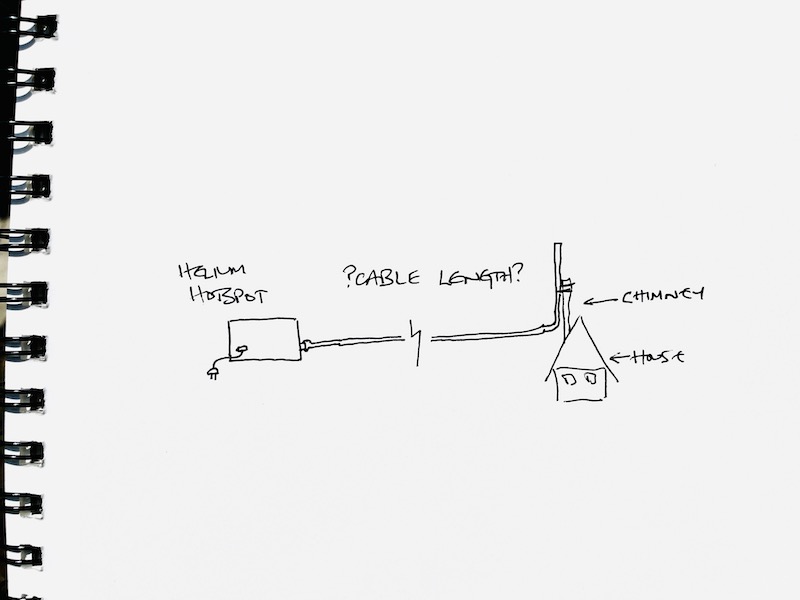
You're not alone! Lots of folks want to know if they should use LMR 240 or 400 or 900, or how long it can be, or if they should use the cable that came with their cheap-o eBay antenna.

In order to answer that, I'm going to walk you through how the whole thing works. That way, instead of asking me if your XX antenna with YY feet of ZZ cable will work, you'll know how to calculate the answer.

First, let's talk about the precise but confusing terminology in the land of RF (Radio Frequency). Well, if you want to just skip to the cable loss tables, go here.

You'll commonly see dB (decibel), dBm (decibel milliWatt), and dBi (decibel isotropic) thrown around, as well as dBm, EIRP, ERP, FSL, and others. Sheesh, that's a lot!

We'll start with dB, which stands for "Decibel". A decibel is the difference between two signal levels. RF engineers (and the rest of us) use it to add or subtract the effect of cables (or other "system devices") on signal strength.

dB are logarithmic: Every time you add 3 dB of gain, you double to the signal level. Every time you halve power, you subtract 3 dB. That means a 3 dBi antenna is doubling your emitted power over a zero gain antenna! But wait...that can't be right, can it? Antennas don't "add" energy.

As I've covered in other blog posts, antennas focus and shape energy. They don't add energy. It's kind of like a garden hose sprayer with multiple spray patterns. The water pressure going into the nozzle doesn't change, but as you switch from "mist" to "shower" to "stream", your emitted pattern changes.

That pattern change, and the resulting focus and range, is measured in dBi (decibel isotropic).

Ok, it's about to get a little more confusing, but I promise you can understand this.

"Isotropic" refers to having the same energy value in all directions. It's the idea that an antenna could emit a perfectly shaped "globe" of energy. For various reasons, it's impossible to build an isotropic antenna. Every antenna in the real world emits energy in slightly uneven patterns.

Still, RF engineers use a perfect 0 dBi as a reference point. As you go up in gain (the dBi goes from 0 to 1 to 3 to...13), the pattern becomes less and less globe-like and more focused in a single direction & plane.

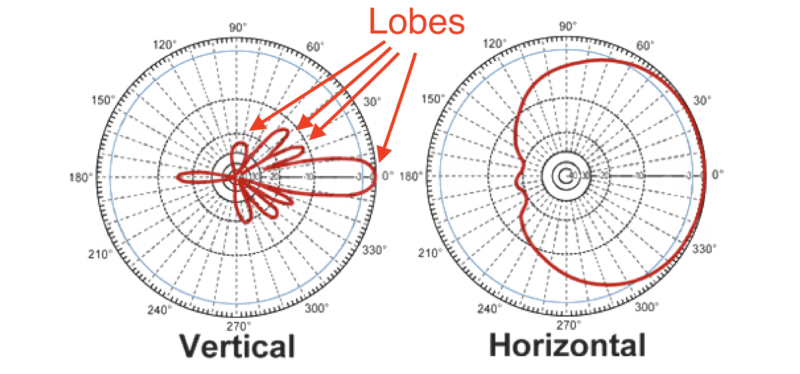
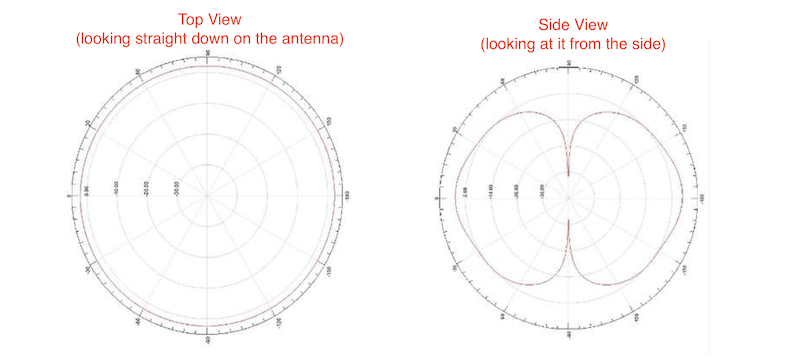
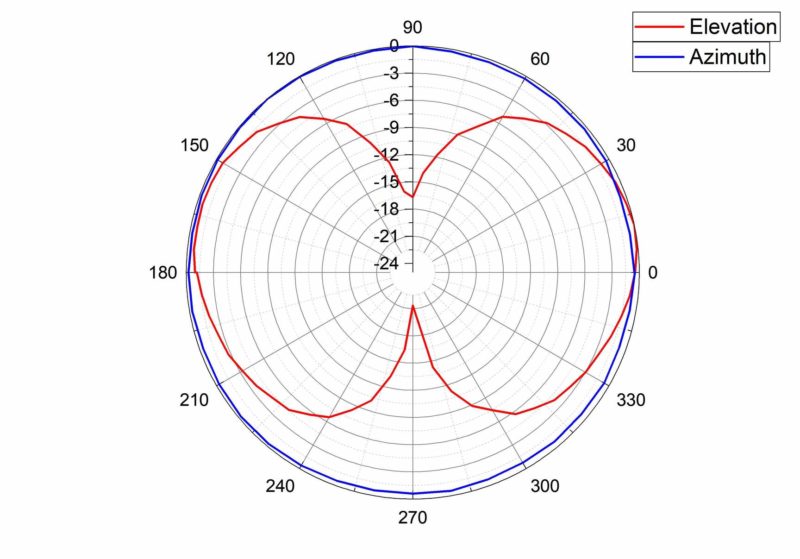
That brings us to EIRP, or Effective Isotropic Radiated Power. This is a measure of the radiated power coming out of an antenna in the direction of its largest lobe. What's a lobe? Let me show you:
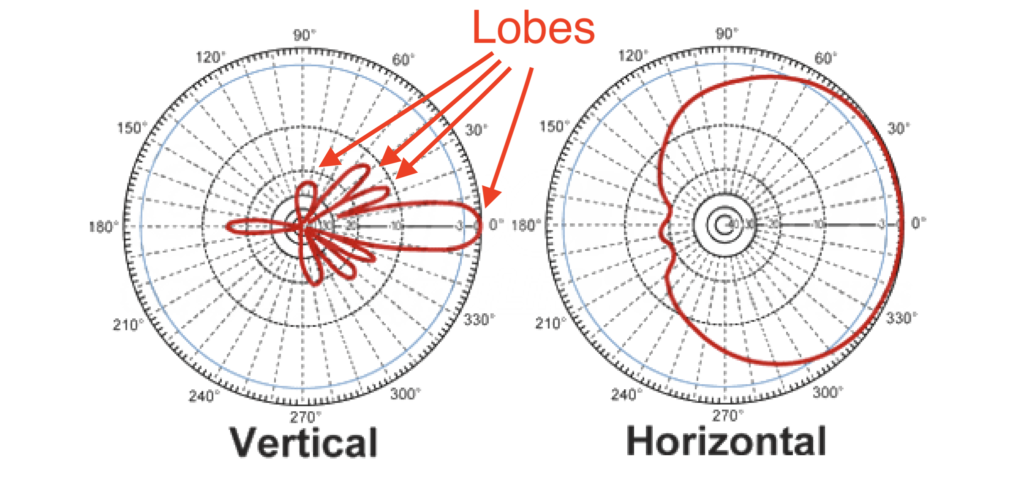
Why is that max lobe energy measure of EIRP important? Because that's what regulatory agencies (like the FCC) use to measure the power coming out of an antenna.

In the US on the 915 MHz frequency we use, the FCC limit for EIRP is 36. You get the EIRP by adding the transmitted power in dBm (what gets fed into the antenna) to the antenna gain in dBi.

Transmitted power is measured in dBm, or decibel milliwatts. The max transmit power we can use in US Helium Hotspots is 30 dBm, or 1 watt. For Euros, the max transmit power for uplinks is 14 dBm. You can read more on this here, in the LoRa docs. I'm US based, so we'll stick with the US numbers for this article.

The transmitter used in a US Helium Hotspot pushes out 27 dBm. The stock antenna shipped with the original Helium Hotspot was a 3 dBi Antenna gain.

That gives us a total EIRP of 27 dBm + 3 dBi = 30 dBm

If you're US based and do the math, you're now realizing why a 9 dBi antenna is the limit for your Helium Hotspot deployments. 27 dBm + 9 dBi = 36 dBm, or the max allowable EIRP.

But wait, wait, wait, Nik. I thought this post was about cable loss? Why are we talking about antennas and gain? Well, when you pass energy through a cable, you lose some of it. Different cables lose energy at different rates, usually measured as dB per distance. In general, thicker cables lose less, and thinner cables lose more.

Cable loss effects EIRP, because remember, EIRP is a measure of what is "fed into the antenna". So:

EIRP = Transmitter power (dBm) - Cable loss (dB) + Antenna Gain (dBi)

This is why you can have a 9 dBi antenna with lots of valid witnesses if you have cable loss that brings your EIRP down to what Helium considers "normal" limits.

Before we get to the cable loss table, let's cover one more term that gets thrown about, which is FSPL, or Free-Space Path Loss. This is the decrease ("attenuation" for the RF nerds) in radio signal power over distance. FSPL is important in Helium because it's one of the factors the blockchain uses to determine if the signal strength of any beacon is "out of bounds".

FSPL is used to combat gaming. If you've got 10 hotspots in your closet (remember Modesto?), you can "say" they're deployed in a perfect grid pattern, but using FSPL to calculate the signal strength that should be reported is one way to make sure they're actually, say, 800 meters apart and not all stacked on top of each other.

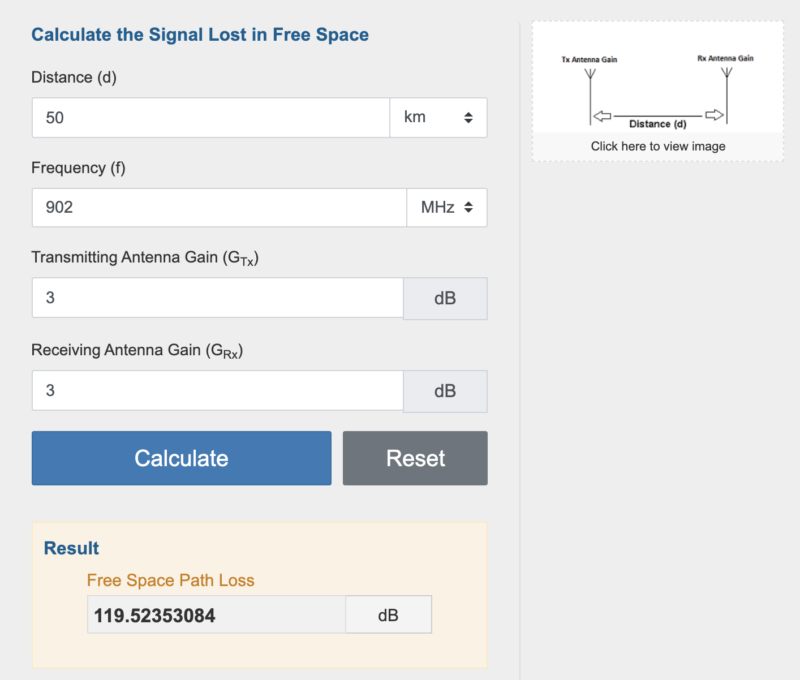
You can calculate FSPL here. Here's what that might look like for 2 hotspots 50 km apart with clear line of sight, both using 3 dBi antennas:
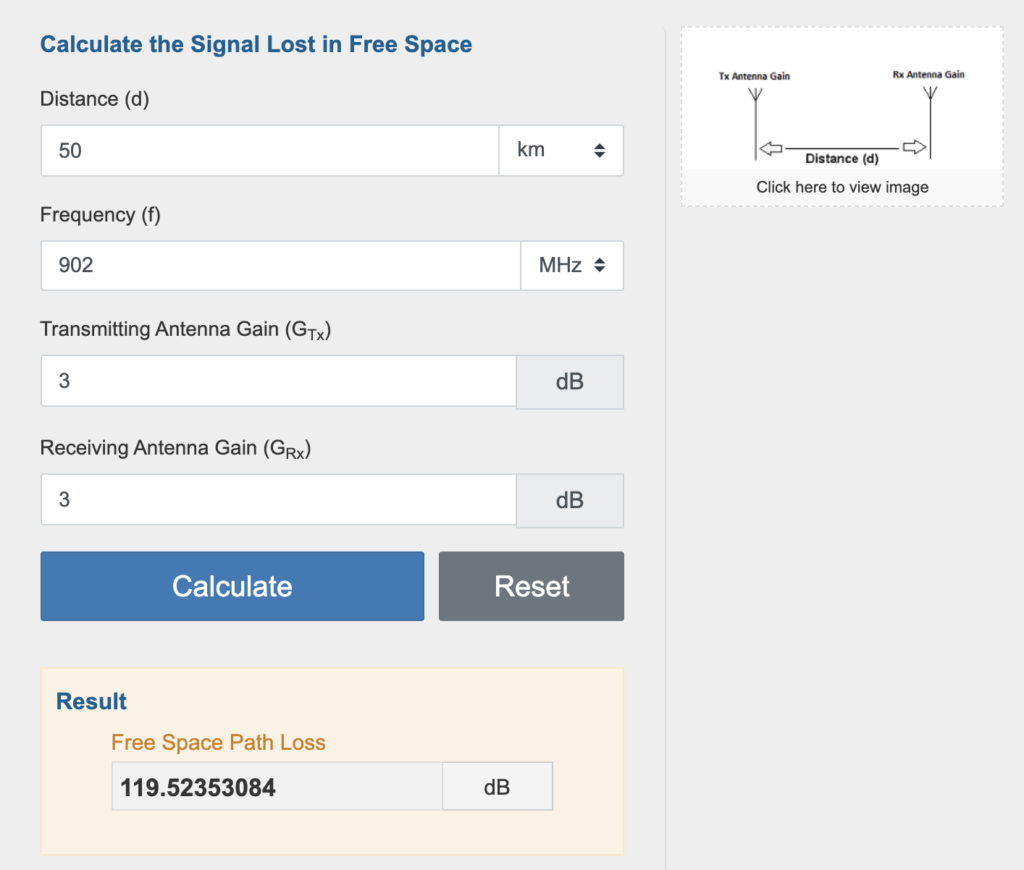
How would you know if that's within limits?

Let's do this! Remember that your hotspot pushed out 27 dBm. Let's imagine you're not using any cables, so cable loss is 0.

We've already accounted for the gain using the calculator, so we just subtract the FSPL from the transmitted power (27 dBm - 119.4 dB) to get -92.4 dB.

That's a signal strength within normal limits. For Helium hotspots in the US, most common signal strengths are (generally) between -90 and -122, though it can go higher or lower, down to -130 in some instances. Now, there are some other measures, both public and private, that Helium uses to combat gaming when assessing a tx/rx receipt, but these are the basics.

So, with all that as background, here's your cable loss table. Use your transmitter power minus the cable loss plus your antenna gain to get your EIRP, and make sure that number is 36 dBm or below.

You can get as detailed as you want, but I'd recommend not getting too wrapped up about your EIRP to the thousandth dBm.


[ninja_tables id="1782"]

Finally, one thing to think about is this: Having more power come out of your antenna isn't always a good thing. An effective way to plan your EIRP is to go after the LOWEST number you think you can get away with, say, 30 or lower. LoRa is already pretty darn capable, so "extending the range" with antenna gain can be pointless. I mean, I've seen a 3 dBi antenna be witnessed 200 km away. That antenna does a way better job of hitting lots of local hotspots than a higher gain would, in large part because of the effective pattern it has. Higher dBi doesn't always mean "useful longer range" (or greater HNT earnings). Just something to think about.

Rock on!

References & Resources

Archived Comments

Kerry Prudhomme - 6/15/2021

O K I'm a little confused. My first hotspot will be at my home. I live in a relatively flat area. I have tall trees about 50 - 100 feet from my house. I plan to use an 8 DBI antenna. I could place the hotspot within 20' of the antenna. Should I purchase an outdoor enclosure for the bobcat miner to reduce the amount of cable between the miner and the antenna. Is the 8 DBI antenna Ok in my situation?


Nik - 6/15/2021

Hi Kerry, I always aim to reduce the cable length between miner & antenna. You don't *have* to, it's just a good idea. Your 8 dBi antenna will probably be fine. Does that help clear it up?


Kerry Prudhomme - 6/16/2021

Thank you. I think I will purchase the enclosures. I will also need to purchase a short length of cable for each.


Dan Carare - 6/17/2021

Hi! So the best thing to do is to buy the most short cable with highest LMR 600, considering will be short distance between hit spot and antenna location ) Is this correct? Shir cable, maximum LMR Right?


Nik - 6/17/2021

Technically, yes. Practically, you don't need anything beyond LMR400 for most instances, and the 600 & 900 are thick and more difficult to work with.


scott dieken - 6/19/2021

Hey, could you please add the LMR900 cable to your chart. I do not understand why people would cheap out on their cables. I was making 2 grand a month on a rak miner with the factory provided rak antenna on an 8ft lmr-400 ft cable. I tried moving it up 25 feet with a 50 ft lmr-400 cable and was making zero dollars a day. If you can make one or two grand a month why buy anything but the very best cable? Then you don't even need these high dbi antennas. Please let me know if you have any good suppliers for lmr-900 cables. It wouldn't matter to me if the cable was $500 or $1000.


Nik - 6/20/2021

Hi Scott, sure, we can add LMR900.


Johnny - 6/26/2021

First, awesome stuff Nik. Thank you for sharing. Second, any links to pre-made cables you’d recommend and/or to tool and connectors that most easily make for reliable connections. Again, thank you.


Nik - 6/26/2021

Thanks Johnny. I'd use USACoax for cables. You definitely can make your own, but it's more expensive unless you're making a bunch, and even then you're probably still breaking even.


Evangelos Foutris - 7/1/2021

Hello Nik, thanks for the info! 1) You state one place that the max EIRP in US is 30 dBm but then elsewhere say 36 dBm. Can you clarify? 2) Is loss only from the antenna to the miner or also from the miner to the router (ethernet)?


Nik - 7/1/2021

Hmm, let me know where I screwed that up. For clarification: Max transmit power fed to the antenna is 30 dBm. Max EIRP (the focusing of that power) is 36 dBm. Does that make sense? More on that here.


scott dieken - 7/4/2021

if you wanted to make a longer cable run like 100ft using the lmr-600 could you offset some of the power loss using some kind of booster?


Nik - 7/4/2021

I haven’t seen that work well. Usually better off to figure out how to run long Ethernet and short antenna cable.


Natko Jankovi? - 7/9/2021

Please can you explain me is there any gain for those hotspots for Emrit which are all set to 1,2dBi and 0m vs. private which are adjusted to real values? No need to say that may hosts modify antenna and don't place hotspots on the ground level.. Are there any consequences for Emrit for this falsely setting gor thousends hotspots around the globe from Helium?


Devon - 7/9/2021

Hi Natko those settings (Antenna Height/Antenna Gain) are not currently active, and no there will never be penalizations for not having the proper parameters set. That will be utilized to advance the network specifications further. For now it is not active, and again even when it is active you will NOT need to have to settings match your system. It will only be in place to improve YOUR performance.


Nik - 7/9/2021

The current antenna & elevation settings in the app don't have any bearing on your RSSI/SNR values (as far as I know.). Shouldn't be an issue.


scott - 7/9/2021

hey nik your previous comment I haven’t seen that work well. Usually better off to figure out how to run Kong Ethernet and short antenna cable. I am not familiar with Kong Ethernet, and a google search really did not bring anything up. For those of us who have not bought outdoor units with POE could you please link to where I can find more info on Kong Internet. P.S. I did end up buying one of those HNTenna so we will see how much improvement I get next week when it arrives and I can get it installed.


Nik - 7/9/2021

Whoops, was typing so fast I put "Kong" instead of "long". Should be "long ethernet". :)


Helium Hotspots & EMF - One Man's Search - 7/12/2021

[…] those of you who’ve read the Cable Loss & EIRP post, you’ll remem­ber that the most pow­er­ful hotspots (Amer­i­can hotspots) blast out a […]


scott - 7/15/2021

what is the difference between kmr-400 and lmr-400


Nik - 7/15/2021

They look similar to me, the KMR claims to be more flexible. I haven't used it.


Michael Kozlowski - 7/17/2021

Hey there, I read that certain materials from placing an antenna indoors can cause dbi loss. I read that plywood can cause 4-6 dbi loss and that high efficiency windows could sometimes cause up to a 40dbi loss, ans paired with a bug screen, even worse! So my question being. If I were to mount say a 10dbi antenna inside my attic, would I be transmitting somewhere between 4-6 dbi, and retain the local vertical reach visibility benefits of having a 4-5.8 dbi antenna versus a 8-10dbi antenna which is more horizontal reaching? Thanks! I currently have a few miners setup with the stock 4dbi antenna next to windows but wondering if a 8-10dbi antenna in the attic would be better.


Nik - 7/17/2021

Hi Michael, good question. If it's in your attic it'll go through your roof just fine. I'd probably stick with a 6 dBi or lower, but the answer is always to test 'em out. :)


Valeri - 7/24/2021

Hi Nik, If I use 5.8dBi antenna and my cable length results in 2.8dBi loss would that mean that the performance (the radiation pattern and the ERP) of that antenna (5.8dBi - 2.8dBi in losses = 3dBi) and that of an 3dBi antenna without any cable extension would be the same (because they have the 3dBi gain)?


Nik - 7/24/2021

Nope. The radiation patterns are different for different antennas. A drop in power doesn't change the pattern of radiated power.


Richmond Mcfarland - 8/2/2021

How do I invest in the cryptocurrency, Helium?


Richmond Mcfarland - 8/2/2021

What do I need to do to invest in Helium, a cryptocurrency? I know its symbol is HNT, But I don't know to access it and buy some of it.


Richmond Mcfarland - 8/2/2021

Can I get an answer to how to invest in HNT


Nik - 8/2/2021

Look for cryptocurrency exchanges that list it. Binance.us and Bilaxy are two you can look at.


Nik - 8/2/2021

Sure. Just wait a bit, dawg. There's only one guy running this site. :) You'll probably get more information faster over on the Helium Trading Discord.


Brad - 8/3/2021

Hey Nik, I am looking at this chart and I think I need help with the math. I have a 5.8 Dbi antenna with 30' of LMR400. So, I am guestimating that is about a loss of 1 dB. But how do I calculate that out since dB and Dbi are different. 36 + 5.8 - ?(dB loss)? = ??? Also I pontificate the following: Is there math that makes an 8Dbi as effective as a 5.8, just by running longer cable? I guess the pattern doesn't change for the antenna, but it would kill the distance, effectively making the widest point of coverage, closer to you, correct or no?


Nik - 8/3/2021

Hi Brad, 30' of LMR400 will give you 1.17 dB of loss (3.9 dBi loss for 100', so 3.9 x 30%). dB = decibel (relative) and dBi = decibel isotropic (measured against an absolute). It's confusing, I get it. For the purposes of this equation you can add & subtract them without conversion. Re. making an antenna more "effective", I'm not sure I follow. You'll be putting less power through the same pattern as far as I know. I'd take the 5.8 over the 8 in pretty much every circumstance we'll have for Helium. :)


Brad - 8/4/2021

Thanks Nik, so basically, because of the cable length, I now have a 4.63 dBi antenna... For the "effective" question, I was thinking that upsizing the antenna to an 8 dBi instead of the 5.8 dBi would make up for the cable loss. Where it gets a little fuzzy for me is that an 8 dBi has a more laser-like pattern with less coverage close by. So, would the reduction in the dBI from the cable loss change the pattern to be more like the 5.8 or would it stay very narrow and just be a weaker signal?


Nik - 8/4/2021

Not really re. having an 4.63 dBi antenna. You have an antenna emitting at a certain pattern with a reduction in strength along that pattern equal to the cable/connection loss. Minor detail, but just to be clear. :) I'd keep it at a 5.8. LoRa has so much dang range anyway (4 dBi antennas ROUTINELY witness over 100 miles away) that this constant focus on whether or not an antenna is strong enough is misplaced.


Can I Get A Witness? - One Man's Search - 8/4/2021

[…] Every­one (in the US, and in most coun­tries) sell­ing a radio device has to have it cer­ti­fied by some nation­al body. In the US, that body is the FCC. One of the things they check dur­ing cer­ti­fi­ca­tion is that your device does­n’t break any emis­sion-strength rules (tech­ni­cal­ly EIRP, more on that here.) […]


Dave - 8/7/2021

For the case of a miner in an attic, any thoughts on 8 vs 5.8/6 dbi antenna? Rokland says that the 8 dbi antenna has a 25 vertical beam width. That still seems pretty wide, e.g. at 300m, the lower bound should be ~66m. So why would one go for the 6 dbi unless you live on a mountain?


Nik - 8/8/2021

Hi Dave, I aim for lower dBi unless there's a mitigating factor. From your situation (in the attic) the 8 dBi will probably work better, but as always with RF, you've got to test it. Please keep me posted on how it goes!


Michael - 8/13/2021

Hi Nik, I'm a bit confused. I generally understand what this post is saying but I'm confused with the different cable types. I see that my antenna has an RP-SMA Male connector and my Bobcat Miner 300 hotspot has an RP-SMA Female connector. I've seen "N-Male" thrown around on different websites, along with LMR-400. I assume I would need a cable with the RP-SMA Male + RP-SMA Female ends. However, when I do a search for LMR-400 with those connectors, the results don't look anything like what I'd need. I'm looking for a 2 or 3 foot cable and was wondering if you could send me a link of where to buy the cable I'd need?


scott dieken - 8/13/2021

could you compare these lmr cable types with the pulsar cable listed on rak for dbi loss? https://store.rakwireless.com/products/pulsar-cable-rak9731-rak9733?variant=39677580968134


Nik - 8/13/2021

Yep, head to USACoax. If they don't have what you want on their "Helium" offerings, look for their standard LMR400 or just call them. Their phone customer service is knowledgeable. Tell 'em Gristleking sent ya; they'll probably have no idea what you're talking about, but it'll be funny. :). Oh, and if you want to see what an N-male looks like, go here and scroll down.


Michael Johnson - 8/13/2021

Thanks Nik! I appreciate your sense of humor along with valuable information. I'll take a look at usacoax.com and reach back out on here if I still have questions. I might end up calling their customer service and tell 'em you sent me, for a good laugh too LOL


Nik - 8/13/2021

Hi Scott, use loss per distance to compare. For example on the page you linked, 16.4 feet has a loss of .9 dB on the Pulsar at 902-930 MHz. Check it against LMR over here (which is all 915 centered), where you'll see that LMR400 (for example) has a loss of .8 dB at 20 feet.


Brent - 8/13/2021

Hi Nik, If I needed 50ft of cable from the antenna to the miner is LMR 400 good enough or should I go with something higher like LMR 600 Thank you for all your awesome posts!


Nik - 8/14/2021

Hi Brent, it depends on the gain of the antenna. At 50' you'll probably want a 5-8 dBi gain antenna to offset cable loss.


Tom - 8/16/2021

Hi Nik, I got a RAK V1 and a Parkey Labs 5.8dbi antenna (link: https://shop.parleylabs.com/collections/antennas/products/5-8dbi-fiberglass-antenna-for-hnt-helium-hotspots-lorawan-us915-gray). I am on usacoax.com building a custom cable (link: https://usacoax.com/custom/custom-helium-lmr-400uf-ultraflex-cable-build-530.html) But I am not familiar with the terminologies of the cables. It is asking for which connection type should it be on CONNECTOR 1 (HOTSPOT SIDE) (options: no connector or RP-SMA male for $5 extra) and which one whould be on CONNECTOR 2 (options: no connector, N male, N female, N female-bulkhead or RP-SMA female (stock antenna extension)). Each one for extra $5. I need some 30" of cable from the top of my chminey until the basement, where the hotpost will stay. Can you please help me to determine which types of connections the cable should have? Thank you!


Charlie - 8/18/2021

Hi Nik, I got a 8dbi antenna on my roof 35ft high with 20ft of Lmr400. That is not much power loss. Anyway, on a few rare occasions at 7:30pm I reached 4x as many witness as normal in different directions 120km away in disco mode! I was ecstatic! However, I was never able to duplicate this again in discovery mode or real world. Any suggestions of what this might mean? Should I try turning my 8dbi antenna or changing to a 5.8dbi to widen the beam. Right now, my only witnesses are over 30km away. Thx


Chip05@me.com - 8/18/2021

Hey Nic, why does it seem like at night disco mode performs better! Is there a best time to run disco mode to get “Max effect” Thx Charlie


Nik - 8/18/2021

Hey Charlie, good question; the ham radio guys love this kind of stuff. I don't know about a "best time"; what you're aiming for with Disco is to get a rough approximation of how many witnesses your miner will have. Day or night obvi make a difference, but since your miner runs day & night it's probably worth it to check both, then see how that lines up with actual results.


Nik - 8/18/2021

Are your nearest hotspots 30 km away, or just your nearest witnesses?


Nik - 8/18/2021

Hi Tom, check out this page on cable connectors, that should help you sort it out. I usually write it down; that helps me clear it all up. "Bulkhead" connectors are extra long, to go through a (thin) wall, like a plastic enclosure; you probably don't need that.


SS Shah - 8/18/2021

Learning a lot from this site - I purchased the HNTenna 3 dbi outdoor antenna that you have recommended elsewhere, but will need to run approximately a 25 foot cable. It seems like this would be approximately 1 dbi loss per your table (if LMR 400). If I'm understanding correctly, this would bring the power from 30 dbi (27 + 3) down to 29 dbi (27 + 3 - 1) which seems like it would still be ok. Does this sound reasonable, or do I need a higher gain antenna to offset? I live in a suburb approximately 15 miles away from a very large city, which is why I was hoping to use the lower gain antenna. Thanks!


Nik - 8/18/2021

Totally reasonable, please let me know how it goes SS!


Scott Dieken - 8/19/2021

Nik Do you have any slightly higher gain antennas you recommend than the 3dbi. If I need to run a long cable like 50ft, a 3dbi just isn't enough to overcome the line loss. (I think) I have a 3dbi antenna doing very well right now on a short cable of 10ft but when it was higher on a 50ft cable it wasn't doing well at all.


Nik - 8/19/2021

Hi Scott, try the RAK 5.8, people seem to get good results with those.


alan pearson - 8/22/2021

Could you use a RF reflective metal, and place it next to your Omni-directional antenna to strengthen signal in a specific direction?


Nik - 8/23/2021

Hi Alan, sure, you're making a homemade sector antenna when you do that. It'd work, though maybe not very efficiently depending on design.


John Wilchynski - 8/27/2021

Hello Nic I live out in the boonies Florida. My nearest hotspot is 32km away. I have three Bobcat 300 units spread out in the area to form a network. We have many tall pine trees all over. What size towers should be used? I have access to 50 foot tv masts. Was thinking of 50 foot towers with 8dbi antennas. Is higher better? But then long cable runs. What do you suggest? Thank you.


Nik - 8/27/2021

Hi John, The higher the better in Florida; those pines are no joke! An 8 dBi at the end of a 50' cable should be fine if it's 50' up. Very tough environment for LoRa to go long distances.


Mike - 9/8/2021

I have a question about this statement: "That’s a signal strength within normal limits. For Helium hotspots in the US, that valid signal strength is (generally) between ?90 and ?122, though it can go down to ?130 in some instances." I'm not sure what this means but if this range is something to strive for, it means you actually want more cable loss. I ran thru the calculators and if my hotspot puts out 27dbm and my free space path loss is fairly low - for instance 3dbi antennas at both ends and the distance is only between 1 and 3 kilometers, the loss is 95db (at 3km). 27 -95 is -68 so if you want to be between -90 and -122, wouldn't you want to introduce more loss with a thinner cable? (LMR195 at 100 feet) Even with 10 more db of loss from the cable I'm still only at -78 which is not within the range. Or maybe I don't understand the comment about the range. Can you explain that?


Nik - 9/8/2021

Hey Mike, calcs look good. I'll pull the word "valid" from the post, as it's not quite accurate. Good catch! I should have said "most common". If you're running 2 x 3 dBi antennas, you are very unlikely to run afoul of any anti-gaming rules. While signal strengths are generally between -90 and -130, I've seen 'em be valid at stronger levels, although with current rules the SNR can be too high and invalidate the whole thing. In fact, SNR (at least for PoCv10) is the real problem, and a part of what I believe they're pulling out in PoCv11.


Mike - 9/9/2021

Nik, thanks for answering so quickly. So is all the hype about needing really low-loss cables overstated? In my case, I will need a 75 foot run. I don't need to hit hotspots 50 km away. However, there are a few at between 10km and 15km that I'd like to hit but I have plenty that are fairly close to me (1 to 5km). Also Vision shows that I have good line of sight for many of these including the 10km and 15km distant hotspots. So if I have the 75ft run of let's say LMR195 and have roughly 8db of loss and the free space path loss at 15km is 109, then 27 - 8 - 109 = -90 which is somewhat ideal based on your numbers but if it happens to be a little stronger that won't be a problem. For instance, right now, my little 3dbi antenna (direct connected indoors next to a sliding glass door) is solidly hitting a hotspot 8km away with an 8dbi antenna (on a 30 meter mast). The calculated signal strength is -71 and I'm getting plenty more rewards since he got started up. So again, is all the hype about needing the least cable just hype? When I mentioned a 75foot run on one of the Discord channels, I got a lot of people saying I was out of luck unless I got LMR900. Not sure I believe that. Thoughts?


Nik - 9/9/2021

Probably a lot more hype than anything else. "Needing" LMR900 is way overkill. 75' of LMR195 is on the low side for a 3 dBi antenna, but if your calcs are putting you well within acceptable levels you're probably fine. Please keep me posted on how it turns out!


Thing - 9/21/2021

Hello, i would lile to ask you about buying rak's 3 dbi antenna with 30 ft long lmr 400 cable for my bobcat. Will it cause too much loss or is 1.65 db loss is too much? And some resources says that bobcat's stock antenna is for indoor/outdoor use but i couldnt find any official answer. Can i use stock antenna with some insulation tape instead of rak? My last question is can i use 3 dbi antenna for bobcat? Because it's stock one is 4 dbi. So will it decrease my antenna gain or anything else? Thank you very much.


Thing - 9/21/2021

Hello, i would lile to ask you about buying rak's 3 dbi antenna with 30 ft long lmr 400 cable for my bobcat. Will it cause too much loss or is 1.65 db loss is too much? And some resources says that bobcat's stock antenna is for indoor/outdoor use but i couldnt find any official answer. Can i use stock one instead of rak's 3 dbi? (The reason that i want 3 dbi is the poc11). My last question is can i use 3 dbi antenna for bobcat? Because it's stock one is 4 dbi. So will it decrease my antenna gain or anything else? Thank you very much.


Nik - 9/21/2021

Check the connection loss chart on this page , 30’ of LMR400 isn’t a ton of loss. Bobcat data sheet here. You can use any antenna you want on a Bobcat (or any hotspot), 3 dBi is fine.


scott dieken - 9/23/2021

Can you make a blog post that explains what changes are in PoCv11?


Important Helium Update! How to update Antenna Dbi + location for POCV11 | ($HNT) | Chia (XCH)/Helium (HNT) Explained - 10/1/2021

[…] Helium 101: Cable Loss and EIRP. - Gristle King - A Guide to Helium gristleking.com Helium (HNT) ???????? ???????? ????? Twitter Facebook ??? Pinterest ???????? iost Chia (XCH)/Helium (HNT) Explained […]


Eric - 10/10/2021

Hello. Beginner here. I was wondering if cable loss affects the signal pattern of the antenna? Example: A 5.8 dpi antenna (outside) with a cable running 30 feet to a miner placed inside. Would the loss make the signal behave in more a "bubble" pattern like a 3dbi. Or remain more flat like the original 5.8 rating? Maybe a better example would be with a 8 dpi antenna. - Thank you.


Nik - 10/10/2021

Nope. The antenna will radiate at the same general pattern, just with less energy.


Elias - 10/15/2021

Hi nik What is the best dbi antenna to use on Cyprus (EU) on the city center of Nicosia Could you enlight me please ? Thank you


Richard Ogden - 10/15/2021

Thanks for all your excellent content Nik. Very much appreciated. From a British cousin !


Nik - 10/15/2021

I'd use a lower gain, 3-6 dBi. Whatever you get should be fine. Location & line of sight is far more important.


Mike - 10/23/2021

Nik, thanks for answering my questions above from September 8th and 9th. I ended up using 80 feet of LMR400. Got the antenna on a really nice tripod on top of my roof about 6 feet above my old TV antenna (which aIso got raised up a bit with the bigger tripod). Overall, the antenna is about 35 feet above the ground. When I had an HNTenna indoors behind a curtain, I was getting around $1 to $1.50 a day. When I moved it right next to the glass, that went up to $5 a day. When I moved the HNTenna 3dbi up to 35 feet with the 80 foot LMR400 ,that went up to around $500 to $550 a month (around $16 to $17.50 a day). A few weeks later, I switched to 6 dbi McGill tuned to see if that would do better. It does and I consider it worth it. The 6dbi really reaches out though to other hotspots that are between 10 and 30 km away. That's really nice. The rewards are up to between $20 and $23 a day. Perhaps the length of cable was worth going up to LMR400 flex but overall, this is a very nice setup for what I was expecting. Thanks again.


Nik - 10/23/2021

Right on, glad that worked out well for ya! Yeah, with those longer cable runs a higher gain antenna can make a difference.


Matty - 10/27/2021

Hi Nik, So many of of are amending our setups. I'm in the UK currently running s 5.8dBi antenna with a 10m run of LMR-400, for arguments sake let's say all my losses are 1dBi. You are asked to enter a dBi value into the Helium app, deducting the 1dBi loss from the 5.8dBi antenna and entering this value in doesn't seem correct to me. My understanding is that the antenna dBi value will never change? Am I missing something here? As I would still enter the dBi value in as 5.8dBi because cable loss will not change this? Cheers


James - 10/27/2021

Hi Nik, The helium app as asked for a dBi input for our antenna, I'm in the UK and run a 5.8dbi antenna with a 10m LMR-400 cable, for arguments sake let's say the cable loss/connector loss is 1dB, can you explain to my how this makes 4.8dBi? To me this doesn't make sense as my antenna is a fixed value, no amount of loss is going to change this. Is the value in the app 'dBi' incorrect for what we are now being advised to workout? (Cable and connector loss? Many Thanks,


Nik - 10/27/2021

Well, they're trying to calculate the output of your system, so I'd claim the loss and enter 4.8 in your case.


James - 10/28/2021

Hi Nik, Thanks for the response, whilst I get that it's a simple deduction. The cable loss doesn't change the end dBi, that is a static number surely, as that is set by your antenna? A 5.8dBi antenna will always be a 5.8dbi antenna? Is dBi the correct value being used?


Nik - 10/28/2021

The cable loss does change the dBi. In simple terms, dBi is a measure of the maximum power in a given direction from an antenna. With cable loss, that power will be reduced, since there's less energy going INTO the antenna in the first place. The antenna radiation pattern won't change, it'll just be outputting less power in all directions. Does that make sense?


R Ogden - 10/29/2021

Presumably there is no value in reporting cable loss if your antenna is at or below the maximum allowed before the miner reduces power to the antenna to get within the legal limit... iirc EU 4dbi and USA 9 dbi ?


Nik - 10/29/2021

Not right now, but come PoCv11 you'll need to accurately report gain or risk going over the RSSI limits.


Kevin s - 11/3/2021

First off I want to thank you for making such a comprehensive explanation!! I’m sure it was time consuming and I appreciate all the info as well as you taking the time to answer all our questions!! I’m here jn Denver Colorado which by the time my unit has arrived is quite saturated! Was able to find a location with 1.0 reward scale and plan to run a 50ft cable to the roof. I have numerous hotspots within 2 miles (maybe 20) and probably 100 within ten miles. And 750 I believe in within 50 miles... (as I said becoming a bit saturated!!!) Would you recommend sticking with the 3dbi (as I feel I’m going to hit my Max witness ammt with that) or should I try snd target as many as possible with 5.8 or 8? Also 400 on the cable since it’s 50ft? Or is the loss going to be somewhat irrelevant since I don’t need to reach out say 50km, if that’s the case do you think I’m ok with say a 195 to a 240 or would you recommend higher? And while I got you (sorry!) since denver is becoming so saturated going to be placing one in the mountains as a bit of an experiment. And some more rural areas as my reward scales being knocked down due to too many units jn the “larger hex” I’ve seen some witness all the way down here to denver from roughly 50-60 miles away (if I were to guess) on that I would assume higher dbi, what would you recommend an 8? And that I want to lose as little as possible so go with a 400 for cable correct or even higher? Last part tk that question that one IDEALLY I’d like to kind of point the direction back towards denver as the other way wouldn’t get line if aight over the continental divide, recommendations there? Sorry for the 10 part question! Been a 6 month long wait so I would love to get it right the first time!! Willing to spend the money to do it correctly the first time around but obviously don’t see the need to spend the extra money for say a 400 cord when I can get away with the 195 here in denver. But the main goal is to maximize the gains as with us all I’m sure ;) Again thank you so much for taking the time this will be the first out of ten I deploy so ANY information is GREATLY appreciate!! BY FAR the most informative post I’ve seen!! Can’t thank you enough! Keep up the great work it’s greatly appreciated!! Some of this is a bit over my head so thanks for holding my hand lol Thanks again! Best of luck.


Nik - 11/4/2021

Hi Kevin, stick with low gain antennas and short runs of antenna cable. A 3 dBi HNTenna is fine, and 20' or less of LMR400 for that is also fine. As you start to go beyond that you probably want a 5.8 antenna, but it really won't make much of a difference compared to *where* you put the the antenna & the lines of sight it has. 3 dBi antennas have been routinely hitting 30 km with clear Line of Sight over the hills/mesas in San Diego, and 200+km over water.


JV - 11/4/2021

Hi Nik, thank you so much for all the useful info you share that helps us to be be better Helium miners. I just have 1 question: I see a lot of reference to the cable loss and not as much to the connectors. I'm just wondering, when you add up the cable loss to the connector to the miner, the one to the lightning arrestor and the arrestor to the antenna, shouldn't you be factoring those in as well or are they so minute as to not make an appreciable difference? Thank you


Nik - 11/4/2021

Hi JV, cable connectors do add to the loss and you can include them. Any good connector should come with how much loss it induces, and you can add that into your calcs.


JV - 11/4/2021

What if it doesn't include that information, Nik? Is there a general rule that applies or a place with info we can consult? Thank you


Nik - 11/4/2021

Oh, on the safe side .5/connector. If they're high quality it's probably more like .1.


Jack Armas - 11/4/2021

NIK, thank you for the excellent article. I must admit a lot of the technical terminology went above my head. My hotspot is a RAK miner with a 60 foot LMR400 cable that runs all the way to the top of my house. It is attached to a 10 dbi antenna. With all that, I am not even witnessing. BTW, my miner is 'Acrobatic Wooden Beetle'. Feel free to look at it. Do I have the wrong antenna. How much loss do I have on this cable? Should a find a way to run an electrical line and ethernet cable to the roof and attach my miner up there inside a weather proof box? Sorry for all the questions and feel free to make fun of my ignorance. I just want to get this right. Thanks again.


Nik - 11/4/2021

Check lines of sight to local hotspots. Are you not witnessing *at all* or just not as much as you'd like? The antenna is too hot, for sure, though the cable length will offset that a little. I'd run much shorter antenna cable and a much lower dBi antenna.


Jack Armas - 11/5/2021

Hey NIK. I can confirm that I am not witnessing at on this 7th day into the HNT mining world. My antenna is 3 feet long and is sitting above any obstacles at the top of my chimney. So It should be true omnidirectional and have a 360 degree line of sight. What dBi would you recommend for a suburban house where 90% of homes are 1 story sub division homes? Again, I cannot thank you ENOUGH for your insight and expertise. TY TY TY!


Jack Armas - 11/5/2021

Hello NIK. I can confirm that 7 days into HNT mining, I am not witnessing at all. My 10 dBi is sitting at the top of my chimney with nothing blocking it. It should be a true omnidirectional 360 degree line of sight install. For a suburban house with nothing but 1 story subdivision homes, what dBi should I be using? What would be the max length cable I could get away with? Again, I cannot thank you ENOUGH for your expertise and guidance.


Nik - 11/5/2021

5.8 dBi will be fine for what you're doing; 10 dBi is way overkill. Florida is a tough environment for RF; flat, with LOTS of trees.


Peter Armenis - 11/10/2021

Hey Nik, first off great info and love your YouTube videos. I’m using a 5.8 antenna with a 25 foot lmr 400 cable. Cable loss calculator shows a 1.1 dbi loss. Should I be updating my antenna info to 4.7?


Nik - 11/10/2021

Right on, thanks Peter. Yep, that's what I'd update to.


Bob Jones - 11/13/2021

Nik, what do you think about ground planes. I have read somewhere they can helo focus signal. Thanks.


Nik - 11/13/2021

Yep, they can help shape the signal to go where you want it. The Bobcat stock antenna benefits greatly from a ground plane.


Shakir - 11/15/2021

Nik, I read about deducting the cable loss and entering the value in the miner. What happens if we do the opposite? Say 8dbi antenna with 20 ft of 400 cable, instead of deducting 0.8dbi, can we add 0.8dbi in the miner (8.8dbi) so the antenna will get 8dbi of power and not 7.2dbi? Thanks


Nik - 11/15/2021

Hi Shakir, your miner will output more power which will translate at the far end into a signal that looks suspiciously strong, and may invalidate your witnesses.


Darren - 11/18/2021

Nik, I’m looking at putting an antenna on top of a tower that is about 100’ tall. Then another 20’ to enclosure. So around a total of 120’ of cable. I plan on using a 8 dBi antenna. Can I use LMR 400? By my math I would loose 6 dBi. Or should I go with the LMR 600? I don’t want to put miner and router on the tower because I want to be able to get to those items without paying a company to climb the tower every time I might have to reset, etc. Thanks!


Nik - 11/18/2021

I'd use a lower loss cable, which will be a pain in the ass to work with. LMR600 or 900. And probably a lower gain antenna.


Darren - 11/18/2021

Nik: So I would be better off using my 5.8 dbi with LMR600? Hate to think of the cost of using LMR900. Thanks for the help. Trying to get it correct the first time so I'm not having to pay someone to run up and down a tower to change out antennas. Thanks for the reply.


Nik - 11/18/2021

Hi Darren, I'd run the calcs to see what your end output will be, then make the call from there re. antenna gain & cable type/loss.


Donnie - 11/18/2021

Hi Nik, I recently set up a Bobcat Miner and my SNR seems quite high. I failed to witness another miner 3.3 km away but I am able to witness one 15 km away. Funnily enough, (not really though) as I was writing this I failed another witness to that same miner. From what I have read, the invalids would be the result of the “anti-gaming” put into effect on the Helium Network since it falls outside of the “acceptable range" for RSSI and SNR. I am completely new to RF and though I have been reading, I am uncertain of the next steps to take. My first thought was to increase the noise somehow so that it would lower my SNR to an acceptable range. Is this possible with an attenuator maybe? Second idea was to increase the signal strength but I already have the antenna mounted from my chimney running through LMR 400 (53 ft) to lightning arrestor to LMR 400 (10 ft) to miner and am not sure putting it higher would help considering the factor may be on the other miner’s end. Any input is greatly appreciated. Thank you. Invaild Distance3.3 km DatarateSF9BW125 RSSI-94dBm SNR11.5dB Frequency903.9 MHz Valid Distance15 km DatarateSF9BW125 RSSI-113dBm SNR-2.8dB Frequency904.7 MHz 2nd Invalid Distance~3.3 km DatarateSF9BW125 RSSI-96dBm SNR8.8dB Frequency904.9 MHz


Jim B. - 11/23/2021

Nik, I consistently have Invalid Witnesses with a few miners around me, when I witness them or they witness me. When this happens the SNR is usually a positive value but never larger than 9db, most of the time its SNR 2-7db range but other times they are valid. How can this be corrected? (Examples below) VALID (my Miner): High Midnight Bobcat Distance ~2.8 km Datarate SF9BW125 RSSI -101dBm SNR 5.8dB Frequency 904.9 MHz INVALID Colossal Fleece Dove Distance ~2.8 km Datarate SF9BW125 RSSI -97dBm SNR 9dB Frequency 904.9 MHz


Nik - 11/24/2021

Hi Jim, valid/invalid depends not only on your setup but the setup (and really, gain) of those miners around you. If they have a higher gain antenna (and you do as well), there's not much that'll help until PoCv11 comes out.


Orion - 11/24/2021

If I paid you $500 to consult for me, what could you do to improve my situation? 1. I have a Gold RAK V2 on a 20 Foot flag pole with a 5.8 dbi antenna. 2. I have .27 transmit scale with a total of 6 other miners in hex. 3. Currently 112 witnesses Do you think, looking at those parameters, that you could improve my situation. My miner: https://explorer.helium.com/hotspots/11ouLbjduW7tdwzKr4SY7V2ekfHfGMPZdMbvyKh5ZALvDbe26G4


Nik - 11/24/2021

Probably not much left to do there; you'll need to find a better location.


Gary - 11/27/2021

In the "lobe" image its clear that even an omni directional antennae has a direction. How do to tell where that direction is? The reason I ask is I'm northeast of a large city. 99% of the miners are southwest or West of me. To the east there's nothing. So it would make sense to align the patter to face southwest. I have an 8dbi antenna with lighting arrestor (-.5 dbi) and 50' of rfc400 cable (-2.1 dbi) at about 35' feet high. Line of sight is good. I get valid witnesses out to 50km. I'm thinking the lobe direction is currently facing southeast based on my pattern of witness but I don't know how to officially tell.


Nik - 11/27/2021

Hi Gary, The lobes in that image are for a sector (directional) antenna. Every antenna you purchase *should* have a diagram showing you the radiation pattern from a vertical and horizontal perspective. Omnidirectional antennas do have dead spots, but they're basically not worth paying attention to for Helium deployments. An omni will "see" in all directions.


Helium Mining - Definitive Guide to Earning Optimum HNT - 11/29/2021

[…] you have a few options you can go for (the higher the cost, the lower the db loss). See here for a table of cable losses. I would typically go for LMR 400-600 cable as the best for price versus […]


Nodson - 11/30/2021

hi Nik. I have rac v2 miner with 6dbi antenaa, but cable neth is 90 feet (LMR400) is it normal confg? Thank you


Nik - 11/30/2021

That's a pretty long cable, but with a 6 dBi antenna shouldn't be an issue (depending on where you are. US no problem, Europe you'll want to upgrade/shorten the cable.) Make sure you enter the loss correctly there.


Marc - 12/4/2021

Thanks to this and all the rest of your article I think I have a pretty good grasp on which antenna and cable to use. Thanks! The one thing I'm wondering. I currently have a 10 ft. Lmr-200 cable connected to a 5.8dbi outdoor antenna. @5m height. My current further witness is 18km. If I change out for 10ft. Of lmr-400 there would be less db loss and assuming Los I should be able to get more range? I'm not quite sure what less loss is actually accomplishing


Aaron Olson - 12/9/2021

10 dbi antenna with 33 ft of cheap cable. What will this result in?


Mark S Werner - 12/10/2021

I think this question is answered... It want to be sure. I have an hntenna 3dbi outdoor connected with 20 ft of lmr240. Looks like loss is 1.5. Should I include the loss in the Helium app to account for the loss?


Nik - 12/10/2021

Yep, include the loss from the cable.


Jared Holm - 12/17/2021

Does cable loss change the focus of a higher dB antenna? i.e. Would a 9dB antenna that would have a flat focused plane be changed into a wider focused plane (as in your diagram on antenna gain) if it had a 4 dB loss form a 100' run of LMR400? Or is that not how it works? I am in FL with VERY flat topography (including buildings...it's essentially wide open space above the trees), but am under the tree canopy. I have the fun but difficult task of trying to position an antenna above the canopy where it should be able to "see" for miles. By my current understanding, I feel I need something like a 7 dB antenna up on 100' of LMR400 above the canopy, but am curious if I'll have a flat plane shooting over everyone. Thanks for all the awesome info!


Nik - 12/17/2021

Hi Jared, it won't change the pattern, it'll just weaken the output along that pattern.


Nate Martin - 12/19/2021

New Bobcat arriving in a few days. Located in between Phoenix & Tucson, just a few miners nearby, but have option to also place closer to City as needed; can you please email me with information regarding consultation for my setup & strategy?


Abner Silverio - 1/9/2022

HI buddy, how would you go about reducing the transmit gain? If you found u are running higher then you should and setup in the helium app to a 15dbi antenna and still was too high what can you put in the line to reduce the transmit gain?


Nik - 1/10/2022

What antenna are you running? That'd be where I'd start. :)


Attzaz Rashid - 1/12/2022

Hi, I've read through the article and embarrassed to say still stumped... I've got a 5.8dbi antenna on a 10m long LMR400 cable with a lightning arrestor between the aerial and cable. Is the figure I put into the helium app simply 5.8 less the loss in the cable which I think = 4.4dbi Any help would be really appreciated thank you! All the best Az


Nik - 1/12/2022

Yep, bang on. [Antenna gain] - [cable loss] - [insertion loss from lightning arrestor] = Asserted gain in app.


Ernest - 1/14/2022

I live in the suburbs on a hill and have an antenna on top of my roof about 40~ feet above ground. I am running 40ft of LMR400, which comes down to about 1.57db of loss. I used to run a 5.8db antenna when I had near 0 loss. Would it be more beneficial to swap to a 8dbi antenna due to the loss introduced with the new cable?


Nik - 1/14/2022

Probably not, I'd stick with the 5.8. Focus on keeping the antenna up high and you'll be getting the most benefit.


Alex - 1/18/2022

hi Nik, how are you - great post! I am trying to figure out my best setup. I have helium miner (bobcat 300) with the stock antenna on my roof. my house is prob 180m above sea level +10 meters for the antenna. most of the antennas i want to hear /see are below me or very far away (closest is 4km) . I actually think that I have to gain from a high gain antenna (8dbi is prob the sweet spot + 20 feet of cable + a lighting protector.) https://explorer.helium.com/hotspots/115s2Kxkwc5QMnBS3qLW2Bz7CBmwGRt7nFB9YRqQAiQ7C8pKUBP/activity does a high gain 8 or 10 sound too much? or a 6.5 better?


tanner - 1/18/2022

my fav part of this article is how GK says ‘i’m showing you how to do the math yourself!’ and all the comments are like ‘what about my setup, it’s like this:’ Thanks for the info, way to always make it digestible


Nik - 1/18/2022

6.5 to 8 is probably fine.


Alex - 1/18/2022

@nik ty very much - appreciate all your "guardian angel like approach" - i went with 8 to try and reach the remote islands :) @tanner you are right :) but as to myself and in my defense there are components implied in the distance and height which make the decision a little more "experience" based vs math based. I liked this calculator also https://www.pasternack.com/t-calculator-antenna-downtilt.aspx - it helps understand how the height and distance play into it as well as the vertical lobe degrees Alex


Chris - 1/20/2022

I messed up and ordered a LMR600 cable with the wrong connector. Will using a female to female converter result in a big lose? Is it worth replacing the cable or would it not make much difference?


Nik - 1/20/2022

Depends on the connector quality; anything you use should list its "insertion loss". Probably not a huge deal, though if you're running LMR600 you probably have a reason to avoid loss. ;)


Had - 2/11/2022

Hey NIK, is it worth runing 25 metter cable in order to climb antenna to roof of my 45metter building and completly open the view in full 360 circle? Or should I rather have around 150 degree open view and stay much lower but run short cable. Also which cable would you suggest for such a long setup? Is LDF 7/8 okay or should I stick to LMR - 600 or something else? Thank you for the answer in advance.


Nik - 2/11/2022

I'd say getting it high offsets any cable loss issues. Calculate cable loss for your length & frequency and decide on your cable choice from there.


Had - 2/11/2022

I already did, but I am not sure how much loss is a red flag? Is 2 db loss acceptable for 8-9 dbi antenna? I am from Europe btw. I saw that everyone just talking about LMR-400 as a standard and LMR-600 for longer set ups. So not sure if LDF cables are okay for hnt mining usage because no one is mentioning them even with the fact they got lower db lost.


Nik - 2/11/2022

2 dB loss should be fine. I'm not familiar with LDF, sorry mate!


Jeff - 2/21/2022

Hey Nik - Thanks for this awesome post - When you change the gain in Helium, this will only affect the Tx, not the Rx, correct? Say you have a 15dB antenna, if you set it to 15 in Helium, the Tx will be brought down to 36 (USA) while the Rx will remain at 42. Am I understanding this right?


Nik - 2/22/2022

Yep, that's correct. Whew, that'll be a tight pattern!


Jeff - 2/23/2022

Haha thanks! I'm not actually using a 15dBi - I was just using it as an exaggerated example. I run a 10dBi antenna and I'm planning to install a 2-way amplifier with a SAW filter on it and I want to make sure I'm in the legal range for my Tx without losing any Rx. Thanks again for all of your work in teaching us everything you know! Actually while I have you on the line - do you know if the Bobcat puts out 25dBi or 27dBi? I know the max for the US is 27 but most of what I can find in forums says Bobcat puts out 25.


Ben - 4/9/2022

HI Nik, First what an amazing article, I’ve read hundreds and by far this is the most comprehensive. I’ve just setup my Bobcat Miner, live in Scotland in U.K. However, I messed up with initial setup, I got conned on some cable. So my setup is bobcat 300, McGill 6DBI tuned antenna, I’m 63M above sea level and my antenna is 13m high (top of house). However, I have 15 metres of RG58 cable (I know right). I calculated the loss it’s over 6dbi so I’m not sure why I am seeing witnesses 24km away. I’m generating around .4HNT per day but only 5 witnesses/2 becons a day….. In 3 days time I am replacing the cable to 10 Metres LMR 600 (£100 just for the cable), once I setup I’m going to update Helium app with a .4dbi loss is that correct? So new antenna will be 5.6DBI. I’m more keen to see what impact it will have with the new cable? What’s your thoughts? Hopefully I’ll have more witnesses. I’ll update you on the results hopefully the upgrade of the new cable will pay for itself and show the results.


Nik - 4/9/2022

Right on Ben. You may have more witnesses if the extra signal gets you through a few more walls/trees. Depends on how many Hotspots are around you. .4 HNT/day right now is about 4x global average. :)


M Dave - 5/5/2022

Hi nik, How to calculate db , dbi, Eire for miner using 860 to 870:mhz…pls advice which antenna should I use.


Nik - 5/5/2022

Hey mug, follow the links in this article and you can run the calcs. Also, check out this article on choosing antennas.


Had - 5/19/2022

Hey, I recently upgraded from a stock antena to 7.5 dbi McGill and I have some invalids (rssi too high) when I am witnessing. My first thought was to try putting a higher number of dbi into the app but if I am correct that would just weaken my tx and not rx. I am runing a 15m of lmr 600 + a lightning arestor. Do you have any idea beside attenuator or you think I have to buy attenuator? Thank you in advance


Nik - 5/19/2022

Hmm, how long has it been? I might give it a few more days and let this whole Light Hotspots thing settle before I made any changes.


Raghav - 5/31/2022

I've a 6 Dbi antenna at the height of 15 meter. My Antenna is Connected with 12meter long LMR 400 Cable going through a 0.5 meter long RG316 Jumper(connector). What antenna gain should I mention on Helium App


Nik - 5/31/2022

Hi Raghav, add up all the losses from your cables and subtract that from the antenna gain. I'd probably include .2 dB per connector, but that's splitting hairs for this.


Ryan - 8/16/2022

First off thanks for responding to people. So here is the question. 5.8 antenna > arrestor > 25ft LMR240 > Miner. I want to add a amp (RX Gain +12dB,TX Gain +3dB, 2 saw filters) would it be better to add it near the miner or antenna...maybe not at all?


Nik - 8/16/2022

Amp not needed. I'm not sure about best positioning on it re. where in the chain, a quick search suggests closest to the antenna, but again, I'm not sure.

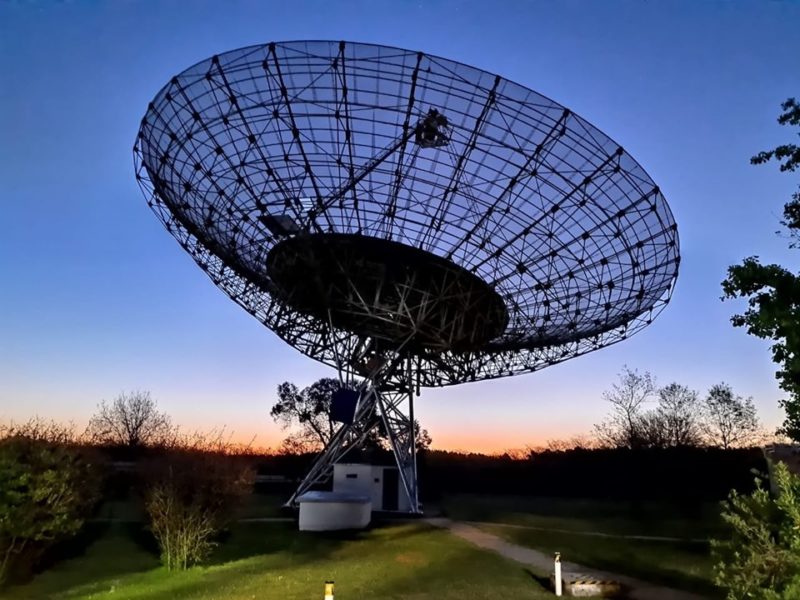
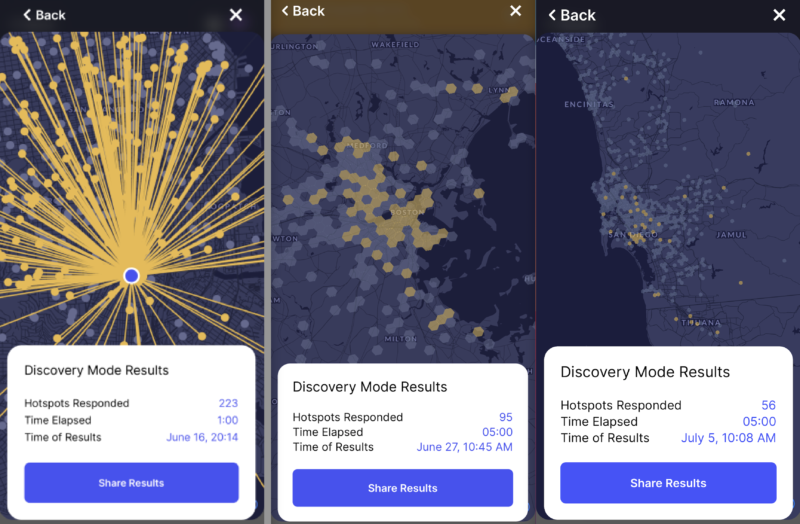
How to do a Helium Hotspot Placement Assessment

· 19 min read
Nik
Site Owner

Getting the most out of a Helium hotspot deployment requires a strategy to maximize your placement, antenna elevation, and then physically deploying the thing.

Most of the earnings will come from the placement. I know it's usually easiest to just put it up in your house, but it's probably worth assessing a few spots before you install it in the easiest place possible. Here's a video walking you through how to assess a location for a Helium hotspot deployment.

https://youtu.be/mDKNdRTxwIQ

Now, you probably know your local area pretty well, but I've seen a lot of clients surprised by "hidden" geographical features that blocked their RF viewshed and therefore their earnings.

With assessment tools being affordable (I use Helium.Vision, but there are other tools as well), there's no excuse not to do your homework and determine whether or not all the effort that goes into physically deploying a hotspot will be worth it at your house or somewhere else.

The video walks you through the steps to take that will help you run an assessment on your place. This is just a small piece of the Strategy & Optimization consulting I do, but I thought it would be super useful for many of you who want to start on the journey of maximizing your hotspot.

Oh, as a hot tip: I now start with temporary deployments just to test things out. I can put an antenna up in under an hour, Beacon using Discovery mode just to check on things, then let it run for a week or two before putting in a more permanent placement. Mastwerks is what I'm using for an excellent tripod that'll get that antenna up high temporarily. You can find other options, but I wanted the best out there. ;)

Best of luck to you, and please, if you do something different I'd love to hear about it! If you'd like help understanding more about Helium and how to maximize this opportunity, take a course or consider hiring me.

Archived Comments

Chris - 6/13/2021

One hotspot I deployed was “Unique Blonde Bear,” I used Helium RF and it looked like it would not be a good placement for the hotspot. I optimized the setup using your guide and placed it on a 22 ft. pole Now I have about 14+ hotspot connections. Wondering if there’s anything else I can do to optimize the coverage. Cheers!


Nik - 6/13/2021

Hi Chris, once you get it at the max height for your location, that's about the most you can do. Nice job on the 14!


Tom Fool - 6/14/2021

Hey Nik, quick question regarding Helium.vision - does it know if your hotspot has been updated? Say I change the antenna and placement slightly but its still in the same location - will helium.vision be able to account for that or is it just a simulation giving rough estimates? Is discovery mode the only way to tell if a hotspot is witnessing in "real time"?


Nik - 6/14/2021

Tom, HV will pull data in from whatever you've reported via the Helium App; if you've updated your antenna & elevation, that's what will display. The simulations *can* change radically depending on elevation, less so with antenna gain. Discovery mode is just a snapshot in time of what nearby hotspots have witnessed your beacon.


Ady - 6/14/2021

Hi Nik, I’m awaiting for my RAK hotspot miner order, my question is I live in a rural area in the UK my nearest hotspot is 45kilometers away. Does this mean I’ll not be able to have any witnesses and should be looking to move it elsewhere in a built up location. You’re advise greatly appreciated. Ady


Nik - 6/14/2021

In general, yes, you'll want to be able to see at least 4 other hotspots in order to begin to earn maximally.


Simon Moreno - 6/15/2021

How did your miner mined 80+ helium token within 2 weeks? I added your Helium and it added up only 5 helium tokens?


Nik - 6/15/2021

Hi Simon, not sure I understand the question. Would you re-phrase?


David - 7/22/2021

Hey Nik, I've had my rak v2 miner for a month, it connected to the network day one with no issues, there are roughly 7 miners near me within a 10km radius, and hundreds within 100km. I'm the only miner in my area through lvl 6 on helium vision. I'm at one of the highest points in the county so it would seem it's a perfect spot. I'm beaconing and witnessing other miners, but I haven't had a single witness yet. I didn't even earn 1 from hnt in 30 days. I have the miner inside on the second floor right next to the window, roughly 30ft in the air, not near any metal or obstructions I can see or am aware of. I just found your blog, both the hnt help desk abs the discord have given me mixed answers, no one seems to know what's wrong. Could my miner be defective? If I build a 20ft tower and put the miner outside all that any difference or is there anyway I can troubleshoot that? It doesn't seem to make sense that I can witness other hotspots around the world, but no one can see me? No one has any answers and a few other ppl are complaining that their rak v2s can't be seen - do weak just have bad placements or are you aware of any issues with the v2s? I know they had tremendous issues getting them. I ordered in February and didn't get mine until this month. I can't quite afford your full assessment, but would $50 get me anywhere? I'd really appreciate any help you can give me.


Nik - 7/23/2021

Stock antenna? If you're witnessing other miners that's good. Troubleshooting steps: 1) Is there any way to get the antenna outside, even temporarily, just to test if that's a good fix? That might run you $30-70 for the cable, depending how long a run you need. 2) Does Discovery mode work? 3) With only 7 HS in a 10 km radius, that might be the issue, especially if they're not well placed. 4) For $50 you could build a mapper and test your coverage as well as running data through your device. If that works, then it'll probably be an issue with the other hotspots.


David - 7/23/2021

Yes it's the spock antenna - if I took it outside temporarily I'd have to drop it about 8ft from where it's at. Opposed to drilling through the roof or brick id probably have to build a little tower and could probably get it 20-30ft in the air but it would still be lower than where it is now. Do you think with an upgraded antenna I might reach some of the further hotspots or will that not make a difference if they are too far away? When you say issue with the other hotspots - Do you mean they are too far or they aren't working properly? I understand a little bit about RF frequency, I just don't see the brick making a huge difference. It's just been a bit frustrating with the massive delay. Is there a YouTube tutorial for the mapper, that seems a little over my head with the coding, I don't want to accidentally break anything and the quick start guide is a dead link?


Nik - 7/23/2021

Hi David, I'd start with getting the antenna outside for a day or two, just to see if that's the issue. If it is, then you can build a tower. The other hotspots may be poorly deployed; sometimes they see you, sometimes they don't. You'll have to Google around for a tutorial, or head to the Discord and check the #mappers thread.


David - 7/23/2021

Hey Nik, I think I see what the problem is - I'm north of Pittsburgh and even though I'm at one of the highest points in the state, the terrain of the whole state is "the rolling hills of Pennsylvania" out side building a 100ft tower - it looks like I'm not going to reach anything because one way or another there's a hill in the way - and a few of the close miners do have poor setups - 2 are relayed, and 3 of them are using 8dbi antenna's - I can't imagine that's a good idea for the terrain. I can't build a massive tower, but if I was able to get it up about 20-30ft and got one of those hntennas do you think it would make any difference? There are roughly 9 miners between 7-10km from me. I don't know how much the hills are blocking the frequency from where they are. I was never able to figure out how to add credits or get the frequency thing to work on helium vision. I did get one response from another hotspot while running discovery mode with the miner outside on the ground, but still no witnesses - it really seems like it's the hills and the only real way around hilly terrain is be more miners closer together.


Nik - 7/23/2021

The HNTenna (or any antenna) won't make a difference when it comes to punching through hills; they just won't do it. See if you can use the Line of Sight tool on Helium.Vision, that'll quickly tell you if you're likely to be able to witness/beacon with other hotspots. Rock on!


David - 7/23/2021

Nik, Just looking at quick line of site scenarios - it seems I need to get it to almost 120 Ft to get over anything - I actually might be able to hide in a tree in my yard - do you have any suggestions for an internet connection though wifi won't reach it there. I have some outdoor lighting so powering it isn't a major issue the line is already there. I might be easier to mount on a tree and there's no way I can put anything that large on the roof - if I got to that height - would a 5dbi antenna make sense - in theory it should be clear for a good 15miles since I'm on such a high point to start with - or would it be better to go with 3dbi so it has better reach into valleys - I'm hopeful that a few more will pop up in my area, I'm a bit shocked to see how many are actually in the city and I'm seeing new ones pop up more and more as miners are finally being shipped out. Thanks for all your help btw - not a single person on discord suggested checking line of sight - every just kept saying just wait for it to load on the the blockchain and I was pretty sure that was just BS. I can't believe there aren't better how to guides from the companies selling these. I'm really glad I found your site.


Nik - 7/23/2021

I'd use PoE if you can; you've got 300' to work with on that and it solves your internet problem. Either antenna should be fine. I'm not a fan of tree mounts, though I do have at least one client who's had success with 'em. Charge!


Ray - 7/23/2021

If I extend my antenna from my chimney say 10 - 20 feet. the chimney is about 25 30 feet already, should I worry about lighting hitting my antenna, there is not much lighting though. There may be some other trees a little higher in the 3 arc property. Also, is the antenna that comes with the synchro bit I believe 3.8 be the best to use if I want to reach a 5-mile radius with other machines in the area? does the 3.8 antennae reach out in a circle compared to the others out there? Thank you


Nik - 7/24/2021

Hi Ray, with a lightning arrestor added you'll be doing all you can to prevent damage to your equipment. Sounds like a pretty low risk (from a lightning perspective) install to me. A 3.8 dBi antenna will be fine, just make sure it's rated for outdoor use. If not, the upgrade to an outdoor rated antenna will run you from $35-$150, depending on what you get.


Gerry - 8/8/2021

Great information Nik, and super helpful. Question about optimal value from placement of multiple miners - There are 0 miners in my town, but I have 7 miners arriving with the first batch coming in 3 days. Main street in my town is roughly 1 mile long and extends 1/4 mile on each side of main street. I am on one end of town within 300 feet of the highway between 2 of the biggest cities here in Texas. In regards to the placement of 7 miners, and outside of the discussion regarding terrain and buildings etc would it A - be better to have a tight hexagon cluster at one end of town where my house is to leverage HIP17_res_8, or B - would it be better to try to zigzag crossing main street to deliver more coverage. Another consideration I struggle with is the thought around a tight placement grid that would best make it look like there is no room at the Inn for new hotspots within "my" grid. The drive to head in that direction is to aim to have the most possible control over each of the hotspots in that grid in regards to any necessary upgrades to antennas, outdoor enclosures or mast height. Thank you for taking questions here.


Nik - 8/8/2021

Hey Gerry, I'd focus on providing excellent wide coverage with the HS youhave. You just won't have the opportunity to witness beacons as much with only 7 hotspots, no matter if you deploy them tightly or spread out. As the network grows, we all beacon less frequently. Plus, you can't really *own* or prevent anyone from doing anything. I guarantee you'll have some jackwagon put a hotspot up right next to yours. Has happened to me. The best thing to do is to make sure every placement is the best it can possibly be, and that it has clear line of sight to as many other miners as possible.


Ray - 8/17/2021

My son has a house with a Direct TV antenna on the roof they are not using. Can he use that to connect his SP hotspot mining machine? Also, Would a 5.8 ANTENNA reach the same radius distance or more as the 3.8 that comes with our mining machine.? Thank you, Ray


Nik - 8/17/2021

Hi Ray, the Direct TV antenna won't work; not the same freq. Either the 5.8 or the stock will be fine; they'll both reach plenty far.


Bob - 8/20/2021

Hey nik, 3 questions 1. Is the stock antenna usually water proof i have the 4dbi bobcatminer one. 2. When first setting up my hotspot, in the assert location step, where you drag the little triangle to the other little triangle, my actual location is a few meters off(30maybe) from where it placed it, is this a big deal? 3. And lastly ,when setting up the hotspot how important is it to accurately type in your elevation on the antenna details, because most of the hostspot with really high earnings are at 0m of elevation in my area so i can only assume its not relevant? Thanks for your hard work and time to help us all out.


Nik - 8/20/2021

Hi Bob, 1. Bobcat has told me their antenna is outdoor rated; I don't know about waterproof (like underwater), but outside should be fine. 2. A few meters isn't a big deal. It'll always snap to the middle of the res 12 anyway. 3. Unimportant for now to enter antenna details, but it will eventually be important once we go to PoCv11, especially if you're using a higher gain aftermarket antenna. The default elevation is 0, that's what a lot of people just leave it at.


Hotspotty Improved: Deep Research For A Better Way - Gristle King - A Guide to Helium - 11/4/2021

[…] the main­te­nance guy over at the Empire State Build­ing, etc. If you need help, I’ve got a blog post over here about how to do an […]


michael walsh - 12/27/2021

Hey, Nik I live in the NJ/NY area and I have various places that I can place my miner such as 60 story buildings to areas to huge warehouses. I currently have it in my house as connected via ethernet but I am running into the issue of port forwarding to resolve the relaying issue. If you can reach back out to me with some advice on an antenna, best location, and how to remove this thing out of relay mode it would be much appreciated. Also anyone seeing this thread can reach out to me and can possibly utilise the various locations I have to mine.


Nik - 12/27/2021

Hi Mike, I'd post your properties over in the Real Estate section of HeliumJobs. I offer paid consulting that covers your questions, check out your options here.


Allan - 12/30/2021

Hey Nik, I am all new to Helium mining and recently purchased 2 RAK Miners (Gold 8GB editions). I set them both up currently inside for now. 1 is connected and seeing little reward, probably due to stock antenna and inside, the other is in another room and is relayed with no witnesses which i assume as it connected to the first miner. I set up port forwarding, i changed it to another network (other router but connected to main network router) and still it shows as relayed. Maybe this is normal, i do not know but before i start to change antennas and look to set up outside, any advise you can offer? Also i am in an apartment, is there an easy way to install a new outside antenna on a balcony set up where i have limited elevation options? Thanks a bunch,


Nik - 12/31/2021

Hi Alan, I'd suggest getting them at least 1 km apart, getting the antennas outside, and up high. 2 miners on one network usually force a relay on one of 'em.


Allan - 1/1/2022

Thanks Nik, I will ask a friend to place 1 of the units in his apartment and use an outside antenna :)


Allan - 1/4/2022

Hi Nik, Sorry for another message. I switched off one of the miners and will relocate it next week, however it still shows as online through the app? Also how do i get the main one (the one that is still connected to network and shows a 0.37 transmit scale which i assumed it would go back to 0.77 before i set up a 2nd miner? Maybe it takes more time to revert back to 0.77 or does it depend on the set up of the 2nd miner at a new location? Thanks a bunch


Nik - 1/4/2022

No worries. The app can be delayed by days, don't worry about it showing as online still. Should be 2 and a half days (approx) for the scale to update once the miners are moved.


Allan - 1/6/2022

Great thanks, You were right, moved back up to 0.72 transmit scale, however i am unable to remove it from relayed even after port forward, restart etc. Even checked with Port Checker and everything looks good there, port is Open, looked in the diagnostics from the app, everything looks good, Outbound/Inbound = Green, BlockChain Sync = 100% green, so everything looks all good, just the relayed part i need to figure out now. Thanks a bunch as always


Nik - 1/6/2022

Hi Allan, try this post, and use HeliumStatus.io for checking your status.


Sam - 4/16/2022

Hey Nik, Moving the antenna outside is not an option for everyone specifically the one's living in apartments with no balconies and buildings around. I was thinking to move the antenna to building roof but in summer its too much hot here. Now the solution I am thinkjng of is: there is a room at the roof in my building for lifts motor and AC is always on there. If i can move my miner in that room with POE and connnect a 5.8 dbi antenna with it which will be placed on the roof of the same room. But before doing it I have few questions: 1. Will the magnets and motors in the lift room interefete with the lorawan signals? 2. If I place the bobcat miner on the roof top under some shade, in summers weather can damage the hardware? I am talkjng about 8th floor ad region is middleeast( Bahrain). If I can go with this approach i can place the miner a bit far from this lift room. 3) If I place miner in the lift room and antenna lets say 7 ,8 meters away , will this work fine? Appreciate if you can help here.


Nik - 4/16/2022

Good question, you'll have to try it out. Bahrain is pretty darn hot, I'd keep the 'cat cool if you can. 7-8m run for cable is no problem, just use something like LMR400.


Gristle King On Helium Uplink

· 2 min read
Nik
Site Owner

It's been a heck of a ride so far, from the beginnings of looking for a better way to find lost paraglider pilots all the way out to being featured by Helium as a top hotspot optimization expert.

Travis Teague and I just did an episode of the Uplink, which Helium releases to showcase how the community is developing. A very cool show to do and a real honor.

We went through the genesis story of of the Kiwi SAR, through the first hotspot and my experiences building DIY hotspots back when the alpha code program was still open. That includes a few mountain deployments, a few urban deployments, a few suburban deployments and more consults with rad folks like you than I can count.

Here's the video:

https://www.youtube.com/watch?v=Y9E-3qOFDzo

While I aim to make enough information freely available so you can go through this blog (and the rest of the internet) and figure out how to optimally deploy your hotspot, if you'd like help with

  • Maximizing the opportunity to earn HNT with a well placed and well set up hotspot
  • Deciding whether or not it's the right time to jump
  • Figuring out what the next step is in the Helium network

Please consider hiring me to help you out. I'll put all of my knowledge and experience at your disposal to make sure you make the best of what you can and don't miss any big opportunities. No matter what you decide, I wish you the best of luck with your Helium journey, and I can't wait to see what you do with it!

Shield Your Helium Hotspot From Powerful Lightning Strikes

· 24 min read
Nik
Site Owner

How do you attach a lightning arrestor to your Helium hotspot antenna? What does one look like? Is it dangerous?

Let's start with a picture. This will answer 90% of your questions.

You can (and according to knowledgable ham radio operators) SHOULD connect the lightning arrestor at the other end of the cable, down by the miner. Another way of saying that is: Don't attach the lightning arrestor directly to the antenna like you see in the picture, attach it to a short piece of cable that connects to the miner, and a long run of cable that goes to the antenna. That didn't fit into my picture, so I did it this way.

Now, let's talk about what you can expect a lightning arrestor to do. Hint: Despite the blog post title, a lightning arrestor won't stop a bolt of lightning.

A lightning arrestor connects the antenna to the antenna cable. It passes the RF signal from one to the other through a medium that, when it gets too much power, it breaks, just like a fuse. RF engineers will probably lose their minds when they hear it explained that way; they'll start spouting about ionized gasses and fixed gas discharge tubes and input/output surge magnitudes. They're right, but you don't have to know all that to use a lightning arrestor.

A lightning arrestor will NOT stop a direct lightning strike. That would annihilate your house. While it would be awesome advertising to see a pristine hotspot miraculously protected in the middle of a charred and blackened house hit by lightning, it wouldn't be true.

All a lightning arrestor really does is protect your electronics against the static electricity that can build up during a storm. If the energy feeding into your antenna (don't kill me lightning scientists!) gets too high it zaps the gas in the middle of the arrestor, breaking the connection to the antenna cable, and all the energy is diverted to that ground wire (which is hopefully attached to your house ground.)

So, uh, how does it work? Just screw the thing in between your antenna and antenna cable, connect the attached grounding wire to a metal "path" that goes all the way to the ground and you're done.

Wait, you want more? What antenna is that? Where did I get that mount? What's the insertion loss on this lightning arrestor (make sure you get the right connectors!) vs the stuff the military uses when they don't want to fritz out a $40,000 piece of electronics? Psst, just get one from McGill that fits your cables.

I'll start with the antenna. I don't know what it is. A friend brought it over. He said he'd bought it on eBay and what did I think of it? I thought it would make a good demo for this lightning arrestor post, so I just gave him a Nearson 8 dBi I had laying around and kept his unknown antenna, which had the only thing that mattered: An N-connector on the bottom.

What about the mount? Made that out of aluminum bar, twisted, drilled, and ground to fit. Should've drilled first, but I made it work. The other super cool part of this project is the use of rivnuts. Stop here if you want to learn anything more about lightning arrestors, and refer to the above picture.

Just because I love building stuff and sharing knowledge, here's the journey. I started by clamping the aluminum bar in my vise, then twisting one end 90 degrees.

Twist complete. Nothing fancy, just simple and functional. I'll leave that pink paint on the end of the bar. Pink means you like to party.

Then I drilled out the holes I'd need for the antenna mounts and the pole mount.

I love that drill press. A random guy gave it to me. I saw it in his garage and commented on how old and rad and heavy duty it was. He said, "That thing's dangerous, I watched my grandfather lose the end of his finger in it. Do you want it?" Yep.

It weighs about as much as I do. I love heavy metal.

Next, I laid out what I'd need. Antenna, lightning arrestor, grounding wire, easy disconnect terminals, and a rivnut. Aw yeah, rivnuts!

Ok, what's a rivnut?

It's a cool little way to add a nut into a thin walled piece of metal. You drill out the hole, screw the nut onto a rivnut tool, insert the sleeve into the hole, then compress the sleeve of the nut, securing it to the wall of the pole.

Here's what it looks like. That's ready for a 10-24 bolt, which I happen to have a bunch of.

I used a u-bolt to clamp on my demonstration antenna mount.

Then I had to make the grounding wire. I used 12 gauge cable for this demo, most specs require 10 or 12 ga. You need to crimp on quick connect terminals to both sides, then seal the heat shrink around 'em. Here's what it looks like with the wire stripped, before I made the connection.

Here's what it looks like once you crimp it.

I crimped both sides, used a heat gun (Steinel HL2020E if you must know) to shrink it down all tight and pretty, and I had my grounding wire. You want these to be as short as possible.

All that was left was to connect everything up. Here's what it looks like without a bunch of words pasted in. Yes, I could've made the grounding cable shorter. I just didn't.

Pretty simple, right?

Oh, and the insertion loss? Let's be mean and call it .5 dB. If you're deploying for a critical application and want to drop $150 on a badass NexTek Surge Guard lightning arrestor with < .1 dB loss, you can do that because every tenth of a dB counts. But....you don't have to.

Ok, that wraps up lightning protectors. You don't need to do any of the building/light fab work I did, you can just screw it into your antenna and use the mount that comes with any decent antenna. It's simple. You got this!

Archived Comments

Larry - 6/8/2021

Hi Nik, would love to buy a couple of your home made brackets that mount to the pole. They look so different and obviously custom made. Nice to have someone in the HNT community explaining the correct way of doing things.


John Diprose - 6/8/2021

Great stuff as always Nik. Can I put the arrestor at the end of the cable near the ground where I will be putting a grounding spike? Or does it have to attach to the antenna. As my antenna will be on my roof and no place to ground up there.


Nik - 6/8/2021

Right on Larry. You can totally make 'em yourself with a vise and a few clamps. If you'd rather just have me make 'em for you, reach out via the Contact Form for a quote. Thanks again!


Dan Kiel - 6/8/2021

Can you ground it off anything that qualifies that is near by or do you have to ensure it is grounded all the way to your house ground or a newly pounded in ground rod? I've been prepared to run the ground wire all the way down the side of my house, but if I can ground it on something closer, that would be great.


Nik - 6/8/2021

John, shouldn't be a problem to put it lower down the chain.


Nik - 6/8/2021

Hi Dan, there has to be a solid connection all the way to the grounding rod/house ground. Can't just attach it to the nearest metal "thing". :)


John diprose - 6/8/2021

Thanks Nik


Stephen - 6/8/2021

Thanks for the great info Nik. I'm looking to put my antenna at the top of a wooden post (get's me another 4mtr above rooftop, in a very flat area), so how/what/where do I attach the grounding wire coming out of the arrestor? FYI I will be running power cable up the post as well, given the HS plug is only 2-pole (not earthed) could I potentially run a 3 wire cable and use the earthed wire to connect to the arrestor? Thanks in advance, S.


Nik - 6/9/2021

You'll need to run thick metal all the way to the building ground. The wire in a 3 wire isn't thick enough by a long shot.


Gary - 7/10/2021

Hey Nik. I have the lightning arrester and some solid copper 8 awg copper (I know it's probably overkill) this fits in the lightning arrester terminal perfectly! Is that ok that I use bare copper wire and no sheathing? I see you are using braided copper wire I think.l with terminal connectors. I want to run that from the arrester to the terminal clamp I bought to fit my mast. Then from there I was going to run a separate copper wire down to my copper rod and connect it to the grounding clamp there. I was going to go to house ground which is only a few feet away, I just wanted to make it tidier lol. Does this seem right?


Nik - 7/10/2021

You know, I'm not sure. I'd think the sheathing would be pretty important, but I'm not an electrician.


Bruce - 7/11/2021

Hi Nik, Do you know if the lightning arrestors on Amazon are of sufficient quality? Take this for example (https://www.amazon.com/dp/B078NT5M37/ref=cm\_sw\_r\_wa\_apa\_glt\_fabc\_EHQBTXA5T5T5N6GMWNFE?psc=1) They list the same specifications and signal loss as other, more expensive options such as Times Microwave ones.


Nik - 7/11/2021

Hi Bruce, typically you get what you pay for, though that can be offset by paying more for a name brand. I usually go with name brand just to be safe.


Ndu - 8/13/2021

Nik, I have this https://www.timesmicrowave.com/DataSheets/FamilyProducts/LP-GTV.pdf. What do you think about the insertion loss? Is this a suitable arrestor? Thanks!


Nik - 8/13/2021

Just a caveat: I'm not an electrician. :). That looks fine to me.


Aaron Ursulak - 8/16/2021

Finally someone to answer my simple question ... I finally received my HNT miners and antennas . Can I screw my lighting arrestor (with a female end) directly onto my antenna (with a male end), and avoid breaking the run and order two separate cables. or dose the lightning arrestor have to be a certain distance from the antenna? It looks like that is exactly what you are doing and that way I dont have to order a second cable and break the cable run correct? Thanks .


Nik - 8/16/2021

Hi Aaron, yep, that's totally fine to attach the lightning arrestor directly to the antenna.


Aaron Ursulak - 8/16/2021

Your the best thanks! Its tough to find co ax in my area. Looks like ill have to order them all on line custom mae. hey do you know of good place, quick shipping to ALberta Canada that can make up som 440 with N type female end and RP SMR male end at lengths of, 5' 10', 15' 25' and 30'?


Aaron Ursulak - 8/16/2021

Sorry for the type .. looking for some 400 co ax. not "som 440"


Nik - 8/16/2021

Hi Aaron, hmm, not sure of Canadian sources. Might try calling USACoax.com and see if they have Canadian connections.


Aaron Ursulak - 8/16/2021

Thx. That is where Im looking.


Michael - 8/17/2021

Hey Nik, I have an HNTenna 3 dBi antenna (tall, skinny one) and am placing it outside my bedroom window on the 3rd floor of my apartment. I’ve read that a 3 dBi antenna won’t need a lightning arrestor since it’s 1) not strong enough to send too much power back to the hotspot to fry it, and 2) I’m not hoisting the antenna up a pole 20 feet higher than the apartment roof. If that info is inaccurate and a lightning arrestor is needed, is it possible to ground the copper wire to my balcony floor? I won’t have access to dropping a 30 ft wire down the side of the building.


Leon - 8/18/2021

Hi Nik, straight donw the line and to the point post, freakin awesome. Here are some thoughts from days when we used RS485 as communication over long distances in South Africa where lightening was always a challenge. - Arrestor as close as possible to equipent to minimize the exposed wire becoming the next lightening / statis antenna. Any exposed wire has the possibility of receiving and inducing static into the system. - Rather run a new ground wire to a propper Ground pole - if the ground is not good then not even the fancy gasses will stop a static / lightening strike. Its a good idea to have a Ground pole near a rain gutter to keep the ground as moist as possible. - Buy good well known arrestors, its worth it Leon


Nik - 8/18/2021

Hi Mike, well, technically *all* outdoor antennas should have a lightning arrestor. Many don't. I'll probably get sued out of existence for saying it, but I wouldn't worry too much about a small antenna outside your bedroom window.


Nik - 8/18/2021

Right on, thanks Leon!


Michael Johnson - 8/18/2021

Hi Nik, I appreciate the honesty. My biggest concern is making sure my hotspot doesn't get damaged but you seem like an extremely honest guy with a TON of experience so I'll take your word on it. Thanks!


Aaron - 8/18/2021

He’s better off to buy a 5.8 DBI antenna and mount it in his window indoors instead of a weak three outside No grounding required and better range


Octavio - 8/23/2021

Hi Nik, I plan on putting my antenna on the side of my roof (about 20 feet high but at the same height as the roof). Like Mike, do you suggest grounding it since it's not 20ft about the house? Additionally, I have a few power lines near my house that are about 30-50 feet away. Would these create static and possibly damage my miner? Thanks in advance!


Nik - 8/23/2021

Hi Octavio, I wouldn't worry about static from the power lines. Technically you should ground every outdoor antenna. Practically you'll see that many people don't.


Aaron Ursulak - 8/25/2021

Hey Nik I now have 2 or 6 miners installed. I wish I had. Clone to do the installs . Anyhow Ive been asked a couple time now are Bobcat devises safe. What do they emit. Ive heard RF waves are harmful … etc and I can’t really find anything that states they are safe other than they are FCC approved .do you have any links or info uiu can send me. Many thanks Aaron Ursulak


Nik - 8/25/2021

Hi Aaron, yep, check this post over here on RF exposure.


Teodora - 8/25/2021

Hi Nik, it may be a stupid question here but better ask... :) We'll mount our antenna on a 6-storey building and the antenna will be 5 ft above the roof. The grounding of the roof (which is flat) is done with a metal grid that covers the roof. We are thinking about connecting the lightning arrestor to the grid instead of running our own rod all the way to the ground, which obviously is not possible. Just worrying that charge already collected in the grid may go up to the arrestor and damage the equipment. I don't know if this is ? valid concern... What do you think?


Nik - 8/26/2021

Good question. I don't think so, but I'm not an electrician. There shouldn't be any charge collected in the grid; it's grounded, right?


Aaron Ursulak - 8/26/2021

Hey Nik. I need another 10 5.8DBI antennas> I can order them from RAK but delivery is way out ...! Do you know of US supplier? Thanks Aaron Ursulak


Nik - 8/26/2021

Check Parleylabs, it looks like they have 'em in stock.


Ndu - 8/28/2021

Hi Nik, Have you come across other strong research/opinions against connecting the lightning arrestor directly to the antenna like you did? Do you have the arrestors directly connected to the antenna in most of your setups? I ask because I would like to follow best practice once and for all. Thanks.


Nik - 8/28/2021

Hi Ndu, I've heard from a couple folks that you should connect the lightning arrestor closer to the equipment being protected. I have 'em connected directly to my antenna.


Eli - 9/22/2021

Hi Nik, which "Nex­Tek Surge Guard light­ning arrestor" would be recommended for an outdoor HNTenna?


Nik - 9/22/2021

Hi Eli, The outdoor HNTenna has an N-type female connector, so you'd want an N-type male on one side of the NexTek, then whatever matches your cable or hotspot on the other.


Brad - 10/4/2021

Nik, I've learned a lot from your site. I appreciate it! My original plan was the mount the lightning arrestors at the base of the antennas and then running the cables back in the house...10', 20', or 30' or whatever the length for the application. However, now I've heard people on the AV and Ham radio forums say that since cables can also build up a static charge (not just coming in from the antenna) then static charge won't necessarily be disappated out that arrestor as you'd want, and it could just as easily go down the cable to the miner and so this is why you should have the arrestor/ground as close as possible to where it enters the house and also as short of a cable as possible to the ground rod. I guess you don't think that is necessary? What I'm worried about is that we THINK and HOPE we're fine with the arrestor at the end of the antenna but we don't KNOW for sure until it's too late and we have damage! These were also recommended to me, which ground the outer sheath but I assume not the inner wire of the cable. I wonder if this could be a good belt and suspenders solution since I've already purchased the cable and arrestors to do it as you said, but these could also dissipate static in the line closer to the building entrance. (Not sure if links are allowed but here it is if so) https://www.solidsignal.com/installation/grounding-supplies?custitemsg\_brand=Times-Microwave-Systems&pricelevel5=0.31to31.97


Nik - 10/4/2021

Hi Brad, That all looks good, and you can definitely put the lightning arrestor closer to the gear side (away from the antenna). I've always used super short antenna cables so a short ground wire hasn't been an option, but it's a fine way to build it. Let me know how it goes with the Solid Signal stuff, looks neat.


Mohammad - 10/21/2021

Thanks! My question is that if doing all grounding process is going to discharge the static electrical energy enough to prevent sparks or still a lightning may hit the antenna. In case of a big hit all the antenna and grounding system will evaporate but I wonder if grounding really prevents such a hit. My house is a one story house and the highest point is 15 ft up. My antenna is 6 ft long. I appreciate if I you advise me on this case. Many thanks!


Nik - 10/21/2021

Hi Mohammed, a lightning arrestor won't actually stop a lightning strike, it'll just discharge static buildup. A direct hit will destroy everything, including the house. :)


Carl - 11/1/2021

If youre deploying an off-grid hotspot is there any need to ground...as in a roof top deployment? Thanks


Nik - 11/1/2021

Yep, still need to give that static charge an easy path to the ground.


Illia - 11/15/2021

Hi Nik, Interesting post. I want to hear your opinion about the setup I am about to create. I have a two-story house with a chimney on top. I plan to install a 20ft flag pole as my mast to raise my miner as high as possible. I will use the original bobcat antenna, but I will be using the lighting arrestor with that. As far as I understand, I will ground the arrestor to the pole, and then I should also ground the pole to my house grounding rod. I am not particularly sure how to connect the pole ground to the grounding rod. My idea was to just drill a couple of holes and feed the ground through. After I would drop the cord down and attach it to the grounding rod. Let me know if I should reconsider. Thanks


Nik - 11/15/2021

That sounds reasonable.


Brett - 11/17/2021

I'd really like one of those bad-ass unicorn shirts!


Nik - 11/17/2021

I think we got 'em for everyone at my other business; you can buy 'em on Amazon. I may have to start doing GK Merch...


James - 12/30/2021

Hey Nik, I see many using Lighting Arresters and suffering from the DB loss since the higher quality is more expensive and the more affordable route is usually the chosen. Can you explain to me why one just couldn't use a HomeDepo grounding clamp (Link Below) and wrap that end around the metal base bottom of your antenna and run your 10 gauge wire from there (No Arrester Needed)? Wouldn't it be more advantageous, there is no DB loss, and the path to less resistance (to ground) is increased due to the increased conduction properties of the clamp. In theory or my mind at least, this should dissipate even static electricity just the same. What do you think? https://www.homedepot.com/p/1-2-1-in-Type-JH-Bronze-Ground-Rod-Clamp-for-8-to-4-AWG-Wire-JH-B1-10/203339353


William - 1/2/2022

Hi Nik, Question about when you ground your outdoor builds. I believe in order to have proper ground it should be an 8-foot pole buried into the ground. Are you able to do this in remote locations or are you using an alternate method of grounding?


Nik - 1/2/2022

Hi William, I generally don't ground my outdoor builds.


Angel - 1/7/2022

I’m Going to be running a outdoor POE set up with a M1 sensecap and outdoor HNTenna, I’ve seen conflicting information about whether to ground. For ease I’d like to not have to ground my set up, I see you mentioned you generally don’t ground your outdoor set ups, so would I be good to run it that way? “Safely”?


Angel - 1/7/2022

Sorry, forgot to add this piece of information. The outdoor sensecap M1 and HNTenna will be a home setup if that makes a difference as far as whether or not I have to ground the set up


Nik - 1/7/2022

Hi Angel, that's not technically "safe" and you should always ground electronics. I generally don't ground my "off grid" setups, which aren't connected to any buildings. The risk depends on what you've got at stake and the likelihood of getting static build up/discharge.


tixorama - 1/15/2022

Hey Nik, I've seen setups where the lightning arrestor is not connected directly to the antenna but further down the cable closer to the miner. Is there a preferred way to do it? Thank you. Mark


Nik - 1/15/2022

Hi Mark, yes, that's the recommended way. I need to update the picture and diagram to reflect that. :)


A Complete Guide on How to Ground Helium Antennas - 7/12/2022

[…] overthinking it, is the best way. Also, some helium antennas come with a lightning arrestor. A lightning arrestor makes a connection between the antenna cable and the antenna. With this connection, it allows radio […]


John - 11/15/2024

Nice -- do you ever consider galvanic reactions when you build? I've been trying to factor this in with my builds... here in Japan they sell little separators (I think they are Nylon) that can be popped in between metals with different hardness... Aluminum can be a bad one for this. Nice of you to give your friend a nice Antenna in exchange, and thanks again for info.


Nik - 11/15/2024

Hey John, I remember wondering about it early on, but my hotspots that are still out in the wild haven't had any issues with it. Might be something way more important in other environments, but I haven't had issues with it yet.


How To Read An Antenna Chart

· 17 min read
Nik
Site Owner

Helium is a gateway into the world of RF, or radio frequency. While the easiest thing to do when you get your hotspot is just plug it in and set it in a window, most of the time you'll earn far more if you optimize a bit. Most of those optimizations are focused on improving the RF signal your hotspot can beacon (also called "transmitting") as well as improving the ability of your hotspot to witness (also called "receiving".)

I'll assume you've read the piece on antennas I wrote that covers some basics. Now, let's do a deeper dive into antennas and radiation patterns.

Let's start with a zero gain omni antenna. An omni directional antenna with zero gain will theoretically radiate RF energy in a perfect globe pattern all around it. Now, that's perfection. In reality, most low gain (say, 4 dBi or lower) antennas will do a pretty good job, but will have gaps directly above and below the antenna.

The way we "see" an antenna's RF pattern is by visualizing what it looks like from the top and the side.

Here's a lower gain antenna's RF pattern.

See how it radiates out evenly in every direction to the side, but directly above and below it there are gaps in the RF emitted? That's pretty typical for an omni directional antenna.

Here's another example from the antenna I use on most of my installs, the HNTenna. MP Antenna (the manufacturer of the HNTenna), puts both patterns together. The Elevation is what it looks like when you're seeing the antenna from the side (red line) and the Azimuth is what it looks like from the top down (blue line).

All manufacturer's will have a radiation pattern for their antenna, and most will share it with you. That pattern can change at different frequencies on the same antenna. Here's an example of a 3.0dBi L-Com at different frequencies.

Now, all the antennas so far look pretty similar even at different frequencies, right? They're all "omni directional" antennas, meaning they're supposed to radiate antenna in all (omni) directions. What does it look like when you get a sector (also called a directional) antenna? Check this out!

This antenna was designed to radiate most of it's energy in a vertical beamwidth of 60 degrees and a horizontal beamwidth of 70 degrees. This is the antenna you'd use if you wanted to punch through a thick brush line with a bunch of Hotspots on the other side of it and nothing behind you.


Antenna Polarization

Next up is antenna polarization. This hasn't gotten much press, mostly because damn near every antenna you can buy is polarized *vertically*. In simple terms, that means the RF waves it emit go up and down. A *horizontally* polarized antenna will emit RF waves that go side to side.

Why is that important? Well, if a vertically polarized antenna and a horizontally polarized antenna are trying to beacon or witness each other, they won't be able to, even if they're on the same frequency! That's because the "up and down" waves of a VP antenna won't intersect with the "side to side" waves of an HP antenna.

"OK Nik, so why should I care about this? If most of the antennas out there are vertically polarized, I'm fine, right?" Sort of.

See, when that radio energy hits an obstacle, it usually bounces off *and changes orientation*. That means a vertically polarized wave can now be a horizontally polarized one. If your hotspot is "listening" on a vertically polarized antenna, it won't witness RF signals that are coming in on the horizontal plane, unless...

Here's the last twist for ya: You can get a "multi" polarized antenna. This allows you to both transmit and receive multiple signal orientations. That comes at a cost of a slight reduction in power as the signal is radiated out on multiple planes, BUT...I've used a multi-polarized antenna and made 170km witnesses, so it's not an issue in the real world application.

I'll finish off with a quick way to think about what antenna you should buy.

Indoor antenna -- Use the stock antenna. Get it up as high in your building as possible and next to a window. If you MUST buy an indoor antenna, pick up the HNTenna indoor version.

Outdoor antenna, urban area, limited clear lines of sight -- You've got a few options.

HNTenna Outdoor - This is a multi-polarized antenna and what I recommend for most placements.

McGill 3 dBi - A great omni pattern antenna that'll do well in most urban deployments.

McGill 6 dBi - Want to try the middle range, as recommended in this video?

Outdoor antenna - Has Facebook/Reddit/Twitter convinced you that high gain is the best bet? If you're desperate for a "high gain" antenna, get a 9 dBi from McGill.

Brush Penetrator -- Ok, you really want this? Keep in mind, this antenna is almost never the right choice. But since you asked for it, here it is.

That's it! Now you know a bunch more about antenna radiation patterns and how to choose the right one for you. Rock on!

Archived Comments

Greg - 6/4/2021

Amazing article again! Is there anything like the HNTenna for the 868 band?


Nik - 6/4/2021

I'll double check with Adam at MP Antenna (the makers of the HNTenna).


Greg - 6/4/2021

Don't worry! I emailed and he said, in the future hopefully!


Travis - 6/4/2021

Nik - badass as usual my man.


Vis - 6/9/2021

Hi Nik, Is there a 5.8dbi antenna with multi polarisation or 3dbi will be good even for the suburbs where other hotspots are not close


Nik - 6/9/2021

Vis, MP Antenna is working on a 5.8 version but it'll be a while. They're current antenna will be fine for suburban deployments, just (like very antenna) get it as high as you can.


John - 6/22/2021

Hey, Quick question, if you already get 25 witnesses on beacon and as high as you can get antenna do different antennas affect witnessing or would that be the same? For example with a HNTenna get more theoretical witness events than a 5.8 dbi antenna in an urban setting? Just never understood that part. Thanks for the great information!


Nik - 6/22/2021

Hi John, good question. Depending on how many hotspots you have around you, you may see a *different* set of 25 with each beacon. An HNTenna is likely to pick up different witnesses due to the multi-polar receive. I wouldn't expect miracles, but every small improvement counts.


JB - 6/26/2021

im currently using a Rak 5.8 in the most optimized way I can given my situation. It appears I'm just on the cusp of a connection w/my neighbor, as we connect, but only rarely. They're 2.7 miles away. Do you think the 3dbi multi polar might help or should I wait for the 5.8 to be released. Btw, I've tried an 8dbi Rak and get nothing as I'm in the foothills


Simon Uxbridge - 6/27/2021

Hi Nik, I have a location halfway up the side of a mountain (2000ft up), with super long views of civilization and will be using the L-Com flat panel which as you say has a vertical beamwidth of 60, and which you advise to aim carefully. I am looking for points on roughly how to aim it. Would you think aiming the centre of the panel at the horizon would be too high? CIvilisation starts about 1 mile away from me


Nik - 6/27/2021

I'd aim it a little below the horizon, but check the pattern the mrf provides.


Nik - 6/27/2021

Check Line of Sight, that's probably more of an issue than antenna gain.


What To Look For In A Helium Antenna - One Man's Search - 7/5/2021

[…] An anten­na for Heli­um should be either ver­ti­cal­ly polar­ized or mul­ti-polar­ized. I’ve writ­ten about anten­na polar­iza­tion in this post on anten­na radi­a­tion pat­terns. […]


Sergio - 8/14/2021

Hi Nik, If you don’t have direct line of sight due to topography, will the hntenna help? Currently using the 6dbi from McGill but that doesn’t work. Currently can see witnesses far away, but not in the city nearby. https://ibb.co/VJJxb1Q Thanks! Thanks!


Nik - 8/14/2021

It can, the multi-polarization can help you pick up more signals.


Simon - 9/2/2021

Hi Nik I’m looking at a picture of an elevation radiation pattern, almost identical to the HNTenna 915 one above. (I can’t add a picture to this comment.) However in this picture the 0 degree point is rotated 90 degrees - so that it lines up with the “dip” in the pattern. Could this antenna: (1) Simply be the same as the HNTenna diagram (and I’m just overthinking it?) (2) Be totally different? (3) Or actually be an error in production of the diagram - so in effect the same? I hope I have explained this clearly? Many thanks. Cheers Simon


Nik - 9/2/2021

Interesting, what's the antenna?


Simon - 9/2/2021

Here you go Nik https://www.arcantenna.com/products/laird-antnex-tra9023np-m2m-902-928-mhz-ism-white-low-profile-omni-antenna Data sheet is halfway down the page. Very very similar - slightly smaller & lighter & cost effective. What do you think? Simon


Nik - 9/3/2021

First responder orgs love those because they're cheap and they "work", though they're definitely not the same antenna as the HNTenna. Remember, antennas don't really matter that much. Try this one, see if it works for you. For me the cost isn't a concern and I'd rather have the best on the market, but it *doesn't make a huge difference.*


Simon - 9/3/2021

Understood Nik - Many thanks


Chris - 9/7/2021

Hi Nik, Thanks for the more detailed inside of antennas. I was wondering what to look for in the specs of an antenna to know if it will be suitable for a Helium Hotspot. Does it specifically have to mention/support the LoRa / IOT /Helium technique or will any antenna that support the 868Mhz freq (I live in the Netherlands) work? For example https://poynting.tech/antennas/epnt-1/ or https://poynting.tech/antennas/xpol-1-5g/ Chris


HNTenna - Is it really the best Helium Antenna? | CoinPensation - 9/7/2021

[…] to Gristleking, a vertical-polarized antenna cannot listen to a horizontal-polarized antenna and vice versa. Even […]


Nik - 9/7/2021

Doesn't have to mention LoRa/IoT/Helium. That's a huge band the first one is listening on though, and the middle is definitely not 868 so it's probably not very efficient for what you're doing. 617 – 3800 MHz, whew!


Chris - 9/8/2021

I have seen a hotspot nearby having a Poynting antenna in it setup.It’s behind a window on the first floor with a LongAP hotspot. It has a beaconing average of 800-900 times (7d avg) and does 2-3+HNT per day. I was not sure if the poynting antenna was used for the miner or maybe a LTE router/modem. If used for the hotspot the MiMo technique seems help picknick up a lot of signals.


Nik - 9/8/2021

Interesting, I'll check out the Poynting. What's the hotspot name? Transmitting 8-900 beacons in 7 days is way over the top, you sure that's not witnessed beacons?


jeff - 9/16/2021

Hi, not much info about Hntenna , you ordered, all is fine ? with new POC i think this antenna might be a good option, a bit scared to order, I would appreciate it that you confirm if they are legit? thanks


Nik - 9/16/2021

Hi Jeff, I've ordered and deployed multiple HNTennas. I think they're the best on the market, and an excellent option for most hotspots deployments. High quality, made in Ohio, I've been to their manufacturing plant and met the staff.


Brad - 10/5/2021

Hey Nik, Any idea how a standard vertically polarized antenna would function if you mounted it at a 45 degree angle to the ground? Would it then function as a multipolarized antenna since the waves would be transmitting and receiving (in theory) partially both vertical and horizontal waves and everything in between? I'm sure that as an antenna's RF is bouncing around the world it's not purely vertical even if it's coming from a vertically mounted antenna, and as you mentioned, it seems that in the real world barring your antenna being in a very flat environment, it seems that RF would be bouncing and bending all over the place the further it got from the antenna and thus would be able to be picked up by an antenna mounted at 45 degrees. Also any idea how ground planes affect a vertically polarized antenna? There's a guy on reddit talking about how he mounted his 4dbi bobcat antenna on a bread pan and it increased his earnings and other people said they tried it and it increased theirs too. I wonder if a ground plane is making the vertical waves at least partially multipolar and thus allowing these antennas to perform better?


Nik - 10/6/2021

Hi Brad, it would probably function worse. Multipolarization is about multiple angles. For the Bobcat, testing in an RF chamber has shown that a metal plate at the bottom improves antenna performance.


Mike - 10/17/2021

Great info on the patterns. I have 2 situations I’m where I’m considering the HNTenna and I could use some advice on. 1. Prairie town, I have the high side about 60’ higher in elevation than the rest. 7-9KM to the furthest hotspots. Maybe 60-70 in the area and I witness about 30 with a Rak 5.8 on the peak of my house - 500 yards from me sits a giant brick school though. 3dbi Outdoor Hntenna going to provide any benefit? 2. Host location lower plane of the same town but restricted to indoor only with some line of sight challenges and using a Bobcat stock 4db - Hntenna indoor 3dbi claims it’s good at overcoming some of these challenges - thoughts? Have no issues spending the $ to find out but McGill is also in my considerations.. Thanks, Mike


Nik - 10/17/2021

Hi Mike, Always hard to say that one antenna will always do super well. I'm putting HNTennas up even on my mountain installs now. I don't think you'll see a huge improvement over the Rak, though you may see a slight one. The HNTenna indoor is supposed to be excellent, but I haven't installed it indoors. I've seen it work well outdoors. You won't go wrong with any of those antennas listed.


Evangelos - 11/14/2021

Hi Nik, Trying to understand if a directional antenna is beneficial over a omni-directional for a situation where the witnesses are only on one side (180 degrees of hex). I would think an 8dBi directional antenna would reach as far as a 8dBi omni-directional antenna but for only a few degrees. Is this the case or will the directional antenna see further?


Nik - 11/14/2021

Depends on where you are. In the US there's not a huge advantage with directionals. In the EU it may make more of a difference, all because of how much more dBm the US hotspots push out.


Jim Moran - 11/21/2021

I'm wondering... If I mount an antenna on my roof near the peak, does it make a difference if only the top of the antenna is above the Ridgeline, or should the full length of the antenna be above the ridgeline? Our HOA doesn't allow mounting an antenna on the roof, but if I mount it with only the tip above the ridgeline, I might be able to get away with it. I ask because I don't know if the antenna sends/receives only from the tip or the full length. I've tried reading everything on your site but cannot find information concerning the tip of the antenna vs. the length of the antenna. Thanks in advance if you choose to answer.


Nik - 11/21/2021

Full length. Hit 'em with OTARD.


Lukasz - 11/25/2021

Hey Nik, Question for ya. I've got the choice of mounting an antenna out my window, 3rd story townhouse so approx 9 to 10 meters high mounting point, that faces towards the majority of Hotspots or placing it in the attic space, approx 2 to 3 meters higher than out the window. Not possible to mount on roof due to strata. Suburban area with a not so bad line of sight other than a giant church directly across the street. Any recommendation as to which mounting point and whether a 3dbi or 6dbi would be best?


Nik - 11/25/2021

I'd go with a 3 dBi outside, but I'd also test it. :)


Robert - 1/15/2022

What panel antenna are you using on the pictures? I seen many pictures that showcase a panel antenna. Thanks


Nik - 1/15/2022

Hi Robert, I've used both 9 and 13 dBi antennas in various test deployments. I have one 9 dBi panel left that I just haven't replaced because I haven't made the time to drive over to it.


Mike - 2/4/2022

Hey Nik, 2 questions. I currently have a 12 foot lmr 400 attached to a 8dbi antenna. If I wanted to go 30 feet high with lmr 400 and stick with 8dbis worth of signal do I go with a 10dbi because of the signal loss? Also a miner just popped up in my hex :( he is still syncing, my rewards are already tanking is there anything I can do or just make my antenna set up significantly better? Thank you!


Nik - 2/4/2022

Nah, don't worry about offsetting with an 8 dBi and only 30' of LMR400. Enter the loss (about 1.4 dB) and let 'er rip. Nothing you can do about other miners in your hex (outside of filling in surrounding hexes to increase to density_max OR moving.


Mike - 2/4/2022

Roger that! Thank you for the fast response Nik!!!


Joe Gama - 12/29/2023

Hi, Your link to the multi-polarized antenna info is no longer valid... Would you, please, post it elsewhere? I'm dying to find out more about it!


Nik - 12/29/2023

Hey Joe, it was made by MP Antenna, called the HNTenna. You can probably find 'em on eBay.


Is The Helium Bobcat Miner Any Good?

· 18 min read
Nik
Site Owner

A few months ago, Ann at Bobcat reached out to see if I'd like a hotspot for review. She'd read the Rough Guide To Hotspot Optimization article and liked it. She thought it might be useful to get a Bobcat hotspot into my hands ahead of the wave of normal production. I thought so too. I don't think she expected me to do anything other than plug it in and earn HNT and talk about it, but...that's not what I did.

If you just want to skip to the "Is the Bobcat OK?", yes, go here. You'll miss out on the most important part of this post, but I get it; you're impatient.

Now, I'm not a super technical guy. Sure, I've built a DIY hotspot and I can read as well as anyone on the planet and figure things out enough to build the first giant badass off grid antenna that covers an entire county, but to dive in and dissect a hotspot at a master level? Not my game. So, the day after the Bobcat arrived at my door, I sent it on to someone who *could* do that.

https://youtu.be/8WIwyjd8BqM

@Jerm on Discord has spent more than a few years as a hardware guy, cracking open different pieces of hardware and breaking them down to a level that is frankly incomprehensible to most of us. He's a competent licensed ham radio operator as well, so RF is not new for him. Like me, he's a moderator on the Helium Discord (and since this article was written has been hired by Helium!)

We connected during the above mentioned giant badass off grid antenna installation when I needed help dialing down the transmit and receive power of the antenna I'd placed. As we worked together and I saw his capabilities, it became clear that he was the perfect fit for a Bobcat crack.

I sent the Bobcat to Jerm.

My request was that he use his expertise to understand how it worked, to find any weaknesses and strengths, and to share that journey with other mods on Discord so that we would all have "ground truth" when it came to the Bobcat.

He agreed, I sent it up to him and he started to crack it. His goal was to get so far inside the thing that he could map out its brain in 4k definition (my words, not his. He'd probably be more technical.)

He streamed parts of his hacking on Twitch so the rest of us mods could follow along, but most of it was done solo, with the full focus of 20+ years in computer security aimed squarely at the Bobcat helium miner.

I watched the Twitch, and I'd talk with him most days about it, but almost none of it was comprehensible to me.

While he spent the next few weeks diving deeper and deeper into the Bobcat, I spent more time researching Bobcat and Easylinkin. Easylinkin is the manufacturer that helps Bobcat make the devices. How are they connected? What are their goals? Why are they a good option for meeting the (currently insatiable) demand for Helium Hotspots?

This part goes into how the grand Helium experiment is a case study for how the world is changing.

Let's start with Easylinkin, the enormous Chinese manufacturing company making the Bobcats. Here's how they describe themselves:

"Easylinkin is a leading LoRaWAN Gateway manufacturer and invests heavily in its own R&D capabilities. In addition to designing and manufacturing LoRaWAN gateways and modules, Easylinkin owns more than 200 LPWAN related patents and has so far raised $85 million in total funding. Easylinkin’s gateways and solutions have been deployed across 100+ cities in China and abroad. It has deployed Lora networks for Alibaba in Hangzhou City, 510,000 LoRa water meters in China, and 55,000 LoRa electricity meters for Indonesia and Mongolia."

It's a pretty safe bet from that description that Easylinkin will be able to produce Bobcat miners at scale. They've been working with Semtech, the company holding the patent for the technology we're all using, since 2018. For those of you in the manufacturing world, Bobcat utilizes the ELi 49,000 sq meter workshop space including 11 SMT lines and 73 auto robot testers. What does that mean for the rest of us? Bobcat ain't making these in their garage, this is a full-on commercial manufacturing facility.

"Ok Nik, so where's my Bobcat? If they're being manufactured in this giant facility with robots and all sorts of fancy equipment, where are MINE? And what the heck is going on with their payment process? Mugglepay? PayPal refunds? USDT? C'mon, why isn't this easy!?"

Great questions, and I had 'em too. So I asked Ann at Bobcat.

Gristle King (GK): What are the biggest hurdles you're facing right now?
Ann @ Bobcat (BC): First, 2C (Direct to customer) market experience. Like all other IOT manufacturers, we are venturing into a 2C market for the first time. Traditionally, manufacturers deal with enterprise level customers, system integrators, large retailers and other 2B customers. We don’t consider this a hurdle but there’s a learning curve involved.

Second, the global chip shortage.

GK notes: In case you don't have time to hit that "global chip shortage" link above, here's the very short version: Everybody from Apple to Ford is affected by it. There has been a massive surge in demand in the past year, and industry isn't able to keep up in the short term. Remember how toilet paper went out of stock at the beginning of COVID? This is like that. This isn't about Helium, or Semtech, or Bobcat. This is a global issue that will take time to solve.

GK: Why is the payment system so difficult to navigate?
BC: In our April news release we mentioned the struggles we’re facing with Paypal. We're working on moving away from Mugglepay and over to Coinbase Commerce, though that's not official yet.

"Traditional payment aggregators [GK note: PayPal and others] consider the pre-order sales model adopted by Bobcat and other vendors to be highly volatile. Thus, in an attempt to protect themselves from chargebacks, they will hold onto customer payments for an extended period even after products are shipped."

GK notes: This is a legitimate issue. When I first started taking payments on PayPal, PayPal would hold the payment for up to 30 days. That chokes off a starting business' cash flow. If Bobcat can't take the money from sales and pay invoices for production, everything slows way down until the production line can get paid. Mugglepay and paying in USDT are responses to a cashflow challenge, they're not trying to make it difficult for you to buy a Bobcat. Trust me, no business wants to make it difficult to receive payment. This is at the core of what is fascinating about Helium, aligned incentives, and just-in-time manufacturing at scale.

GK: Does Bobcat have any plans for outdoor miners?
BC: Right now our focus is on making the one and only product we have, the Bobcat Miner 300, a solid quality product. We do have more products on our roadmap but we try not to get too ahead of ourselves and will never over promise anything if we are not 100% certain [we can] deliver. We want to grow and expand as a company, but we understand we need to do it one step at a time.

GK: Where else might we see Bobcat expanding into?
BC: We’re very experienced in providing proven, real-life IoT solutions that have been deployed on a mass scale (such as metering) and used by real customers on a daily basis to solve a real problem. Providing sensors and IoT solutions as well as more hardware for the decentralized network is a direction we're likely to explore. Bobcat’s mission is to provide high quality hardware for decentralized networks, and the company’s presence, especially in the US will continue to grow in 2021 and beyond.

So that's the interview, or at least the parts that you'll find useful. I spoke more with Ann about the connection between Bobcat and Easylinkin. She made it very clear that they aren't the same company, and they have different missions. Bobcat's mission is to sell hardware for decentralized networks. Easylinkin is a more general device manufacturer.

With that said, we get to the most interesting piece of the whole Bobcat experience (and by extension, every other manufacturer, since all of them I know about are made in China).

We've all heard about globalization, but this is one of the first times many of us are directly experiencing it. Bobcat, and Bobcat's connection to both Easylinkin and to YOU, a Bobcat customer, are an example of what happens when you get rid of most of the "middlemen" in a manufacturing process. As a Westerner (what an odd concept in a round world, right?) your interaction will not be as smooth as you're used to. You are dealing with a different civilization, and you're dealing with them directly. I think that's awesome, but for many of you it's jarring.

You're used to Amazon delivering products in 2 days or less with the push of one button. A 12-20 week wait time and a 5 step payment process is freaking you out. When your heart starts to pitter-patter at this newness, remember that an entire business has been stood up within just a few months to meet an insatiable global demand for a new, complicated product at a scale most of us have no experience with, with materials (chips) that are in extremely short supply across many industries. It's incredible that it has such a short lead time for all the complexities required.

The big takeaway for me is that we get to live in a time where damn near anything you want can be created and delivered to your door, no matter how technically complex, in under a few months. That has never been possible before in the history of humanity, and it's only going to get better. Bobcat is a superb example of progression on that line, and I'm psyched they're involved with Helium.


Is the Bobcat OK?

Yes, it's fine. Order one here if you're interested.

From @Jerm's notes, with some slight modifications from Nik:

It's a very light unit (263 grams for the one I received) that you can easily mount anywhere, and it'll perform just like any other hotspot as far as earnings.

The LoRa radio appears to be based on the SX1301 radio, which takes more energy than the SX1302 and is slightly worse at hearing packets, but for any given placement outside of some reeeeeeallly far out off-grid ones that shouldn't be an issue.

Bobcat has done a great job with stuff you'll never realize you needed.

The power supply section is great. I can see that a lot of care has been taken to make sure that consumers won't accidentally fry the hotspot with the wrong power supply.

The eMMC flash chip should prove a lot more durable than the SD-card storage used in the original Helium hotspots.

Bobcat ships a batch every Tuesday, and they are determined to only promise what they can deliver. As of this writing (early June 2021), they have met every promised delivery date.

Their antenna being 4 dBi is fine. It has a magnetic base, which can form a ground plane and improve the radiation pattern. Any of the stock antennas from any manufacturer will send a beacon as far as you need to go in order to earn HNT. See my post on antennas for more on that.

That wraps the Bobcat. Buy one if you want a Helium hotspot, and expect them to deliver when they say they will.

If you want to join a community of people serious about Helium, I'd love to invite you to check out the Gristle Crüe!

Archived Comments

Andrew Gaspar - 6/4/2021

Dear Nik, First let me thank you for your hard work that you put into this website and also for making the abundance of information available for all of us. I am a soon-to-be hotspot owner in Europe, and your website helped me to gain a lot of knowledge while I've been waiting for my pre-order. I anticipate receiving my first bobcat hotspots sometime this month and I have a dilemma. I plan on placing them safely in the attic and run a 5-meter coaxial extension cable to the antenna which will be securely attached to the chimney. I will be the pioneer in my city, there are no helium hotspots anywhere near. The five hotspots will be witnessing each other about 500 meters to 2 kilometers apart, with a clear LOS. The only problem I am having is that I just cannot buy LMR-400 cables that you recommend. (I can only order it from overseas, but it will not arrive before the hotspots.) If I go with a readily available LMR-240 for the 5 meter (15 feet) coaxial extension cable instead of the LMR-400, I will have about 2dB of cable assembly insertion loss per unit. Do you think it will adversely affect the above described setup? I cannot wrap my head around the concept of the dBi, dBm and dB values. I know that 2dB loss will not mean that my 4dBi antenna will be dumbed down to a 2dBi one, but I thought it's better to ask you, since you are a helium veteran with an immense amount of experience. Thank you in advance for your valuable input!


Nik - 6/4/2021

Hi Andrew, you don't *have* to have LMR400, you can find an equivalent. Was McGill not able to supply it? If not, I'll hunt around for another Euro supplier. Getting the antennas up high is important. For now you could use the 240, order the 400 or 400 equivalent, and replace the cables when they come in. The other option is to get some higher gain antennas (up to 6) and not worry about 2 dB of loss.


Greg - 6/4/2021

To follow up on that- if you are less worried about gain loss and accepted long cable loss, would a higher gain (6dbi+) antenna be "more lightbulb" and "less laser" with a long cable? For example, if I was anticipating a long cable run but only require a 4dbi antenna.


Nik - 6/4/2021

Non technical (engineers, don't come after me!) -->The cable length will just sap RF energy, it won't change the pattern that energy is radiated out as. You want to be pushing out as much as possible from the antenna, so long cable runs call for higher gain antennas to offset that loss, but with a corresponding restriction of pattern.


raka - 6/5/2021

Why is bobcat writing that payment done by cryptocoins in this case usdc is not refundable and no any guarantee is given etcetera? They only give you this option (usdc payment) to pay with. Does not give any trust and seems bobcat does not want to take any liability? Seems they have not learned what customers really wants and need. Fully customer satisfaction since there are EU rules for protection of customers buying a product.


Nik - 6/5/2021

Hi Raka, you should def. reach out to Bobcat about that. My guess would be they're protecting their downside. I know a lot of this seems straightforward and should be simpler, but international business directly between a manufacturer and the end-user (you) can be pretty darn complicated.


Andrew Gaspar - 6/6/2021

Hello Nik, Thank you very much for your prompt reply. I did not know about McGill until now, but it appears that they have (almost) everything a "new-kid-on-the-block" such as myself would need in order to get started with Helium. I have ordered my LMR-400 cables, and hats off to you sir - it seems that you are an expert dominating international arenas... I would hate to overstay your welcome, but I'd really like to ask your opinion concerning another interesting issue. As I have previously mentioned, the five hotspots that I am planning to put out are 500 meters to 2 kilometers apart with a clear line of sight of each other. However, the topography around here is somewhat challenging, due to the fact that ours is a moderately hill-valley town. I plan on implementing two hotspots in the lower (valley) region, and the remaining three units up on the hillside. The elevation difference between the two areas are about 100 meters, and the distance is approximately 1000 meters. Despite the clear line of sight, the signal from the lower hotspots would need to travel somewhat uphill to reach the higher witnesses. In your opinion, can a 4dBi antenna push a signal vertically high enough (~100-150 m) from the valley area before expanding sideways to reach the hotspots on the hill? Yours truly, Andrew


Nik - 6/6/2021

Andrew, yes, it'll travel up high. Keep me posted on how your deployment goes!


Francisco Canha - 6/7/2021

Hi I bought my first Bobcat 300, 05-06-2021, I'm from Portugal, i like to know when will arrived... My order n°11896xx.. Thank you


Nik - 6/7/2021

Hi Francisco, I'm not sure when it'll ship, you'll have to check with them.


JAY - 6/17/2021

Hi, I want to place my Bobcat in my loft/attic, would the 4dBi antenna be able to work well enough inside my loft?


Nik - 6/17/2021

Should be fine, though I'd consider upgrading to the HNTenna indoor; that thing is testing out REALLY well right now. Not the cheapest antenna you'll find, but one of the very best.


Greg - 6/18/2021

Would you recommend the RAK BOBCAT EXTERNAL ENCLOSURE to limit cable length (under a few ft)? Like I see in your Installs you always try and put the box as close to the router as possible, also it’s relatively easy to run one Ethernet cable outside. This kit Also includes everything needed for POE. I already have HNTennas on order for 868. This box looks solid. Do you think their antenna adapter is going to kill the gain?


JAY - 6/21/2021

Hi Nik, Thank you very much for answering my question, much appreciated. That antenna looks just like what I need, just need to find a UK version now 868MHz. Kind Regards, Jay


Nik - 6/21/2021

Sure, you can try it out. I like to build stuff myself, but pre-made options are way easier. I doubt their antenna adaptor will kill gain any more than a normal connector; I wouldn't worry about it.


Arunas Pleckaitis - 8/9/2021

Hello Nik, simple question - because antenna cable "eating" signal, so maybe its wiser to use longer ethernet (cat6 or quality cat5) cabling ? And if needed, put PoE and splitter ? My SensaCap M1 on the way to me :)


Nik - 8/9/2021

Definitely better to use ethernet (cat5 is fine) to get your miner closer to your antenna. More on PoE over here.


Dan - 10/19/2021

Hi, I have broken the pigtail inside my Bobcat miner. There seems to be 2 options when buying a new one; M.2 (NGFF) or Mini PCI-E interface? Do you know which one I need? Thanks, Dan


Nik - 10/19/2021

Hi Dan, thanks for writing in. I'm not sure which will work, def. check in with Bobcat on this one.


Far UVC - 5/6/2022

thank you very much ,it cana help me


Learn How To Use The Helium Network

· 22 min read
Nik
Site Owner

While many of you are hammer and tongs at the game of deploying hotspots, the real opportunity is beginning to shift from *building* the network to *using* the network.

One of the best ways to learn something is to do it. Let me show you how, for about $40, you can add your first sensor to the network and visualize the data.

Before we get there, let's think about why this is important, and how knowing how to do this will give you a competitive edge. This'll go into strategy and theory plus my own predictions, so if you just want to skip theory and get started, jump here.

Strategy and Theory - A New Network

Helium is participating in a movement that is the single largest jump in human evolution for the past 10,000 years or so. If you would wind back in time 10,000 years to the pre-agricultural era and talk to a hunter-gatherer, the information they knew about the world would melt (or at least temporarily re-form) your brain.

From odd aspects of sensing the world, like ocean navigators dipping their scrotum into the sea to feel very slight water temperature differences that indicated what current or part of the world they were in, to Native Americans who knew where the animal they were going to hunt and kill that day was well before they left camp, humans had a highly developed internal view of the world. This was based on paying attention to senses so finely tuned as to be unbelievable today.

That view is almost entirely lost, and any individual human will probably never experience it again. We will experience something even richer.

With the help of edge computing, a wide deployment of sensors and sensor types, and the burgeoning ability to both visualize and use data, we humans are beginning to re-understand our world. Helium is a part of this.

When you deploy a Helium hotspot, you're probably aiming to maximize your HNT earnings. That's cool, so am I, and on top of that I'd love to help you with it. Still, the thing you may not be thinking about is what's beyond the HNT earnings. What are the opportunities that are popping into existence just by you and a few thousand others building our own network that moves data from invisible to visible?

The simplest explanation is that by increasing the "data density" of a business, then by showing them how to use that extra data, you give them a valuable competitive edge. In some cases that edge will save them money. In some cases it will make them money.

This data density is the "new and improved" version of how we humans sense the world. As a quick (and non-monetary) example, imagine the hunter-gatherer from 10,000 years ago. She knew where to go that day to find the best food because of her individual sensory connection to the weather and season, but she couldn't really share that knowledge with you, other than to tell you where to go.

If you deploy a weather station network of 20 units over, say a few thousand acres, you will have created a far denser sensor network than any standard weather station deployment, and ANYONE IN THE WORLD can have instant access to that data. If you decide to help people visualize that data, now you have added tremendous value that is available to anyone who wants it. Maybe you charge for that data. Maybe you don't. Maybe you share it in a way that other experts can help you refine your understanding further. Whatever you do with a sensor network like that, you are contributing to elevating our human understanding of the world, and that's pretty damn cool.

Now, you can apply this data density idea any where you can imagine, so start imagining.

Is it useful for the local trucking company (or an Amazon DSP) to know where their vehicles are at 12 second intervals? Is it useful for your local restaurant to know the inventory levels in an off-site kitchen, and for every other company who shares that off-site location to also know their inventory levels based on weight-plate sensors?

Will FedEx see a use for tracking individual packages, or pallets, or trucks, or airplanes? Would a supplement company benefit from tracking the provenance of it's supplies, so you know the high-end collagen you bought actually came from animals humanely treated, and if you wanted to you could track from cow to coffee? You ARE putting collagen in your coffee, right? Wait, that's another article.

How about your local government? San Diego sure could benefit from knowing when wildfires were starting way before they get reported by human senses. Deploying a network of air quality sensors might save BILLIONS of dollars if we can stop a wildfire when it's only covering ½ an acre.

When it comes to deploying sensors, the only limit to creating and using data density is your imagination

So, how do you go about adding to this data density?

Let's get started!

Here's a broad overview of how the whole thing works:

  • Buy a sensor
  • Sign up for a Helium Console account
  • Provision your sensor (this just means you claim ownership of it digitally, so that you're the one controlling the data flow)
  • Connect that sensor to some kind of data visualization platform
  • Deploy the sensor

Step 1: Buying a Sensor

I suggest starting with something simple and cheap. I've deployed a bunch of the Dragino LHT-65 temperature and humidity monitors. I use them to act as a double-check on monitoring whether or not a hotspot is up. They're usually under $50 with shipping and don't use much data. Do NOT throw away the box with the DEV EUI sticker on it. You'll want that info. We'll see a quick tip to see a long list of sensors in the next step, Provisioning.

Step 2: Provisioning the Sensor

You'll need to set up a Helium Console account. Helium has an excellent set of instructions on their site for how to do that, head over there and follow the steps to get yours going. Helium has also done a great job of walking you through adding a specific device.

Since you already bought the LHT-65, we might as well follow the steps for that one, here. Yes, typing in the DEV EUI, APP EUI, and APP KEY is a PITA. The only shortcut is using the QR code on the device to give you the DEV EUI, which you can then copy/paste.

Ok, now that you've got a sensor, a Console account, and you've provisioned the sensor, you'll need to activate the sensor. In this case, that means you push the only button on the device for at least 3 seconds. Yeah, it's that easy. Here's the manual if you want to dive in deeper. It may take a few minutes for it to show up in Console. I recommend getting the LHT-65 outside and within direct Line of Sight to your nearest hotspot just to ensure this first process goes smoothly.

You can watch as nearby hotspots pick it up. Scroll down to the Event Log, open up an Event, then click on Hotspots. That's the hotspot that's "hearing" your device.

Now let's talk about integration with data visualization platforms.

Step 3: Connect & Visualize

As you've probably seen after following those steps, Helium Console is not built for the average person to just look at and visualize data.

For that, you'll need to connect your Console account to another platform. If you want the easiest version, just follow along with Helium's LHT65 instructions and use myDevices Cayenne. It's free and easy.

You can use other tools to visualize the data as well. From your Helium Console window, click on the Integrations menu on the left side and then look for all the pre-built integrations. Let's try Datacake.

Head over to the Datacake website and set up an account. Once you've got that, go back to Helium Console and look for Integrations on the left menu. Click on that, then choose Datacake. There's a full set of instructions on how to do this, so at the risk of sending you to the Helium site, you should go check those out.

Ok, the next step is confusing. With the LHT65 provisioned in console, you have to tell Datacake AND Console what you've done. In Datacake, look for the blue Add Device button, then choose LoRaWAN --> New Product from template-->then search for LHT and click on the Dragino LHT65 radio button. Like this:

Next they'll ask you to choose the Network Server you want to connect. Look for Helium, then click next.

Now you'll need to put the DEV EUI in. Hot tip: Use copy/paste to pull it over from your Console account. It will look different than the DEV EUI you've typed in, don't worry. Just copy/paste. Trust me on this one.

For this first device, choose the Free plan and then connect away. That's it.

I've found that it usually takes a while to start actually SEEING the data. Be patient. It'll come.

Now the fun part starts: Deploy the sensor! A sensor is just one more tool in your toolbox as you help build this new world of IoT interconnectivity.

How will you use data to change your world?

Get 'em!

Archived Comments

Cristian H - 5/20/2021

Hi Nik, thanks for always sharing great content with the Helium community, I really enjoyed this post. In theory any LoraWan sensor is compatible with Helium, as far as I understand. But, is there anything in particular that I should look for other than the 915 (US) frequency band? Thanks!


Nik - 5/20/2021

I don't think so. Still the Wild West a bit, but 915 is my north star for now. :)


Gary Boudrie - 5/24/2021

Hello Nick, I am just getting started and waiting on my FreedomFi hotspot for delivery. My question, related to to question above, do the current models being or getting ready to be shipped come in at 915 default, or is this something you need to state and pay extra for in said configuration and components? One more quick question, I have a second hotspot on order also from Helium and FreedomFi, should I cancel the second hotspot and just put my money to better use in the system on other components? Thank you, Gary


Nik - 5/24/2021

Hi Gary, not sure about the FreedomFi, none of those have shipped yet and don't look like they will for a while. Should be pretty straightforward re. 915. As far as a 2nd FreedomFi hotspot, I've seen those slots on the waiting list are selling for a boatload on eBay. Tough call.


Ian c - 6/2/2021

Hi Nick, I have enjoyed your projects with the helium network. I live in the north bay area, and I have access to a mountain top. I would like to pick your brain on your mountain project deployment with the helium network, I'm currently following your setup as far as I can tell from your videos.


CHRISTOPHER FOOTE - 6/9/2021

Hi Nik; thank you for the great content. Im awating 2 of the bobcat miners that i have ordered and I have been thinking about how it is not enough for me to just put up the miners, but that the real longevity and acceptance will be centered on Using the network/finding ways to show potential users how they can use it as well! the temp/humidity sensor is something that I will buy as a use case scenario in order to show people the potential. I live in a small town, and most of my "neighbors" would be better served if I could show them a way to use it. We have a lot of people who are constantly "losing" their pets. I have been thinking that if i could find a device that they could attach to their pets collars, that would help them find their kitties and doggies, then I would be better able to promote the network as well as find volunteers to host my miners. Do you know of an application that is on the market that would meet this requirement? thanks for your help and for sharing your knowledge!!! chris.


Nik - 6/9/2021

Hi Chris, There's nothing super small and simple *yet*, but it's coming. Def. keep an eye out for new sensors. I'll write more about the ones I'm working on bringing online once I've got 'em up and running. You're def on the right track though, keep learning & exploring!


Greg - 7/12/2021

Another brilliant article. Definetely going to purchase a couple of the LHT65 units. Do you have any experience with the LSN50v2-S31 — LoRaWAN Temperature & Humidity Sensor? While larger, its only £15 more expensive but seems like it could alert you if your hotspot was in danger as it claims to have instant mode. Thanks again for directing me here!


Nik - 7/12/2021

I haven't seen those, but test 'em out and let me know what you learn. Neat!


Mo - 8/2/2021

Nik, Thanks for the great content. Is there any returns/rewards/economics for deploying sensors within the helium network yet?


Nik - 8/3/2021

Well, there's a cost in data credits to deploy sensors, but you can charge for access to that data, or to make sense of that data.


Marco Martins - 9/5/2021

Don’t you have to pay for the “traffic”?


Nik - 9/5/2021

Yes, you have to pay for the data on any sensors you "provision". If your hotspot is processing that data, it's basically a net zero cost. If someone else's is, you'll pay. If you turn around and charge a margin to the customers you're providing a service for, that's how you'll turn a profit.


Marco Martins - 9/5/2021

Does that mean that if I have hotspots running I can use my earned HNTs to pay that traffic directly from my earnings or I do still have to buy credits? How much does a device like this reporting every 10 minutes would “cost”? Thank you


Nik - 9/5/2021

Sure. You'd have to sign up for a Helium Console account and buy DC with HNT. I've had one running May 2nd to Sept 5th which has used 8,532 DC.


Marco Martins - 9/12/2021

That’s basically free ?


Nik - 9/12/2021

depends on what you call "free." :) It's definitely cheap, and especially if you're earning HNT off a hotspot, easily affordable to run lots of data.


Ben Swim - 11/25/2021

Anyone know what network PurpleAir uses? There’s a lot of those here in Ca. I’d be willing to put out the $ for it if I knew it would use my hotspot. Do you know of any other sensors that are already in high deployment that use our hotspots?


keith - 12/4/2021

is there a way i can see what sensors are in my area? is that on the console or another app? i. still waiting for my bobcat, but would like to see what sensors are in the area or what data would be flowing into my hotspot….. thanks Nik


Nik - 12/4/2021

Not sensors as far as I know, but you can see data flow in an area here.


Road - 12/5/2021

Ben, I have a couple of PA sensors, some for work, and they work pretty good compared to professional dust monitors. They are using local wifi of the customer. They're not cheap either, almost $300 a piece. When I use them remotely, I have to use a battery/inverter, and then use my cell as a hotspot. It would be cool if they made something that utilized the Helium Network.


James - 12/7/2021

Under integration and status in Helium console while running the temp sensor should it say no-status? I did set it up and added to data cake and it is being found by a hotspot


Nik - 12/7/2021

Hi James, I'd check over in #sensor-dev in the Helium Discord, although if you're getting data you're probably fine.


kyle p - 12/9/2021

hi nik Is there anyway to get your dc to the helium app?


GEORGIOS STYLIANOU - 1/11/2022

hi there, i have already installed LHT-65 and placed on the exact same outdoor box that is used for my bobcat. after 30 transmitted packets my miners has not heared any of them being 2 cm away from the sensor while at the same time 9 of them are heared by a hotspot many km away. is there any distance restriction ?


Nik - 1/11/2022

Hi Georgios, you may have the sensor in a "dead spot" not covered by your Hotspot's antenna. Try moving it away from the Bobcat box a bit (and shielding it from other directions.)


Bruno - 2/2/2022

Hey Nic, Do you know if there is a lag in the sensor data propagating through the network? I’m looking into using Dragino door Lora sensors for a home security setup, and transmission time would be important for that. Thanks Bruno


Andy - 4/29/2022

So, from what I've been reading, you wont earn enough HNT to even offset the cost of these sensors. Basically, the only reason to add sensors is to help the Helium network grow?


Nik - 4/29/2022

That's not how it works. Sensors will cost you money (in data credits) to use the Network. The reason to add sensors is because you have something that is profitable to measure.


Mr. Smith - 5/7/2022

Just thought you'd like to know that there are already some dead links on this (so, how do you use the helium network) page already: "Dragino LHT-65 temperature and humidity monitors" isn't truly dead, but it produces: Search results for 'LHT65' Your search returns no results. "follow the steps for that one, here" is dead and "Helium’s LHT65 instructions" is also dead.


Nik - 5/8/2022

Thanks Mr. Smith, will get those updated!


Erin - 5/9/2022

Nik, could you go into a little bit more detail. On how it sensor would earn income if I deployed just one or two in my own yard or do I need to spread them out and multiples across my city. To earn a second passive income. Suggestions of sensor's like proximity sensors for vehicles needing reporting back to homebase. Or just temperature moisture dust. Also It sounds like using the network is going to cost a variable amount depending upon the data being collected from the sensor and cost to sent it. Also now I need to market the information to earn something by selling the data to someone. This all-seams extremely vague on how to do that now. Do you have any insight to those questions.


Nik - 5/9/2022

Hi Erin, It all is super vague for now; this is the next step of Helium and no one has it dialed yet.


Paul - 5/25/2022

I'm interested in connecting some items like a Sonde receiver or an AIS receiver. Currently have a LORA 433MHz receiver , using "custom" firmware, collecting data on Sondes to at least 120Km away. The antenna was tuned on a VNA , it is about 2"/5cm stubby antenna. However my interest is installing another receiver 150Km away to detect Sondes coming from another launch station. They have a low data rate and are only transmit for 2 hours twice a day. Any ideas on a practical LORA interface to Helium. I haven't set up a Helium hotspot of my own ,yet.


Nik - 5/25/2022

Check out the work Starwatcher aka Matthew Patrick over at NovaLabs (formerly Helium Inc.) More on him here.


Marlan - 8/3/2022

Hello Nik (and his followers as well), Have you ever heard of a situation where no matter what you do you can't get a sensor to provision on the network until you power-cycle (not a SW reboot) your basestation? I'm a lone wolf out in the country with a Bobcat 300. The sensor is LDS02 Dragino door sensor.


Nik - 8/3/2022

Hi Marlan, I haven't seen that, but you might check in on the Helium Discord #sensor-dev channel, as they may have some better answers for you.


Lior Kvatinsky - 12/9/2022

Hey Nick! Great work in Europe. Me and my business partner followed you for awhile and learned a lot from your content. We heard your advice for finding ways to use the Helium network. We are building a company which provides IOT sensors to small businesses (currently restaurants are our main target). Our first client asked for 10 sensors and is very happy with our service. Unfortunately, both of us doesn't have a lot of technical knowledge, and everything took awhile to figure out.. But now we face a new challenge: Helium Console let us operate only 10 devices and one organization ? We try to go over our options for increasing the limit but it's very technical and complicated (running our own server). Do you have any idea what should our best course of action should be?


Nik - 12/10/2022

Hi Lior, Three options: 1) Short term you can reach out to Helium Foundation and ask for access to a Console with more devices. 2) Reach out to Paul over at disk91.com and ask about pricing for running this for you; that's his expertise. 3) Dive into Chirpstack and be ready when Helium makes the switch. That'll be a longer term play. Best bet if you're not technical is probably Paul. Good luck with it, and if there's anything I can do to help, please let me know!


Lior Kvatinsky - 12/12/2022

Thank you my friend I appreciate your response! - I'm trying for weeks to reach the Helium Foundation and no response/: is there a specific person from the Foundation you know I can contact? - I assume that there's some I'm not aware of: What is the switch you mentioned? Does the console gonna merge or discontinue?


Helium Network Guide 2024: Top 10 Tools, Tips & Solutions - 6/14/2025

[…] network has evolved considerably with specialized units like the Helium Mobile Hotspot, which bridges traditional cellular connectivity with blockchain rewards. Technical […]


Diving Deeper Into Your Helium Hotspot

· 2 min read
Nik
Site Owner

I sat down with Vishal from HeliumHiker to go through his pretty rad set of tools for getting deep into a Helium hotspot. I first found Vishal through using his Challenge Receipt Analysis dashboard which is my go-to tool for checking my hotspots and make sure they're singing. Looks like I might need to dig into this one and sort out the invalid witness issue...

Whether you're on Discord and want to get a quick view of what's happening through his HikerBot, or you're trying to figure out what's going on with your witnessing or beaconing, or you just want to do a skim through a bunch of different wallets or cities to see patterns in high earners, Vishal's tools make visualizing the data much easier.

I'll let Vishal do the talking. Enjoy learning more about how you can use the CRA dashboard to catch a hotspot that might have gone down or to optimize an antenna. With HeliumHiker (and the HikerBot on his Discord Server) you can cruise through cities (or wallets) quickly and see what the hottest spots around are. Very cool.

https://www.youtube.com/watch?v=A2CU3UjthaE

As you'll notice, this can get a little technical.

If you need help with getting your Helium hotspot back online and earning BUT you don't have time to get in to the weeds with learning about the RSSI/SNR curve or how to fix a relayed hotspot, or if the only thing you're sure of is that your hotspot isn't working... Consider hiring the Gristle King crew.

We've got a deep expertise in fixing all the sometimes complicated errors that can cost you HNT earnings -- go here to learn more about our Hotspot Rescue Service.

Resources