103 posts tagged with "Helium"

View All Tags

Reports From The Field: Helium In The Wild - Lisbon

· 12 min read
Nik
Site Owner

On Nov 2nd, my bride Lee & I set off to 4 cities in Europe to conduct a Helium Foundation project called "Helium In The Wild" with three goals.

First, to see how Helium was being used in the wild. Obviously sensor usage isn't huge yet, and lots of b.s. has been thrown around the interwebz about what is and isn't happening with it. My gut is that we're totally and fine and about where I'd expect us to be for a very new and ambitious project, but...

I wanted to meet real people on the ground who are building with Helium and see for myself just how far along it actually is, who's using it, and how.

Second, to rally local communities together so they could learn, network and grow the Helium ecosystem locally. One of the amazing strengths of all these decentralized projects is that they're decentralized. Duh. It's also a weakness, as it can be hard to find focus points where you actually meet other people in real life who are interested in the same things you are.

Third, to show with "boots on the ground" that the Helium Foundation is strongly supporting IoT projects outside of the US. I know, I know, there's been a ton of news about 5G lately. For those of you A) outside the USA and B) into IoT, it has felt at times as if the Helium project has abandoned IoT. It hasn't, and part of this project was to demonstrate that.

Our first stop was Lisbon, where Solana Breakpoint was kicking off. We did the flight in two steps; San Diego to London, and London to Lisbon. On the London to Lisbon flight, I'll estimate about 60% of the passengers were there for Solana. That seemed exciting, as the reason I was starting in Lisbon was to see how much of the Solana ecosystem was building on, in, and around Helium.

As I asked around the airport gate waiting to board the flight to Lisbon (no, I don't have a problem meeting strangers), what I found was that, while most people had *heard* of Helium, very few knew what it was, what it did, or had any idea of the size of it.

That trend continued throughout my Solana Breakpoint experience. It reinforces (to me) that we're still super early in this whole thing, and while the move to Solana is a huge deal in the Helium community, it hasn't really spread as "hot news" throughout the Solana developer community yet.

Now, it's not the like the very first thing I did was go straight to Solana Breakpoint. I wanted to meet some Helium homies first, and Lisbon is the home base for Hotspotty OGs Daniel and Max. Daniel was the one who walked me through (on YouTube) building my very first Helium Hotspot, back when the DIY program was open. For the record, the DIY program is not open now, but it's on the roadmap for the future. I'd expect mid to late 2023 at a guess. Ok, back to Lisbon!

Lee & I cruised over to the coffee shop that Daniel used to co-own (before he switched full time to Hotspotty) to meet up with a few other Helium peeps.

Max was at the shop as well, and while we were there, the mappers that RAK Wireless donated as part of support for the tour showed up. Daniel immediately started working to get them set up.

As Daniel started to tear into the mappers, I got to visit with Miroslav Marko, owner of Heliotics, and Charbel Matta, owner of CM7. Both of them are working on building businesses on Helium, and both were in Lisbon to check out Solana Breakpoint and catch up with the Helium community. Meeting these two was a great indication of the current state of building out the IoT side of Helium.

Both are deeply technical, already have a related business, and see the value in a global, permissionless, decentralized network. It was heartening to talk with both of 'em, and along with Max (Hotspotty) and Joey Hiller (Helium Foundation), we spent most of the rest of the day together walking around, sharing a meal, and talking about Helium.
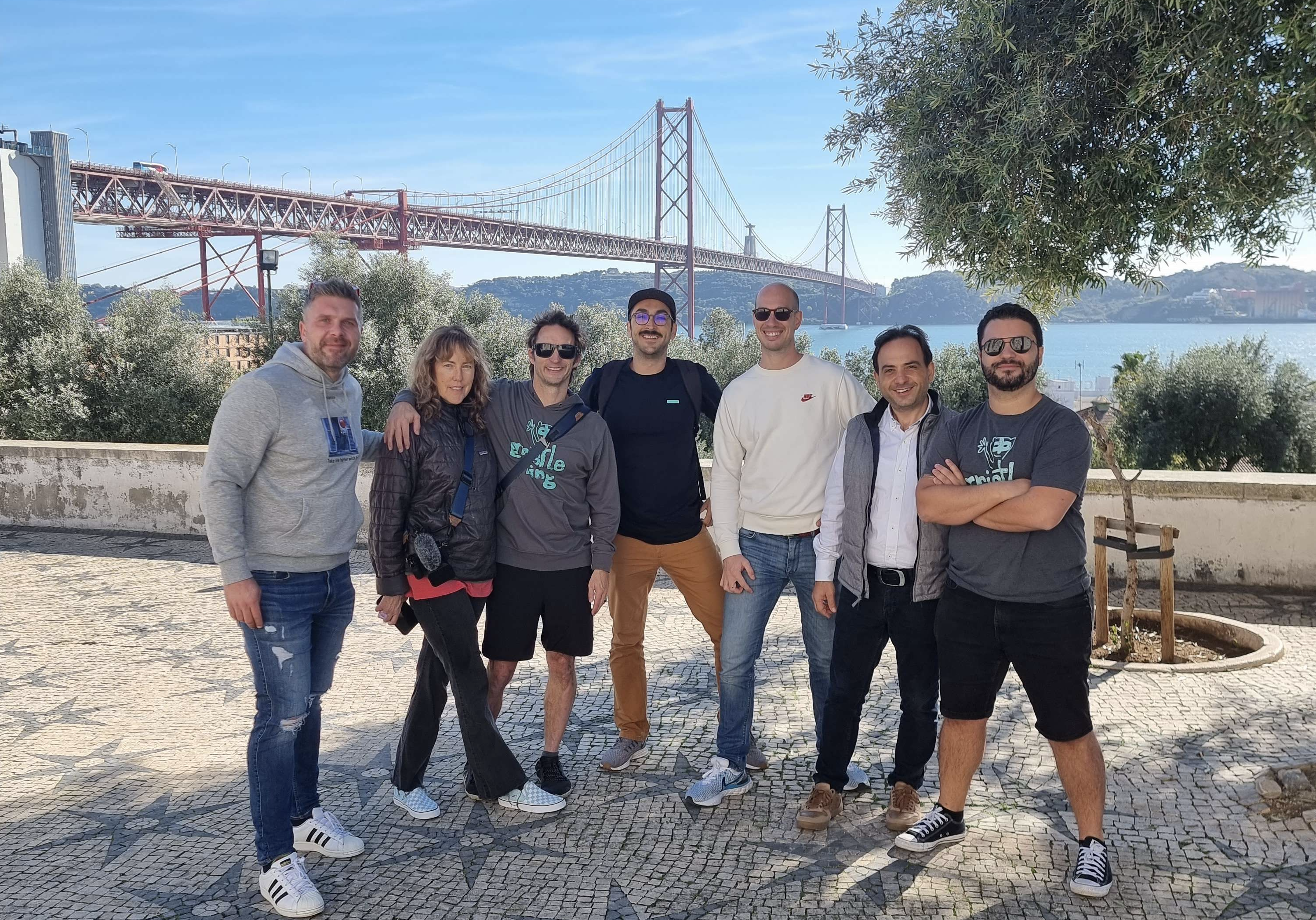
This first day was super encouraging; we were meeting people who were building on and excited about Helium! We spent the next four days checking out Solana Breakpoint, where we definitely didn't meet as many people who were so deeply involved in Helium. Still, we watched closely as both Nova and the Helium Foundation demonstrated a clear commitment to continue to grow Helium.

https://www.youtube.com/watch?v=xxfxJn\_uTF0

Amir spent about half the time talking about IoT, and the other half talking about the 5G plans as well as how the network is readying itself to take on more protocols. I've seen a fair amount of "Nova is abandoning IoT" FUD, but pretty clearly that's not the case.

There were other excellent presentations there that I'll go deeper into. Let's start with Abhay Kumar's. Abhay is the new CEO at the Helium Foundation , and he talked extensively about the move over to Solana.

https://www.youtube.com/watch?v=Auk06eIRanI

Abhay spent time explaining what Helium is, which is something we (the community) need to remember is an unfinished task. I'll skip forward quite a bit here to the lessons learned at the last stop on the tour, Barcelona, where I found that most people in the Smart Cities space have never heard of Helium.

Look, in growing the Helium IoT network to over 970k Hotspots in over 75,000 cities in the last three years, the Helium community has made a pretty good start towards achieving the long term goal, which is to "provide ubiquitous affordable connectivity to the Internet for all things and people." We (community members, including myself) tend to think of Helium as a pretty big deal, and something "everyone" knows about. They don't. Not even close. We have a ton of work to do when it comes to just letting people know we exist, let alone what Helium can do! Ok, back to Abhay's talk.

Abhay talked about the IoT side and also introduced the MOBILE network. He didn't go deep into either one. His talk wasn't about explaining Helium in depth, it was about making sure the Solana community understood, at a high level, what Helium is bringing as far as an opportunity for Solana developers and the ecosystem.

He introduced the idea of HIP 51, the Helium DAO. Now, for those of us in the world of Helium, HIP 51 is old news, but for the crowd, a lot of this was new.

Abhay also talked about HIP 70, which is the one that proposed a new architecture for core parts of the blockchain. Dig more into HIP 70 here, but the short version relevant here is that it allows Helium to move to a new L1, taking the burden of building a blockchain off the Helium community. It means we, whether "we" means Nova, or the Helium Foundation, or you, can do the thing we're the best at, which is deploy coverage and build businesses related to that coverage.

One of the first exciting things that happens with the move to Solana is the minting of almost a million NFTs, one for each Hotspot. The implications of this aren't yet understood, but what I think we'll see is an explosion in flexibility on ownership splits, enabling better incentives for healthier network growth, and some very interesting smart contract applications.

Until I re-watched Abhay's talk, I missed one of the key parts; Helium Foundation has acquired the Strata Protocol. Strata is a protocol to launch tokens on Solana, so this makes sense. This makes it reasonably likely for the Foundation to hit its goal of getting Helium on Solana mainnet by Q1 2023.

Noah Prince from Strata joined Abhay on stage to go through a demo of Hotspots earning MOBILE tokens and interacting with HNT. He touched on security aspects, including circuit breakers. As an example, if more than, say 20% of the MOBILE tokens leave the treasury in some configurable window, say 24 hours, there's an automatic shut down.

Noah also demo'd the Backpack wallet to show how you'd claim rewards. With about a million hotspots, if all rewards were released all the time, it would spam the chain with transactions. The way they've set it up is that a Hotspot NFT will be like a piñata; it'll hold all your rewards until you hit it, at which point it'll release 'em to you. Simple. He also showed how you can redeem MOBILE for HNT, which is a one-way operation; you can't buy MOBILE, you can only earn it or redeem it for HNT. With that HNT you can buy Data Credits and then use the Network.

What's left is the integration with Helium's cloud. That is a system of Oracles counting all the packets that are used by all the Hotspots and provide Proof of Coverage rewards and figure out the lifetime rewards for all entities. Challenges include taking all the current Hotspots and rewards and bringing them into the Solana system. Minting a million Hotspot NFTs at $.40/mint is an enormous cost which they may try and solve with NFT compression. With many technical problems still to be solved, the core functionality of how the DAOs and subDAOs work appears to be sorted out.

Next, Joey Hiller, Jose Marcelino, and Carrie Kellar presented on how some of the use cases that start to occur with Helium on Solana.

https://youtu.be/ckcPH7CBreI

Joey's demonstration referenced his IKEA air quality sensor build, internet connected chicken coops and supply chain tracking for small coffee shops; it's always fun to listen to his talks. Jose Marcelino from RAK Wireless joined Joey to go through a demo with Trackpac, which is BFGNeil's company that uses Browan Tabs and other trackers to provide a super easy experience with using Helium.

Now, one of the things we hear all the time from the FUDpatrol is how no one is using Helium, which is (fairly obviously to those of us using it) bullshit. Still, it was nice to see Jose put numbers to just one customer's use; 1,200,000 check ins from Trackpac trackers since early 2022, all on the Helium network.

Getting a Trackpac tracker to work is simple; download an app, scan a QR code, and you're tracking whatever it is you want. RAK Wireless & Trackpac worked together to track buses and shuttles for Solana participants to move between the 3 main venues during Solana Breakpoint. Proving that the Helium IoT network is super cheap to use, tracking 26 vehicles across the city for 3 days cost 46.8 cents in total. (26 trackers x 1.8 cents per tracker for the 3 days).

Carrie Kellar, the CTO and co-founder of Baxus, shared the stage and talked about how Baxus is creating infrastructure for tangible assets, starting with whiskey and wine. Baxus has created a pipeline for collectors to authenticate, store, and insure their wine and whiskey. They allow you to mint an NFT that acts as proof of ownership and authentication which users can trade or use as collateral for loans.

Baxus is using Helium to provide proof of presence as well as temperature and other sensor data to show the environment of a specific cask or barrel throughout its lifetime. This gives a collector the ability to audit, in real time, the location, state, and history of a specific unit. Casks are outfitted with temperature and humidity sensors, and will soon have trackers attached. Now, I'm not a wine or whiskey collector, but I do like nice things and, like many of us, I've got a Gollum-like obsession with seeing the state of something I own whenever I want to. Watching Carrie talk, I could see the power in layering the ability to get all this data cheaply on top of an NFT.

The upshot of the Baxus presentation is that we've got yet another industry being born on the back of Helium and unlocking the potential present in a different L1. Before Helium, there wasn't the cheap and ubiquitous coverage across rural areas and down in wine cellars that you need in order to track barrels of wine and casks of whiskey. Now there is. Yes, the world is changing, and if you're reading this, you're witnessing history. You can expect to see something like this happening for every type of ingredient and collectible thing that exists.

This was all super exciting to see. From the broad perspectives of Amir and Abhay down to the use cases that Jose, Joey, and Carrie demo'd, this was evidence of Nova and Helium Foundation's efforts at growing the Helium ecosystem and ensuring the transition to a new blockchain unlocks a ton of new value (not just a faster chain that works better.)

What's next in the Helium In The Wild series? Why, the Helium Train Hackathon, of course. My post on that will come out in the next few days. In the meantime, rest assured that the Helium ecosystem is alive and kicking, and though it may still be a baby, it has all the hallmarks of growing up to be a giant. Rock on!


Crypto & IoT Black Friday Deals - 2022

· 2 min read
Nik
Site Owner

Gathering together blockchain + meatspace as well as other relevant deals here. In some cases the links are affiliate links, so I'll earn a small commission if you use 'em. That seems fair to me, but you can always just Google the project and "Black Friday" and find 'em yourself as well. If you know of any others and want me to post 'em up, drop it in comments. LFG.

Blockchain + Meatspace

IoT & Geek Patrol

If you know of or see any others, lemme know and I'll drop 'em in here. The goal is always to help everyone grow together. Rock on!

What Can You Do On Solana? A Guide For The Helium Community

· 9 min read
Nik
Site Owner

We're switching over to Solana as our Layer 1 (L1 for the cool kids). What does that mean for you, a Hotspot owner?

Let's start with the important stuff: On a day to day basis, about the only difference you'll see once we switch over to Solana is that the whole system will run faster. Sure, there'll be outages; there a part of every new technology, and Solana is no exception.

Still, most of the time what you should expect to experience is a working blockchain that's faster than Helium's original.

Ok, so "working and faster" is a good start, but...what else is there?

Helium brought a lot of new-to-crypto people into the crypto space, and while the promise of "decentralized" and "permissionless" and "smart contracts" seem useful as fuzzy concepts, how can you as a Hotspot owner actually use all that? Maybe you want to dip your toe a little deeper, say to ankle depth, into crypto. Where could you start?

You could start with the official Solana Ecosystem, but that seems to get overwhelming quickly. DeFi, Protocols, NFT Marketplaces, DEX projects...whew! Let's slow down and find just one thing to start with. Let's start with making a simple ticket to an event, and using the Solana blockchain to prove that the ticket you have is both yours and unique.

As an example, we'll use the Here Be Dragons event that I'l be running at Solana Breakpoint in Lisbon. This is part of the Helium In The Wild tour sponsored by the Helium Foundation.

The event itself is one where you pick up a mapper (supplied by event sponsor RAK Wireless) and are given a set of landmarks, coordinates, and Hotspots to tag. The mapper uses the Helium network to prove when you were where. A fun mapping event is what I'd consider a soft intro into the Helium ecosystem.

I'm doing another soft intro, this time to Solana, by running the event ticketing using a Solana app called Cardinal. In Cardinal's words:

Cardinal is a Solana Protocol that enables the conditional ownership of NFTs. We're powering the future of NFT utility through rentals, subscriptions, staking, tickets and more.

Cardinal.so Homepage

Ok, so what's a "protocol"? What is "conditional ownership"? Let's go through this a step at a time.

A protocol on Solana (or any blockchain or system) is a set of rules that defines how data is allowed to be transferred between different systems. You might have one protocol for managing tokens (exchange of value), another for getting into an event (something combining time and access), and another for proving you attended an event (combining location and time). Protocols are the bedrock of how computers talk to each other.

Conditional ownership is the idea that you did or had something before you received something. It might be simple, like you paid something in order to receive a ticket. It might be a little more complex; you owned something (in your wallet) AND you paid some amount, and by fulfilling both conditions you now have absolute ownership over the item. Perhaps not totally obviously, conditional ownership opens up doors to fun games like, "You have to be a member of this club, and be at that location, where you collect a specific NFT, before you can have the right to buy some other rare thing."

For my event, Here Be Dragons, I'm keeping it simple: You can buy a Solana NFT using Cardinal, and all proceeds from that go to a hackathon contest I'll run in the future supporting a Helium + Solana project. The NFT costs about US$5 worth of SOL, the native token of Solana. I suggest using a Phantom wallet, but any wallet that Cardinal supports is fine.

You don't have to buy an NFT to participate, you can just show up to the event and I'll hand ya a mapper and a list, though at least register at the bottom of this page so I know you're coming.

If you do decide to embark on this experiment with me and you buy the NFT, show up to the event and I'll check you in by having you scan a QR code on my phone that makes sure you have the NFT in your wallet (on your phone). This proves that you were there, and I'll experiment in the future with figuring out how to get a few extra cool things going your way just for being an early believer.

Now, for my nit-picky readers, you'll have noticed that this isn't actually an integration between Solana and Helium, it's just using Solana to help manage a Helium event.

That's pretty much where we're at in October of 2022. We know we're moving over, but we ain't there yet. We also know a lot of really rad things are coming, like Helium Mobile powering the Solana Saga Phone. I mean, you saw that one coming, right?

Right now, there are three important things to do with this whole Solana x Helium thing.

  1. Use
  2. Dream
  3. Build

USE

Step 1, "Use" is what I'm doing. I'm using Solana to do this event, poking around in the thing, looking for reasons to just try it out. For most of us, we learn really well by doing that. Sure, it may cost you a few bucks (or pounds, or euros, etc), but that's cheap education.

Maybe you go a little deeper and check out a recent award-winning app called WiHi by Noetika, which lives on Solana and allows you to get paid tokens for connecting a weather station (no, not WeatherXM, this is something different). You could use the same weather station WXM is, just get paid in a different token.

You could check out another option and dive into Dialect, a Solana project based around web3 messaging. As you'll see if you check 'em out, none of these are yet ready for prime-time; these ain't things your grandma will use today.

If you want to check out other projects built on Solana, I'd head to any of their Hackathons; the Solana Summer Camp one is an excellent start!

DREAM

Ok, so if you dream a little about NFTs integrated seamlessly with Helium, it's not a huge stretch to think that a Hotspot could be an NFT, and holding that NFT give you access to that Hotspot's rewards. Pollen already does this, so you know it's possible. One cool thing (thanks for the idea AC!) is that, let's say you have a banger hotspots and it cranks out HNT. You could rent a fraction of your NFT and therefore a fraction of your rewards to a group of people.

In that same vein, what happens when you make a hex an NFT that affects the Hotspot NFTs in it? HIP 15 & 17 is getting pretty long in the tooth, it'd be rad to see a proposal come out that heavily incentivize currently uncovered hexes and strongly disincentivizes the poor performers in an over-covered hex.

For example, as a single user you could just pay in SOL for someone to deploy (and remain deployed) in a hex where you want coverage. It could be a res8 hex or it could be coverage across a res4 region. Maybe the incentives get rewritten so that any uncovered res 8 hex on land gets 1.2x rewards of every currently covered hex on land. The possibilities once we have easy access to NFTs and start thinking of them as more than expensive jpegs get pretty darn interesting. Dream on!

BUILD

The third you can do with Solana is build on it.

There are a LOT of people on that chain; it has one the highest numbers of active wallets out of any blockchain project, and Rust, Solana's language, has a thriving community (can we call them Rustafarians?)

Maybe it's YOUR idea you want to bring to fruition. Maybe you've seen the explosive growth of Helium, looked at your regular job, and thought, maybe I could do Helium stuff for a living? It ain't impossible to learn Rust, and the Solana ecosystem is supportive of new developers coming in, you can jump into their viewpoint here.

Now look, you don't have to do any of those things. You can just sit back and let your Hotspots generate a little HNT every day and go about your regular life. Check back in every few months to see what's happened, and I think you'll be pleasantly surprised. I also think if you take that hands-off route, you'll miss some of the greatest opportunities we've seen yet; after all, it's not every day that an L1 hops its rails and jumps onto another track. Giant movement always holds giant opportunity; are YOU the one who'll figure out what the trapped value is?

LFG!

Archived Comments

Bernie - 11/16/2022

Hey Nik, seems because of that switch to Solana I can’t deposit hnt in my wallets anymore. Can I transfer hnt from my miner to my Solana wallet? Cheers Bernie


Nik - 11/16/2022

Hi Bernie, Switch hasn't happened yet, all that happened was it was approved to happen in the future. :)


Find Out Why Helium Hasn't Stopped Those Rotten Cheaters!

· 10 min read
Nik
Site Owner

Let's go through seven aspects of why stopping cheating, also known as gaming, on the Helium Network is so damn difficult. I know, I know, you just want an answer or *someone* to do *something*.

First, and let me be very clear: A group of talented people, both volunteer and paid, are working on combatting cheating and they've made tremendous progress from the early days. They acknowledge they ain't where they want to be in terms of controlling it, but contrary to popular belief, a fair amount of work has been and will continue to be done on keeping cheating to minimum levels.

Still, when you're trying to secure an enormous decentralized permissionless network against sophisticated and motivated criminals, it ain't an easy game. Look at this way: Modern society hasn't succeeded in stopping crime; why should it be any different in a subsection of society, particularly one that's very new?

Let's go through the hurdles to stopping gaming along with what you can and can't do, what is being done, then talk about where your time as a member of the Helium network is probably most profitably spent.

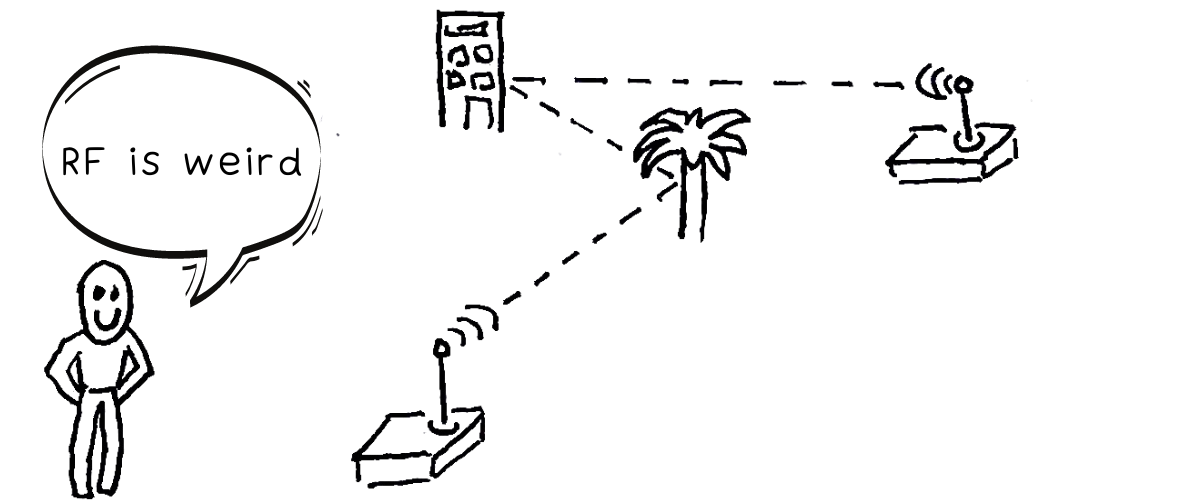
First, RF is weird. RF stands for Radio Frequency, and the "RF is weird" saying is common in radio expert circles. Using RF to determine a Hotspot's location is one of the fundamental principles of Helium. Unfortunately, the way Helium is using RF to prove location is not conducive to knowing where any given Hotspot is if someone is trying to cheat.

In a lab, RF is predictable; radio waves travel at the speed of light and take "X" amount of time to get from a known distance between point A and point B. In the real world, they bounce of buildings and trees and planes, get stopped by mountains, refract off of water, and behave in ways that, while generally predictable, are not individually predictable.

Don't believe me? Talk to any HAM radio enthusiast who'll tell you that one day you'll talk to South Africa and the next you can't get out of your city. With the fundamental method of "proving" whether or not a real world signal is legitimate so fuzzy, it's difficult to apply a clean set of rules that give a "cheat/no cheat" label to any given signal set.

Second, GPS is incredibly easy to spoof. Pokemon proved that, and Helium is no exception.

That means you can set up a bunch of hotspots in a basement in Boston and it'll take a few hours on the internet and about $40 to make them seem like they're set up in a beautiful layout in the mountains halfway around the world. Yes, sophisticated anti-gaming algorithms can beat that, but not every time, and...

Third, no one wants to see a "good" hotspot get roped in with a bunch of bad ones. Sure, the PoC SWG (Proof of Coverage Security Working Group, the group generally in charge of anti-gaming) could cast a fine net that caught, say, 90% of the cheating hotspots, but if it also accidentally scoops up 10% of the good hotspots, that's not acceptable.

That brings us to the fourth reason cheating is hard to stop: The network is decentralized. The whole point is that the network itself is the protection; ideally there isn't a need for an "anti-cheating police force" the way we have in traditional government. I know you want someone to go kick in the doors of Bent Pastel Porpoise (which has been on the denylist over 50 times) and confiscate all those stolen HNT, but...who does that? The Helium Police Force? Do they fly to China and lodge a protest? What if they're wrong, and BPP is actually a Xiangyang farmer just making a few extra HNT on the side?

This brings up a few important points: What if there WAS an entity in the Helium ecosystem that could take HNT out of your wallet if they thought you'd stolen it? That's anathema to all of crypto; what's in your wallet is incontrovertibly yours. Who should judge that? If it's just a pig-pile method of voting, what stops a few whales using their voting power to say that your HNT isn't yours? What happens to the recovered HNT?

It gets tricky fast, and the only reasonable way to judge right now is to err on the side of people who are *probably* doing the right thing, even though that probability provides cover for an awful lot of cheaters.

Let's get into some better news, now that you see a few of the (very difficult) obstacles to stopping all cheating.

Fifth, there actually IS a group taking on the monumental task of programming the network itself, and not just you or your buddy or any self-appointed Helium police, to make cheating not worth it. They work under the acronym PoCSWG, mentioned above. In general they remain out of the limelight, although they will bring forth cases against apparent institutional gaming to be heard by the MCC (Manufacturer's Compliance Committee). Full disclosure (and no surprise to those of you who've watched the MCC calls), I sit on the MCC as a Community representative (vs an RF or security expert, which I'm not). If you'd like to learn more about the MCC, their charter is here.

The PoCSWG is made up of experts from the world of RF, security, machine learning, programming, mathematics, AI, and manufacturing. If you'd like to join, jump into Helium's Discord and look for the #poc-discussion channel. Read through the past week's posts and see if you think you can help. If you do, apply here. The PoCSWG works together to develop ways of combatting gaming on the Helium network, and while they're not perfect, so far they've done pretty well. That brings us to the next thing:

Sixth, quite a few gamers actually HAVE been stopped. Now, having friends and clients who have pointed me to "cheating" hotspots that seem to pretty clearly cheating and still getting away with it, I know that not all cheaters have been stopped; not by a long shot.

I asked Dave Akers over at Helium Analytics to run the stats on how many gaming hotspots there are and how much they've earned. He suggested we use the denylist as our standard for "gaming hotspots", so this doesn't include all cheaters, but it probably gets most of 'em.

Here's a quick table for ya. Gamed Rewards are the rewards that went to Hotspots on the denylist. Hotspot Rewards represent HNT that went to Hotspots NOT on the denylist. Denylist Reward Portion is that percentage of Hotspot rewards that went to the denylist. Network Rewards is all HNT that was emitted to all actors; Hotspots, Validators, and the HST to investors.

[ninja_tables id="5932"]

Takeaways?

First, about 10% of all Hotspots (just over 100k) are currently on the denylist and not allowed to earn by either receiving challenges or witnessing a beacon.

Second, in 2022 so far (Oct 23rd), about 2 million HNT was earned by Hotspots on the denylist. Yes, that's a problem. No one is denying gaming isn't an important issue. While it is a lot, it's only about 10% of all HNT emitted during that period.

Now, those of you who've been strident about letting me know that gaming is a much bigger problem and may comprise up to 50% of the network...show me the stats. As far as I know, there isn't a way to see not-yet-caught cheater rewards. If there were, we'd probably be able to stop them.

I'm going to GUESS that less than another 10% is going to as-yet-uncaught cheaters, which would mean, again, as a GUESS, less than 20% of all rewards are going to cheaters. Yes, that's a problem. No, it's not 50%. Yes, people are working super hard on this to bring it down to acceptable levels.

Compared to estimates on global crime as a percentage of GDP, we're behind, by a lot. Still, it's reasonable to believe that the PoCSWG and other entities will bring cheating down to more normal levels within a year.

The seventh aspect is what YOU can do to help stop cheating on the Helium network. You can report suspected gamers to Crowdspot.io. Crowdspot isn't a perfect fix. What it does is surface up apparently bad behavior so folks from the PoCSWG can find potential bad actors faster. Just reporting a gaming cluster doesn't mean they'll be shut down by the end of the week (or even in 6 months), it just makes it easier to identify who might be potentially bad. Remember, if it was just a voting system, a whale could just vote against YOU and there'd be nothing you can do about that.

Other ways you can help including digging into the stats to see if you can figure out better ways to spot and prove cheating, or volunteer your efforts for the PoCSWG.

The most exciting news out of all of this (for me) has nothing to do with cheating, and everything to do with a network worth trying to cheat. We have built something amazing here, a globally useful decentralized network. It is so amazing and valuable that actual crooks are trying to cheat it. While it's bloody frustrating, it's also the sign of a very healthy network. After all, no one steals from a beggar.

With that in mind, if you've been frustrated by cheating, know two things: First, a group of people are working on your behalf to minimize the damage cheaters are causing, and they're more or less succeeding. Second, even if all cheaters on the network were stopped TODAY it would have a minimal impact to your earnings compared to what you could do if you actually built a business using the network.

The time for crushing on PoC and data rewards is gone. The absolutely most profitable thing you can do right now is not the focus on what is wrong, but on how you can build something on the network. THAT is where the largest opportunity lies, and where I strongly recommend you put your ablest effort.

To your success in Helium!

GKIIN Vol 1 Issue 3

· 2 min read
Nik
Site Owner

The Gristle King Industry Insider Newsletter is a weekly publication gathering all the intel and observations we collect as critical nodes in the blockchain + meatspace.

-GEODnet is looking for third party manufacturers for their miners.  They are aiming to grow to 100k miners world wide.  They can currently run on a Pi4, which is the reason for the RAK V2 swap offer, or their own proprietary hardware (Hyfix.)

-With early Hotspot makers like Pycom going out of business, there may be an opportunity for Bobcat to be the “backup of choice” for providing long term support.

-HIP 72 (Secure Concentrator) may offer an opportunity for Bobcat to mfr those.  Happy to make an intro to Dinocore (HIP originator) if that’s useful.

-The Boring Protocol (crypto VPN project) wants to move in as a Helium subDAO.  Boring Protocol allows you to buy a separate device or add firmware to a current device (like a Helium Hotspot) that acts as a node in a VPN. Some complexities exist around adding firmware, as someone will have to burn HNT to do that. We recommend considering a conversation with them supporting their firmware.

-The MapMetrics SPT tracker arrived, and like many early crypto hardware projects, works about 20% of the time.  They're promising 2000 MMaps (their currency) to all who received a unit.

-Max has just applied as a committee member for the Helium Foundation's new governance committee. We'd recommend you apply as well, contact Valerie at the Helium Foundation to see if they'll accept a manufacturer rep.

GKIIN Vol 1 Issue 2

· 4 min read
Nik
Site Owner

Critical news for industry professionals and investors in the space. This is sectioned into News, Opportunities, Issues, and Unknowns.

NEWS

HELIUM

  • MCC Video - Due to Light Hotspot scheduling, the MCC has paused hardware audits for the month of October. I'd think of this as a "standard delay".

  • MCC - Video 19:46 All 5G gateways will need to incorporate "secure boot", and a new HIP 19 audit process specific to 5G units will be put in place.

  • MCC - [Video](http://-22:05 Gateway-less discussion.) 22:05 Gateway-less discussion

  • Boring Protocol has submitted a HIP to become a subDAO. If approved, this would be the first "real" external subDAO in the Helium ecosystem.

  • We're seeing lots of "need an installer?" or "are you an installer?" call outs across mfrs/distros (HeliumDeploy, CalChip)

GEODnet
GEODnet is innovating in the realm of blockchain + meatspace spatial incentives. Long the domain of Helium (HIP 15/17), GEODnet is experimenting with at least 2 new options. This is important for the industry as it starts to pave the way for more projects to improve their location incentive structure.

  • GEODnet will start to enforce signal strength penalties on rewards. Up until now, miners were rewarded solely for being connected to the internet. This is the first in a series of refinements of signal data. Expect the next penalties to revolve around antenna movement (1mm or less, "it should be strong enough to do a pull up on."
  • GEODnet will also start to issue NFTs based on miners that have provided consistent data, with ownership of the NFT allowing a reward level in perpetuity.

MapMetrics
I received tracking info for the SPT, or Special PositionTracker. No preference (that I know about) was given for this shipping. This is a healthy indication for MapMetrics; they're shipping product. They're also using NFTs to sell advertising, which could be an interesting channel.

XNET
XNET launched as a new player in the "telecom cowboy" space. Max and others found critical flaws quickly, which the XNET team has worked rapidly to remedy. XNET will have their first AMA on Thursday the 6th at 5 pm PDT in their Discord.

XNET is very committed to their gateway. In order for their program to work, they have to have one gateway-to-one-radio. If you'd like to set up a meeting to discuss further, we made a connection at WISPalooza in Las Vegas.

OPPORTUNITIES

HELIUM

The MCC is looking for new members, both voting and non-voting. Interested parties, including manufacturers or distributors who may sit as non-voting members may apply here.

Current 5G models are attached to an "AGW" (gateway). The gateway is what is onboarded onto the blockchain, not the radio. There is an opportunity to allow a manufacturer (or other party) to onboard an AGW separately from the radio and be responsible for (and profit from) managing the gateway in the cloud. Current discussion is opening up questions about who gets to onboard an AGW, who gets the rewards, how they might be split, and how the system might be managed.

Going to gateway-less opens up the possibility to do WiFi6 offloading of 5G, which means vendors could make a WiFi6 radio with a secure boot, opening up $MOBILE rewards to a global audience.

ISSUES

Pycom, a Helium HIP-19 approved manufacturer, has been put "into administration", the US equivalent of bankruptcy in the UK. Anyone they owe money to is unlikely to get paid unless the company is sold. You can see this discussion at 16:35 in the MCC call.

UNKNOWN

Christian from Pollen & Scott Kaplan from Nova were on a panel at WISPapalooza. Nova does not appear have a clear plan for 5G. Pollen seems like they have a much clearer path to mass deployments.

Helium In The Wild - Start Your Engines!

· 8 min read
Nik
Site Owner

Ready to push hard into IoT outside of the US? Meet Helium In the Wild!

Starting in November with Solana Breakpoint in Lisbon, Portugal, I'll be heading out to see how Helium is being used in the wild. I'll be looking for and sharing lessons, inspirations, and interviews with real people who are getting up to their elbows in this network.

https://youtu.be/hKbBtm6sqDg

The Helium Foundation is sponsoring this series to showcase how people are using Helium around the world. Yeah yeah yeah, I know, I'll still do stuff covering the use of IoT in the US, but there's a whole world out there and I want to help YOU see it!

Driving demand is critical to the long term success of Helium, and I'm psyched to help you figure out how to do it yourself by showing you how it's already being done.

At each place I visit, we'll do something different to help you learn about Helium and connect with your local community. It may be learning how to use a sensor, an aspect of running a LoRaWAN business, or any other thing useful to you as a user, service provider, DIYer, or just an interested bystander. We'll also be running a mapping contest called Here Be Dragons at a few locations, more on that below.

The current schedule looks like this. For details on each location, head down to the individual sections.

Wherever possible I would LOVE to meet you at any one of these. If you'll be in any of those areas on or around those dates, please sign up so I can keep you abreast of when the community workshop and meet up will be. Everyone who signs up AND shows up to their location gets a Helium in The Wild t-shirt (while supplies last).

If you know anyone I should meet or should invite to present at any of these, connect us up, yo.

Stoked!

[formidable id="35"]

In the interest of making all this really easy for you to keep track of, here are a few more things to think about.

At each location we'll be running something a little different. Some will have the Here Be Dragons mapping contest, some will have presentations from experts, some will have a panel discussion so you can learn from a variety of people. All events will allow you to connect with locals who are into the same things you're into as well as allowing you to build and strengthen local network connections.

Here Be Dragons mapping contest is an event with RAK 10701 LoRaWAN mapping units. RAK is one of the sponsors of the Helium In The Wild tour, and we're psyched to see them supporting the community! During the contest you'll be competing to see who can map a variety of things, from most hotspots connected to specific hotspots to most miles traveled. Tiny prizes will be given to top performers, and at the end of the Helium In The Wild tour I'll mail all the mappers off to the various winners. The Hotspotty team along with Dave Akers at Helium Analytics has generously agreed to help support the back end of this so we can know who did what with a mapper. :)

LOCATIONS & EVENTS

LISBON Activities

On November 4th, at 11 AM, I'd love to meet you for coffee at Selva.

Pending hardware arrival (it got stuck in transit), on the 7th, in conjunction with Daniel & Max at Hotspotty and sponsored by RAK Wireless, we'll be running the first ever Here Be Dragons event. You can buy an NFT for the event (NOT required, just a fun way to support, all proceeds will go to supporting a future Helium x Solana Hackathon).

If you're coming, please register using the form above and show up. RAK Wireless has sponsored this event with 10 of their 10701 WisBlock Field Testers which Daniel has set up to integrate with Hotspotty for scoring.

After running Here Be Dragons I'll be exploring Solana Breakpoint and reporting back on how moving over to Solana will benefit Helium users in specific ways. If you're in Lisbon and have anything to do with IoT, Helium, and Solana, please reach out so we can connect!

I'll attend the Proof of Physical Work event and let you know more about the Hivemapper/Helium collab.

LONDON Activities

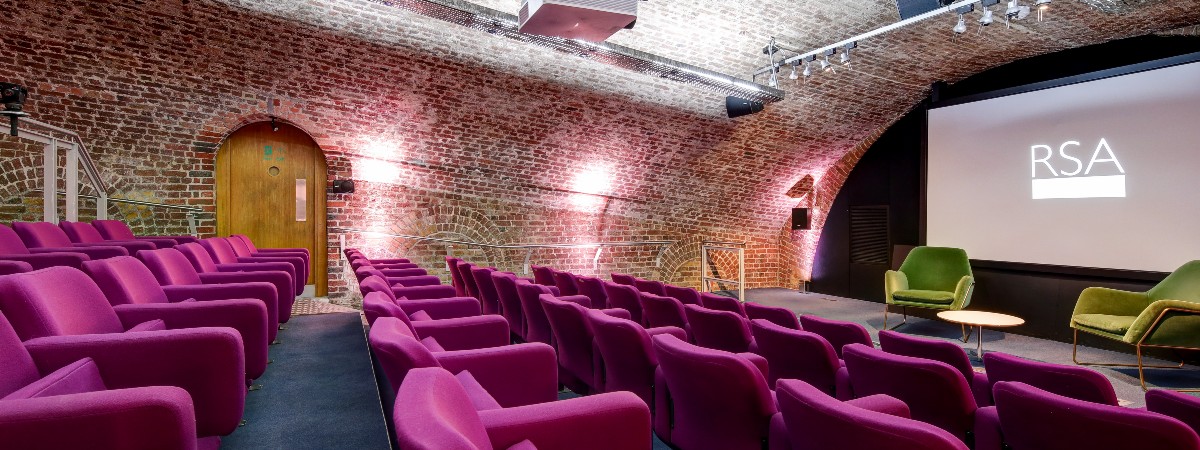
The London event is turning into the headline event of the tour. I've booked a pretty special place for us to meet, the Durham Street Auditorium at the RSA House in Central London.

We've also got an adjacent meeting space, the "Long Gallery" so you'll have a place to mingle and connect with others. We'll have food there as well, so while I'll ask ya not to come off a 1 week fast and clean out the refreshments, there'll be something to nibble on.

The event kicks off at 9:30 AM the morning of the 11th, meeting in the Long Gallery to start the the London Here Be Dragons mapping contest using units supplied by RAK. You can buy an NFT for the event (NOT required, just a fun way to support, all proceeds will go to supporting a future Helium x Solana Hackathon).

After that, starting at 1 pm local time we'll be holding an series of talks focusing on running an IoT business with Helium. We'll have reps from the community, Helium Foundation, manufacturers, and even from outside the Helium eco-system! The event runs 1-5 pm in central London.

Event timeline:

0930 - 1000 Here Be Dragons Registration (optional NFT for this is here)
1000 - 1300 Here Be Dragons mapping contest
1300 - 1315 What Hath Helium Done? - Nik Hawks/Gristle King
1315 - 1345 Building a Business With Helium, Neil Skoggers/Trackpac,
1345 - 1400 Using Analytics to Drive IoT Business Decisions, Dave Akers/HeliumAnalytics
1405 - 1435 Future of IoT Panel (Adrian Clint/Helium Foundation, Skye Blackledge/RAK Wireless, Adrian Li Mow Ching/Linxdot)
1440 - 1500 Building End to End Solutions, Rob Putt/Trackpac
1500 - 1600 How To Save The World With LoRaWAN, Bill Clee/Novacene
1600 - 1700 Mingle as needed. Wallflowers to depart. Extroverts shall sustain.

If you're coming to either (or both events), please register using the form above. RAK Wireless has sponsored this event with 10 of their 10701 WisBlock Field Testers which Daniel at Hotspotty has set up to integrate with Hotspotty for scoring.

PARIS Activities

Morning meetup at La Felicita, 10 AM, to connect with the local Helium crew (including local YouTuber SMOKLM).

We'll spend the rest of that day and the next connecting with locals in Paris (and frankly, recovering from a blaster of a trip up 'til this point) and prepare for the final stage, Barcelona! We did have a trip down to Paul (aka Disk91 planned), but it ate up too much time; we'd be on the train for 8+ hours plus a 2 hour flight, all in the course of 24 hours. Far better to spend that time boots-on-the-ground in Paris!

BARCELONA Activities

The theme in Barcelona revolves around exploring how governments, specifically cities, may use LoRaWAN and Helium. I'll be attending an expo called Smart Cities Barcelona to dive into how many municipalities are using the growing flood of data to build and manage better, smarter cities.

On the evening of November 16th we'll be meeting with the IoT Barcelona Meetup group at 6 pm. That group is run by Marc Pous, a Balena wizard and our local connect. We'll be at Itnig, which is a local statup hub; come join us if you're around!

Opportunities in the Ice Age of IoT

· 7 min read
Nik
Site Owner

Helium ain't the only LoRaWAN network out there, and it's certainly not the one that's been around longest. Thomas over at Tingkart recently sent me this excellent video from the The Things Network YT channel called "The Silver Bullet to IoT Success".

Spoiler alert: The "Silver Bullet" involves hard work.

If you don't have 20 minutes to spare, here's the short write-up. If anyone from the TTN YouTube channel sees this, you're welcome to copy/paste any of this into your description.

The great news is that other very sharp minds have been learning about and trying to solve the IoT business problem. They share the distillation of a few decardes years work and prolly many millions of dollars in consulting fees in a little less than 20 minutes.

In the video below you'll see Ferry Grijpink (I'd pronounce his last name cHi-pink" using the German "ch as in Bach" and be pretty close) from consulting behemoth McKinsey walk through the state of the (non-crypto) IoT space right now. I'm impressed by Ferry, this is a sharp cat!

https://www.youtube.com/watch?v=5gfJu5QcXWQ

NOTES
We are in an Ice age of IoT, and winter is coming for the global economy.

[Nik's notes: This Ice Age thing is probably the dominant narrative, but it doesn't mean it's true. The idea that "winter is coming" is super sexy from a FUD perspective, but I'd balance that perspective with the opposite end: Daniel is coming.

Daniel Andrade at Hotspotty (along with Max Goossens and the rest of the team) are showing us how fast a new IoT-based business can grow using the rocket-fuel incentives of crypto. Daniel and Max aren't the only ones building in the space; you've got BGFNeil with Trackpac, Paul at disk91, the Mycelium crew, the Hexagon Wireless crushers, and a host of less well known but equally competent operators out there building the next economy.

If we want to really stretch the Ice Age analogy, I'd put it this way: Sure, the ice age is coming, but web3 is also coming, and web3 burns with the white-hot intensity of a thousand suns, melting the ice and causing tsunamis of change to race around the globe.

I'll keep my notes in italics from here on out.]

Back to the notes from Ferry's talk, which is excellent:

Investors don’t believe in IoT anymore, but bottom up efforts (like Hotspotty, Trackpac, and other lean and fast web3 based companies) are working well and can be profitable.

This sounds like supporting evidence for my "Ice Age meets white-hot web3" hypothesis. Small & lean companies are building fast while the big money backs off. That's what opportunity smells, looks, sounds, and feels like. Ever seen a duck? You're looking at one right now. Don't wait for the Encyclopedia Britannica to confirm it, MOVE!

The first important key to an IoT business is: Making it easy.

As the joke goes, "The e in IoT is for easy". If you're in a position to make the business use case of IoT easy, you're sitting on a golden egg machine. Many people are not sitting on that machine. Psst: You'll have to build it.

The follow on and equally important aspect is: Change management is key.

Both fascinating and predictable (McKinsey is a consultancy helping large businesses go through a change management procession), this idea is not to be overlooked. We, the new players in IoT, would be wise to learn from some of the biggest and brightest in the industry, and Mr. Grijpink is certainly among that crowd. Do not for even a femtosecond think that your path to install some rad IoT solution at a business will be easy. People are resistant to change. If you want to be successful, make sure some part of your business addresses this change management.

The two commandments of IoT Businesses:

  • Thy devices shalt work straight out of the box.
  • Thou shalt ROI quickly.

Ferry didn't actually reference "two commandments", but I thought it was useful as a framework.

What Ferry DID say was, “If you need a deep integration in the SAP, if you need a lot of of institutional change management, the next 12-18 months are going to be really tough for you." Read: Big businesses that can't move fast are about to freeze & shatter.

So, what can you do?

1 - Watch for the environment to change.  Or change the environment. That is far harder to do, but at a local level is achievable. For example, if you get just a few local businesses to start using your IoT or 5G solutions and it gives them an edge, you can bet you'll have many more customers (and competition) quickly following.  

What did he mean by "Watch for the environment to change?" Ferry gave the example of UK doctors changing en masse in response to an environmental change.  Pre-pandemic none of them wanted to do online consults; they thought it was silly, a waste of time, not real "doctoring". Within 6 weeks of the pandemic hitting and lockdown, UK docs were complaining that no online consultation was available and that “the system” was failing them.

2 - Silver bullet: Make it really simple.

Ferry gave the example of the outputs from all your efforts should be as simple as:
Red, green, or double green.

How can you make it incredibly stupid simple?  If you’re an engineer and think it’s simple…make it 10x simpler.  As interviewer and The Things Industries CEO Wienke Giezemann says in the video, “We [engineers & developers] are addicted to hard problems.”   That’s great if you’re an engineer.  That’s terrible if you’re building for normal people, who by and large are addicted to social media.

Another great Ferry quote: "People don’t want to use technology, they just want to do their job." Again, keep it super simple. Use IoT solutions to make it easier for someone to do their job and you'll make the "change management" problem much easier to solve.

Want to build a successful IoT business?  Solve: How can you take a problem away?

Be as complex in the backend as you like, but the front-end should be Samsara simple: Drive slower, drive faster, or keep this speed.

When McKinsey looked at IoT businesses cases from a financial perspective, 95% of business cases worked out.  There are not technology hurdles when it comes to IoT. There are "change" and "ease of use" hurdles.

A 95% success rate is obviously good news, but in stark contrast to the assertion that investors have lost confidence in IoT.  Why isn’t IoT seeing higher adoption?  McKinsey thinks it’s because of a change management problem in the institution.

A “you win / I lose” business case isn’t sustainable.  For example, if you’re buying materials and IoT makes your buy less materials due to efficiency gains, that’s great for you but not for the material producer.  A case that allows you to use more materials to build a better product is one direction you might consider, as an alternative.

Find a business cases that work throughout the value chain, and make sure everybody wins.

Thanks again to Thomas at Tingkart for sending that video my way and to the good people at TTN who put that on. If you want to keep up to date on the latest I'm active on Twitter & Discord. If you want a weekly update for industry insiders, check out the GKIIN. Rock on! ~Nik

The Gristle King Industry Insider Newsletter, Volume 1, Issue 1.

· 8 min read
Nik
Site Owner

This is the inaugural issue of the GKIIN (Gristle King Industry Insider Newsletter), which is written and researched by myself, Nik Hawks, and my good friend Max Gold, owner over at PPL Antenna and one of the most dogged investigators into these projects you’ll find. We'll be writing and releasing these on a weekly basis. Unlike much of the content here on GK which is free and written for the general public, or the Gristle Crüe membership, which is paid access aimed at Hotspot owners and enthusiasts, the GKIIN is a paid subscription written specifically to help industry professionals and investors understand the space.

This week in review: The Rise of TIPIN, launch of XNET, Community Calls & other updates.

Last week’s TIPIN Summit, put on by Lattice Capital in NYC, was a watershed moment in the world of blockchain + meatspace, initiating both this newsletter and a rapidly growing interest in the space itself.

After talking with many of you over the past few weeks, I realized one assumption I’d been making was totally wrong; that you all have a good feeling for the industry.  

Being more or less at the center of the space, Max & I are constantly connecting across every active project that’s out there as well as a few stealth ones.  

Whether it’s Helium, Pollen, Hivemapper, XNET, GEODnet, or the long list of really exciting projects out there, we wanted to share with you what we uncover in our research and conversations (whilst of course respecting confidentiality where requested) and help you, as an industry player, have a clear understanding of what’s going on in the minimum amount of time.

If you'd like to subscribe and get these once a week (again, this post is just the first issue and is free for all, the rest will be emails with access only via paid subscription), hit the button below.

SIGN UP FOR THE GKIIN SUBSCRIPTION HERE

Think of this as an email from your insider buddy who catches you up quickly on the most important parts of what happened last week.  You'll find news and updates along with analysis of key events, all in a length you can read in about 7 minutes. Where applicable we'll add links so you can go deeper if you need to.

If you have a question and you’ve subscribed, just hit reply.  By the nature of it, this newsletter has a small readership. If YOU have a question, there’s a good chance many others do as well.  If we don't know it off the top of our heads we can usually run down an answer for you in a day or so.

Unless otherwise stated, nothing you’ll read is a “paid editorial”.  If we get paid to promote something, you’ll know about it.

Finally, nothing in here is financial advice.  We love learning about projects and sharing what we learn, but make your own decisions based on your own research.  The blockchain is a dark forest, filled with both glorious surprises and dangerous pitfalls.  Beware!

With that as the intro, here’s the latest:

XNET Analysis

XNET launched this week as a competitor to Helium & Pollen’s CBRS play.  Headed up by former Google employees, XNET is claiming that they’re a crypto telecom industry “started by industry insiders.” 

In the world of blockchain, the accepted statement is, “Do not trust, verify.”  The recent launch of the XNET project was an example of just how harsh this rule can be.  

XNET launched into the space assuming customers would solely trust in the promise of “smart guys from Google”, but that line has been worn a little too thin.  While they may have an excellent long term idea in terms of focusing on building out a true MNO with voice, 911, and data (something neither Helium nor Pollen can boast at the moment), they made some incorrect assumptions.

First, they didn't understand how savvy their community would be when it came to deploying small cells as part of a crypto project. XNET assumed that by using cool names (Felix and Lucius, for their indoor & outdoor units, respectively) their customers wouldn't be able to suss out the make and model. This proved incorrect, and after pulling FCC Certification records, the XNET Felix is a Neutrino430 Indoor TDD eNB (Pollen uses the same thing and calls it a "Camellia") and the XNET Lucius is a Nova430i Outdoor TDD eNB (again, Pollen also uses this radio and calls it a "Elderflower").

Second, they missed the mark on establishing bona fides. They said they didn't want to be doxxed (publicly documented and known), but details are available for anyone who looked. Hoping they could hide it was solely wishful thinking, not a good PR strategy.

One of the main players at Hexagon Wireless, a large minerdeployer in the space, has posted a longer explainer article on ‘em if you want to get deeper. GKIIN has not confirmed whether Hexagon Wireless has invested in the XNET project.

Based on what we've seen so far, XNET's tokenomic model proposed may not solve the chicken and egg problem, which is the main reason to employ crypto in these DeWi projects.

The Big Dogs:
Both Pollen and Helium had their Community calls this week. While those are always packed with info, not much of it was new in either of ‘em.  By the time this is published Helium will have announced they have a far stronger anti-gaming tool than they’ve had before, so we should see less of a bleed in network earnings to gaming scum.

Pollen is aiming to get paid data flowing through their network by the end of the year. Remember, that’s a plan not a promise.  Pollen also announced that their grants are live. They're looking to fund at least 3 grants with no cap to funding, though 1 million PCN (approx $100k) was mentioned. Deadline to apply is Saturday, Oct 1st at midnight. Got an idea? Ask yourself this: Does it bring back 10x the value of what you're asking? If the answer is "yes", you've got a great chance at getting approved.

Helium HIP 70 passed on Sep 22, Helium Foundation begins to address Validator and Service providers vs Hotspot owners. A ton of work to be done, the next big announcement will probably center around WiFi6 cell offload, which will mean non-US players can earn MOBILE tokens if they have the right hardware to support it. That's a big deal, but again a lot of work and probably not going to happen in the next month.

Hivemapper announced Hivemapper Fleet Day (full disclosure, I’ll be moderating the panels there and helping run that day’s show), they’re a little late on their launch schedule but have been releasing pics of their new mining camera hardware.

GEODnet announces their first station to use Starlink backhaul. Pretty cool that centimeter satellite accuracy is being supported with satellite backhaul.

Anode Labs launched the React Network, a crypto-based play on running a Virtual Power Plant (aggregating power management across a ton of houses and buildings). They'll be focusing on what's called "dispatchable" power, which (in very general terms) means they have excellent control over how much power is used. We'll lay out specifics on this as they make those public.

Upcoming Events:

WISPapalooza, Oct 3- 6, Las Vegas NV. For those of you in the 5G world who want a crash course in running a WISP.

Hivemapper Fleet Day, Oct 20th - San Francisco CA - How Hivemapper works and how you can leverage your fleet.

LA Blockchain Summit, Nov 1-3 - Los Angeles - Not a ton of coverage of blockchain + meatspace yet, though that may change.

Solana Breakpoint, Nov 4-7 - Lisbon, Portugal - This is the chain Helium is moving to, we'll be paying close attention to what their ecosystem is building.

*For those of you well outside the blockchain world, "FUD" stands for Fear, Uncertainty, and Doubt, and is one of the things being a subscriber to this newsletter will help you avoid.

Bottom Line Weekly Takeaway: The space is exploding, with new projects constantly popping up and a bunch in stealth mode. The community is far more savvy than it was a year ago, so projects that launch need to have solid fundamentals, a compelling & tight narrative, and locked in PR ready to educate.

If you found this useful and want to get these type of weekly updates for industry professionals and investors delivered to your inbox, sign up for a subscription below.

SIGN UP FOR THE GKIIN SUBSCRIPTION HERE

GKIIN will always disclose whenever we are invested in a project we're writing about. Contributors to the GKIIN may at times be employed by various entities mentioned in the newsletter. None of what you read is financial advice. This newsletter is intended for information and entertainment purposes only.

Specific Disclosures
Nik Hawks currently holds contracts with GEODnet and the Helium Foundation.

The Race to Usage Domination - The Gun Has Gone Off!

· 5 min read
Nik
Site Owner

"Innovate, be relentless, and make the network usage grow" says Robert Putt, an early Helium adopter and LoRaWAN expert. Rob wrote one of the most useful articles on getting your Hotspot off relay (back when that was an issue) and has spent years in the LoRaWAN space. He's now working with the well known BFGNeil on the Trackpac project.

Helium has been an incredibly exciting ride so far, but as far as the general public goes, has one main stumbling point: It's not yet being used.

While that may seem like a giant problem, there are two critical (and often un-noticed) aspects: Remember, the network is still brand new. While it neatly solved the "chicken and egg" problem when it comes to how to deploy gateways when no one is using gateways yet, we're left now with a (golden) egg: A giant, unused network.

This giant unused network has two main problems, both of which are what the Silicon Valley folks call "high quality" problems.

First, it grew so fast it outpaced the ability of the market to produce hardware to be used on it. In fact, it grew so fast that it outpaced the market's ability to keep up with supplying the hardware to build it, never mind the sensors to use on it. This caused the main consternation, unfairly attributed to Helium Inc, of not being able to place an order for a miner. Helium built the first 5,000 miners. The other 895,000 or so were produced by third party manufacturers that had to go through a vetting process and immediately have the order ship.

The sensors that will produce the most network data have not been built yet. This applies both to current available sensor ideas like vehicle trackers and soil data trackers as well as future solutions that only make sense when you have a widespread, cheap to use LoRa network. One example of a Not-Yet-Here sensor is a LoRa-enabled device permanently fastened to a catalytic converter. The technology exists to do this, but no one has built that business yet. Will you be the one to do it?

As Jameson Buffmire, VP of Decentralized Wireless over at CalChip Connect, has said:

"The enemy of innovation is not competition, it's inertia"

-Jameson Buffmire, VP Decentralized Wireless at CalChip Connect

The problem is not that there's a ton of competition, it's that this isn't the way we've done things before. Integrating LoRa, satellite, cell, and the rest of the protocols isn't brand new, but it ain't, by a long shot, commonplace.

This brings us to the second problem that comes from having a giant network no one is using -- without usage you don't have a real world stress-test, and without a stress test you don't know if you can rely on it. Clever operators like Paul over on at disk91 are mitigating this risk by building networks that CAN roam onto Helium but also have other networks roaming built in as a redundancy.

This is probably the way we'll see Helium usage grow. For a long time, usage will slowly accrete as more and more fleets start to roam onto it. Unlike the bubbly early days, this gives the network time to work out bugs without catastrophic failure and build a reputation for reliability and ease of use. In the long term it'll probably become the de facto worldwide LoRaWAN it set out to be, and few people will remember this initial build out turbulence.

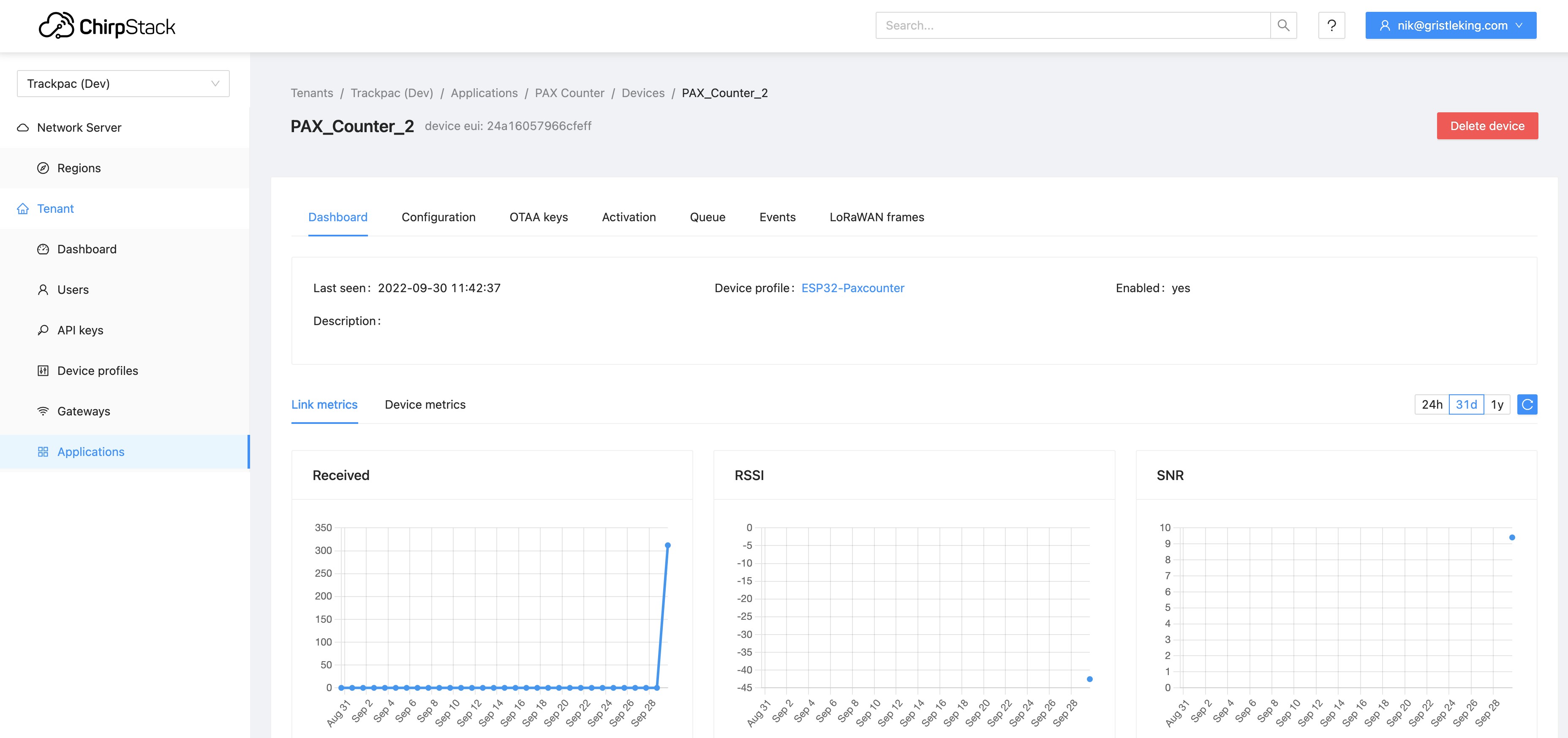
Remember, what it looks like right now is NOT what it'll look like in a year. Here's an example of today (September 30th, 2022) on a Chirpstack server run by Trackpac.

Now we circle back to where we started, with Rob Putt's idea: If you want to be a successful player in the long term world of IoT, now is the time to be relentless and build. Whether you figure out how to use Chirpstack, develop a new sensor, build the ability for others to use and re-sell network services, or just pay attention to the massive innovation going on in the wider space, this is an inflection point for those willing to do the work.

Very few are paying attention, the field is wide open. The limits are your imagination - it doesn't get any better.

"Go for build."