103 posts tagged with "Helium"

View All Tags

Advice: You're On The Moon, You Just Don't Know It.

· 9 min read
Nik
Site Owner

During this transition to Light Hotspots, which has been predictably uncertain, it hit me that many, if not most of the people who have been buying Helium Hotspots and deploying them don't have a strong understanding of the system.

It's as if you're on the moon and you're constantly wondering why there's no air, or why it gets so hot or cold, or why you bounce 20 feet when you walk. I'm not talking about how you earn HNT; any fool can do that. I'm not talking about the interactions between Hotspots, or how your rewards are affected by how densely packed local Hotposts are. I'm not even talking about the problem (and yes, there's definitely a problem) of gaming syndicates earning HNT for providing no real-world value.

I'm talking about the implications of what it means to participate in a decentralized system. On the surface level, decentralization is an easy concept. There is no centralized point of power, there is no one group that can manipulate the system. Any person or entity can come in to contribute and receive a fair share of the value they provide. That's the dream. So far, it's still a fantasy.

It's a fantasy in Helium for two main reasons. First and obviously, there is a fair amount of centralization in the system.

Centralization: The Current Reality

There had to be centralization in order to bring the thing into existence. Helium is still a young enterprise, and a central entity is the most efficient form of management to get the system strong enough to stand on its own.

Now, that doesn't mean it's completely centralized, or that the powers that brought it into existence aren't working very hard to make it decentralized.

We've got four main "players" in the space. Two of them are centralized and essential power players, and two of them are decentralized, though still essential.

First, the Nova team. Nova, formerly Helium Inc, is the group who created the idea of Helium. They wrote the code, did the marketing, manufactured (or more correctly, caused the manufacture of) the first few thousand Hotspots, and built out the initial platforms (first Slack and now a Discord server) for a growing community of Helium Hotspot deployers to build the wireless network. While they remain core contributors, they are trying to decentralize the system as rapidly as they can.

Second is the Helium Foundation. The Helium Foundation has three main roles: First, to be a steward of the intellectual property and brand assets of Helium. Second, to maintain the core technology and its repositories, including the Helium blockchain, miner, and Hotspot app source code. Third, to responsibly distribute and manage signing authority for changes to the system.

Nova & the Helium Foundation are the centralized power players. They maintain and control the system for now, guided by the community but with the ultimate authority to execute decisions.

The third player is you, the Hotspot deployer. Whether you've got one, ten, or ten thousand Hotspots, you are part of a core element of this system, and the most decentralized part of it. Individually, you have as much power as you care to be responsible for. Most of us, frankly, don't care to be responsible at all. More on that in a minute.

Finally, we have the users of the Helium Network. Users can range from one-sensor deployments by a Hotspot owner to monitor soil temperature in their garden out to 100,000 sensor deployments by large commercial entities. The larger those entities are, the more power they have to make changes to the system. Still, they don't have the same signing & executory authority of Nova and the Helium Foundation.

Those four players represent the current state of the network; not yet fully decentralized, though definitely moving in that direction. Before we get to the implications of a decentralized network (which every Hotspot owner should know), let's talk about one more thing. This "thing" that is either unknown, or misunderstood, or just so new to most people, is at the crux of discontent within the Helium ecosystem. The "thing", of course, is decentralization.

The responsibility to change, improve, strengthen, or destroy the Network is rapidly becoming more decentralized. No one entity totally owns it. All entities, including you, are responsible for all of those things.

The health of the Network is on you.

We don't, as Hotspot owners, tend to believe that. As (mostly) regular people, we're used to interacting with entities that are responsible for a network we are visitors in. Examples of this come in two general flavors: First, governments that set and enforce rules, maintaining order and infrastructure like the tax code, or our roads, or street lights, or airports. Second is businesses, like Amazon, or Apple, or even the local pizza shop.

In either of those networks, government or corporate, you have been participating in a heavily centralized network. While centralization gets a bad rap, for most of us it's A) the only way we've known of interacting with large entities, and B) it allows us to hold someone or something responsible. In general, centralization is a good thing. Centralized networks provide clear avenues for both improvement or complaints. If there's a pothole in the road in front of your house, you can complain to the city government. If you want a different leader (and there are laws supporting a voting system) you vote the old bastards out and bring in new ones.

On the commercial side, if you buy something on Amazon and you don't like it, or it doesn't work, or it isn't as described, you know exactly who to contact in order to remedy the situation. Amazon has taken on as much responsibility for their products as they can. You love that part, even if you hate Amazon. Even with companies we don't love to hate, we're used to them taking responsibility for their products. If you don't like your pizza, or you want a new flavor, you talk to the pizza shop owner.

Now, I can hear you saying it: "Nik, I know all this, why are you making such a big deal of it?"

I'm making a big deal about what you're used to (centralization) vs the system you're entering (a decentralized one) because living in a decentralized world is no less different from what you're used to than living on the moon.

It's not as if you're moving to a new country with new and slightly different laws.

You are no longer on the same planet.

The fundamental conditions you're used to do not exist here. It's as if you thought you were moving to a strange and exciting new city and ended up on the moon.

The laws are are written in a language that most of us don't understand. A set of rules we all agree to live by are barely built, and certainly not mature enough to protect against bad actors. The very atmosphere we breathe is different. The absolute crux of this is responsibility.

The fundamental responsibility of maintaining a healthy decentralized network lays with anyone who wants to take it on.

Now, you're used to "someone else" taking on that responsibility. You're used to, for example, a system with police in it. Those police have a recruiting and training system, a management scheme, and clear rules to maintain and enforce. They act in accordance with what their constituents want.

There is no "Helium Police Force".

The only thing that exists to protect a network of almost a million Hotspots is a few people, mostly volunteers, who feel they can help improve the system.

For most of you, that's when you start howling: BuT wHy dOesN'T soMeOnE PrOteCt mE?

This is the world of decentralization, dawg. A decentralized system has no obligation to protect you. While you can freely participate in the system (nothing stops you from buying a Hotspot, adding it to the Network, and receiving Network tokens), the responsibility for understanding the risks, hazards, and opportunities in that Network are yours. Your success is on you and a bunch of competent strangers.

Now, most of us just look for the opportunities, and really, focus on just one question: How much HNT can I make?

Hey, I get it. While it's not what got me into Helium, the earning potential of it was so staggering that you'd have to be a fool to pretend it doesn't exist. You'd have to be a greater fool to ignore the opportunities that exist in taking on some of those responsibilities. From anti-gaming to a Helium escrow business to Hotspot management to deploying sensor networks , the opportunities to build, profit, and generally succeed within this ecosystem are staggering.

Those opportunities are what I encourage you to explore at this point. Sure, the Network as of May 26th 2022 is a shitshow. That's fine. I expected it, as did anyone who realized the enormity of the task Nova & the HF took on when they initiated the transition to Light Hotspots. It's equivalent to moving from clunky old vacuum tube computers to a modern laptop, and they're going to do it in about 2 months. That's remarkable.

For now, let that problem belong to the centralized powers. Lean into the benefits of centralization while it lasts, and let them get this thing healthy enough to let it fly out of the nest. While the Helium Foundation & Nova Inc are doing that, the rest of us (well, those of us who want to win) will be focusing on deeply understanding and contributing to a decentralized network. That is the great gift they are going to give us. Will you be ready to receive it?

Remember, with great decentralization comes great opportunity. The real question is: How big of an opportunity do you want?
How To Get Remote Access to Your Hotspot

· 9 min read
Nik
Site Owner

How do you manage your Hotspot if it's at someone else's location? Whether there's a formal "Host Agreement" or it's your Aunt Sally, having the ability to remote in to your Hotspot's dashboard and do anything from a quick check on the latest transactions all the way to a reset or reboot, it's nice to have that ability.

I've been using remote.it to do this since I began putting Hotspots in remote locations. Here's how it works in broad strokes.

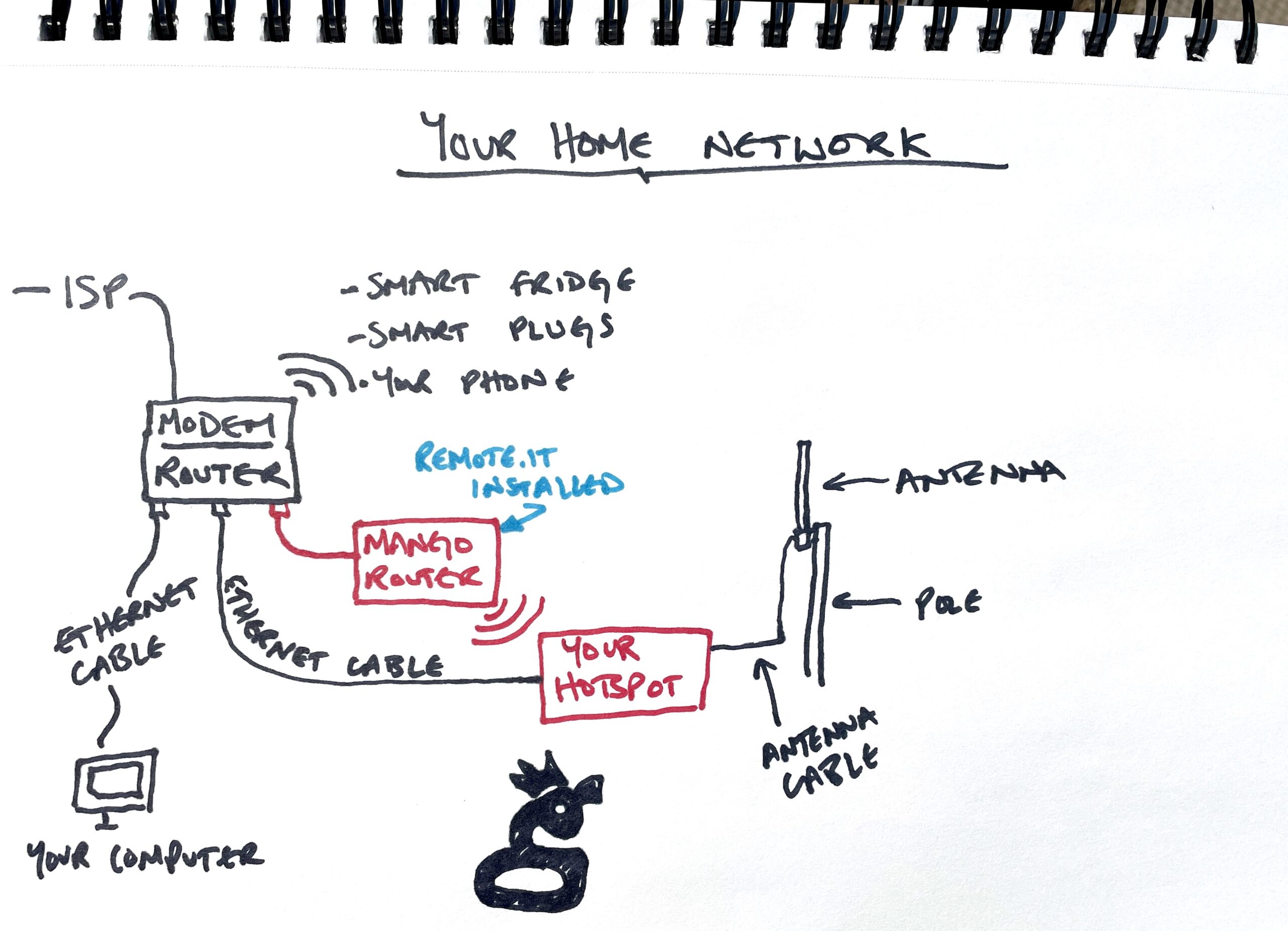
Every Hotspot is connected to a router. Most routers in the home are actually a combination of modem and router, and are more or less locked; you can't add new software like remote.it to them. What you CAN do is add another router that is more configurable, put remote.it on the extra router, and then create a connection from that 2nd router to your Hotspot. It sounds complicated, but it's really pretty easy. Let's walk through how to do it.

Oh, before we do, you should know about the upfront costs and limitations. The extra router is around $30 on Amazon. The remote.it service is free for up to 5 "devices" (aka Hotspots) and after that is $5/month for an unlimited amount of Hotspots. Until manufacturers start including remote access to each Hotspot's dashboard, this is a no-brainer if you want to be able to connect to your Hotspot remotely. Finally, if your Hotspot doesn't have a Dashboard, having remote access doesn't matter much.

Ok, let's start with a diagram showing what it looks like. If we wanted to be fancy, we could call this your network "topology". It's basically a map of your home network, from modem to router to all the devices you might have connected to the internet in your home. We'll focus on the specifics of the Hotspot connection here, but I've added a bunch of other devices just so you get a feel for the big picture.

First you'll have to order a Mango. Like I said, ~$30 or so on Amazon. This'll work with any router based on the OpenWRT Linux distribution, but for this tutorial we'll use the Mango.

While you're waiting for it to arrive, open up a remote.it account, which is free to open.

Once the Mango arrives you're ready to begin.

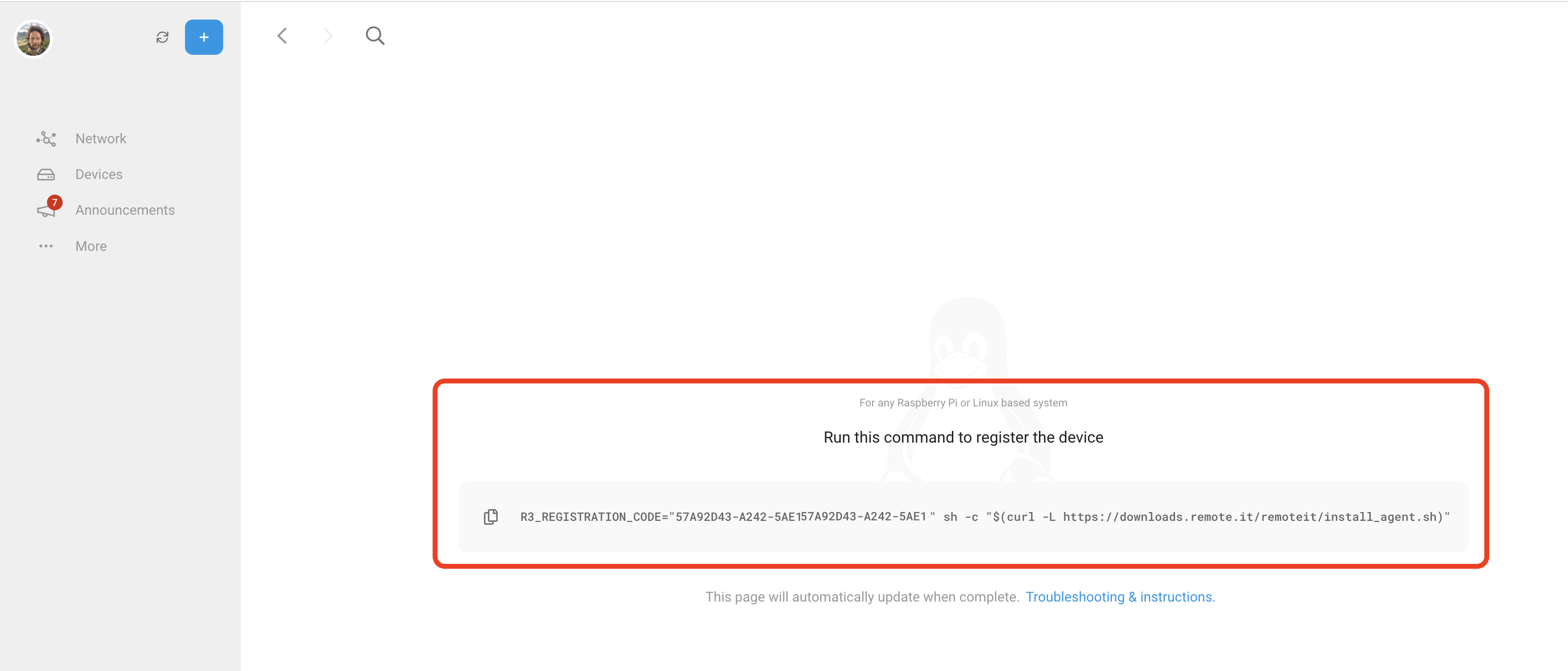
On Remote.it, you're going to generate a "command line install command". This sounds scary, but if you can click your mouse and follow directions you'll be fine. :)

Log in to your Remote.it account.

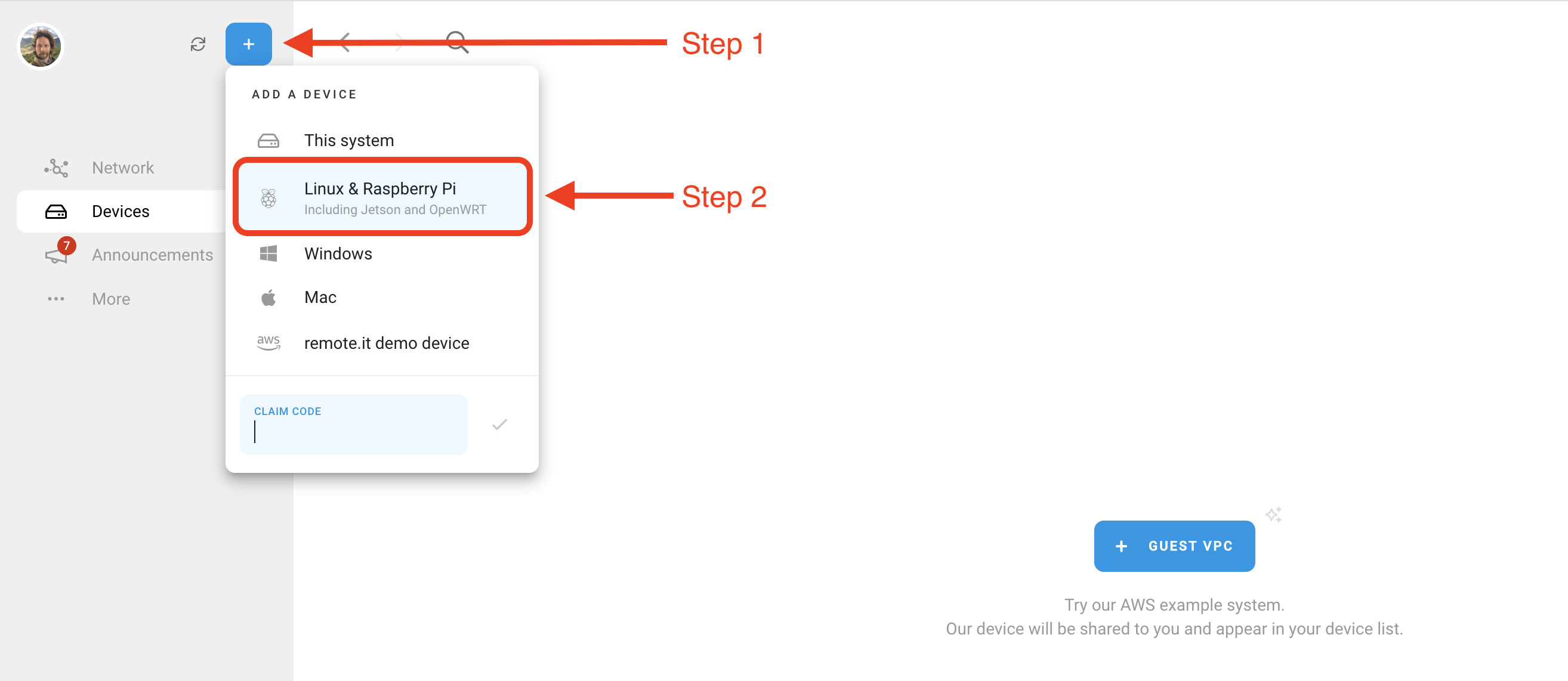
Hit the blue plus button to "Add A Device", then choose "Linux & Raspberry Pi".

That will bring up a code for you to copy. You can copy it now or come back to it later, but leave this tab open. You're going to need that command (the thing starting with R3_REGISTRATION...etc) later.

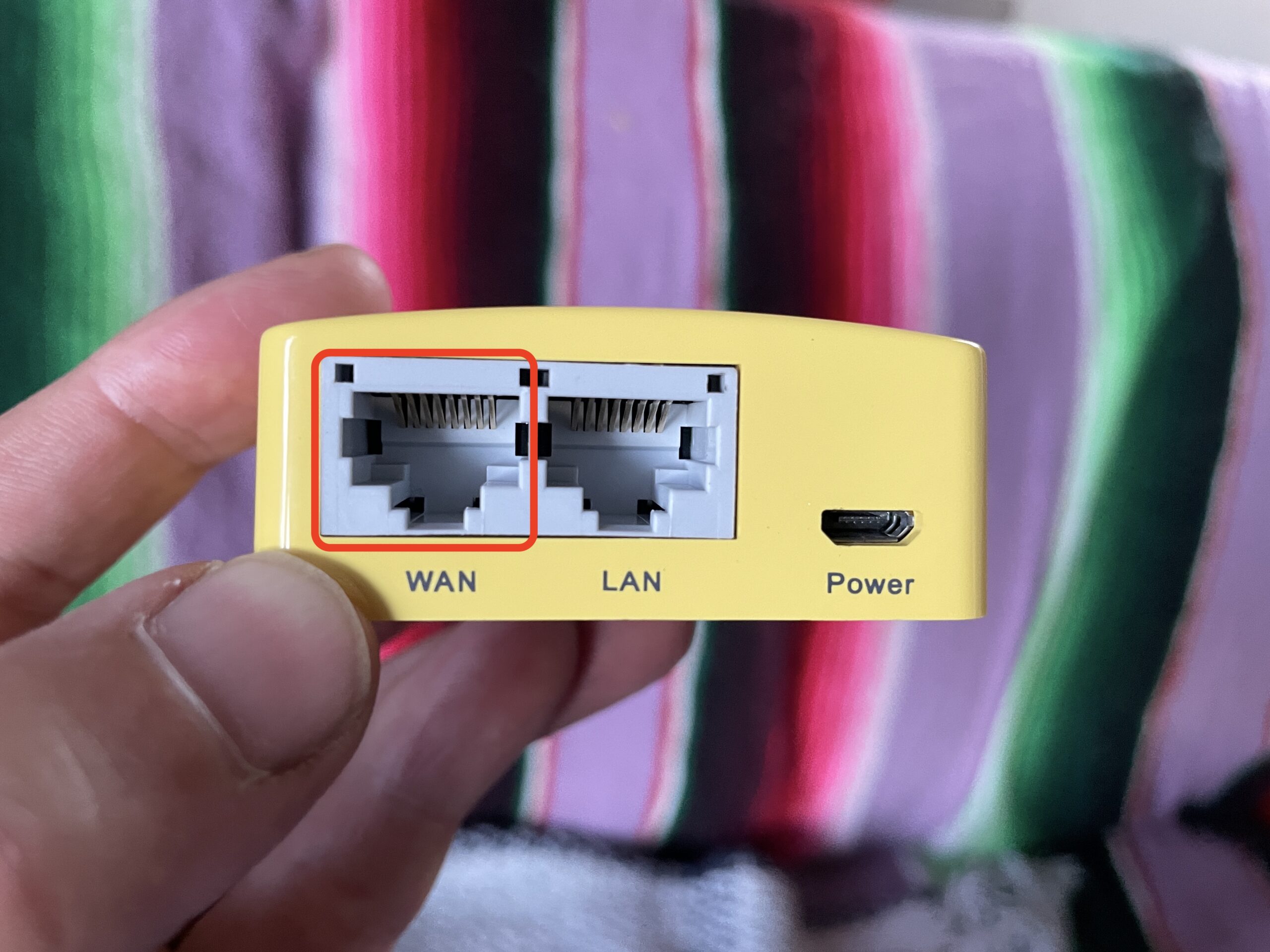
Over on the Mango, plug in power, then connect your Mango to your router with an ethernet cable. Use the WAN port on the Mango, and any LAN port on your router.

Power up the Mango. It'll start broadcasting a WiFi network, which you'll join using your computer.

  • Look for the Wi-Fi network on your computer, it'll be something like "GL-MT200N-V2-xxx".
  • Open a browser and go to http://192.168.8.1 That address should be on the back of the Mango box, and the password (which is probably goodlife, should also be there. Sign in. I think it made me change my password right away.
  • Open up the Terminal app if you're on a Mac, or for Windows, an "ssh client" like Putty (or whatever you use for command line).

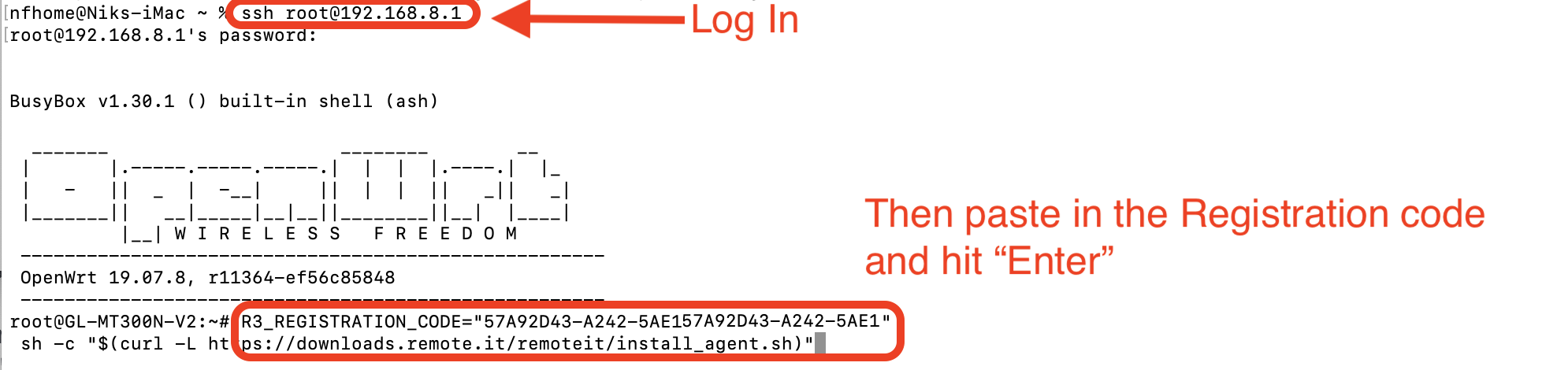
  • In your command line app, connect to the Mango using this command: ssh root@192.168.8.1 Again, the default password is goodlife if you haven't changed it.
  • Now that you're logged in to the Mango command line on Terminal, take the command you copied from the Remote.it website (R3_Registration-blah-blah-blah), paste that into your command line, then hit Enter.

  • It'll spit out a bunch of code. I always feel like a super secret hacker when this happens. You don't need to do anything, just watch the Matrix work. :). It's connecting your Remote.it account to your Mango.
  • Once it's done and you see another command prompt, type in exit, then hit Enter, then close the Terminal app.

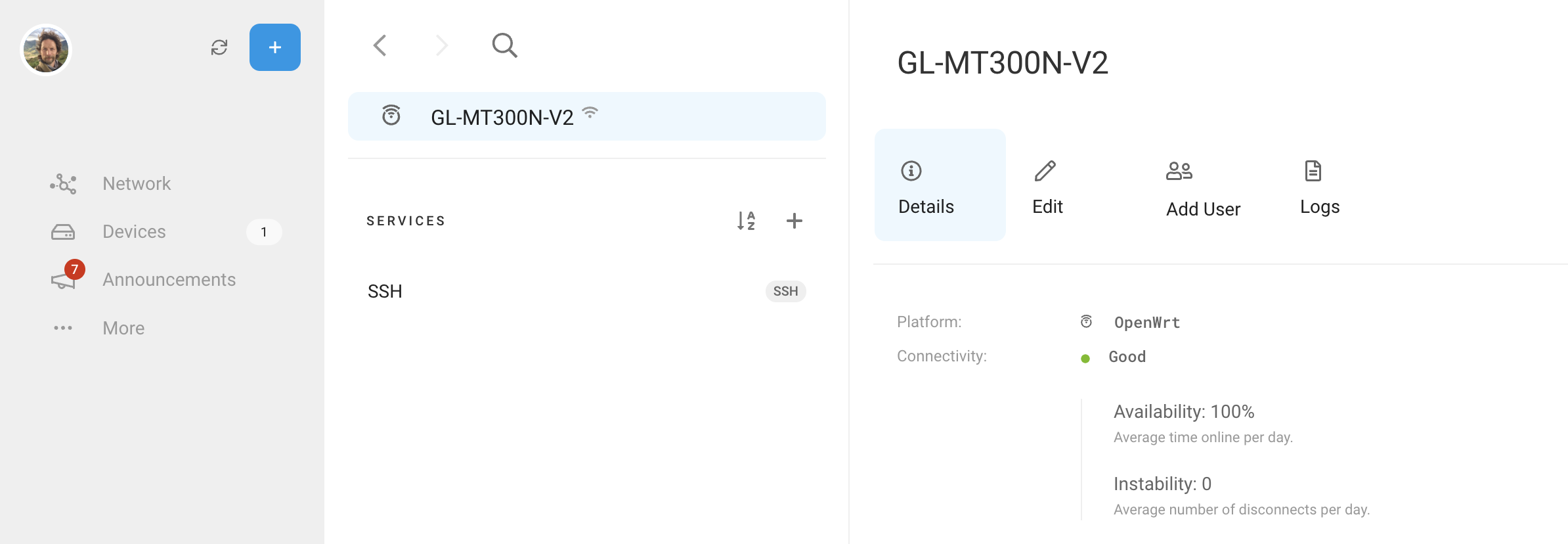
  • Wait a few minutes, then look in your Remote.it account and you'll see the Mango in your account.

  • Now your Mango is connected to Remote.it. The next step is to tell the Mango which device (your Hotspot) you want it to keep a line open to.
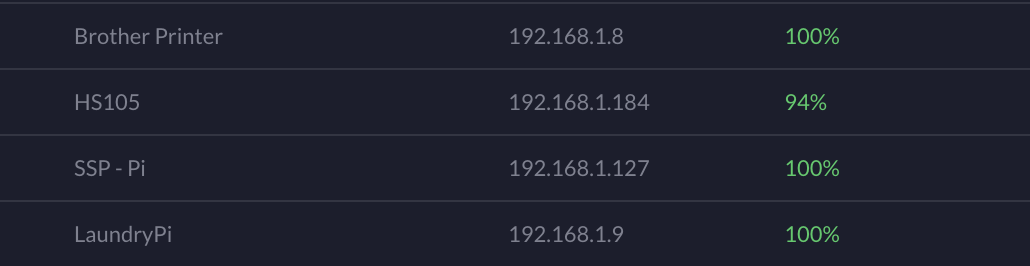
  • To do that, you'll need to find the local IP address of your miner. To find that, you'll need to log in to your regular router. Google your router name and "find device IP list" to do this. It'll take some time. Just go slow and follow those directions. Your list MAY look something like this.

  • You'll see a list of all the devices in your home on your router, from your printer to your computer to smart fridges. You're looking for the miner's IP address. It'll be something like 192.168.1.xxx.
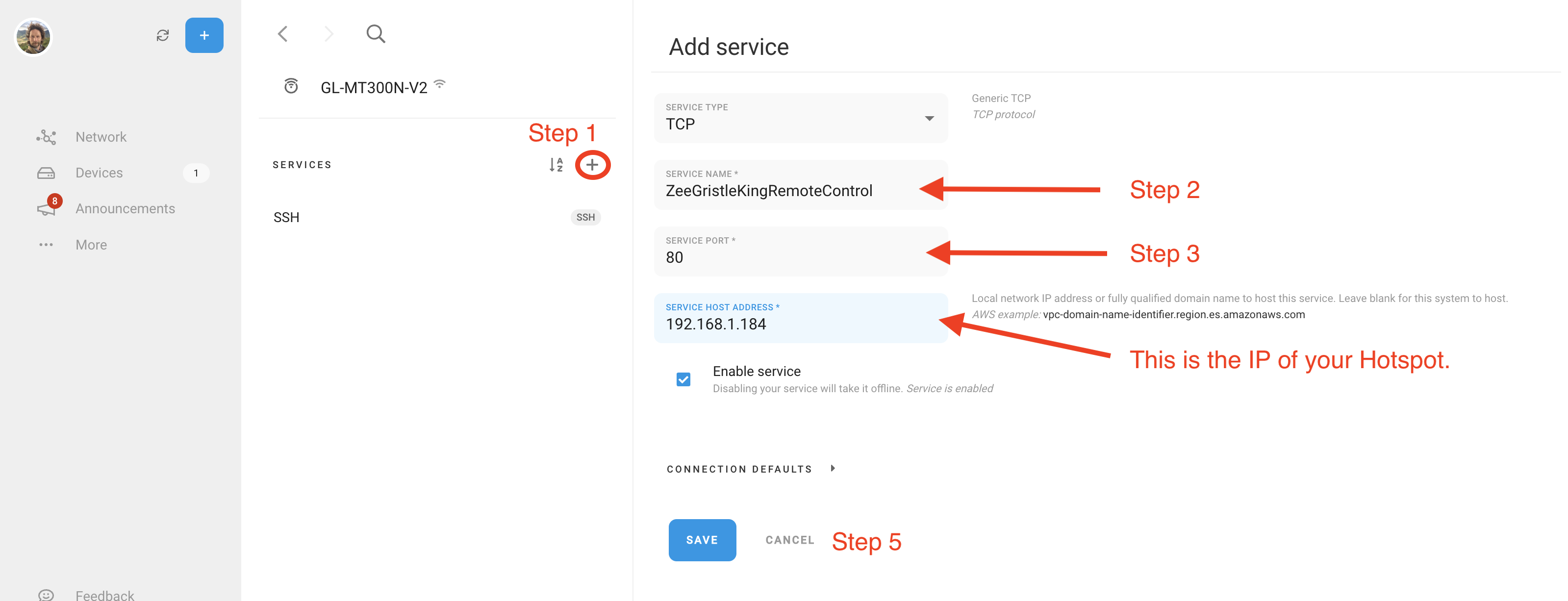
  • Now, back on the remote.it app, select your Mango, and under the Services column, click the + button to "Add Service".
  • Leave the Service Type as TCP.
  • Change the Service Name to whatever you'd like, say, "MyRemoteMinerAccess" or whatever.
  • Set the Service Port to 80.
  • In Service Host Address, paste in your miner's IP you just found on your home router.
  • Enable service, and Save.

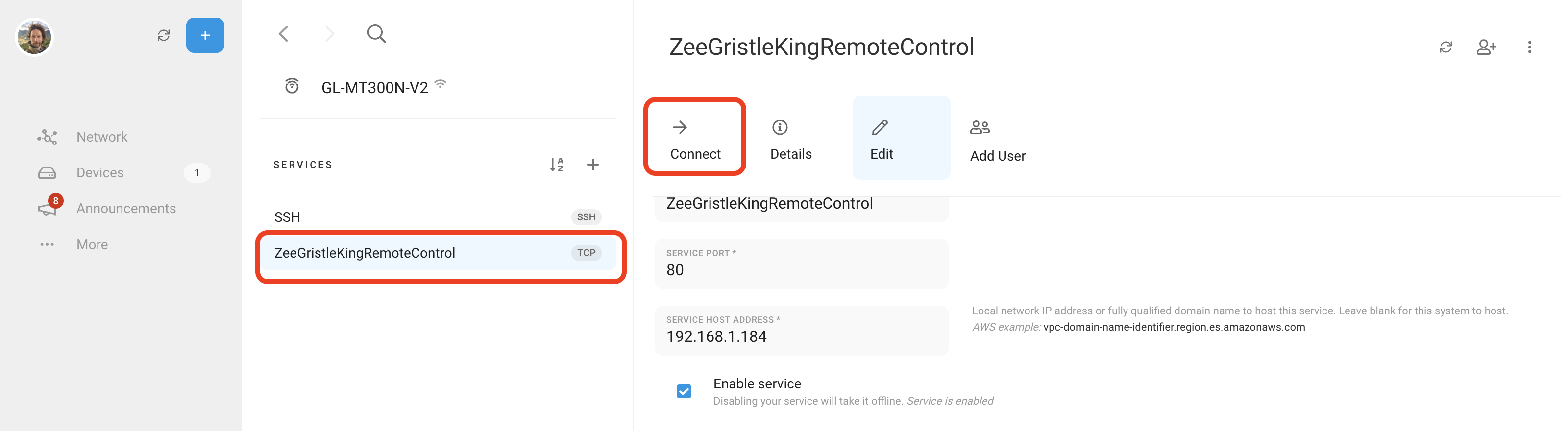
  • Wait for a minute or so and you'll see it appear in the Services column.

  • You're done! Now, from anywhere in the world you can log into your Remote.it account, select the Mango your Hotspot is attached to, click on the Service you just set up, then hit "Connect".
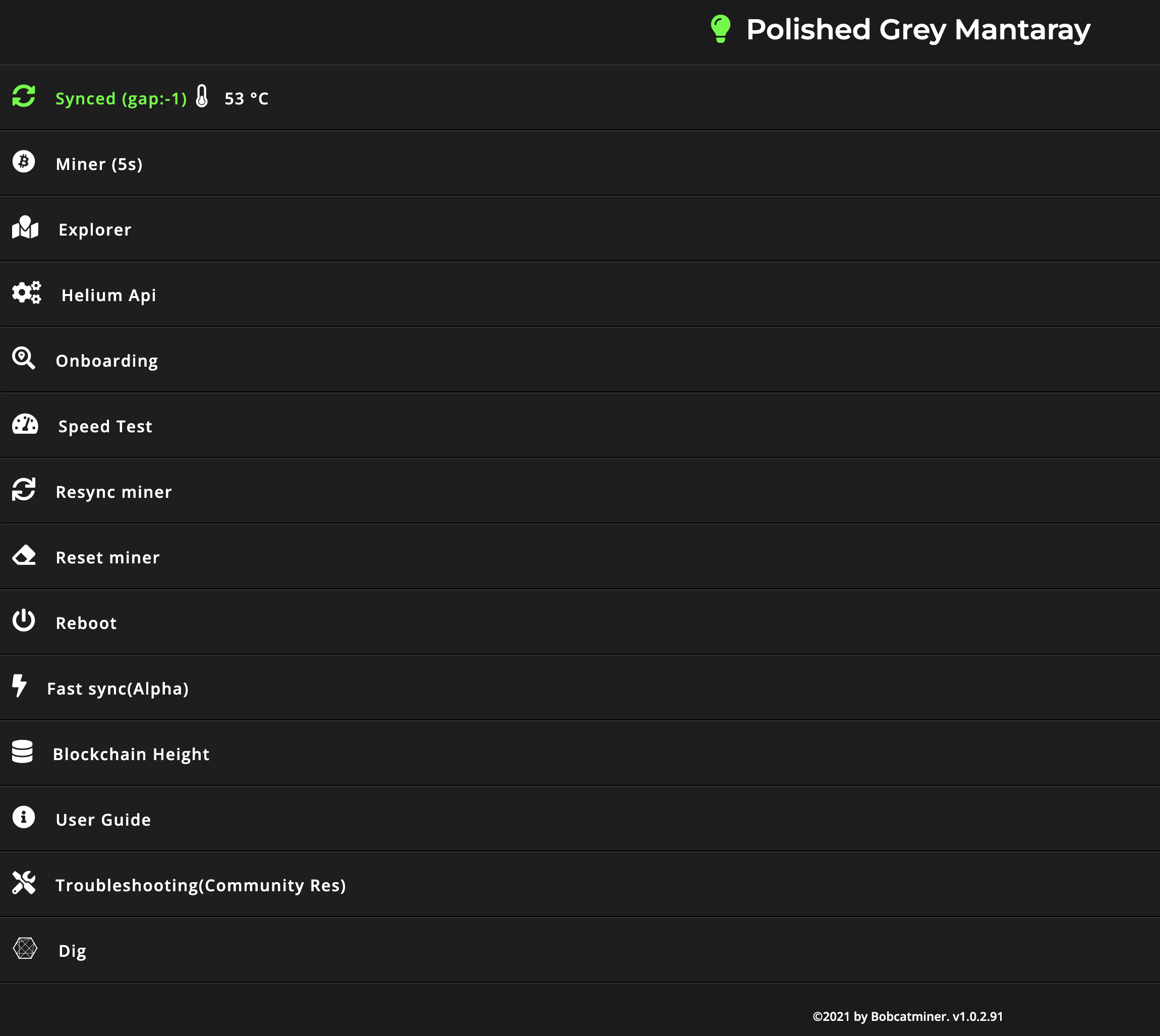
  • You'll see it say "Starting", then in the bottom right corner of the blue section look for an arrow with "Launch". Click Launch, and you're in!

This is what that the Bobcat dashboard looks like, as an example:

Security concerns: If you want to get geeky, you can put the Mango on a different subnet on your network. I wouldn't worry about that complexity, but if you or your hosts are extra concerned about security, Google how to setup subnets on your router.

That's it, you're all set up with the Mango and remote access to your Hotspot's dashboard. Rock on!

Remote.it + Mango Benefits

  • Monitor online/offline status for your miner in real time from anywhere.
  • Check the stability of your miner's internet connection over time.
  • When using a cellular router connect to your miner and Mango, the data plan usage of remote.it (NOT your Hotspot)will be ~2MB per month to maintain an on-demand connection to your Miner. $49/year unlimited slow data (T-mobile card).
  • Get to the web interface of your miner. This ONLY works with Hotspots that have a web interface (like Bobcat).

Oh, one more potentially hot tip (that I haven't tested). The good people at Remote.it have pointed me in the direction of a T-Mobile SIM card that runs $49/year with unlimited data. Even though it's gawd-awful slow (64kbps), that *shouldn't* matter for Light Hotspots which should be below 1.4kbps. Your mileage may vary, but for the record, here it is.

Archived Comments

James Fox - 5/18/2022

Hi ! Jim at remote.it here. If anyone has questions about remote monitoring and mgmt …. or needs help to get started … email us at support@remote.it and you’ll hear back from us in 24 hrs or less. Usually less!!


backtran - 7/26/2022

Hi Nik, Couple of comments after using this guide: 1. Also works well with the GLX750 wireless router with integrated SIM card. Avoids buying the additional mango if you already have a GLX750 for an off grid installation. 2. I think for step setting up the services the HTTP selection is needed not TCP. At least for me TCP did not work but HTTP did. Thanks for all you do! Cheers


cr4zyw3ld3r - 2/14/2024

Do you know if those same terminal commands will work with this model?


Nik - 2/21/2024

Not sure, would love to hear about it if you try that out!


Want to Explore NFTs with Gristle King?

· 9 min read
Nik
Site Owner

When I bought my first NFT, the whole thing was complicated.  It still is, and it’s risky.  Most NFTs are art, so the value is in the eye of the beholder (and the market). While that means you can make a lucky million, you can also be left holding a bunch of NFTs that were supposed to be good, but..weren’t. That's how I did it; making a ton of bets, playing fast and loose, and frankly, losing most of the money I'd set aside to "learn the game". A few NFTs paid out well, but I was mostly left with a collection of jpegs I'd rather hide than display.

That's not a great experience, and I don't want you to have to pay the same price to learn the same lesson. Still, NFTs hold a lot of promise. They are a new form of digital proof. In the world we're heading into, I think the ability to hold, use, and understand that proof will be a valuable skill. I'd like to help you learn it.

The Gristle King NFT, which I call the G-Unit, is a way for you to enter into the world of NFTs and make sure you get something for your money beyond a jpeg.

When you buy and hold a G-Unit NFT, you get the following things:

  • Access to the Gristle King courses (the Helium Basic Course and the HeliumVision MasterClass), which is a $199 value.
  • A month's worth of entry into the Gristle Crüe ($49 value), my private Discord members channel where we meet once a week on Zoom to talk about the latest in Helium with experts in the field.
  • Access into a special channel on the Gristle King Discord called #nft-holders. Unlike many NFT projects I've seen, I'm not going to bullshit you with a bunch of hooey about how access to that channel will make you sprout wings and shit glitter. It won't. It will, however be a place where you can find other people who are very likely to be interested in both Helium and NFTs, and I think that intersection will be interesting. Value in that one is unknown.

So, depending on what ETH is when you buy the NFT, you should get pretty close to the same value if you'd spent money on the courses and to join the Crüe.

I'm only creating 749 of the G-Units, which is a small run in the world of NFTs. Projects usually create at least 1,000 if not 10,000 NFTs. I wanted to keep the group manageable as well as make it semi-exclusive. I'm under no illusions that the thing will "mint-out" in minutes, but I thought it'd be fun if you got to have something that no more than .00000096% of people on the planet will ever have. For that stat, I used a world population of 7.753 billion.

If you'd like to get an NFT, hit the big blue button.

MINT A GRISTLEKING G-UNIT NFT

If you'd like to know a little bit more about minting and how to use the NFT, watch this.

https://youtu.be/nKIJnI\_Qbdw

Once you have the NFT, here's how to access the benefits.

If you want to see the mechanics behind how this NFT came into existence, keep reading.

I started by buying a CryptoHoot, which is an NFT from a totally separate collection. Here's a "Hoot".

Now, you may be asking, "Nik, why the heck are you showing me an owl? I thought we were talking about G-units?!"

Well, this particular NFT gives you access to both a Discord server (which pretty much every NFT does) AND a tool called Shufflemint.

Shufflemint is the thing that makes this NFT special, at least for me. Shufflemint makes it so you can add a bunch of different layers of art, randomly shuffle those layers, and create a bunch of unique NFTs. That's pretty cool, and that's how the G-Unit is made.

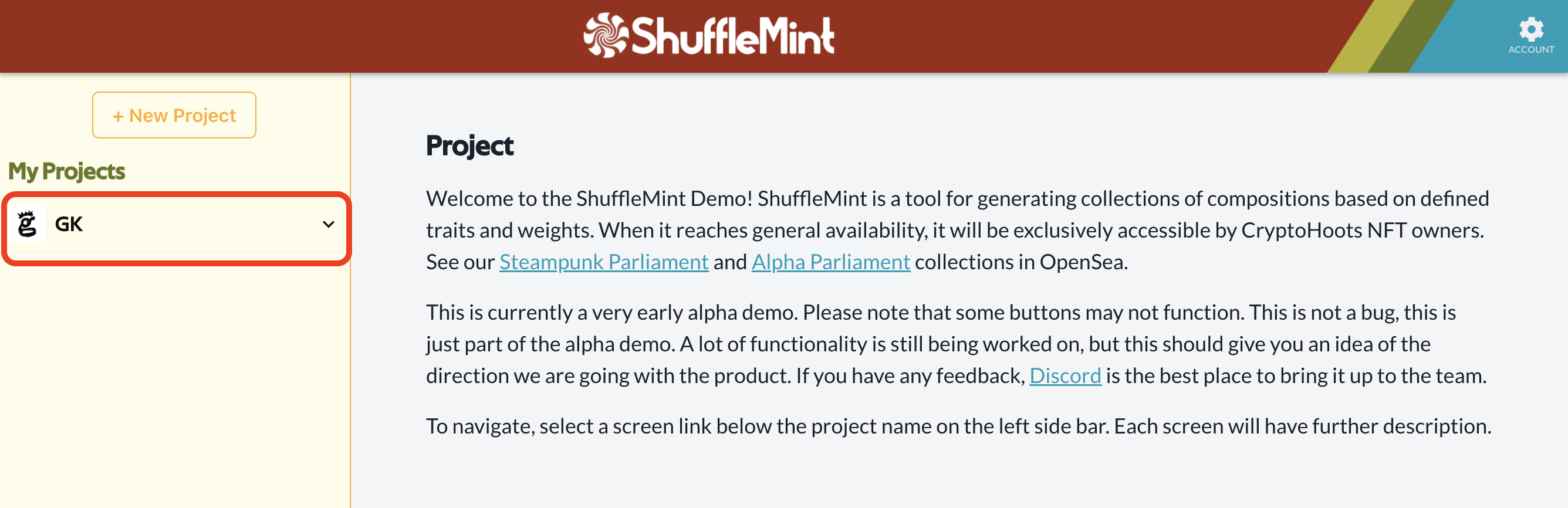
Here's how it starts, with a clean slate. You can see I've already created a project here, called "GK".

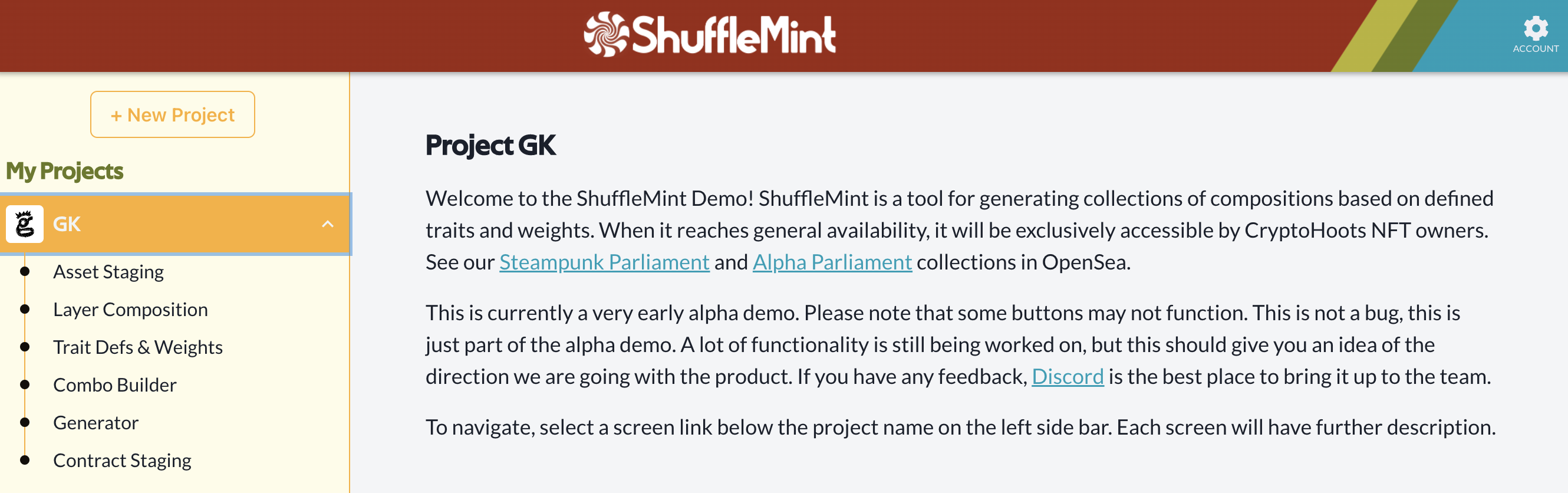
Inside that "Project" are a few different sections. Each section builds on the last. First, you load your assets (the pieces of each image that make up a final NFT image) into Asset Staging.

This NFT is a pretty simple project; 6 layer categories, each with a few different options. There are pancake hats and pink mohawks, different eye styles, bows & arrows and burritos & coffee. If you just threw it all in together it'd be a jumble of eyes and backgrounds and mohawks and pancakes, like this.

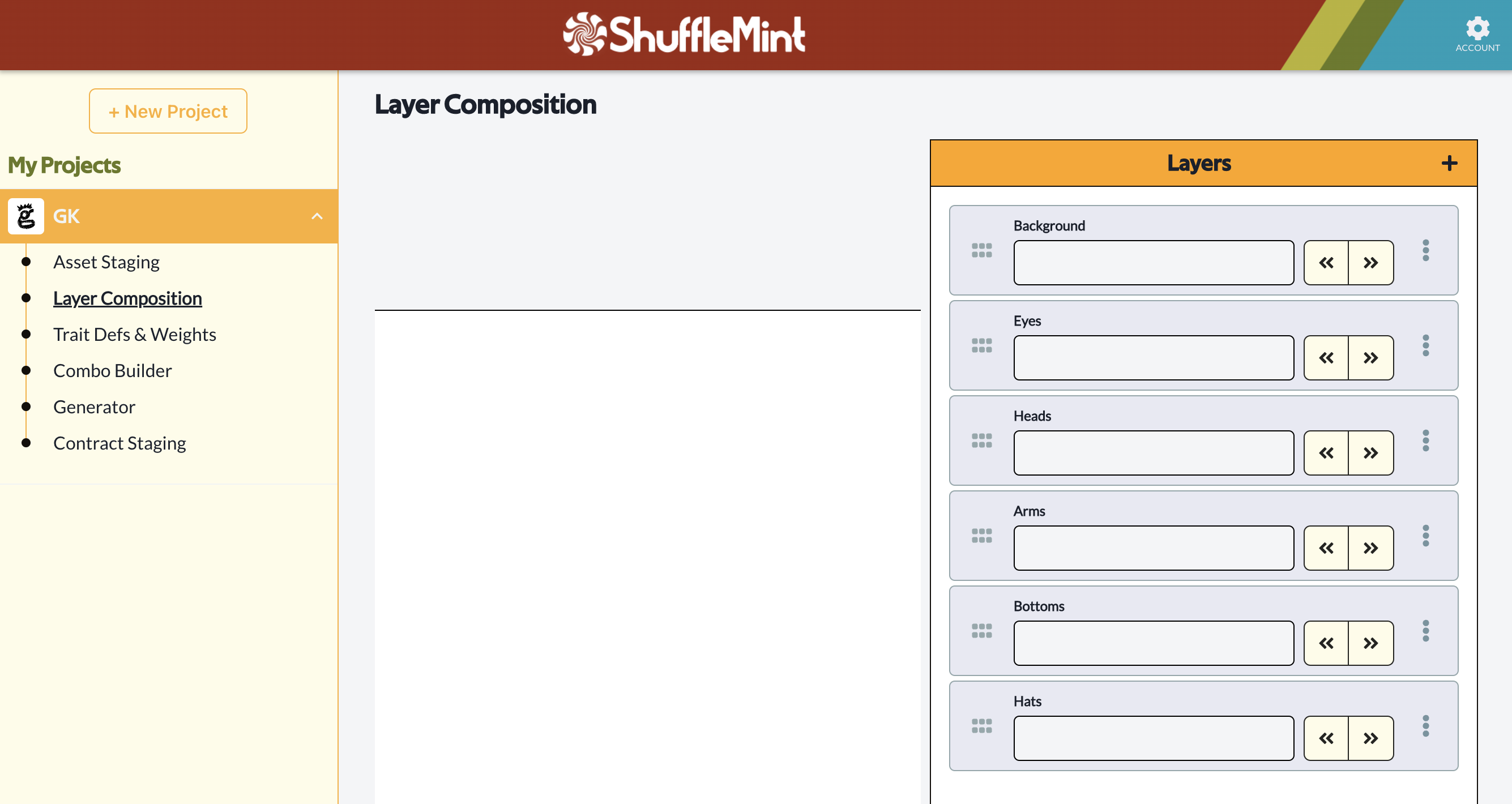
Nobody wants that, so you've got to organize it a little bit. Once your assets are in and labeled, you'll sort them into the correct layer order (background, eyes, heads, arms, etc).

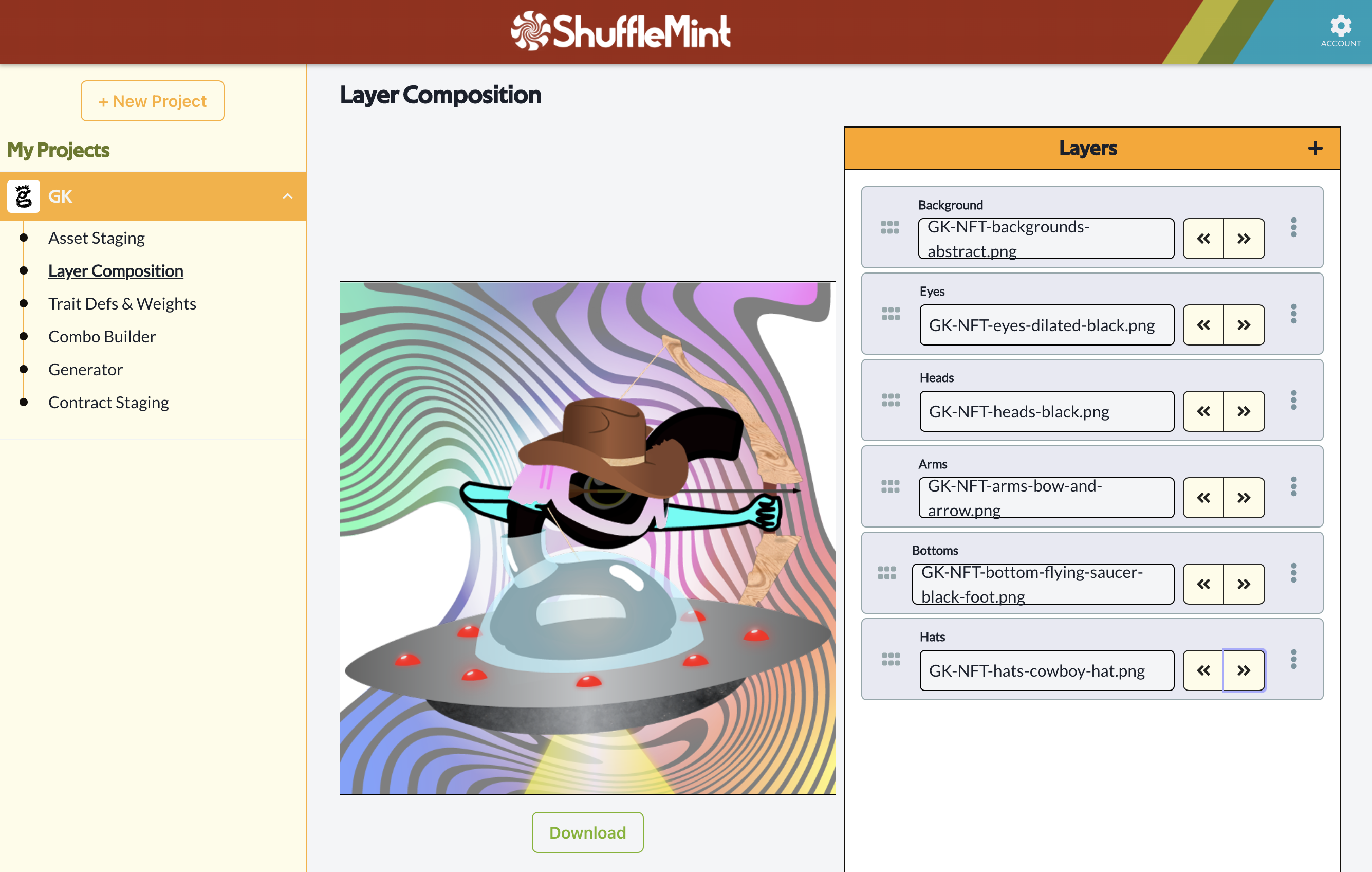
That can be confusing for those of use who aren't super visual people (like me), and this took me a while to figure out which layer should go where so it doesn't hide or get hidden by another layer. A fun puzzle! Once you have the layers ordered correctly, you can use those right and left arrows in the Layers column to flip through all your potential options. It might take years to see all possible options, so I just went through a few each time to confirm I had my layers in the right order. Here's an example of what it looks like when you choose a specific Asset from each Layer.

This really helps you see if you're getting it right!

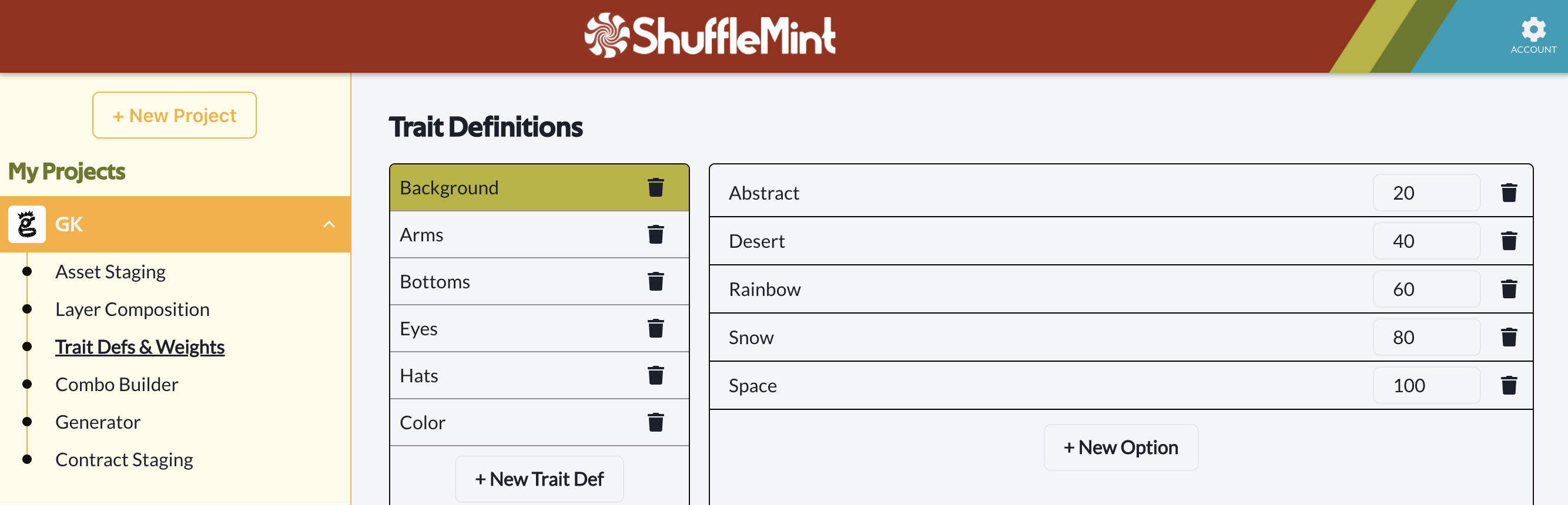
From there, you go through and give your Traits "Definitions" and "Weights". A Definition would be what I'd think of as a Layer Category, like Background, or Eyes, or Heads.

A Weight is the value for the relative frequency of a specific layer. For example, the Weight of the Abstract background (what you see in the above generated image) is 20. That means you'll see it 20% of the time, so it's relatively rare. Here are the Weights for the Trait called "Background".

The next part, "Combo Builder" isn't ready for prime time yet, so we'll go to the fun part, Generator!

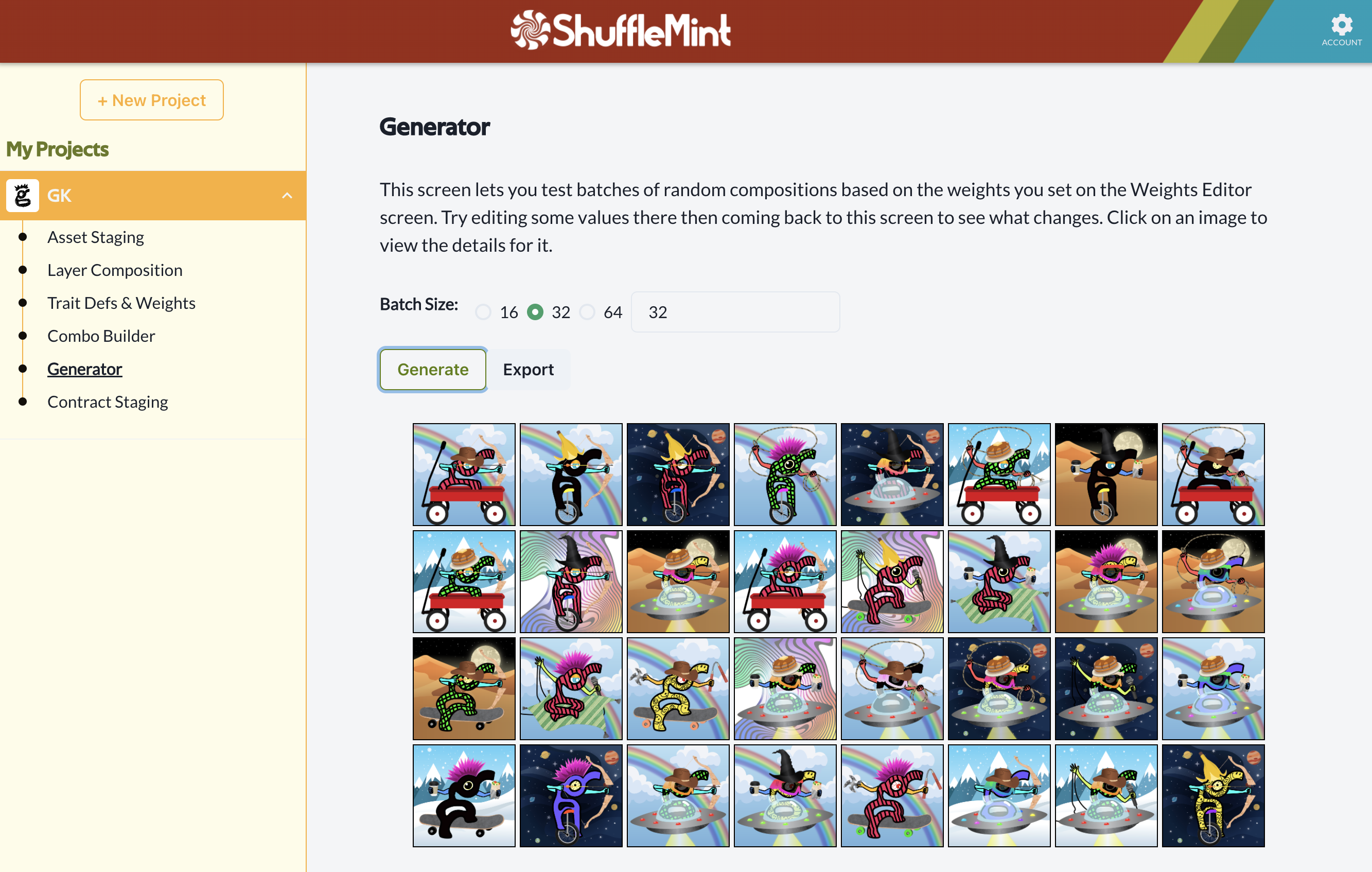
In the Generator section, you pick how many NFTs you want to Generate, then hit the button. Easy (and fun)! Here's a random example of generated G-unit NFTs (which may or may not be in the final collection.) Fun fact: Even though it looks like "body" is all one thing, every "body" is actually made from a "bottoms" and "colors" layer. The "colors" layer stood in for the color of the body. For a while we thought it might be cool to mismatch the two, but I wanted at least some uniformity in this, so all the bodies are the same color, top & bottom.

From there, you can launch it yourself, or, if you're like me and prefer to let professionals handle that, you reach out to the ShuffleDAO for help.

Now, you might think art generation piece is the end of it, but wait, there's more! One of the coolest things about NFTs (and really, web3) is how much collaboration can happen between strangers, and how transparent everything is.

In this case, I've never met any of the ShuffleDAO people in real life. We've talked on Discord, and we've chatted on Zoom, and we've even done a YouTube Live together, but I've never met 'em!

https://youtu.be/pf67iJmNjM0

Still, we're working together on this project as strangers who've decided to harness in together for a bit and pull for a common goal. As part of that, the contract that gets executed when the G-Unit goes live slices off a share for them and the ShuffleDAO project, and the way it does it is REALLY cool!

You see, the ShuffleDAO goal (in part) is to make easy for people like me to create and use an NFT as part of a community. When you buy a G-Unit NFT, part of the ETH you spend goes to ShuffleDAO for orchestrating the project. Part goes to buy their token, which is called $MINT, and then you get that $MINT dropped into your wallet.

Think of $MINT as rewards points; you can use it anywhere in the ShuffleDAO system, and you get it for free when you buy a GK NFT.

Here's the breakdown:
70% to GK
20% to ShuffleDAO
10% to $MINT, which you get back in your wallet.

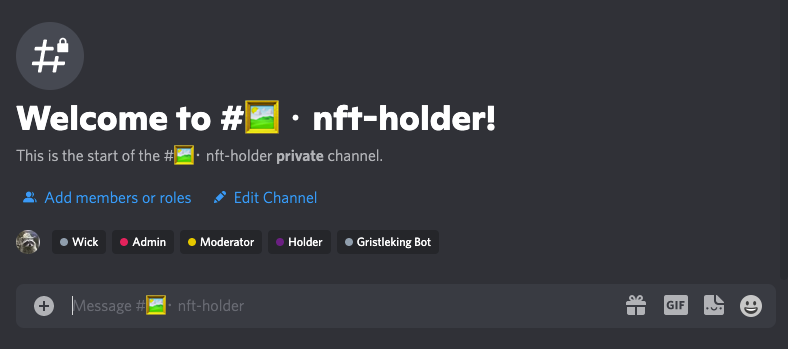
So that's how the whole G-Unit NFT thing is working. I'm super psyched to launch this, and I'm pumped to meet all the holders in the Gristle King Discord #nft-holder channel, which right now is empty, just waiting.

Will I see you in there?


Hey, before I sign off, let me put a disclaimer in here: NFTs are volatile. You could lose all the money you put into this or any NFT (or crypto) project. You'll get charged with "gas fees" every time you do an ETH transaction, including buying this NFT, which will increase the cost of the NFT. I'm not a lawyer, or an accountant, or a financial advisor. None of this is anything close to professional advice. Never spend any money you're not willing to lose in the world of crypto. Do your own research and be careful out there.

Ok, that wraps it. Drop any comments, questions, feedback below, I'm always looking to learn & share lessons to improve. Rock 'n roll!

Archived Comments

Biggworm - 6/1/2022

Hi. I have a 2.3db antenna on my MNTD miner and it does great for me. Do you know what the lowest gain antenna is that we can buy. I've been Googling around for a while and there are an overwhelming number of results, but I just can't seem to find anything less than my 2.3 db. So do you know where I can find a 1 db gain antenna or something similar, if they even make a 1 db? Thanks for all you do for the community!


Nik - 6/2/2022

Hmm, I'm not sure. I think the stock antenna they OG Hotspots came with was 1.2 dB.


What Is HNT Crypto?

· 3 min read
Nik
Site Owner

So you're into crypto and you just discovered HNT? Let's go through the basics so you can decide whether or not you want to jump into the world of Helium.

First, what is HNT crypto?
HNT stands for Helium Network Token. HNT can be traded on crypto exchanges like Binance.us for whatever you'd like (dollars, BTC, ETH, euros, etc), or it can be used to buy Data Credits on the Helium Network. A Data Credit is how a user (not necessarily a miner) on the Helium Network pays to transfer data. Helium miners earn HNT for providing wireless (radio) coverage.

What is HNT mining?
HNT mining involves plugging in an HNT miner to power and the internet. The miner will automatically begin mining HNT based on the radio signals it sends and receives. The signals it sends and receives depend heavily on three things: How many other miners are nearby, how far away they are, and how many of them it can communicate with. You can optimize the signals your miner sends and receives (and therefore the HNT you earn) by using an aftermarket antenna connected to your miner with antenna cable, and getting the antenna on top of your house (or building, or mountain).

What is HNT worth?
HNT is a cryptocurrency with a volatile price. In the past year (May 2021 - May 2022) the price has been as low as $11 and as high as $60. You can check the current price here.

What is HNT used for?
HNT is used to buy Data Credits on the Helium Network. Data Credits are how you use the Network to transfer data. As of current writing, the only wireless network available on Helium is LoRa (for Long Range). LoRa is designed for IoT or Internet of Things devices. While you may not have heard of the IoT, it's one of the largest coming technologies that humanity will use to help understand our world.

Why is Helium (and HNT) special?
Helium is the first and so far the largest cryptocurrency and blockchain project to have an actual use in the real world. You can use Helium today to track anything from packages to pallet to planes to paragliders, or keep an eye on your crops, water pumps, buses, or even camels. While many blockchain projects are out there claiming to be useful, Helium is one of the few you can actually use right now.

How can I learn more about HNT?
This website was built to help you understand it! Check out our articles on a Rough Guide to Helium, or Which Antenna Should I Buy, or take one of my Helium Courses. If you'd like to join up with a group of Helium enthusiasts who are exploring and building solutions using Helium, join the Gristle Crüe. We meet weekly on Zoom to discuss the latest in Helium, and topics range from how to optimize your miner out to tax planning and of course, building an IoT business.

How Much Better Is Your Hotspot?

· 5 min read
Nik
Site Owner

After I did the statistics video with Matthew Patrick, I heard from @cryptofulness via Twitter. He reached out from Portugal to offer some help with a "t-test implementation" to test some Hotspots. If you remember, a "t-test" compares two sets of data and tells you whether or not there's actually a meaningful result.

In this case, the two sets of data are your hotspot's earnings and the global average. I'm going to walk you through how to use the tool Cryptofulness set up for me, and you can see for yourself if your Hotspot is REALLY doing better (or worse!) than the average, and by how much.

For reference (and yes, this counts as bragging), Amateur Jade Hare, which is a hotspot I have set up on a mountain in San Diego, has performed 612% above the Network average over the last 3 months. By the way, it's running a 3 dBi antenna. As I've said before, when it comes to earnings, antennas don't really matter. You could use an HNTenna (what I've got), or any of the McGill antennas, or a PPL antenna. On the PPL, use code GRISTLEKING for 5% off. Remember though, location is what drives earnings, NOT the antenna.

Ok, let's go! You'll need to sign in to a Google account, then open up a Google Colaboratory tab at this link:

https://colab.research.google.com/

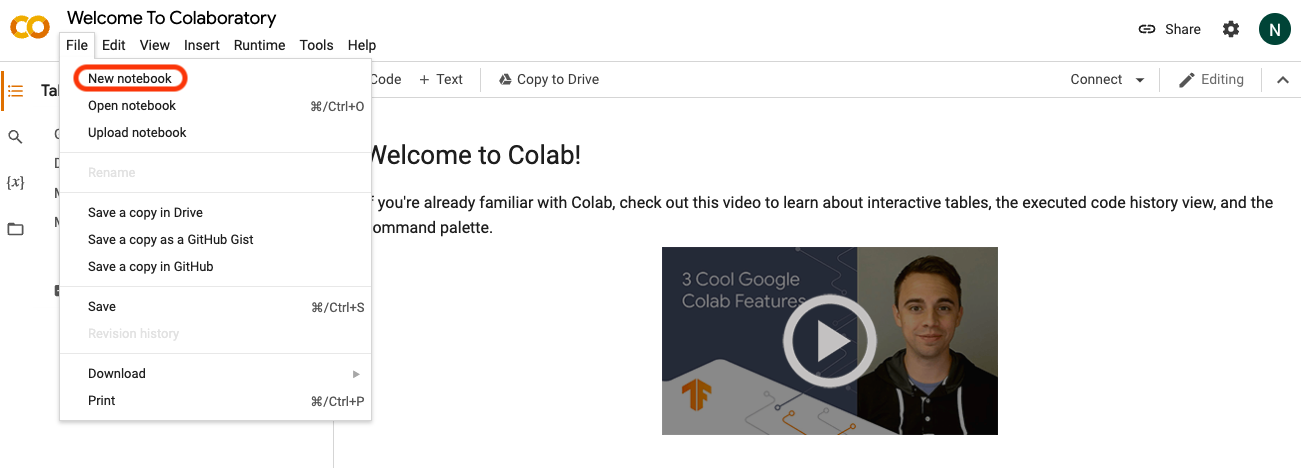
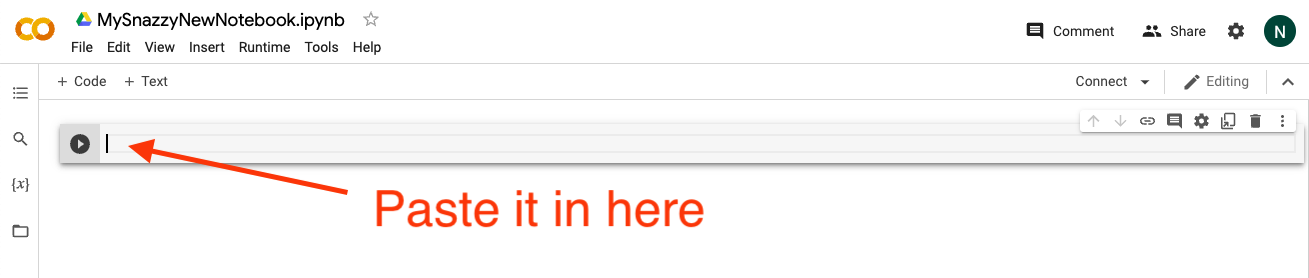
Choose "New Notebook".

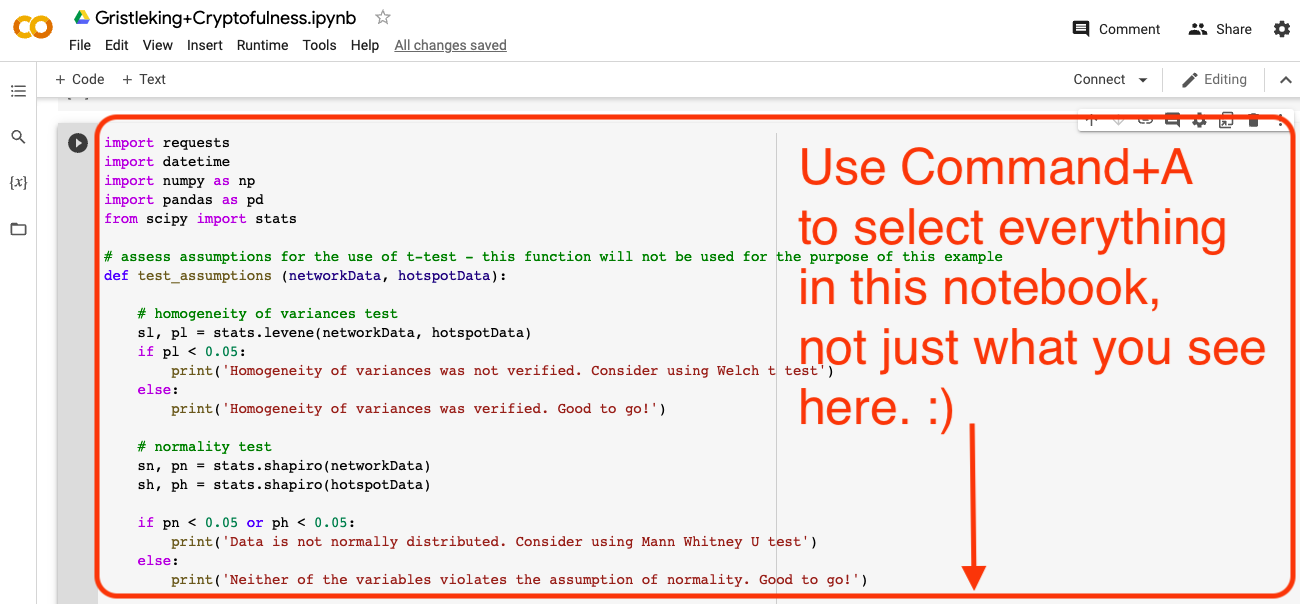
Now, open the Gristleking+Cryptofulness notebook in another tab, and copy ALL of the code in there from mine to yours. Be sure to get each of the different "cells", marked by the Play circle/triangle in the left grey column.

You're doing this in your own notebook so that you can look at your hotspot without the entire world seeing what you're doing (which is what will happen if you run the code in my notebook.)

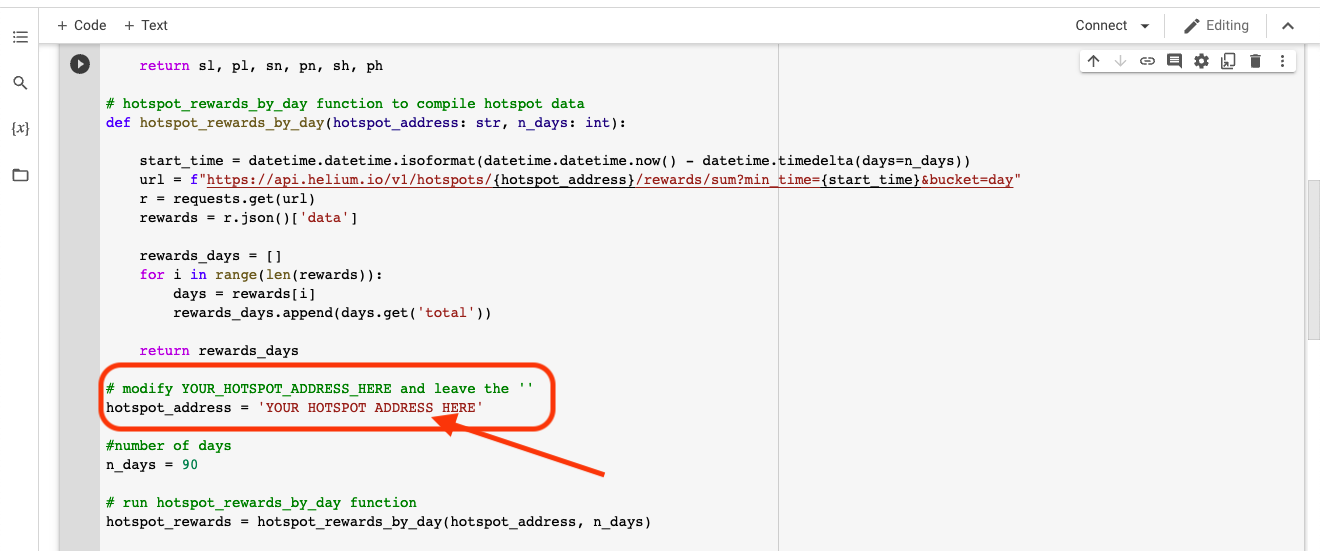
Ok, one more step to get to the results. With the code pasted in to your snazzy new notebook, scroll down until you see the green line saying
# modify YOUR HOTSPOT ADDRESS HERE and the leave the ' '

I'll use Amateur Jade Hare's address for the demo. AJH's address is: 112qN5DMoTdc4ThFGQHKyg4e3QfuEkkCUEfu5EgZA1QZLNdqb4Cf, which you can see below.

Once you've filled in your Hotspot address, hit the "play" button.

It'll spin and dance for a bit, then spit out your result. In this case:

A two sample t-test was performed to compare your hotspot rewards for the last 90 days and the network rewards for the same period. The difference between the two means is statistically significant and your hotspot was above the network average for: 612 %

Your hotspot daily average (HNT): 0.794

Helium network daily average (HNT): 0.112

Now, how do you know HOW statistically significant this is? Keep rolling down that file and hitting the little Play button on each one of the four cells. I'ma drop a video in here so you can see what that looks like.

https://vimeo.com/705416003/fe37042ed5

Ok, so what does each of those mean? Oh, in the video I should probably have called them "blocks", not "cells". My bad. :)

Block 1: The t-test. This compares your Hotspot's rewards against all active Hotspots on the Network rewards and tells you if the difference is real or just "noise".

Block 2: Shows the rewards by day for the Network and your Hotspot for the last 90 days. The orange line highlights the data pattern.

Block 3: A Pearson correlation, tests the association between your Hotspot and the Network. For example, if the Network sucks, is your Hotspot also sucking? That does NOT imply the Network sucking is the cause, just that they seem to follow the same pattern.

Block 4: A simple linear relationship between the Network and the Hotspots reward exploring "causality". This is sort of like block 3, expect where block 3 says "Yeah, these 2 things go in the same direction", block 4 says "When the Network goes down on average, it causes your Hotspot to also go down on average." In my case, the effect is amplified: For every increase in Network HNT of 1, AJH rewards go up 6.8.

So, that's it. Any mistakes in this or in the interpretation are mine, so I explained something incorrectly, lemme know! Also let me know what you find out about your Hotspot, and if you liked this, give @cryptofulness a follow on Twitter!

If you want to join a rad group exploring Helium and how to stay ahead of the curve, consider joining the Gristle Crüe. We Zoom every Tuesday at 10 AM Pacific and talk about the latest in how to crush it with Helium. Rock on!

The People Counter Project: Beginnings

· 10 min read
Nik
Site Owner

In less than 2 years, a group of strangers has managed to deploy 700,000+ Helium Hotspots worldwide. We've got the worlds largest contiguous wireless network built. So, uh, what do we do with it?

I got into Helium because I thought it could be useful to track paragliders back in September of 2020. Like many people, I got way into deploying Helium Hotspots, sometimes going slightly overboard in my enthusiasm to get the absolute best placements. Late 2020 through mid 2021 was an exceptionally joyous and engaging time running around deploying Hotspots in the high backcountry of San Diego.

So, with that 15 month side trip into getting radical with deployed Hotspots about finished up, I'm now returning to the beginning: Using the Helium Network.

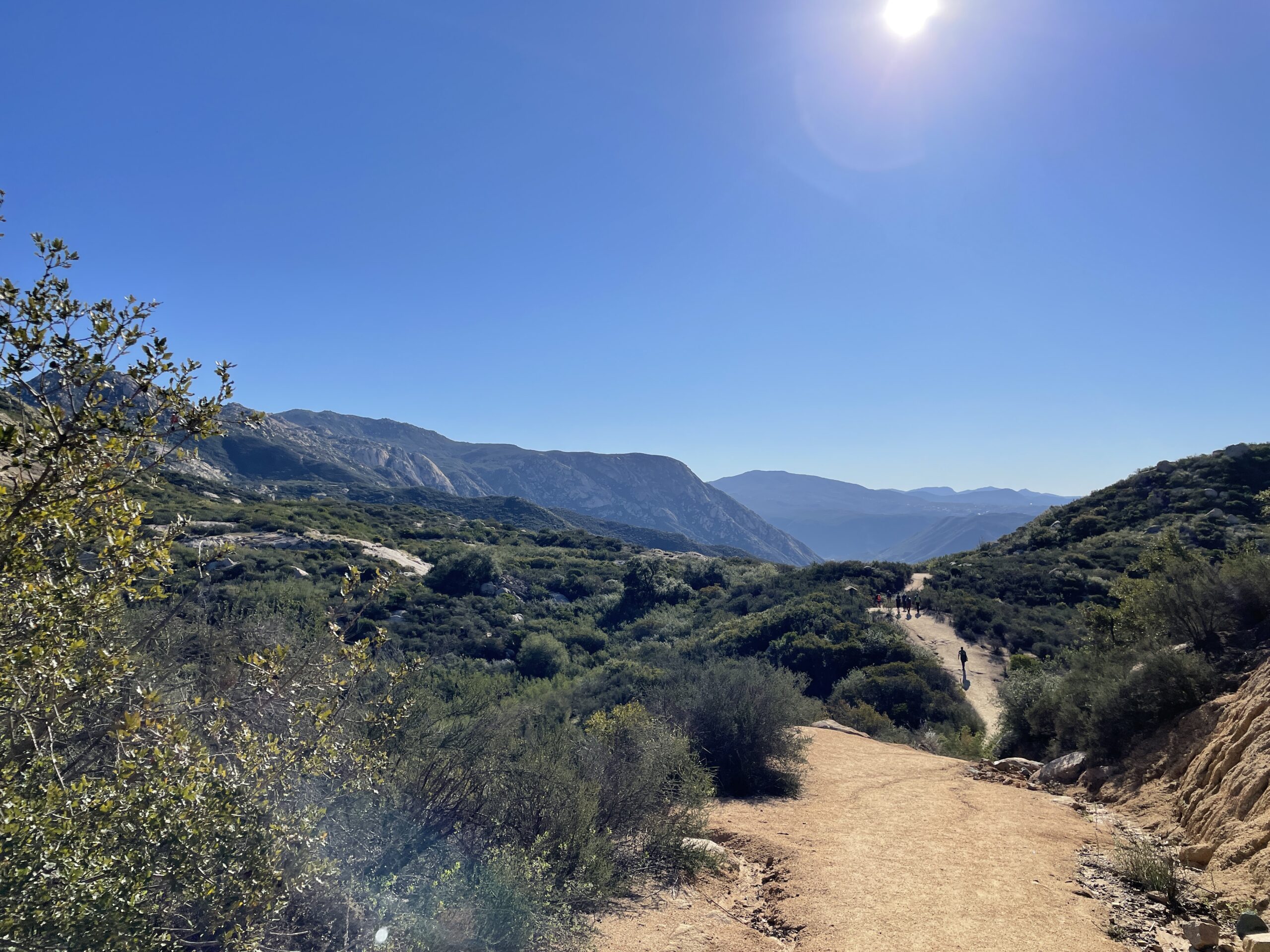
I've spent a fair amount of time on (and off) trails here in San Diego.

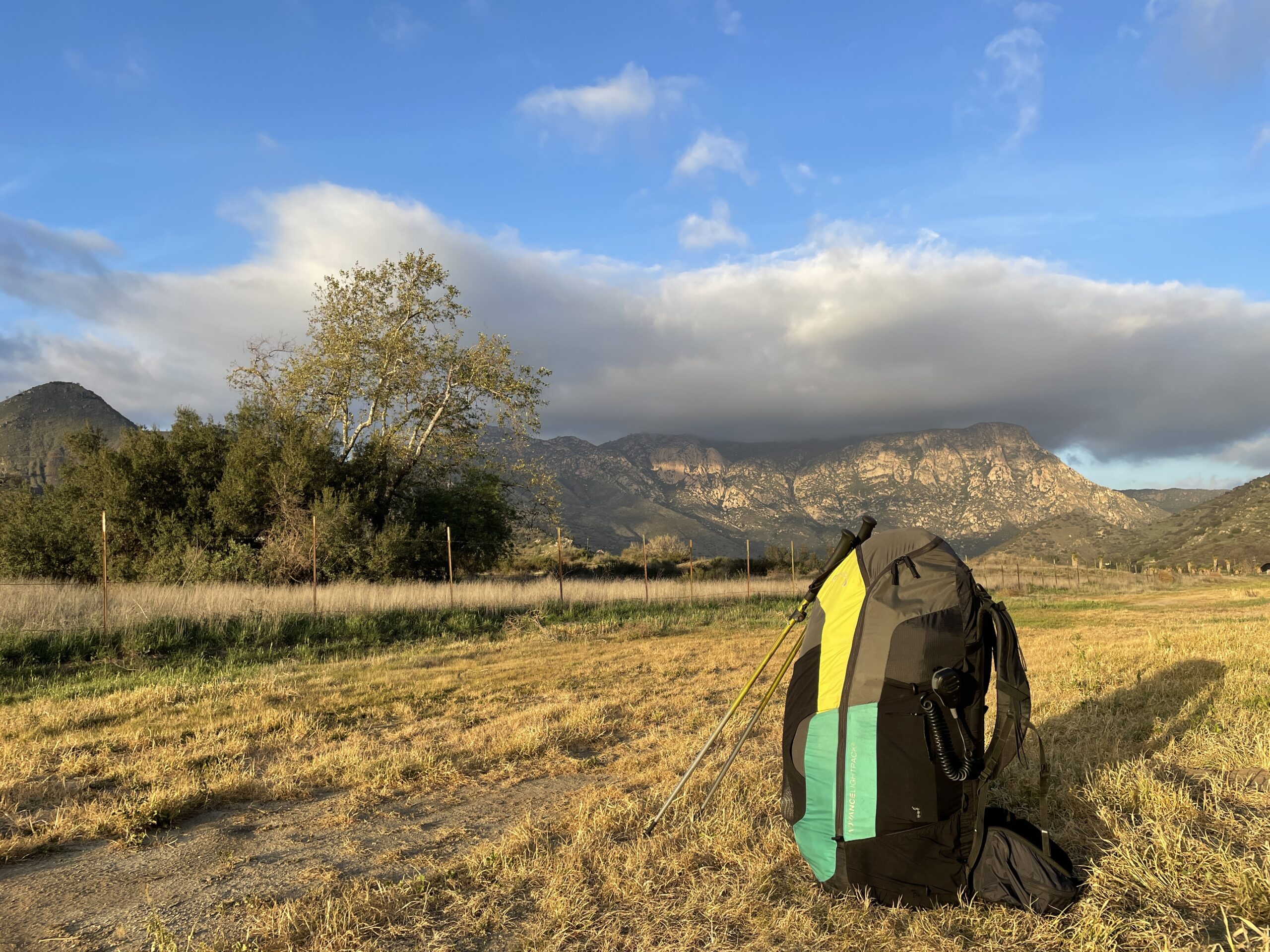
Between my former hobby of ultramarathon running, my current hobby of paragliding (the entire aircraft fits in that backpack), and all that time deploying Helium miners, I've probably got more hours on the trail than I've eaten burrito breakfasts, and I've eaten a lot of burritos.

One thing I've noticed is that there aren't a bunch of park rangers on those trails. Sure, you'll see 'em occasionally, but it made me wonder: How do they know what's going on out here? There are only so many rangers, and there's an awful lot of trail miles in San Diego. Do they use drones? Cameras? How do they keep track of what's going on?

It may seem like San Diego is a pretty benign place to hike, but we have our share of rescues, mostly centered around heat injuries (people getting overheated, dehydrated, etc). Typically with heat injuries, especially on remote trails, you don't know that anything's happened until the person has been missing for a while.

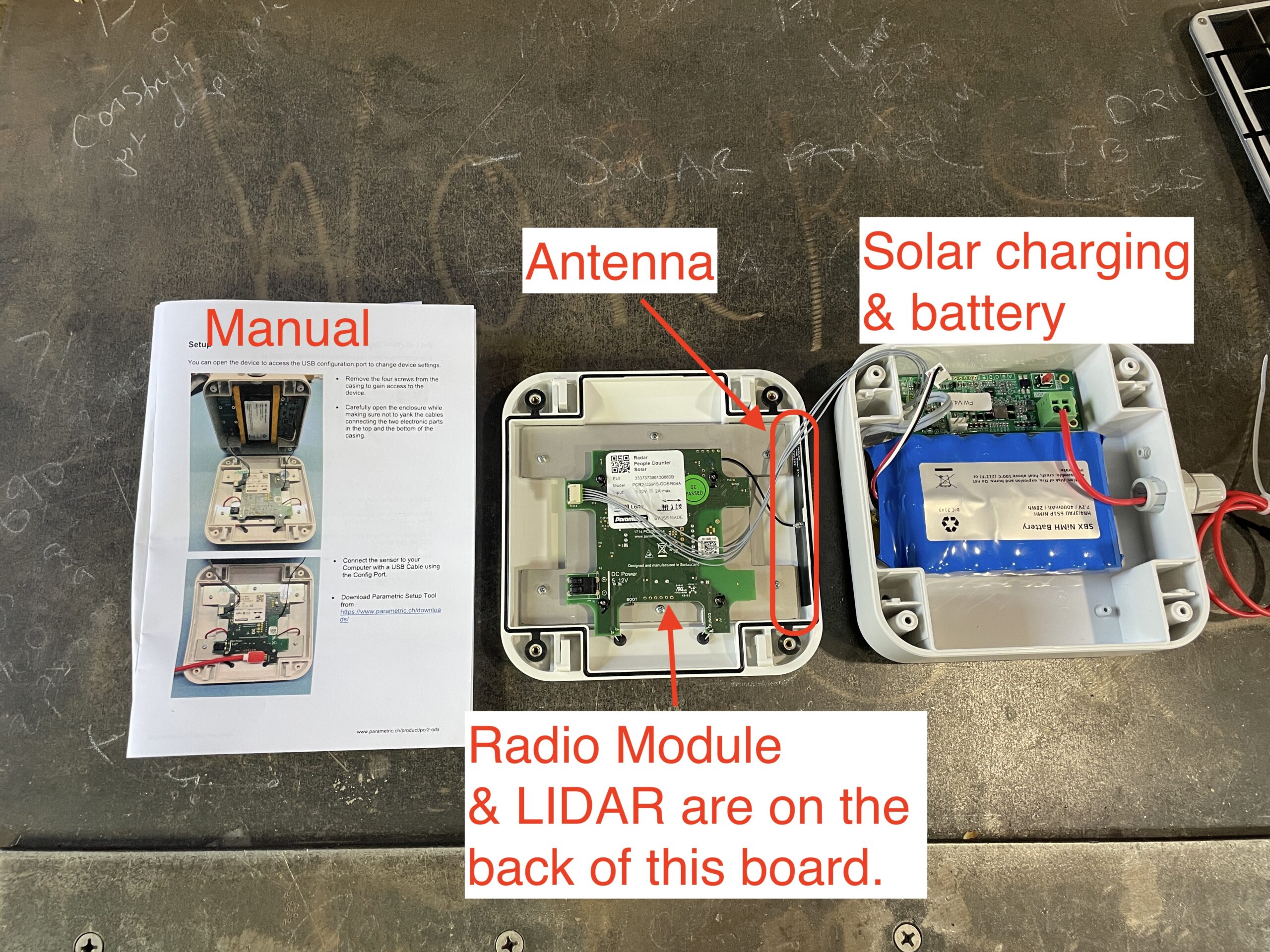
That got me thinking of how I could use Helium to help out. I mean, we've built the coverage, we might as well use it. I started poking around on the internet to see what sensors are out there and stumbled on "people counters". These are small devices that can use an infrared beam between two units, or LIDAR (which stands for LIght Detection And Ranging). Here's what one looks like:

I thought it might be useful for rangers to know is how many people had gone up the trail vs come back down. I also figured people counters would be useful to know which trails get the most use, so they can deploy assets effectively. Now, I'm not a land management dude, so those were just my initial ideas.

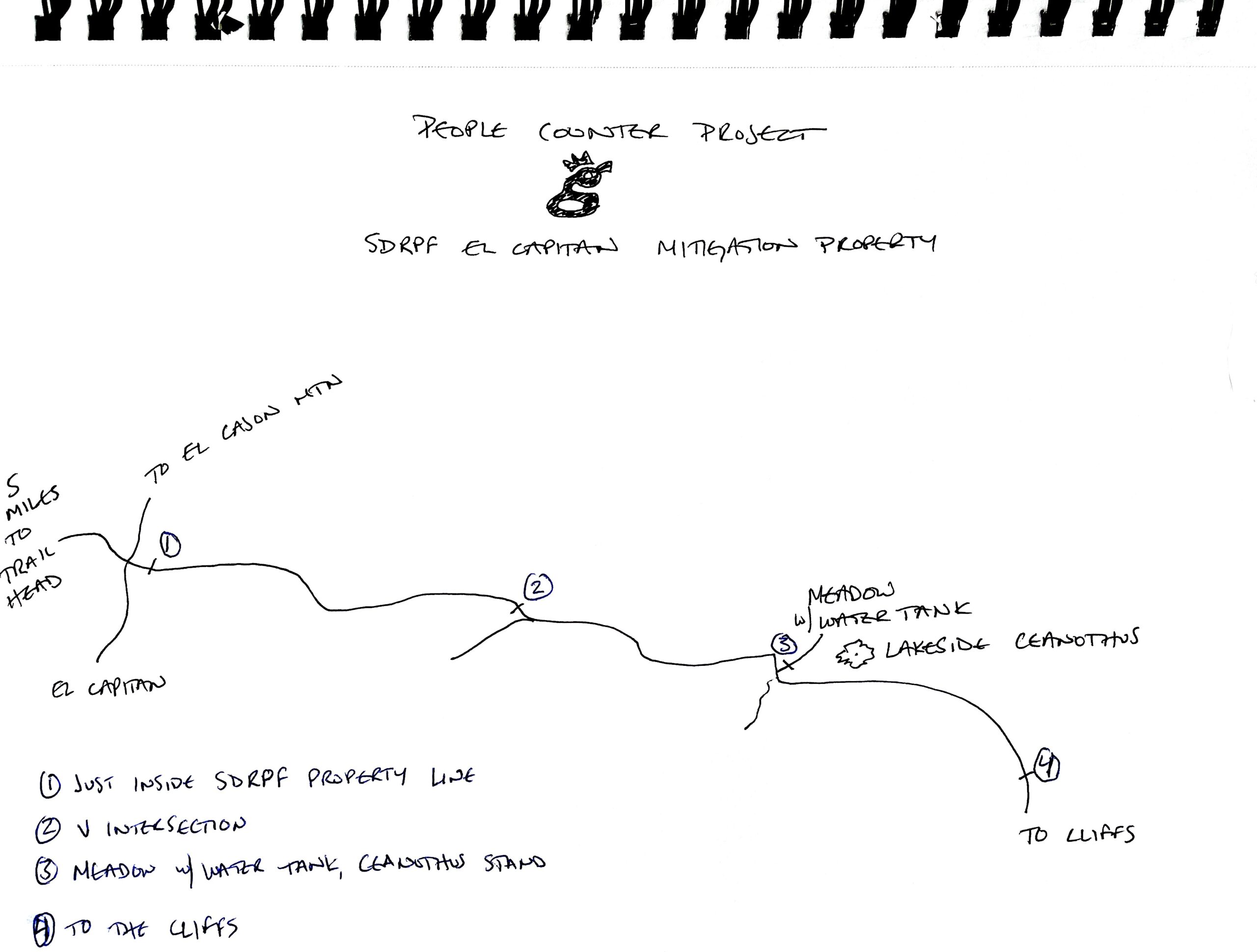
I ran them by a ranger I'd met on the trail, and he was enthusiastic about it. I started talking about a "people counter project" with my Helium homies. I thought maybe I'd just buy one or two devices on my own and deploy 'em just for fun. I talked to a local land owner where I've got a Hotspot deployed, and it turned out they had a trespassing problem, so I had at least one "use case", to count the number of people who trespassing.

Prior to the deployment of people counters, the only thing we're sure of there is that people ARE trespassing. We don't know how many, or when, or how often. At the end of that particular trail is a plant called the Lakeside Ceanothus, and it's only found a few places in the world.

Knowing the amount of trespass will help determine whether or not that landowner needs to figure out a way to stop it, or if it's not enough to worry about.

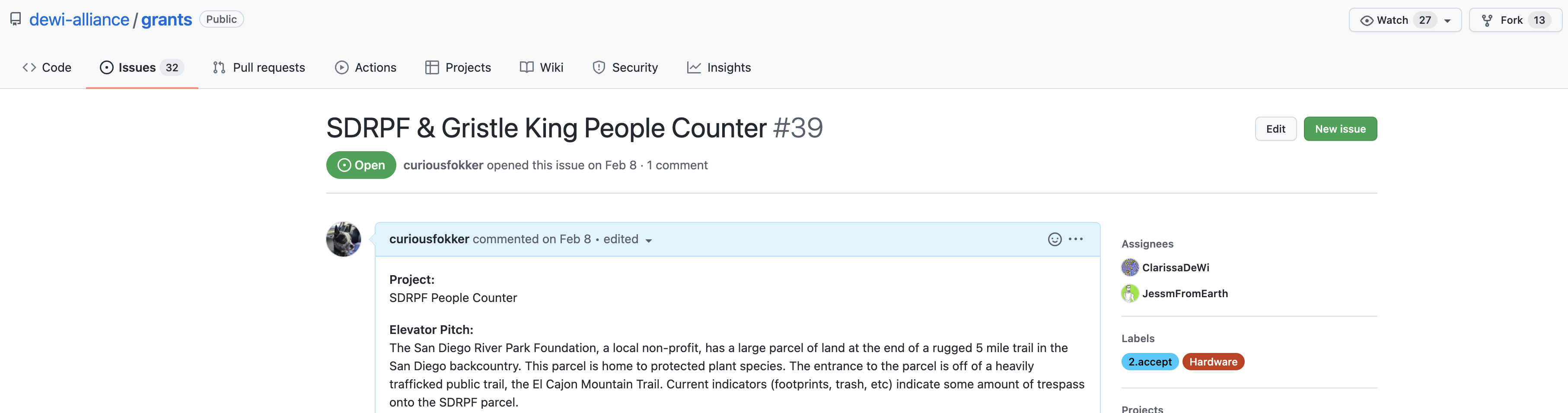
As I talked about the project with friends in the general Helium community, Joey Hiller, now Technical Director at the Helium Foundation, suggested I apply for a grant to be able to buy a bunch of people counters, write software to interpret and display the data, and deploy them as part of a project to show anyone how to use Helium.

We went back and forth about what a project that the Helium Foundation would support could look like, I connected with a few other folks at HF and with their help I ended up writing this grant, which was approved.

As you'll see, part of that grant is helping YOU figure out how to use this magnificent network we've built. Let's start with what's called the "architecture" of IoT.

In general, the closer you get to technology the more specialized the language becomes and in general, the harder it is to understand without knowing some basic vocabulary. Conceptually the whole thing is straightforward; you deploy some kind of sensor in the field that produces data you can use. If you're going to get into the business of actually using the network, you'll need to deepen your understanding beyond the conceptual.

Hang on to your fucking hats here, these next few paragraphs are both complicated and at the crux of understanding this thing in order for you to use it. You may need to read them a few times. This took me days (maybe weeks?) to figure out, so if you only have to read it twice to understand it, consider that a gift of time from me to you.

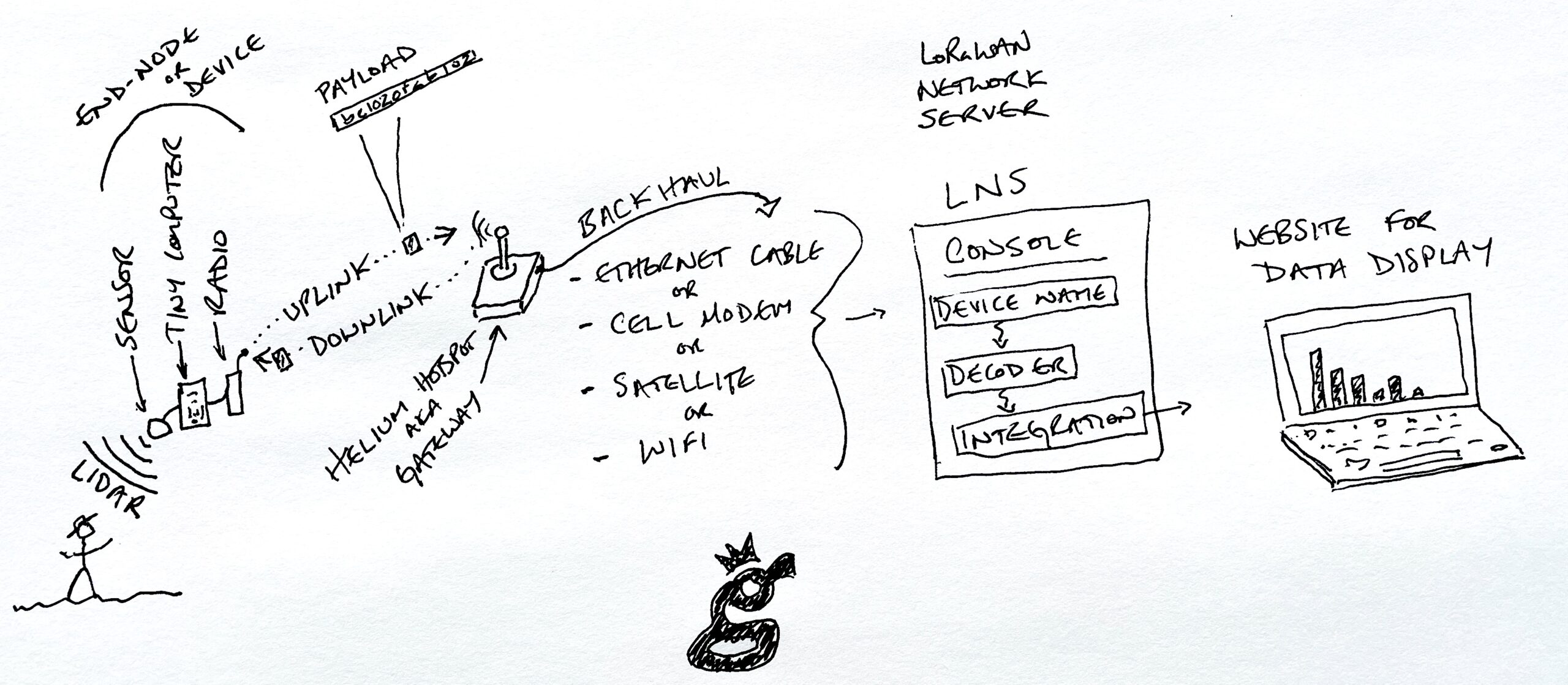
Let's start at the beginning of the system, with the thing in the field. You or I might call it a sensor, but technically a sensor is only the actual thing sensing the data input. In this case, it's a LIDAR sensor. That sensor is connected to a tiny computer, which has a radio module on it. Together, the sensor, the tiny computer, and the radio are called an end-node or device.

Using LoRa, (the Long Range radio protocol) that device transmits a string of data called a payload. This transmission is called an uplink. The payload is received by a gateway, which is what we call a Helium Hotspot. A downlink, in contrast, would be a transmission going from the gateway to the device, usually to reconfigure it ("Send a transmission every 10 minutes, not every minute", or "Let's dial down that LIDAR sensitivity a little so we're counting just people, not moving branches." Of course, you can't speak English to a machine. In this case, you have to translate those commands from our human language to decimal and then to hexadecimal.

There are different types of payloads. Sometimes you'll be using Application payloads, which are ones that configure the data on the uplink, and sometimes they're Configuration payloads, which ride the downlink and tell the device how to re-configure itself (like the "1 minute to 10 minute" example above).

Riding the downlink, by the way, is completely non-technical. It's just how I think of it. :)

The gateway is connected to the internet by some form of backhaul, which can be anything from cellular to satellite to WiFi or an ethernet cable. The backhaul carries the payload to an LNS, or LoRaWAN Network Server. That LNS can be called "the console", or in the case of Helium, capitalized and made fancy, Console. On the LNS, the payload is run through a decoder and then sent to an integration.

The decoder takes the string of data from the device and, well, decodes it. The integration takes that decoded data and displays it somewhere, usually on a website where we humans can glance at it and say, "Oh, it looks like 3 people walked right past that NO TRESPASSING sign today."

As you can see, while it's conceptually straightforward, actually doing it ain't particularly simple. At each step of the way a level of technical ability is required to understand what's going on. It might be hardware expertise required to build or connect a sensor to a module. It could be software expertise, understanding that the payload string is written in hexadecimal and might need to be translated.

To complicate matters further, every manufacturer, including Parametric (the maker of the people counters I'm using) has their own decoder, which might not match up to a Helium specific integration. Those decoders are updated over time, and they can be written in different formats, for example Cayenne LPP, ELSYS, or Extended Payload.

Now, as I said, that took me days to figure out. It DOES make sense, it's just complicated. I ended up bookmarking the following resources as I went through setting up these People Counters with the help of both Travis Teague at Nova and Nick Hough at Lake Street Software. These are Parametric (the Swiss company that makes these devices) specific, but it should give you a good idea of what you might need in order to understand your own projects.

Ok, so that was MY list of useful resources. Unless you're also using the PCR2-ODS from Parametric, you'll have to build your own, but with that as a guideline you'll be way ahead of where I was when I started.

In the next post I'll walk through the process going from buying and importing them to the first test setups. For now, that's probably enough information. :)

Rock on!

Archived Comments

artdudeaz - 4/30/2022

I'm so stoked dude... I have about a million uses that I can think of for this technology and I can't wait to get my mind around the more granular bits.


Nik - 4/30/2022

Right on! Lemme know where we can help, psyched!


What devices can you use on Helium? - Gristle King - A Guide to DePIN - 1/10/2025

[…] Para­met­ric PCR2 — LIDAR Peo­ple Coun­ters — Sup­port is expert but these stymied me for a long time. […]


Government, Surveillance Technology & IoT

· 9 min read
Nik
Site Owner

What is the single biggest obstacle to the Helium project, and the decentralization of wireless networks, from LoRa to WiFi to cellular?

It's usage. It doesn't matter if you have an amazingly robust network. It doesn't matter if you have commercial grade antennas, or nodes, or locations. What matters is that people use it.

So, the question is, what can you use the Helium Network for? As it turns out, damn near anything. You can track packages, or pallets, or planes (useful if you're FedEx). You can monitor the temperature of the soil at seven different depths (useful if you're a farmer). You can see how many people use a public trail (useful if you're a park trying to understand what resources you'll need).

Except on that last one, there's a problem. You see, collecting ANY kind of data is starting to really scare local governments. They're worried about the use of what they call "surveillance technologies." Now, Surveillance Technology (ST) sounds creepy and scary, and when used inappropriately, it is. Of course, anything when used inappropriately is, well, inappropriate. In this case, let's think of "inappropriate" as something that pierces the privacy veil of citizens.

ST that is privacy-piercing can be traffic cameras that snap pictures of people running red lights. ST that is more beneficial and with little downside can be acoustic monitors that alert police of when and where gunshots are fired in a city.

Benign ST might be the use of people counters to monitor how much traffic a backcountry trail has. That's where I stumbled onto the idea of surveillance technology. I had written a grant to deploy people counters on trails in San Diego. Part of the project is on private land and is used for trespassing monitoring, and part of the project was to be on public land, to help public officials understand how much use their trails were getting.

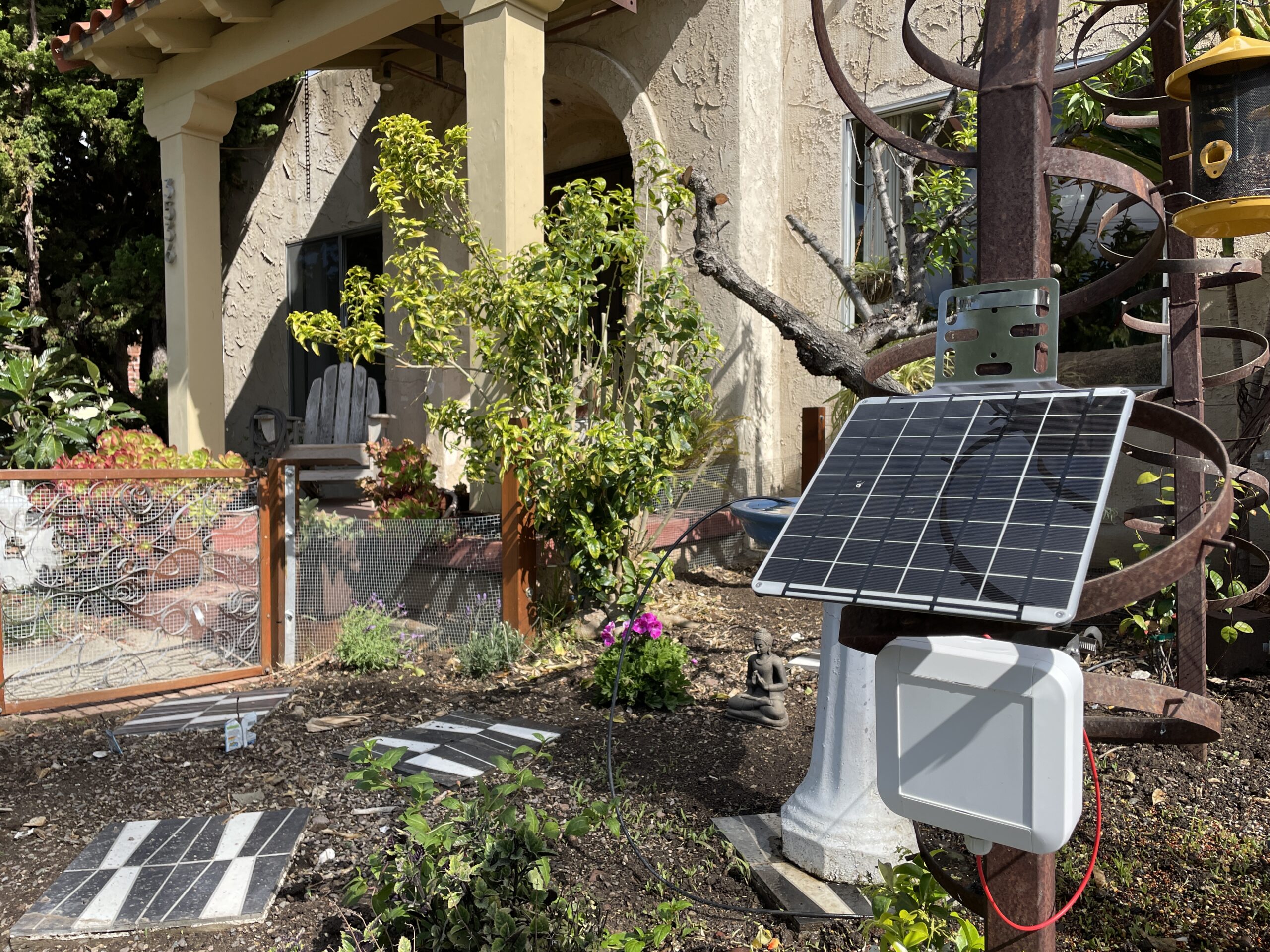
Let's start off with what a people counter is in this context. It's a small device, smaller than a toaster oven, that is mounted on the side of a trail. It sends out two very low powered radar beam signals, and when those signals bounce back off a person, the device counts it. It uses two beams so it can count which direction people are going; left to right, or right to left.

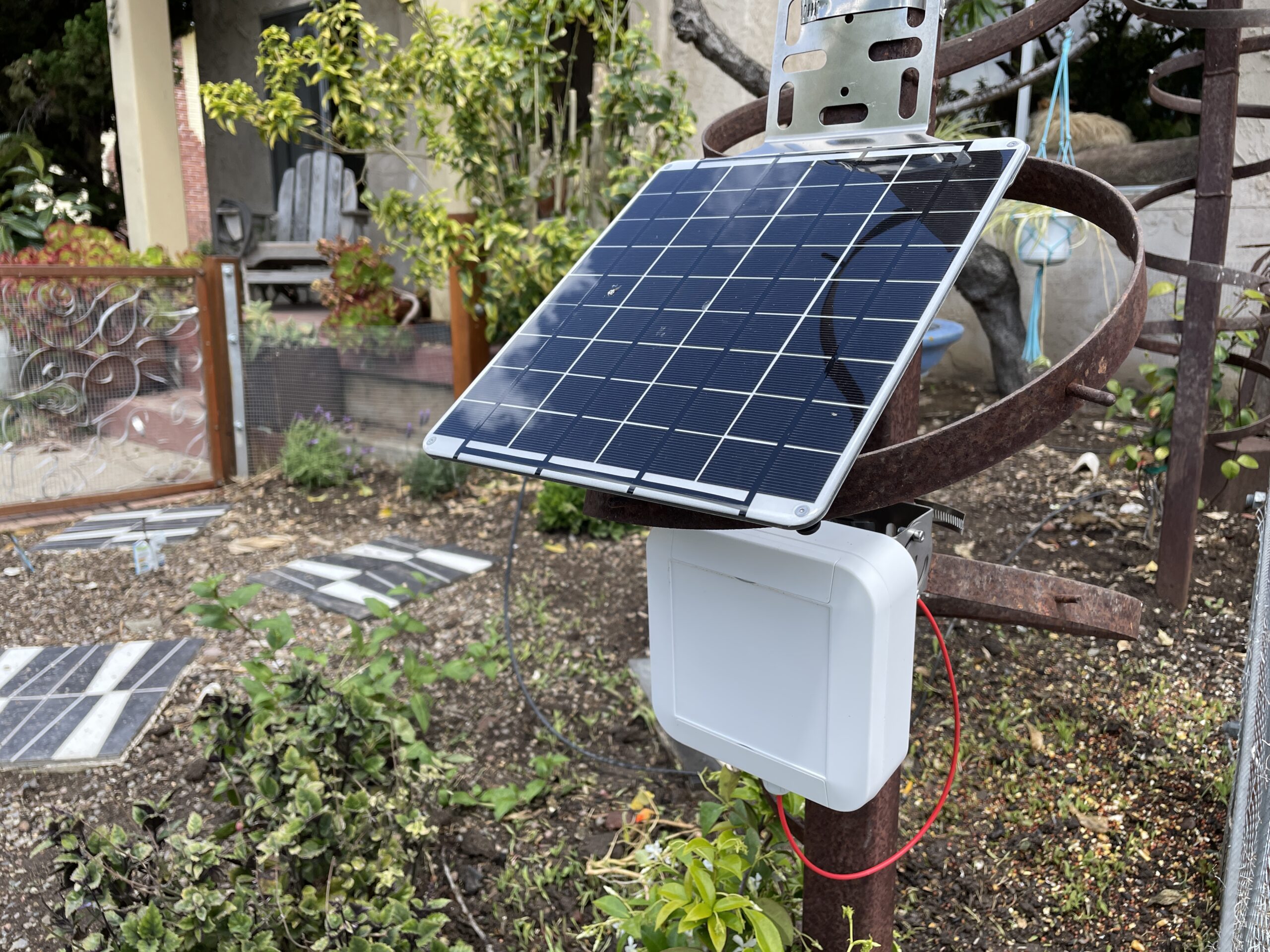
Here's one installed out in the yard:

What you're looking at is benign surveillance technology. What you're looking at freaked out the local government of San Diego, where I live. Why?

Here's the conversations so far (I'm paraphrasing).

GK: Hey, I'm a local trail user and tech geek. I think there's an opportunity to deploy some people counters on the trail and provide you solid data for how many folks use this trail. Explains what a people counter is. If I did all the work and provided the equipment for free, would you be open to that?
Park Ranger: Hmm, that sounds awesome. What's the catch?
GK: There's not really one. I'll write a grant to cover funding, I love being outside and working hard, and I think this is a cool network to use. I'll write about it on my blog. The only thing I really need is permission to put these on public land.
Park Ranger: Wow. That's cool, and we could use the data. Go ahead with it and keep me posted.

4 weeks later, with grant written, funds disbursed and spent, and technology in hand ready to deploy.

GK: Hey, the units came in and I'm getting 'em prepped for deployment, this is so exciting! Let's set a date to meet up and confirm where on the trail they'll go, and when I can put 'em in.
Park Ranger: Um, hey, I talked to my boss and we're doing our own project like this and are no longer interested in this.
GK: Hmm, that's odd. You're doing your own project? Why didn't you tell me about this before I did all the work?
Park Ranger: Umm, I didn't know. My boss is a hard No on this. I'm sorry.
GK: Ok. May I talk with your boss about this?
Park Ranger: I'll give him your number and he'll call you.

Boss never calls.

So, that was weird, but I figured it was miscommunication and really my fault; I should have gotten a written contract to deploy 'em before I started.

"No big deal", I thought. I'll just find another park where they're not running a people counting program and offer 'em the $12k worth of gear and my work for free. That seems like a good deal to me.

Calls up the largest city park in San Diego

GK: Hey, I'm a local trail user and tech geek. I think there's an opportunity to get some people counters on the trail and provide you solid data for how many folks use this trail. I just got a grant to do this and have all the equipment on hand. Would you be interested?
Local Park Service: Let me refer you to our head ranger.
Head Ranger: This sounds interesting, let me refer you to someone who can help, a Natural Resource Manager with the City of San Diego Parks & Rec department's Open Space Division.
Nat Res Mgr: (after hearing my spiel above) This sounds awesome. We've done stuff like this before but the equipment is expensive, so if you're providing that and the labor AND the data visualization for free, I think this would be great. Let me double check with my biologist.

1 day later

Nat Res Mgr: I checked with my biologist and we're both on board, we think this'll be a great project. I'll set up a meeting with my boss and our IT person to over it with you.
GK: Right on, looking forward to this. Accepts calendar invite.

4 hours later

Email from Nat Res Mgr:
I wanted to thank you for bringing this opportunity to our attention.  However after internal conversations with our City IT staff we are no longer interested in pursuing this opportunity.

Ok, so that hit my "Something's weird about this" button.

I mean, why would two different people in similar organizations (County and City Parks) have the same reaction after being so fired up at first? Then I found this article, which details that just a few days earlier (on Tuesday, April 5th of 20220)

The San Diego City Council Tuesday established a Privacy Advisory Board to protect resident and visitor privacy as the city purchases and uses surveillance equipment and other technology that collects or stores individual data.

-Elizabeth Ireland, Times of San Diego

Then I got this email in my response to "What happened?"

The City is undergoing changes and revisions of several ordinances that deal specifically with the City’s acquisition and use of surveillance or other technologies. At this time, Parks and Recreation will not be pursuing new technologies.

-City of San Diego Parks and Recreation Department

So, uh, where does that leave us?

Let's arm ourselves with a little knowledge. I cruised over to the American Civil Liberties Unions site (a bastion of protecting citizen's rights here in the US), and on their Surveillance Technology page they have the following categories:

  • Big Data
  • Domestic Drones
  • Police Body Cameras
  • Stingray Tracking Devices
  • Biometrics
  • Face Recognition Technology
  • RFID Chips
  • Video Surveillance

I went through all of those definitions, and none of 'em include people counting devices. Nope, not even "Big Data", which the ACLU defines as, "a term used to describe the collection and aggregation of enormous amounts of information that can be processed and analyzed only by powerful computers."

Let's think about classifications of surveillance technology as far as how "privacy-invasive" they are. A camera with a GPS and a clock is pretty privacy-invasive. It shows WHO was WHERE, and WHEN. The WHO is the problem there; having a camera takes away someone's privacy.

A soil moisture sensor is on the other end of the spectrum; it shows WHAT happened, WHERE, and WHEN. There's no WHO, so even if you decided to pee on a soil moisture sensor, no one would know who did it.

What about people counters? Why are they a problem? I had the same question. From my perspective, there's not a privacy issue. The sensor can't tell WHO passed by. It doesn't note a person's age, gender, color, race, weight, gait, or any other identifiable characteristic. It just says, "Yep, I'm pretty sure a human passed here. It wasn't a car. It wasn't a deer. It wasn't a jumping raccoon. It was a human."

Now, I'll make clear here: This isn't the fault of the Parks and Recreation Department of San Diego; they're just being cautious and following government rules. What this does is bring up a really interesting issue:

How can local governments understand the nuances of technology so they don't get left behind when it comes to useful data?

I mean, we Helium peeps are out on the bleeding edge of tech; we're co-creating the largest and fastest deployed wireless network the world has ever seen. To us, rapid deployment of new technology is useful and pretty normal. Within the last year and a half, many of us went from having never done more than change the channel on our television to deploying remote off grid solar powered IoT LoRaWAN devices with cell backhaul. That's quite a jump.

So, what can YOU do? The same thing I'm going to do: Offer to educate local officials, find other local governments who are willing to embrace technology, and help present a new and different view of technology to anyone curious about the coming tsunami of IoT devices.

If you have other ways to help, I'm wide open to hearing 'em. If you're a government official or employee who wants help understanding this whole IoT and surveillance technology issue, or you want to use the pro-privacy technology I'm deploying to improve your land management decisions, please reach out. Together we can learn to build a rad world that collects useful data and puts it into beneficial service for all of us.

Rock on!

Getting Healthy With Helium - Community Starts here

· 7 min read
Nik
Site Owner

Are you looking for a cool community project to contribute to that blends Helium with Health? I'm starting one right here, right now.

The idea is to build a Healthy Helium community where we share plans to DIY devices that monitor health. I'm thinking the following:
-weight
-heart rate
-activity tracker (maybe just a pedometer)
-blood sugar (CGM for you fancy types)

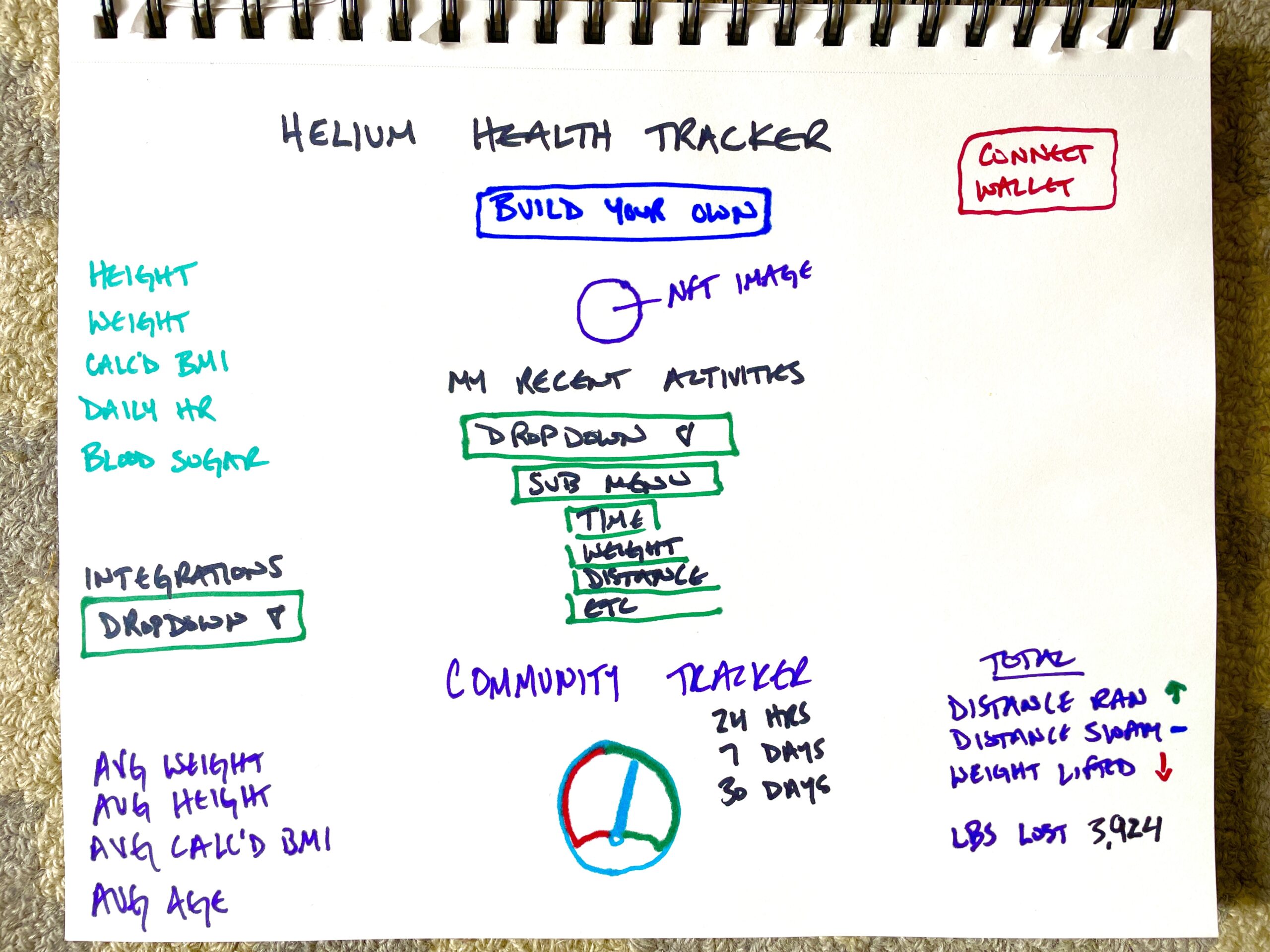
There is no limit to what we can build. Here is what that Dashboard *might* look like. Want to help me make it better?

I am wide open to being wrong on any or all of those. I'll need YOUR help to make this thing awesome.

"Hey Nik, you forgot the [insert your favorite health metric]!"

Keep reading, bubba. This is just the beginning.

I'll spread the word and organize the effort. I'll need help everywhere else.

Desired end state is a community of mutually very supportive people who have built or acquired a DIY Helium health tracker to track their stats and share them in order to improve their health.

In my perfect world, we all work together to help each other improve our knowledge of Helium, our use of the Network and our health. I *think* that works by connecting people who are experts and building the hardware and/software to create a scale, or a heart rate tracker, or a pedometer etc that integrates with the Helium Network.

The project will be in part a public place to gather all the information & materials that any person would need in order to build and use their own Helium Health Tracker.

I know how confusing Helium can be, and I also know how much it can change your life once you understand it. I'm super excited to develop a project that empowers YOU, whoever you are, to build on, use, and benefit from the Helium Network.

Who's in?

FAQ

Why Helium? Why don't I just use my Apple Watch?

The first reason is that Helium is a giant network begging to be used. It's as simple as that.

The second answer goes more into helping grow the Network by learning how the whole thing works. Most people have NO IDEA how to use a sensor. I get it. It's fucking complicated, at least as of April 2022. This project will help YOU learn how to use the Helium Network, while helping connect you to other people who are into the same things you are AND help track your health.

Third, use your Apple Watch, or Fitbit, or Garmin Swim 2, or whatever you want. They'll probably work better, at least at first. What they won't do is empower you to understand the Helium Network, or connect you to folks who are similarly interested in Helium, Health, and Community. Maybe (definitely) we can integrate them into this thing eventually. If we work together, We're All Going To Make It. (WAGMI)

Who's going to pay for all this?

Maybe the Helium Foundation. I'll write a grant for anything that needs money to get started, but mainly my goal is to find people whose primary motivation isn't money, but excellence and community.

I, uh, saw something in the diagram about an NFT? What's that all about?

NFTs at their heart are proof that something happened. They started off as linked to art, but that's not their primary function/capability. One thing I've noticed is that people who aren't in NFTs are really hesitant about getting in. This is an easy way to get into 'em where the utility is immediate (you get access to the Helium Health tracker), and I'll walk you through exactly how to do it.

Once you get your first NFT, you'll have made it past the first giant stepping stone and you'll be at the leading edge of a radical new way of interacting with the world.

Wait, why would we use an NFT for this?

Well, this NFT is designed to benefit the owners. You'd buy in, at let's say, $100. You'd get access to the Dashboard, and immediately get back $40 worth in useable tokens called $MINT. Those tokens could be used to vote on where the Dashboard should be improved next.

Let's say you're an artist, and you want to contribute to the project. You think up the idea of, "Hey, when someone runs 100 miles, their NFT should get a pair of golden shoes." I mean, you didn't think that up, LookingForOwls did over at the ShuffleDAO, but let's say you're the one who can draw it.

You draw a rad pair of golden shoes and submit them for the "100 miles ran" image. It gets accepted by the DAO, and then every time someone runs 100 miles, you get some small amount of the $MINT token.

Is this the same thing as the upcoming GK NFT?

Nope. I'm using ShuffleDAO for that, but it's a separate project.

Ok Nik, so what's the catch?

Well, I think of it more as a feature, but mainly the catch is that this'll take a lot of work by a lot of people who could, frankly, get paid a ton more somewhere else.

Hmm, who runs the DAO?

Well, at first it'll be me. As more people come on and contribute, I'll add them in. Look, I don't want to run this thing forever (or even for very long). I want to make sure it gets stood up, and works, and builds a really healthy community (in every way) and then go do that again somewhere else with something else. I like building awesome stuff. I want YOU to be involved, and I want YOU and the community to win as much as possible.

Hey, could I use a Hash Time Lock Contract where I had to hit a button or do something in a certain time frame, like go for a run?

Uh, hell yes you could. You'd have to credit Travis Teague with the idea, but that's your question...please would you come on board and help? :)

What about nutrition? We all know that paleo/keto/vegan/carnivore is the only correct way to eat, how can I impose my diet on everyone else?

Whoa, turbo. Diet is a weird thing. I would LOVE, like fucking LOVE to include diet in this, but obviously we're not going to force anything on anyone. If you write the code and it makes sense, then hell yes we'll add it.

Will I get ripped and hard in just 30 short days just by building a Helium Health Tracker?

No. This may not be the project for you.

Hey, I've got a really long list of reasons this can't work. Want to hear 'em?

No.

Nik, this sounds awesome. I have a skill in [XYZ] and I want to help. Where do I sign up?

I *think* the best way to do this is on the Gristle King Discord. If this thing goes batshit bananas crazy, we'll stand up a separate server for it, but for now, let's just use the #helium-health channel over on the GK server. Oh, and thank you for volunteering. I love people like you.

Helium Analytics: Data, Truth, and the Results

· 9 min read
Nik
Site Owner

Helium is a complex system. If you don't understand it, that complexity can be REALLY frustrating.

There are radio frequency concepts, Hotspot density rules, different antennas, cables, splitters, and a constantly changing Network. Those all combine to make an extraordinarily complex system. In any complex system, the big opportunity is to look for big patterns and useful data; digging into the weeds can make ya want to tear your hair out sometimes!

Let's go through a few basic truths, then I'll intro you to a tool that'll help make sense of one of the most important parts of the Network for a lot of folks: Earnings.

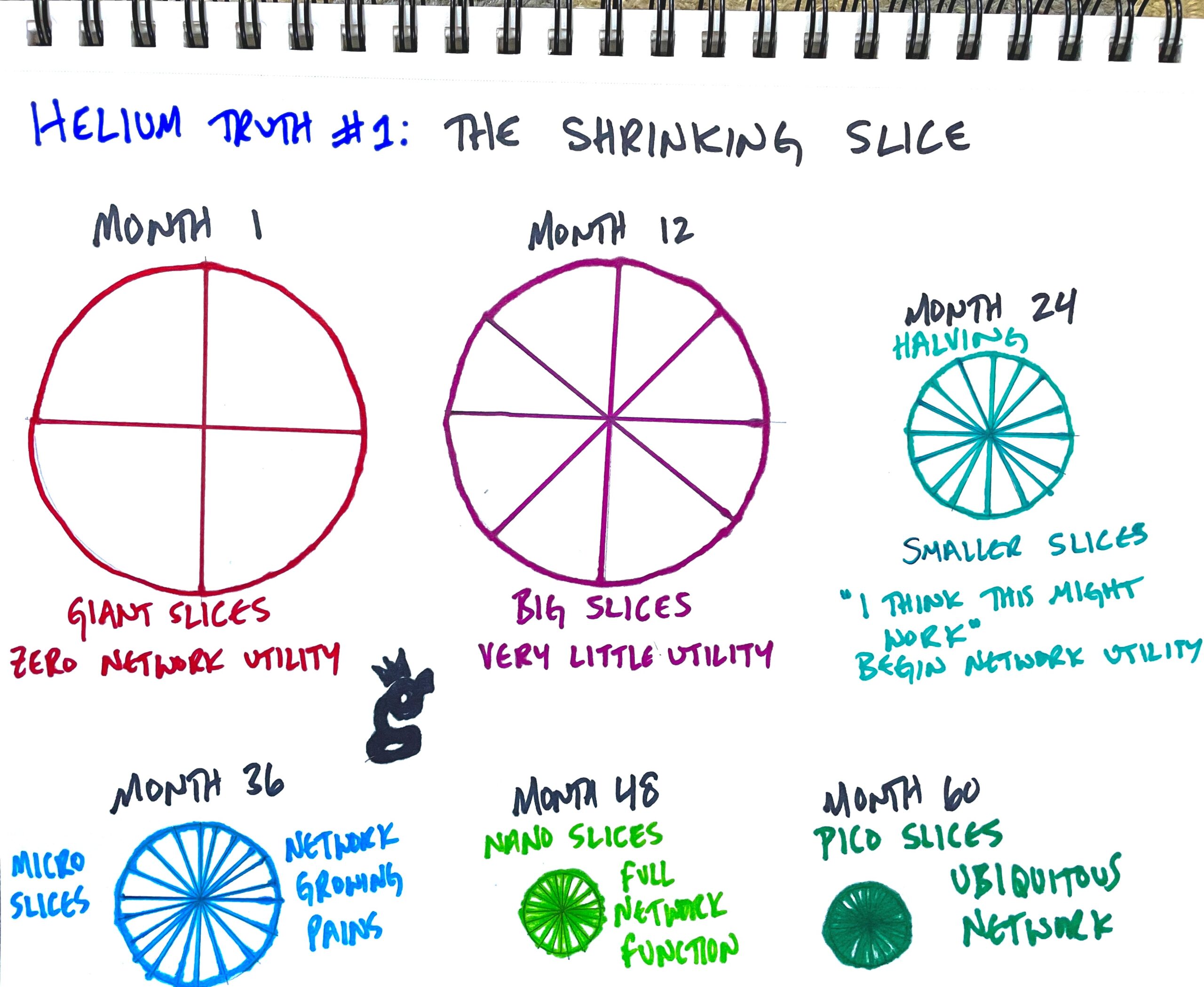
Truth 1: The amount of HNT any Hotspot will earn will steadily decrease over its lifetime due to the growth of the network. Think of this as a pie that both gets smaller over time (the halving every 2 years) AND gets cut into more and more slices as more Hotspots join and the rewards get divvied up to more and more earners.

This means that when your rewards shrink, it's not a scam or a rug, it's actually a sign the thing is working: The network is GROWING. That's a good sign for the overall health of the network.

Truth #2: Over time, the Hotspots that earn the most will be ones that provide the most utility to the network. Utility can be measured in two majorly different ways: Proof of Coverage, or PoC, and Data Flow, which is measured in the amount of data transferred through a Hotspot.

At the start of growth, network utility is measured through the first three letters of WUPU (Wide, Unique, Proveable, and Useful) to provide PoC. PoC is what we're all focusing on now in March 2022, because no one is really using the network at scale yet. PoC is the driving force behind the growth of the network, and is a powerfully elegant way of using tokenomics to build a network before you need it.

Once the network starts to actually get used at scale, utility will be measured by how much data your Hotspot processes.

So, if your Hotspot isn't earning, first ask yourself how much value its providing to the network. Common mistakes are to think that you're special and the network owes you something. You're not, it doesn't. This is a decentralized network built to incentivize superb radio coverage. Admittedly, it's not perfect, but it's not (by a long shot) a scam or a rug. It's an uncaring measure of excellence, and by definition, most of us will be average.

Truth #3: The data for just about every network statistic is publicly available. It may not be easy for the common internet user to understand, but it's there. That's what we'll dive into for the rest of this, mostly focusing on a rad tool called Helium Analytics, which you can find here.

The raw data for Helium Analytics comes from what's called an ETL. ETL stands for Extract, Transform, and Load, and it's basically a copy of the data contained in the Helium blockchain. You can run your own ETL, but it can get expensive to store all of that data. As of March 2022, the blockchain is about 4 terabytes of data. That's a lot, and a great reason to let someone else take that on.

Thankfully, Dave Akers over at Helium Analytics has done just that. Let's dive in to the tool he's built to help you understand all the data the Helium blockchain holds!

Let's start with what you want to know: Is my Hotspot doing what it's supposed to do when it comes to earnings?

Now, "supposed to do" means different things to different people. For me, I look at past earnings in 7 day chunks, and I expect that over time those earnings will drop. I'll typically use the Watchium app for keeping an eye on what my Hotspots are doing (use code GRISTLEKING to get early access), but you can also use the Helium Explorer.

If there is a sudden drop or rise that doesn't match what I'm expecting, then I look at the global average, both the targeted average (what *should* have happened) and the actual average. Helium Analytics makes this ultra easy. For these examples I'll be using today, but you can use the date box in the top right to dive deep into the past. :)

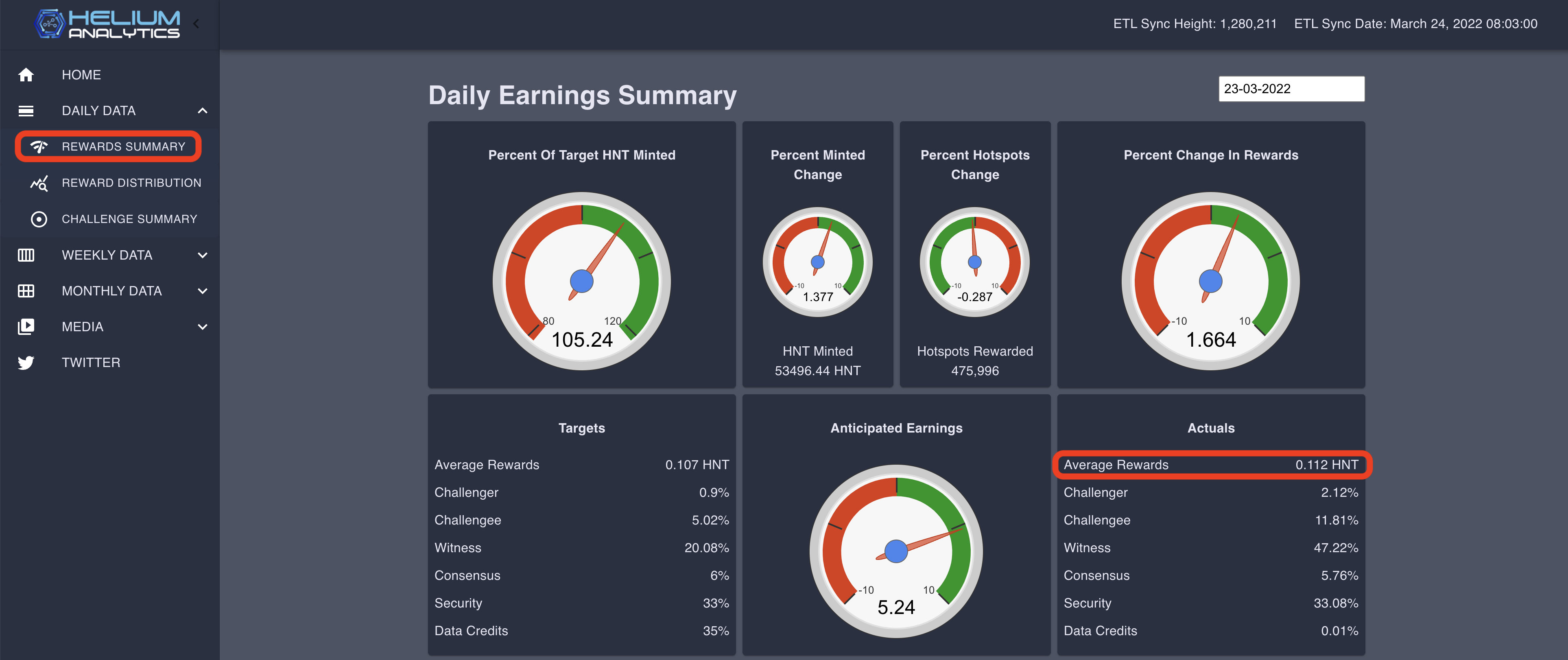
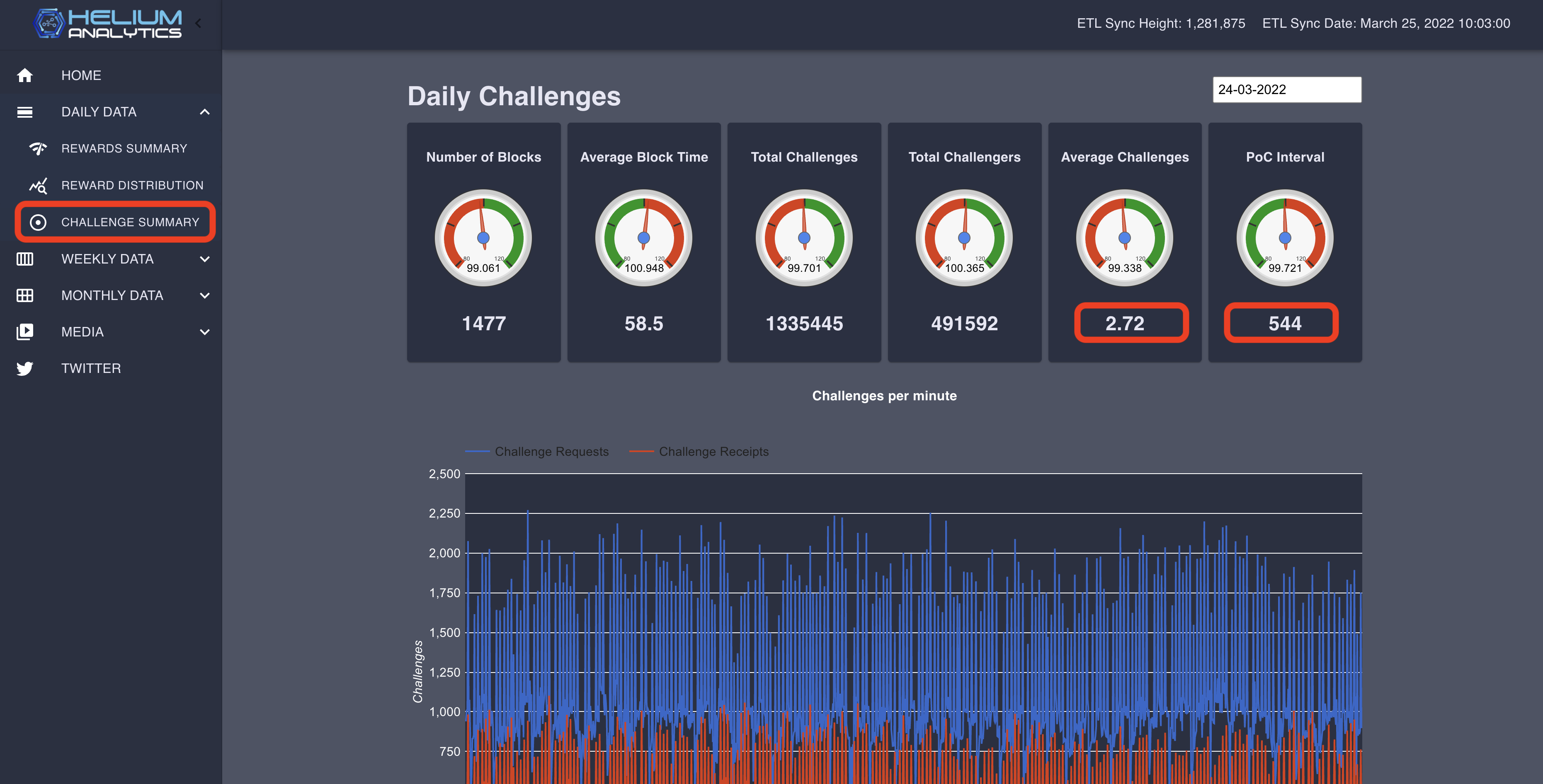
Go to the Daily Data Rewards Summary, then look all the over on the right side, under "Actuals."

Now for me, I'm kind of a location snob: If it's not awesome OR serving a very specific coverage purchase, I won't put one up. I like my locations to be 3x global average at the minimum. Not everyone can do that, I'm just sharing with you what I'm looking for. The important thing here is to see if there's a temporary global shift in earnings along with where your Hotspot(s) stacks up.

The next thing to pay attention to is whether those dials are in the green or the red. If they're in the red, you can expect your earnings to be down. If they're in the green, expect earnings to be (generally) up. All of us who've run Hotspots for any amount of time know that earnings are spiky; you've got days where you feel like you're nailing it and days where you wonder what's wrong. Those are normal.

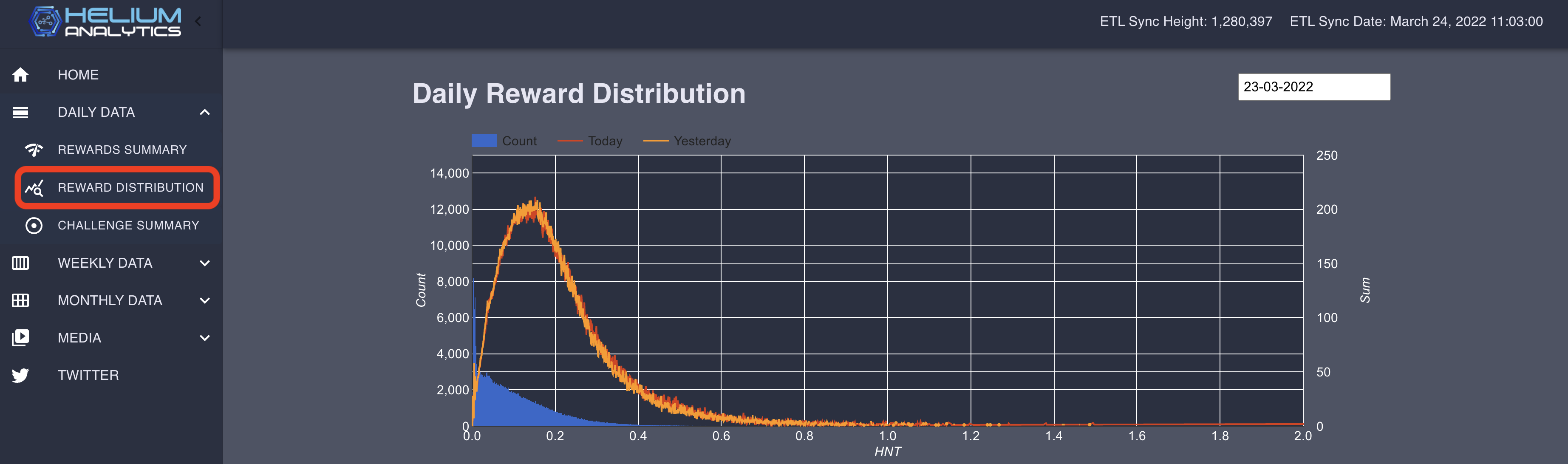
Ok, now you have a pretty good idea of where everybody else is, and you should have a good idea of where you are. But...you've heard that "everyone" on Twitter/Discord/Reddit/FB/YT is complaining of rewards being down. That's something you can check over on the Rewards Distribution tab.

This is a "distribution graph" (Dave at Helium Analytics particularly likes these) with 3 colors on it. The orange line is what happened yesterday. The red line is what's happening today. If those two lines are overlapping (the way they are in this screen shot, you can be pretty sure that rewards across the Network are not down.

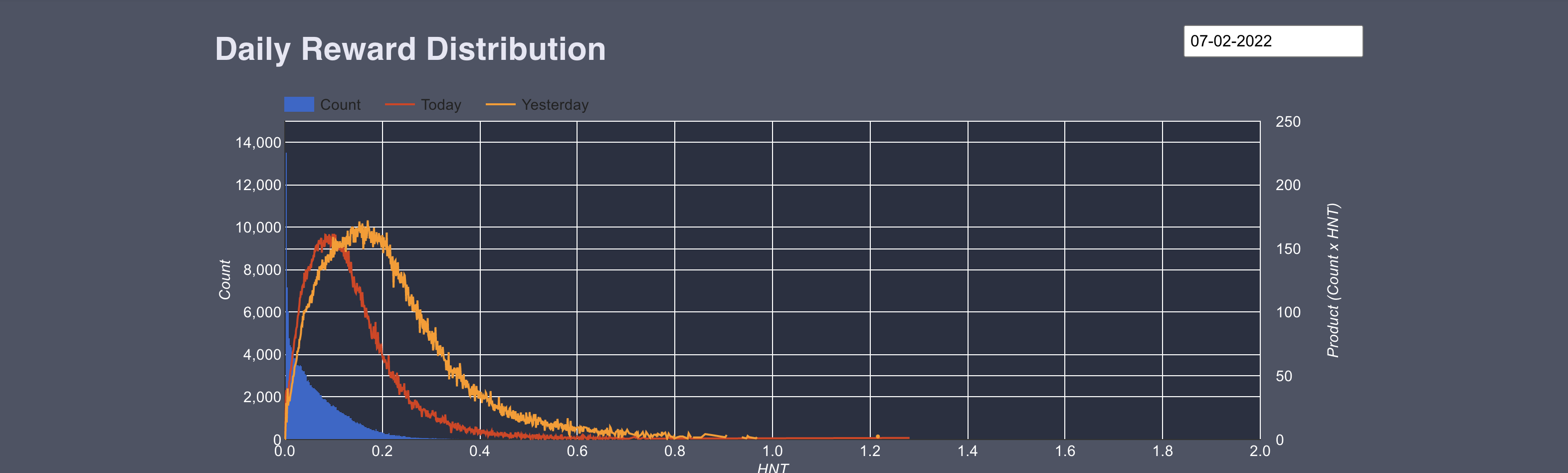
If you see something like this, where the red "today" line is left of the orange "yesterday" line, you know rewards are down across the Network.

The blue area is the number of hotspots at each point. As you can see if you click through the days, MOST hotspots make .4 or less per day.

The left side Y-axis is the number of Hotspots in each "group", the right side Y-axis is the total amount of HNT each "group" of Hotspots made, and the bottom is how much HNT each individual Hotspot made.

A "group" of Hotspots is all the Hotspots that made the same amount, say .46915 HNT that day.

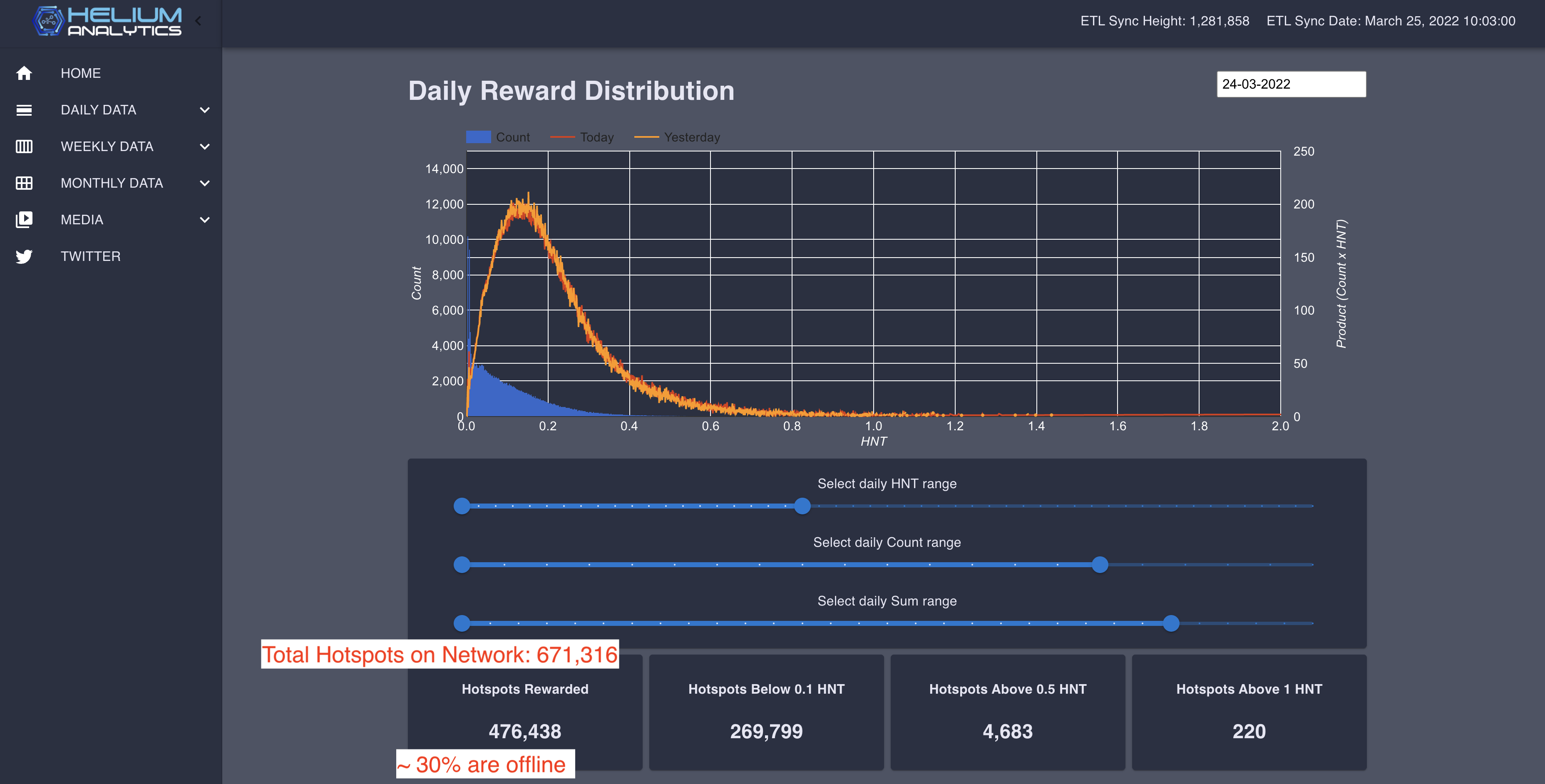
Now let's focus back on the next thing that makes sense for your average Hotspot owner, which is how many Hotspots are actually active on the Network. This was surprising to me; at any one time, about 30% of all Hotspots are offline! Dave says he's been watching that stat for a while, and it's stayed reasonably constant throughout the growth of the network.

Now, WHY 30% of Hotspots are offline at any one time is a mystery to me, though I've heard lots of potentially true explanations. My takeaway as a Hotspot owner who is interested in earnings is that it's fine for those of us online; we don't have to split such thin slices of pie. :)

The last thing to dig into is the Challenge Summary data, and while you can dig in REEEAL deep, I stop right at the top, looking at the Average Challenges (that's per day) and the PoC interval (this is how often an average Hotspot will Beacon). In this case, 544 minutes equal about every 9 hours. Now, that's a rough calc, but close enough for me to use.

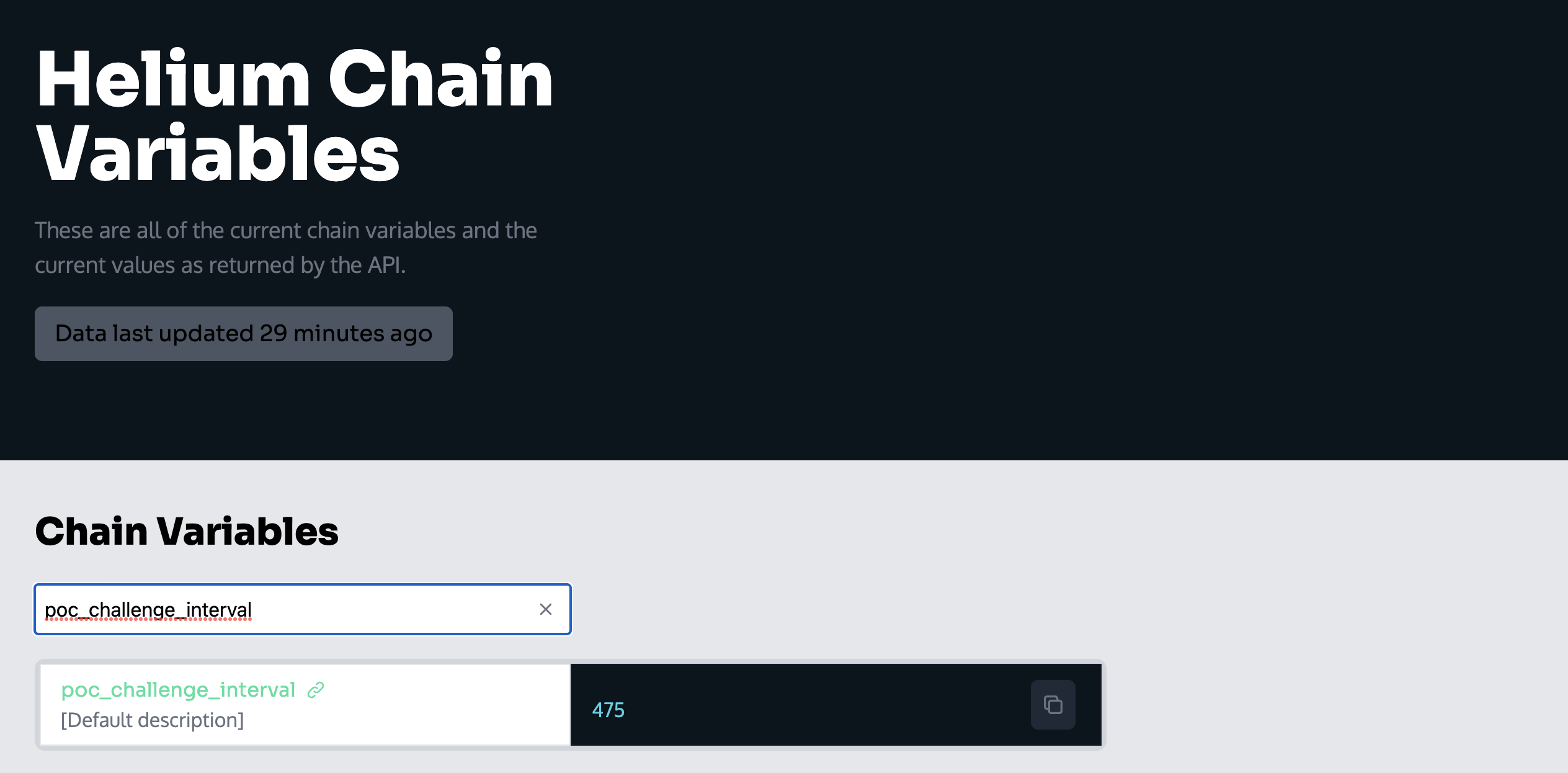
One thing to note here is that the PoC interval can be changed on the blockchain. The Helium team will do this in the short-term future just to keep the blockchain from getting too congested while we still have "full fat" Hotspots on it. When this was written (the morning of March 25th, 2022), the interval was 475.

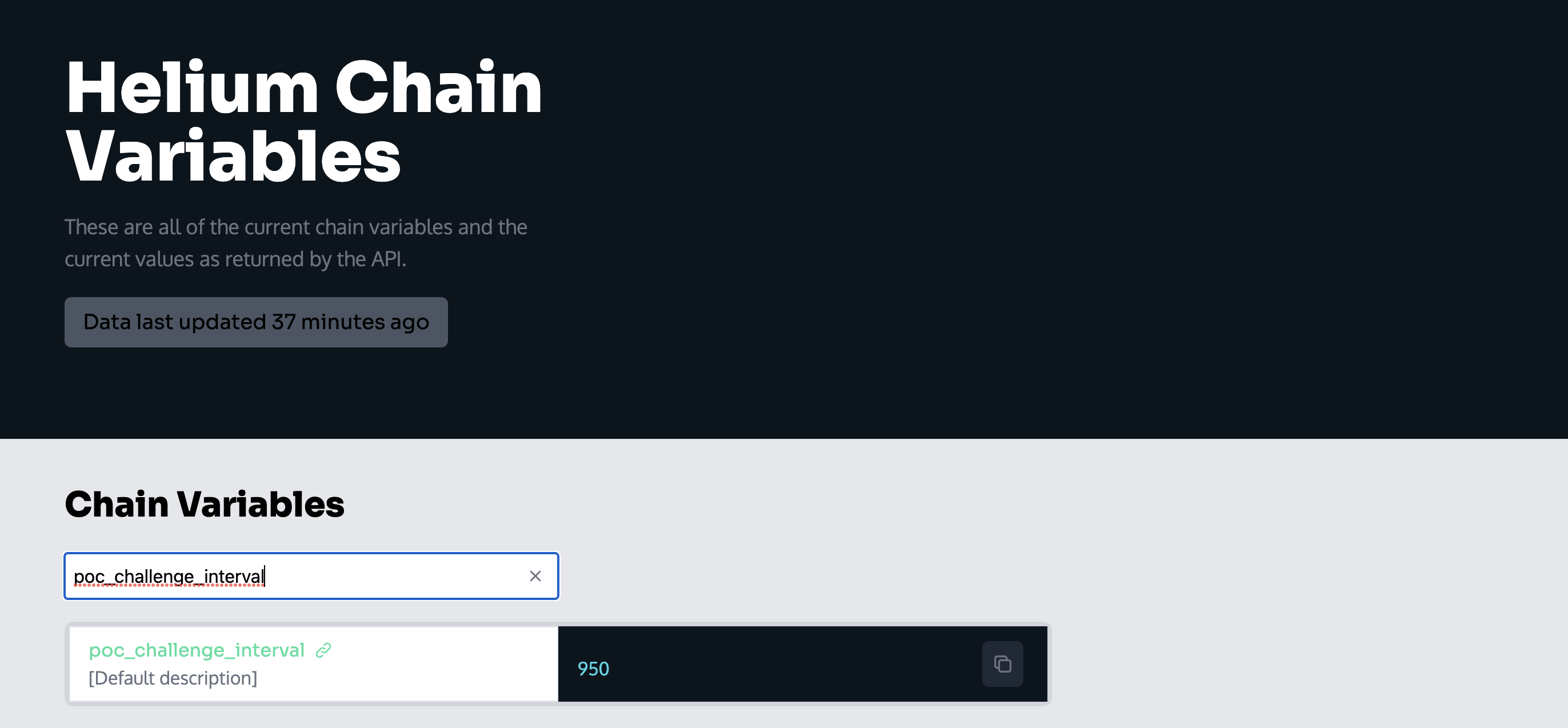
A few hours later, that interval had changed to 950. Kind of cool to be writing a blog post right in the middle of Helium history.

Maybe that's a little on the nerdy side. If you want to check this, you can see any of the chain vars over here, on Helium.Plus.

You can certainly dive deeper, and we do in this video, but for now I think you've got the most useful basics to help determine for yourself the health of the Network. Rock on!

https://youtu.be/Y2O4MeHXNDY

Hey, if you're enjoying the content on this blog and want to either support it OR you want to join a crew of enthusiastic Helium participants, check out the courses I've built to help you understand Helium or consider joining the Gristle Crüe! Thanks so much for reading, and have a rad day!

Archived Comments

Chris Rowse - 6/27/2022

Hi, Tries Helium Analytics .... looks like the last ETL date was 11 May Has it gone? Thanks Chris


Nik - 6/27/2022

Hi Chris, nope, it's still up, the ETL is behind though.


Why Do You Need The Helium Wallet App?

· 5 min read
Nik
Site Owner

The recently-opened-for-beta-testers Helium Wallet app is not the Helium app; that's the first confusing thing. The Wallet app is all about keeping control of your 12 words in YOUR hands, and no one else's. Outside of the Helium Wallet app, you should NEVER give your 12 (or 24) words to anyone. Per.i.od.

In the world of crypto, a "wallet" is really just a set of digital keys that you, and ONLY YOU, have access to.

That's really the whole point of the Wallet app; to make sure you maintain the secrecy of your 12 words while still getting access to all the other tools out there, like the new manufacturer apps (Bobcat, Rak, Sensecap, etc) coming out.

Those apps will allow you to manage your fleet, to remotely control and troubleshoot your Hotspot, to keep a finger on the pulse of your Helium world. What they SHOULDN'T do is ask you for your 12 words.

Think of it this way: The Helium Wallet is your key. All the manufacturer apps are like doors into various rooms. You use your key to open those doors and get into those rooms. You don't leave the key in every door handle.

The whole thing is kind of boring, and a little bit of a pain in the butt (going from one app to a few apps), but the security element can't be overstated.

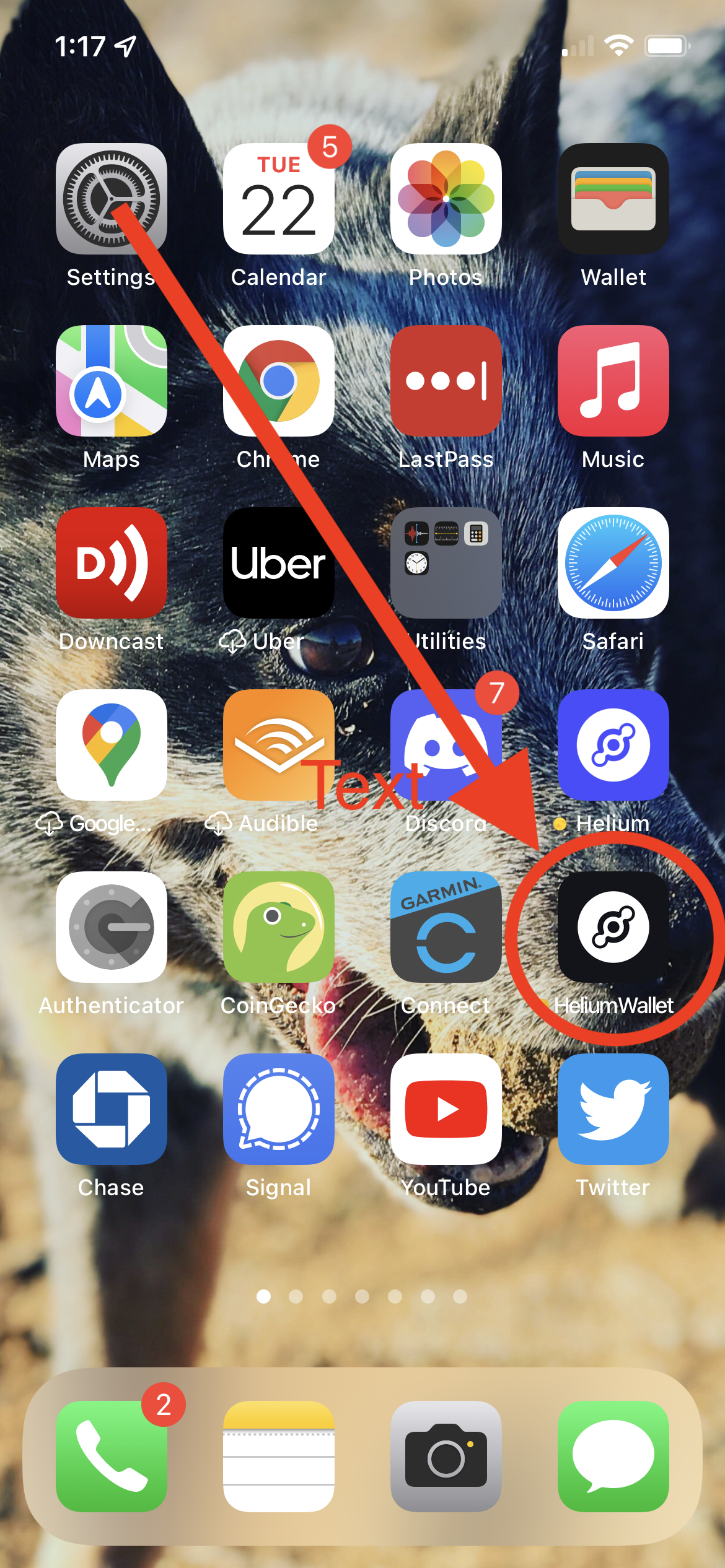
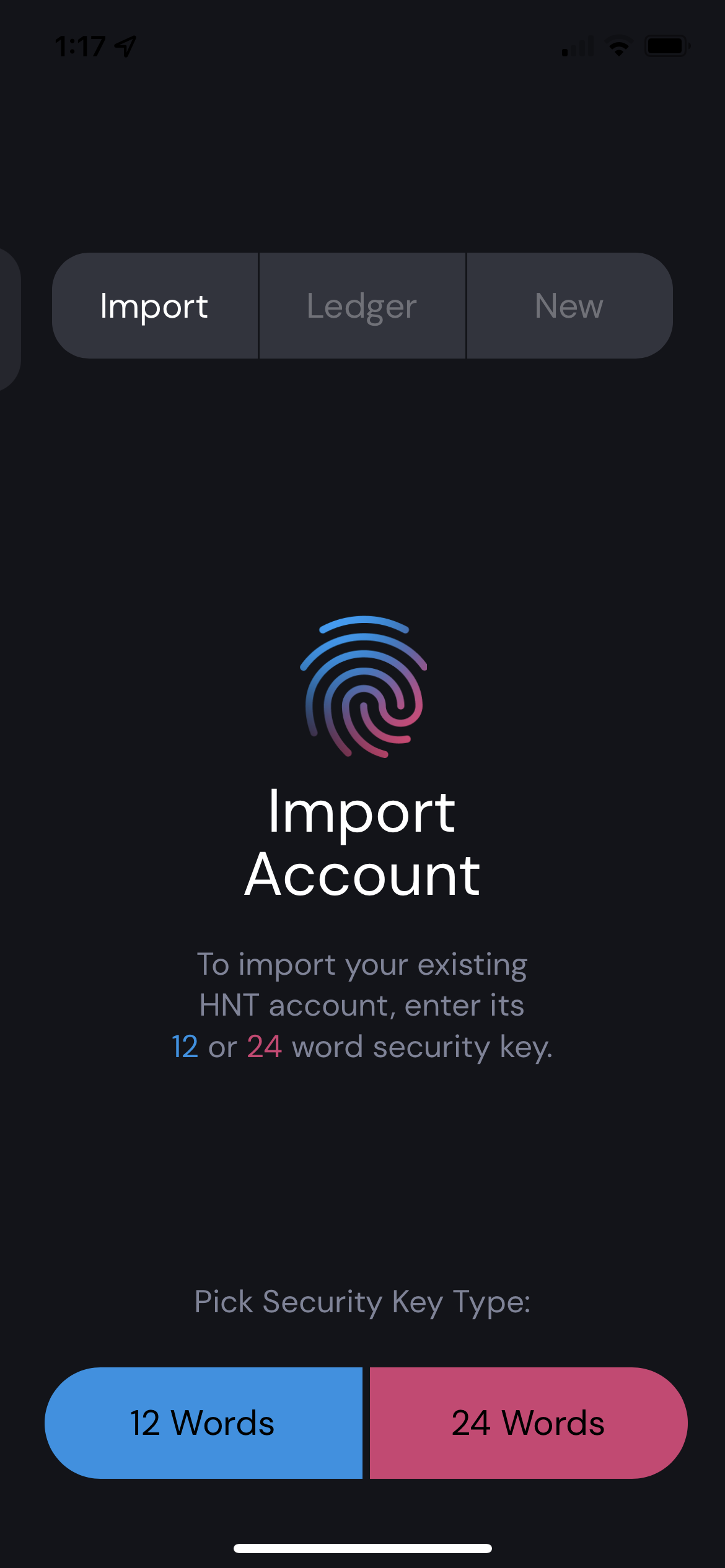
Let's walk through what it looks like. First, look for the Helium Wallet app and download it from wherever you get your apps. Then, open it up, pick either the 12 or 24 word option (depending on what you have, most of us have 12), and enter 'em in.

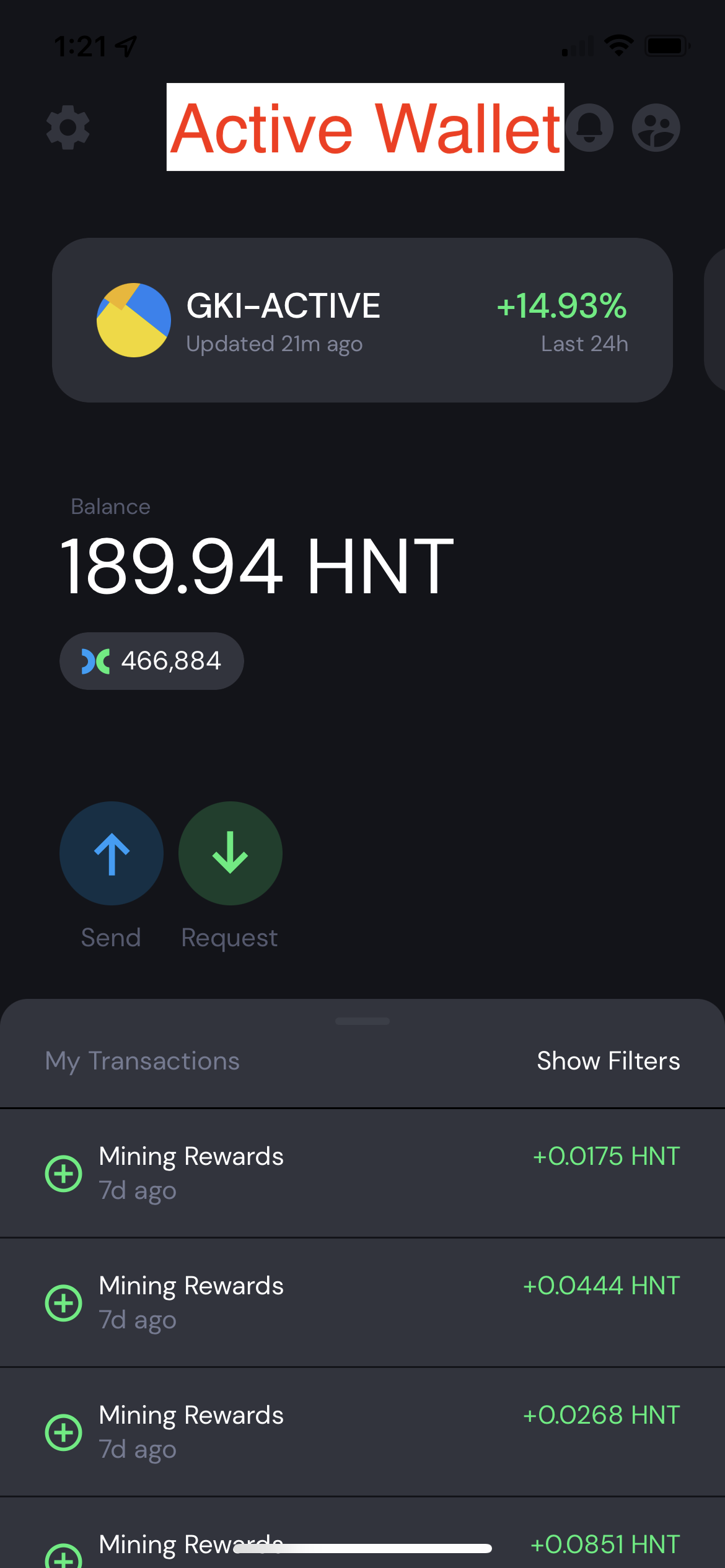
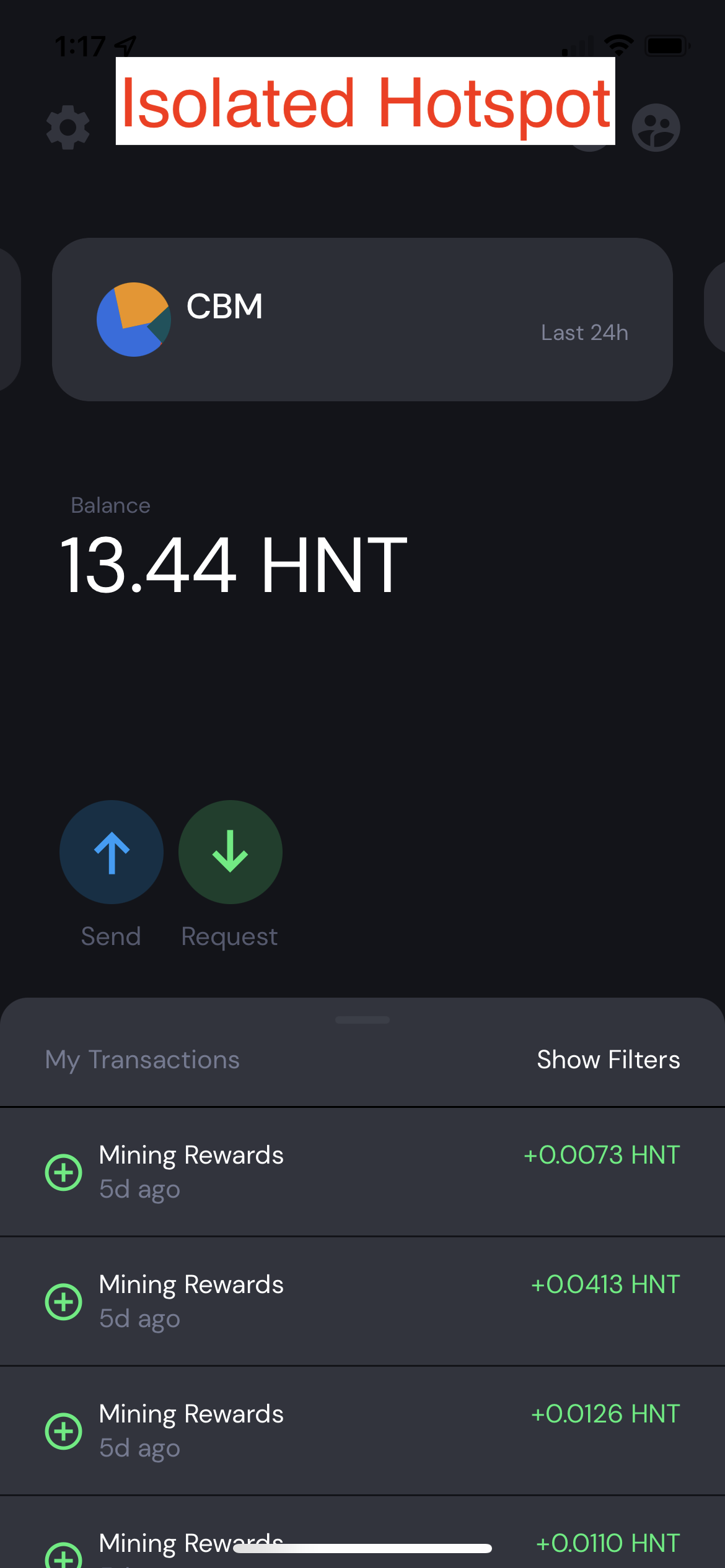
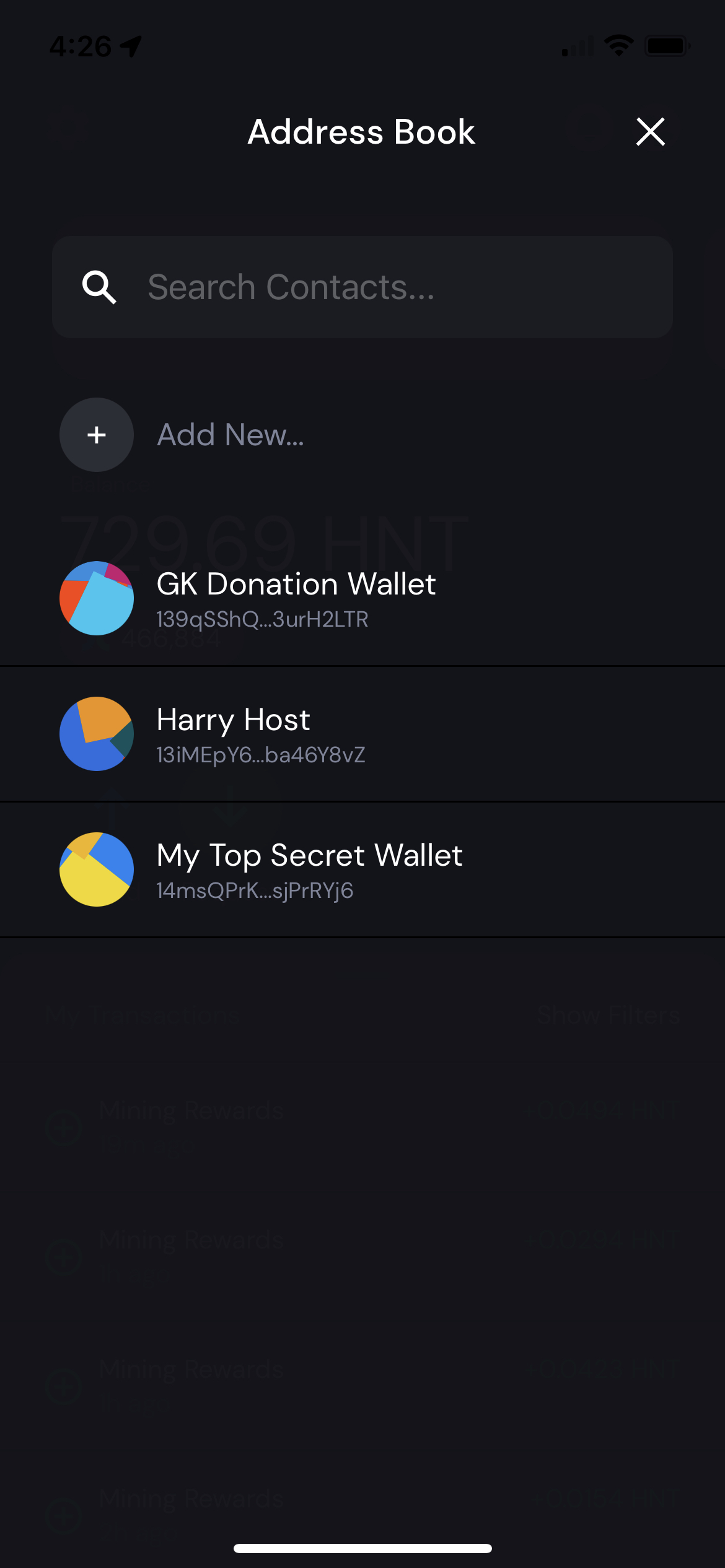
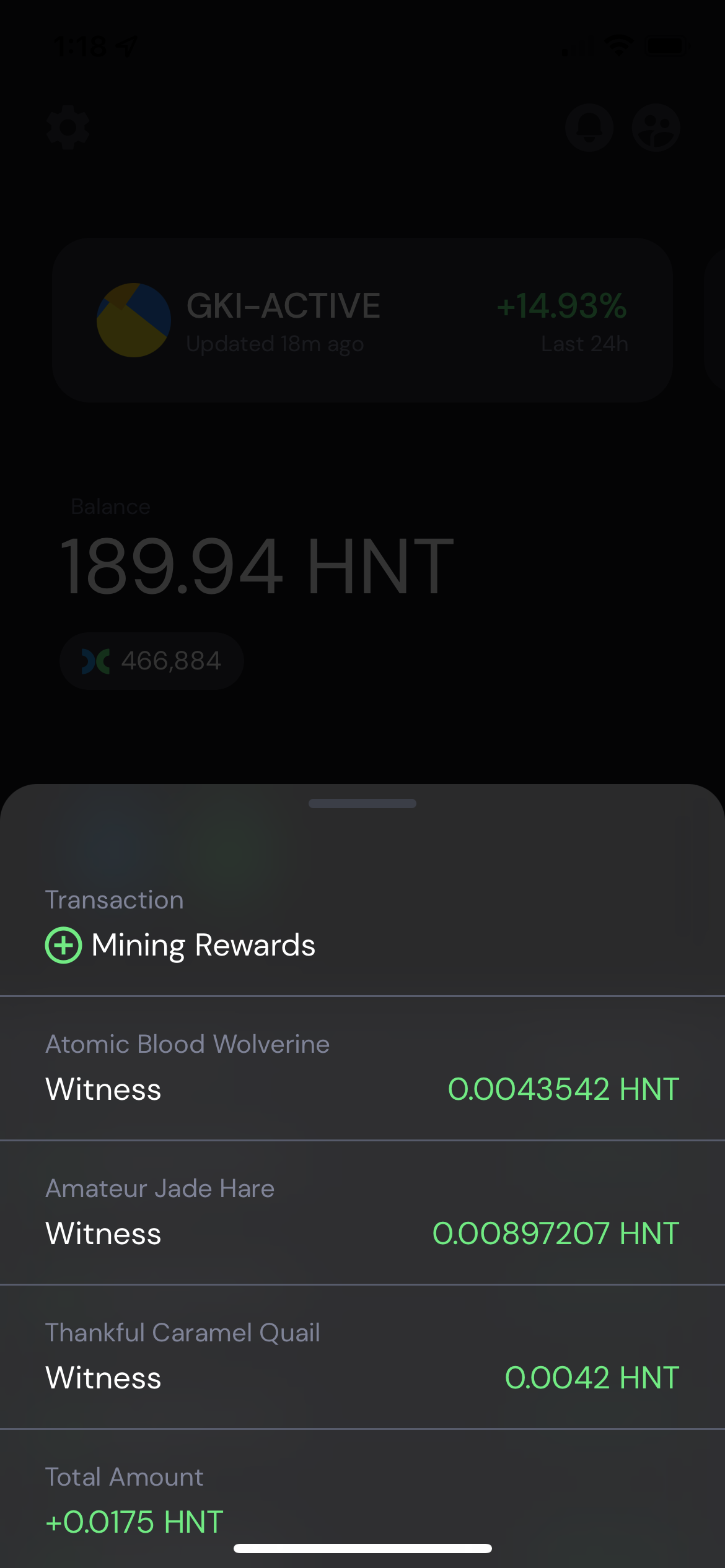
In any given wallet, you can dig into the transactions. You can also add multiple wallets to the app. You might have one for your active Hotspots, one for a Hotspot you want isolated (maybe you have a Host and there's no need for them to see your other accounts), and maybe you have a separate wallet for where you withdraw your HNT monthly, just to keep it out of the active wallet. You can also keep a list of commonly used addresses you send money to. Oh hey Gristleking's Donation Wallet! ;)

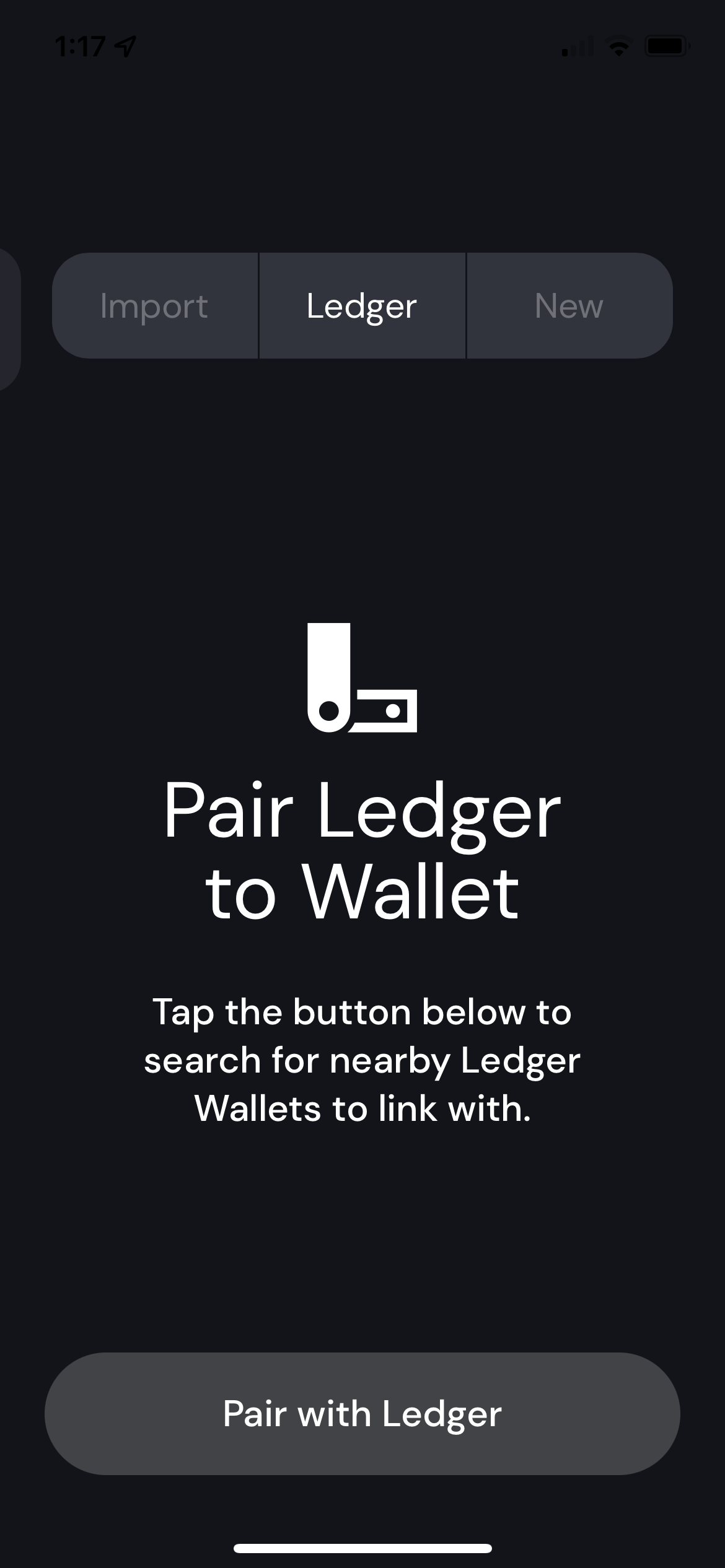
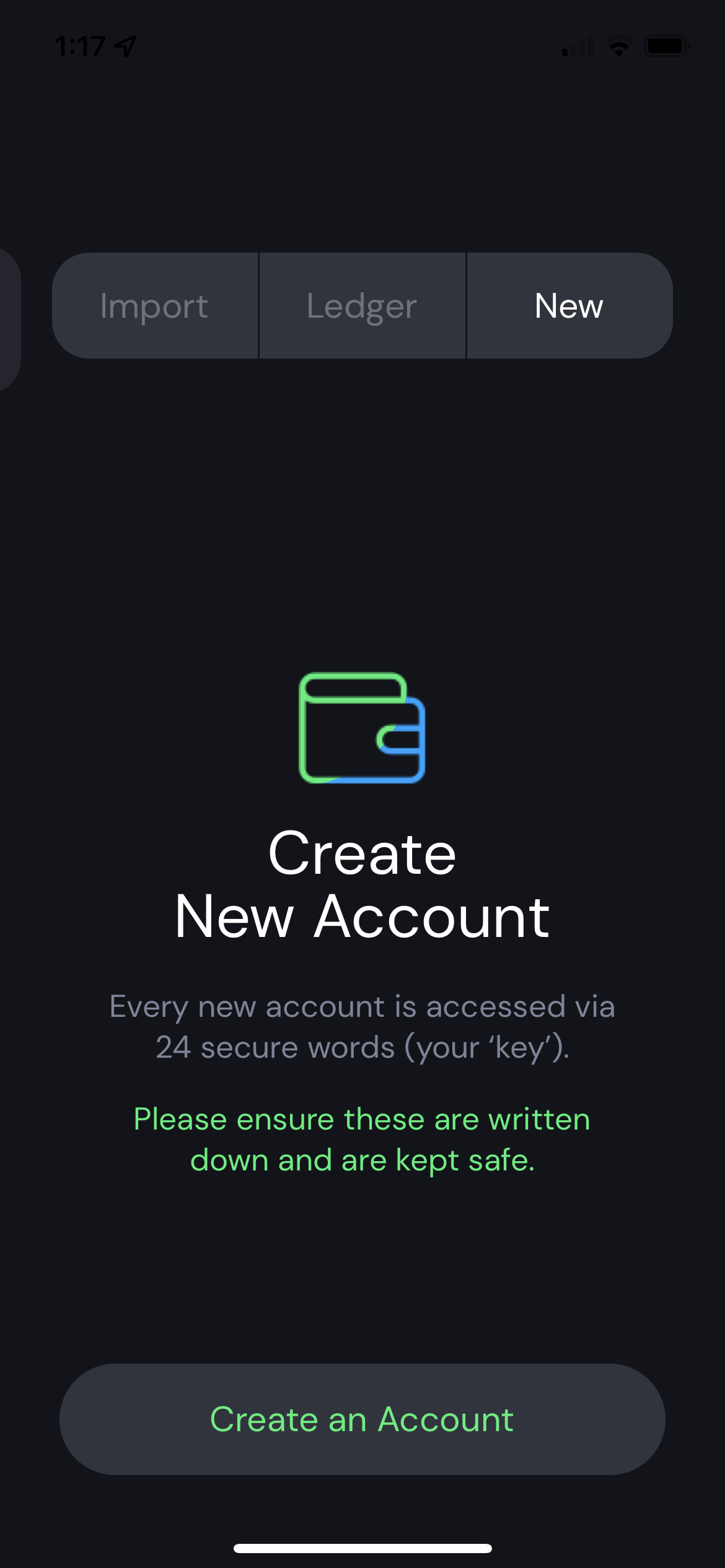
You can click into any of those transactions and dive a little deeper. You can also pair with a Ledger, or create an entirely new account.

The whole thing is pretty straightforward. Now, why is this all so important? Having control of your wallet through the Wallet app allows for a "deep link", which is a direct link from app to app. This allows you to connect from your wallet to any manufacturer's app WITHOUT giving them your 12 words.
That's the whole point. If you give a manufacturer (or anyone) your 12 words, they have access to your wallet. It's kind of like leaving a set of keys at the car dealership. Sure, they *probably* won't stop by your house and take your new car for a spin, but...why give 'em the opportunity. Your wallet, your HNT, your control. That's the deal.

When you buy Hotspots from a manufacturer, you'll use their app to onboard your Hotspots, and you'll "sign" those onboarding transactions with your wallet. Every manufacturer's app will be a little different. You maintain control of your Hotspots in the manufacturer's app, by using the authority of the Helium Wallet. This also allows you to use third-party apps (not manufacturer's) in the future, if you want to, say, manage taxes on your HNT earnings, but without putting your HNT or Hotspots at risk.

One last word to the wise:

Don't share your fucking words with anyone.

No manufacturers, no third party apps, not your brother, not your dog, not even the first girl you kissed back in summer camp in '89. Shoutout to [redacted]! Treat anyone who asks for your 12 words with extreme suspicion; they are trying to con you.

Other than that, have a rad time deploying Hotspots and earning HNT. This is a fun game, and even if you read this in 2023, well, you're probably STILL early. Rock 'n roll!